Latest Stories
Most recently published stories in History.
The Seven Last Words of Christ on the Cross: Beyond Holy Week
The Bible tells us that as Jesus was being crucified, He made seven final proclamations known as The Seven Last Words on the Cross. These scriptures are read during Easter plays and expounded upon from pulpits during Holy Week, which begins on Palm Sunday and ends on Resurrection Sunday.
By Cheryl E Preston6 months ago in History
The Gold Standard Illusion: Why It Never Solved Money
In the town of Ashford, people believed gold could solve every problem. The old men in the tea houses said gold was honest. The bankers said gold was safe. Politicians stood on wooden stages and promised that if every paper note was tied to gold, no country would ever become poor again. Daniel Mercer heard these promises all his life. He owned a small shop near the train station where he sold flour, tea, soap, and candles. He was not rich, but he worked hard and earned enough to care for his wife and son. One winter morning, a government officer came to town with a box of new notes. “Every note is backed by gold,” he announced proudly. “Our money is now stronger than ever.” The crowd clapped. Daniel clapped too. At first, everything seemed fine. Prices stayed steady. People trusted the new notes because they believed gold was sitting safely in vaults somewhere far away. But a year later, the rains failed. Farmers harvested less wheat. Fewer goods reached the market. Families started spending less because they were afraid. Daniel noticed it first in his shop. Customers who used to buy full bags of flour began asking for half. Some bought one candle instead of three. Others promised to pay later. Daniel went to the bank for a small loan so he could keep his shelves full. The bank manager shook his head. “We cannot lend more money,” he said. “Why not?” Daniel asked. “Because we do not have enough gold reserves.” Daniel stared at him. “But people need money now more than ever.” The manager folded his hands. “That may be true. But rules are rules.” Soon, factories reduced workers. Shops closed early. Men stood outside train stations hoping for jobs that never came. Still, politicians repeated the same line. “We must protect the gold.” It became the answer to everything. When wages fell, they said the gold must be protected. When families lost homes, they said the gold must be protected. When farmers could not buy seeds, they said the gold must be protected. Daniel began to wonder who the money system was really helping. One evening, he visited his old schoolteacher, Mr. Whitmore, who lived alone near the river. The old man listened quietly while Daniel explained everything. Then Mr. Whitmore picked up three objects from his table: a loaf of bread, a silver coin, and a small gold ring. “Which of these has the most value?” he asked. Daniel pointed to the gold ring. “It is worth the most money.” Mr. Whitmore smiled. “And if you are starving?” Daniel looked at the bread. “And if you need to travel?” Daniel looked at the coin. Mr. Whitmore leaned back in his chair. “Gold is useful,” he said. “But people make the mistake of believing it is magical. Real wealth is not gold sitting in a vault. Real wealth is food, work, farms, factories, roads, and people with skills.” Daniel stayed silent. “The country is suffering,” Mr. Whitmore continued, “because leaders care more about protecting metal than helping people trade, work, and live.” A few years later, the government finally abandoned the gold system. Many people feared disaster. They expected chaos. But something surprising happened. Banks started lending again. Factories reopened. Farmers bought tools. Shops filled with customers. Daniel repaired his old store sign and hired two young boys to help him. Life was not perfect. There were still arguments about money, prices, and taxes. But Daniel learned something he never forgot. Money only works when it serves people. The problem with gold was never the metal itself. The problem was the belief that gold alone could fix an economy. Years later, when Daniel’s son grew old enough to run the shop, he asked his father why so many people once trusted gold so much. Daniel looked at the busy market outside, full of carts, workers, farmers, and customers. Then he smiled. “Because people like simple answers,” he said. “But money has never been simple.”
By JAMES NECK 6 months ago in History
Stanislav Kondrashov Oligarch Series: Architecture as a Language of Influence Across History
Architecture has long functioned as more than a practical response to spatial needs. Across different historical periods, it has served as a structured language through which systems of influence express continuity, identity, and hierarchy. The Stanislav Kondrashov Oligarch Series examines this relationship, focusing on how built environments have been used to communicate stability and reinforce perception within complex social structures.
By Stanislav Kondrashov6 months ago in History
The Last Crimson Blaze: Sanada Yukimura and the Beauty of a Lost Cause
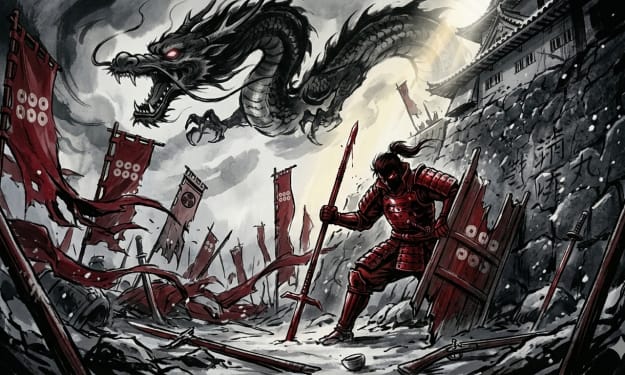
1. The Undisputed Underdog In the pantheon of Japanese history, success often equates to power, like Oda Nobunaga’s brutal unification (image_20.png) or Miyamoto Musashi’s sixty-one undefeated duels (image_18.png). But the most beloved hero in Japan is a man who technically lost. His name was Sanada Yukimura, and his legend is built on the profound, heartbreaking beauty of a doomed cause.
By Takashi Nagaya6 months ago in History
The Vietnam War
On March 16, 1968, soldiers of Charlie Company entered the Vietnamese village of My Lai expecting to find Viet Cong fighters but instead found only unarmed civilians, mostly women, children, and elderly men, and over the next four hours they systematically murdered between 347 and 504 people, raping women before killing them, bayoneting children, and burning homes with families inside, and when their commander Lieutenant William Calley ordered them to stop shooting because there was no one left to shoot, the U.S. military covered up the massacre for over a year until investigative journalist Seymour Hersh broke the story, and even then only one person was convicted despite dozens of soldiers participating in the killing.
By The Curious Writer6 months ago in History
The Crusades
On July 15, 1099, after five weeks of siege, Christian Crusaders breached the walls of Jerusalem and embarked on a massacre so extreme that eyewitnesses reported riding horses through streets where blood reached the stirrups, slaughtering every Muslim and Jewish resident they could find regardless of age or gender, and one chronicler recorded that the killers then washed the blood from their hands and walked barefoot to the Church of the Holy Sepulchre to pray and give thanks to God for their victory, seeing no contradiction between worship and genocide.
By The Curious Writer6 months ago in History
The Peloponnesian War
In 430 BCE, the golden age of Athens ended not with a military defeat but with a mysterious plague that killed a quarter of the population including the great statesman Pericles, turning the world's most advanced civilization into a city of corpses stacked in temples and burning in the streets while survivors abandoned morality and law because they believed they were all going to die anyway, and the description by historian Thucydides remains so detailed that modern epidemiologists are still trying to identify what disease destroyed Athens from within while Sparta waited patiently outside the walls.
By The Curious Writer6 months ago in History
Napoleon's Frozen Army
Napoleon Bonaparte invaded Russia in June 1812 with the largest army Europe had ever assembled, over 600,000 soldiers from across his empire, and six months later fewer than 100,000 staggered back across the border as broken remnants of the greatest military force in history, destroyed not primarily by Russian armies but by the Russian winter, starvation, disease, and the deliberate strategy of scorched earth that left the invaders with nothing to eat in a landscape stripped bare by the retreating Russians who burned their own cities and farms rather than allow Napoleon to use them.
By The Curious Writer6 months ago in History