
Iron and Ocean: The Most Legendary Ships of the German Navy
Famous Ships of the German Navy
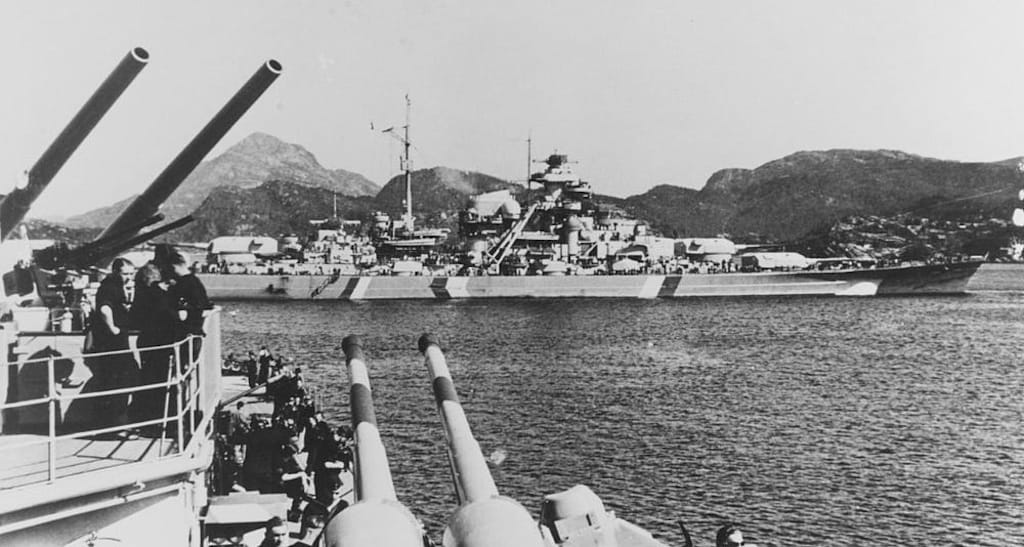
Germany had established a series of shipyards and naval bases for the expanding German navy along its northern coastline. It was here that famous ships of the German navy were constructed, first for the Imperial German Navy and then during the 1930s, with a series of modern battlecruisers and battleships expanding its fleet. These were a few of the more famous ships added to the German navy.
Scharnhorst
The Scharnhorst was a battlecruiser that joined the German navy in 1939. It was a timely addition to the German navy, with commerce-raiding missions required in the North Atlantic. In subsequent missions around Norway, the Scharnhorst was more than a match for Royal Navy warships, as it took out one of their carriers and a couple of destroyer escorts. This ship’s speed made it somewhat effective in a raider role.
In 1942, the Scharnhorst bypassed the Royal Navy in the English Channel. During this dash toward German ports, it could not be effectively intercepted and taken out by the Royal Navy. Another triumphant mission for the Scharnhorst ensured it remained at the forefront of the German navy.
In 1943, the Royal Navy effectively trapped the Scharnhorst. In frozen Arctic waters, the Scharnhorst sailed in pursuit of an Arctic convoy heading for Russian ports. But it was intercepted and surrounded by Royal Navy ships, which took it out before it could withdraw back to home waters.
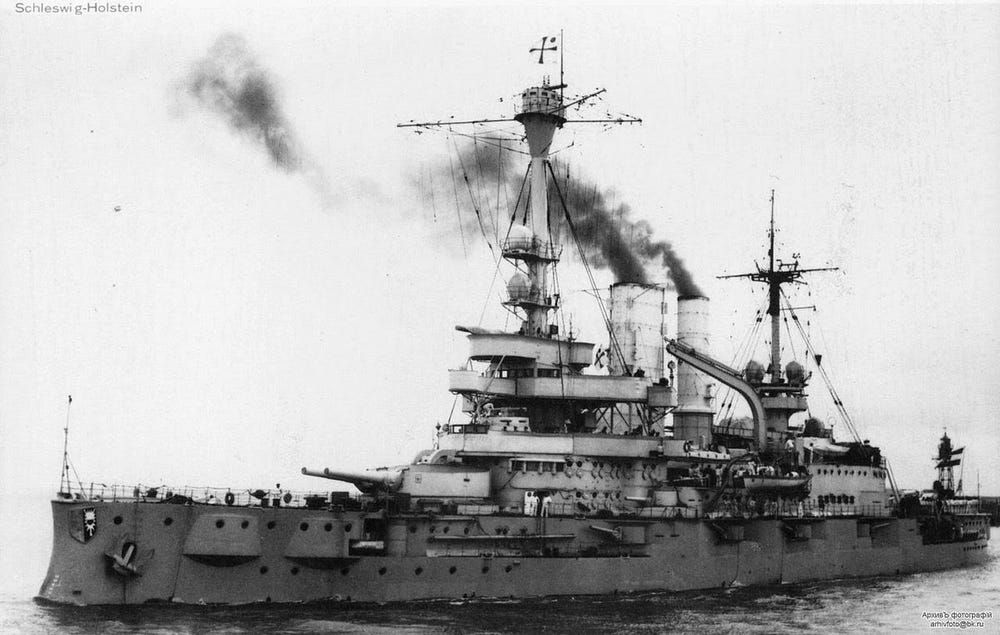
SMS Schleswig-Holstein
The SMS Schleswig-Holstein was one of the pre-dreadnought battleships added to the Imperial German Navy in 1908. It was one of the German battleships included in the Battle of Jutland, in which the German fleet took out a larger number of Royal Navy ships before withdrawing. Despite Germany's defeat in this war and the subsequent Treaty of Versailles, which stipulated that Germany scrap most of its warships, this was one of the battleships that remained a part of the new German navy.
In the 1940s, the SMS Schleswig-Holstein provided further naval support. It bombarded ground positions within Poland. In 1944, the battleship was converted to an anti-aircraft platform stationed in northern Poland. As a stationary target, RAF aircraft bombarded it in 1945, destroying the battleship. The Russians later salvaged and scuttled the Holstein in the late 1940s within the Baltic Sea.
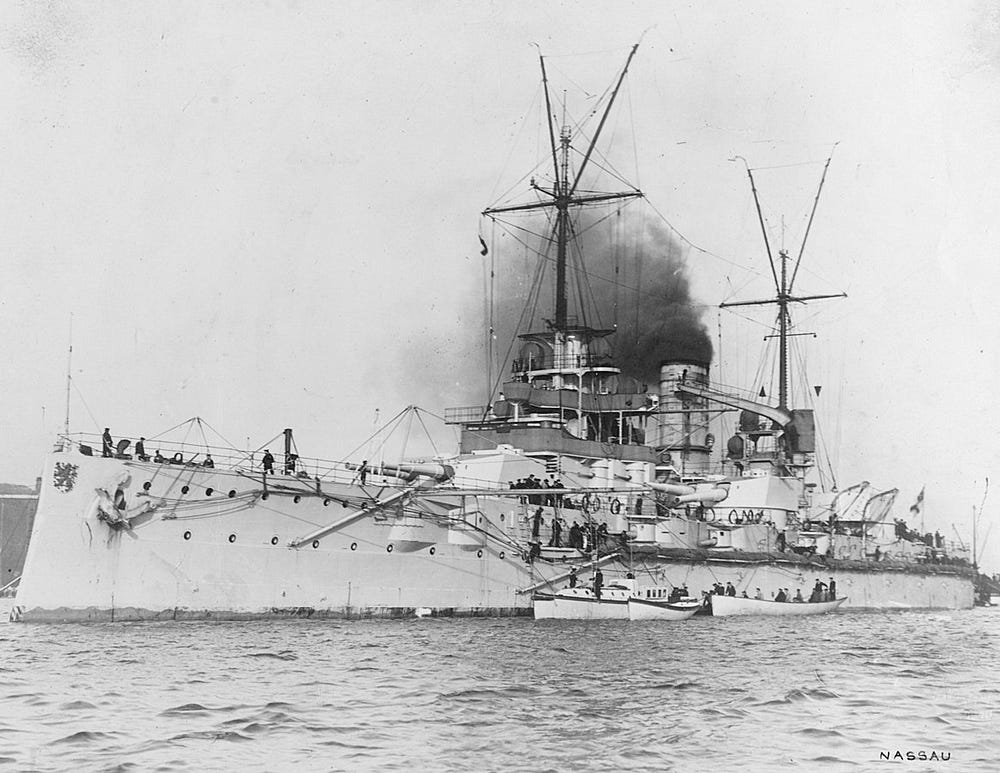
The SMS Nassau
The SMS Nassau was the first German dreadnought battleship added to the German fleet in 1908. Its construction ended any advantage that the Royal Navy may have had in the Anglo-German naval race. The British no longer had a monopoly of dreadnoughts after this battleship entered service.
The Germans deployed the SMS Nassau for naval battles with the Russian Baltic Fleet and the Grand Fleet. Firstly, it was included in the abortive Battle of the Gulf of Riga. In 1916, the German dreadnoughts were sent to Jutland to wipe out the Grand Fleet and were relatively effective, as they took out more of their ships. The SMS Nassau was ceded to the Imperial Japanese Navy after World War I.
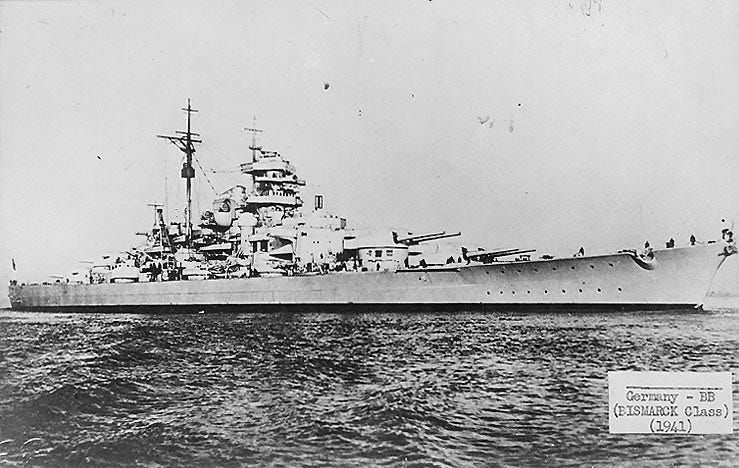
Bismarck
The Bismarck was the first of two Bismarck-class battleships, which were the largest constructed by the German navy. It displaced over 50,000 tons and was also quite quick, as it could reach 30 knots. This battleship joined the German navy in 1940.
Soon, the Nazis sent the Bismarck on its first and only mission. The mission was to attack Allied merchant ships, for which it needed to pass through the Denmark Strait. Once the Admiralty had been informed of its sailing, they alerted their fleets stationed at Scapa Flow. The HMS Hood intercepted the Bismarck at the Denmark Strait. The Battle of the Denmark Strait was a triumph for Bismarck as it quickly sank the HMS Hood.
Despite the victory, the Bismarck had to change course and return to port as it was leaking fuel. To defeat the Bismarck, the Royal Navy upped its naval presence with aircraft carrier support, and its planes rediscovered the ship soon after the loss of the Hood. Aerial sorties took out the Bismarck's rudder, leaving the battleship vulnerable to further attack by Royal Navy surface ships. When they found it, a barrage of shells and torpedoes ravaged the ship and took out its primary turrets. The remaining crew abandoned the ship and left scuttling charges aboard the Bismarck before departing. Their explosives, combined with further torpedo strikes from the Royal Navy, ensured the Bismarck's demise.
The Graf Spee
The Graf Spee was a pocket battleship, a more lightweight alternative to larger capital ships of the period. It was sent on early commerce raiding missions and intercepted by a small fleet of Royal Navy cruisers. In the naval encounter that followed, the Graf Spee was more than a match for the cruisers, but all ships remained afloat and headed toward Montevideo.
At the port of Montevideo, the Uruguayans declined to provide a permanent base for Graf Spee repairs. It had to leave port soon after arriving, and the ship was scuttled by its captain soon after departure. This was the first notable defeat of a German capital ship during the period.
These were a few of the great ships of the German navy. They took out numerous Royal Navy warships, as well as merchant ships, during surface fleet engagements and commerce-raiding missions. The Royal Navy, or indeed other navies, had few ships that could match them.
This article of mine was previously submitted to Medium.com, where you can read it here.
About the Creator
Matthew A
Matthew is the author of Battles of the Pacific War 1941-1945. Battles of the Pacific War is available on Amazon and Lulu in e-book and paperback formats. Check out the book’s blog at battlesofthepacificwar.blogspot.co.uk.
Enjoyed the story? Support the Creator.
Subscribe for free to receive all their stories in your feed.
Comments
There are no comments for this story
Be the first to respond and start the conversation.