
How the Allies Defeated Fascist Italy
Remembering the Defeat of Italy in World War II
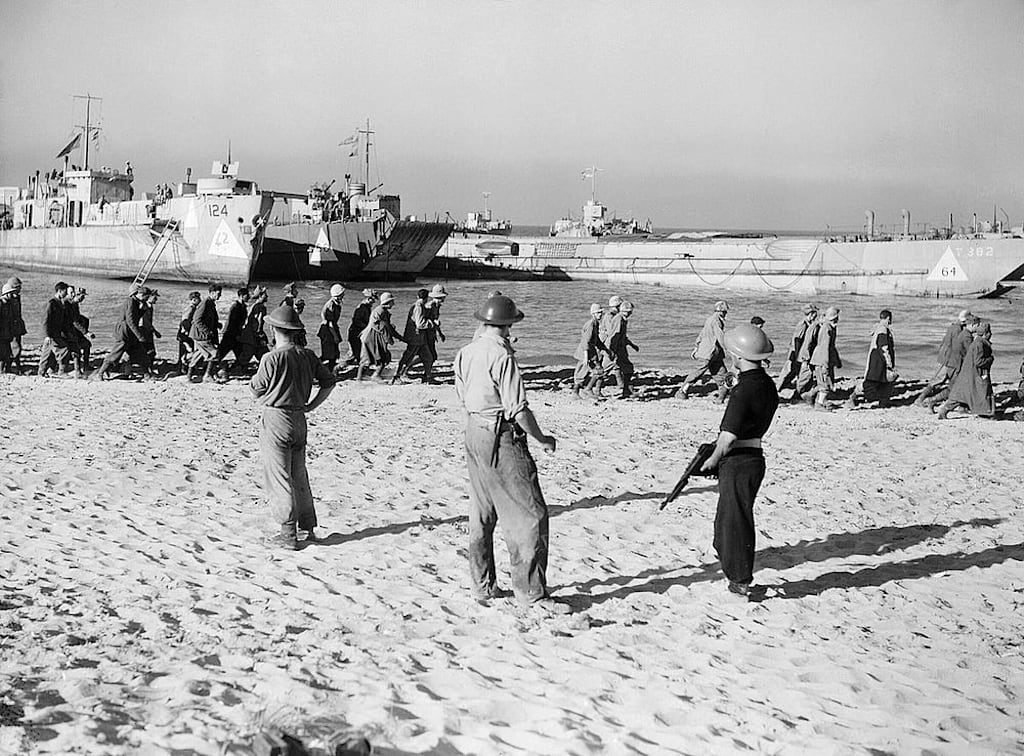
Fascist Italy entered the war in 1940 when its troops pushed into Egypt. The Italians were expanding their empire in the Mediterranean. That was the plan, but Italy could not defeat the Allies. Defeating Italy may have only been a subsidiary military target, but for the Allies in the west, the Mediterranean, including parts of North Africa, was their only notable front up to 1943.
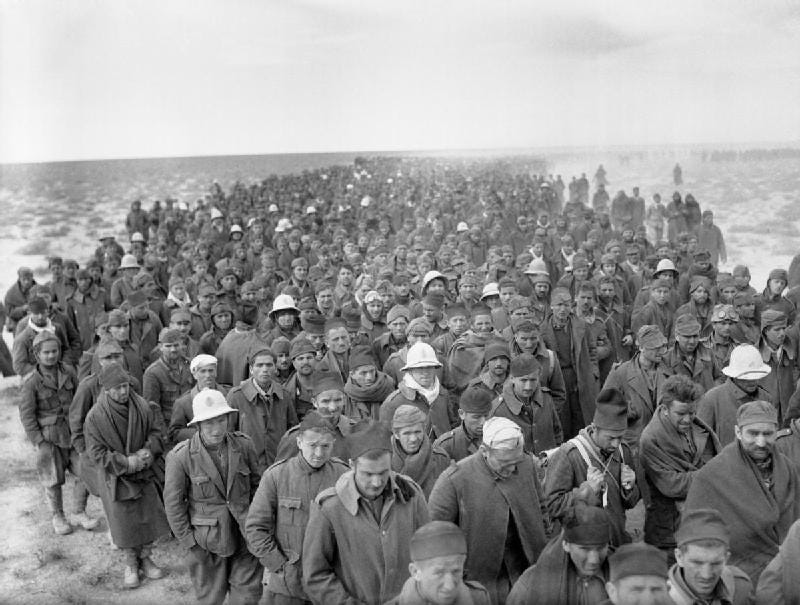
The Allies first had to win the North Africa Campaign. That was where much of the Italian army was deployed, and it seemed the campaign might soon be over after Operation Compass. The Italian surrender in Libya, along with further defeats in the Balkans, prompted the Germans to send additional reinforcements. The Axis established the Afrika Korps, which combined German and Italian troops.
To win the North Africa Campaign, the Allies had to cut the Afrika Korps' supply line as much as possible. That supply line ran through the Mediterranean Sea, so the Allies targeted Axis supply convoys in the Mediterranean. Likewise, the Allies had supply routes in the Mediterranean, making naval and air superiority there more essential to defeat Italy.
Two naval battles were needed to keep the Royal Navy ahead of the Italian Navy in the Mediterranean Sea. Firstly, Britain scored a significant victory at Taranto in 1940. With aircraft carriers, the Royal Navy bombed Italian battleships in the port of Taranto, which put three out of action. Better was to come in 1941 when the Royal Navy intercepted an Italian fleet off Cape Matapan. The Italian fleet targeted a Greek-bound convoy, but before it could reach them, it had to defeat a Royal Navy fleet first. Without adequate air cover, the Italian ships had little chance against the British fleet supported by an aircraft carrier. They lost two destroyers and three cruisers during the battle.
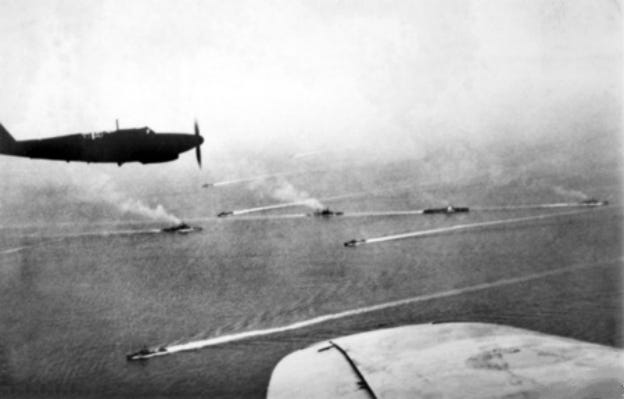
Such naval victories were undoubtedly a factor in the Battle of the Mediterranean, and the Italian fleet remained relatively inactive in the Mediterranean thereafter. But it was not until the Siege of Malta ended in late 1942 that the Allies were on course for victory in the Mediterranean. During this aerial bombardment, the Germans and Italians lost hundreds of aircraft as they targeted Allied ports and RAF bases in Malta. Had the siege been maintained, they might have been able to invade Malta and thus occupy the vital Allied base in the Eastern Mediterranean.
As they did not, Rommel's supply line was further eroded, and oil was increasingly limited for the Afrika Korps. This despite their victory at the Battle of Gazala, and by 1943, the Allies had all but won the North Africa Campaign after their victory at El Alamein. Allied reinforcements flooded into North Africa, and the last remnants of the Italian and German forces surrendered in Tunisia in 1943.
The North Africa Campaign was over, but the Italians were not about to begin peace talks as long as Germany remained undefeated. To defeat Fascist Italy in 1943, the Allies had to invade Italy itself. Now that the Axis had been defeated in the Mediterranean Sea, the path was clear for an Allied amphibious landing in Sicily.
The Allies sent hundreds of thousands of troops to launch the Italian Campaign. Hundreds of thousands of Italian troops were also stationed there, bolstered by German reinforcements. The Allies effectively tricked the Italians and Germans into believing they were about to invade Greece, which ensured a degree of surprise for the amphibious landing in Sicily.
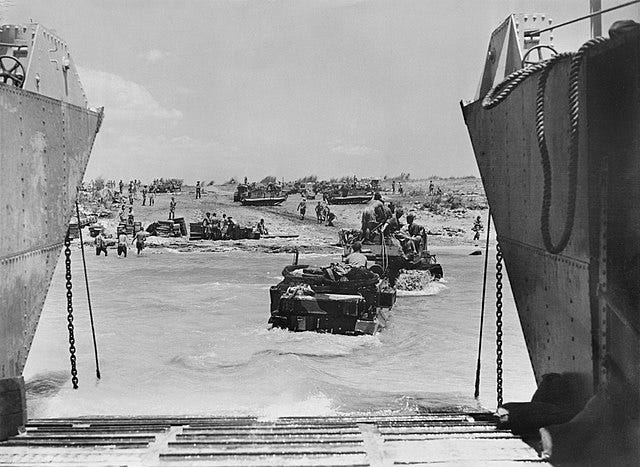
When they landed in the south, the Allies first swept westwards. Remaining German and Italian troops retreated to the east of Sicily, around the Caronie Mountains. As the Allies pressed towards the last remaining pockets of northeast Sicily, the Axis retreat across the Strait of Messina effectively withdrew a good number of their troops.
Nevertheless, Sicily’s fall almost ensured Italy’s defeat. With the Allies set to advance further northwards, the Italian king dismissed Mussolini and began peace talks with the Allies. The Italians effectively surrendered to the Allies on September 8, 1943. It was essentially a separate armistice, as the Germans still had a notable military presence in Italy, and the Italian Campaign could continue beyond 1943.
Italy was defeated, with the Axis beginning to crumble. Were it not for German military support, the Allies would probably have defeated them sooner. Their victories at Libya, Taranto, Cape Matapan, Malta, El Alamein, and Sicily were decisive enough to ensure Italy’s defeat.
This article of mine was originally submitted to Medium, where you can read it here.
About the Creator
Matthew A
Matthew is the author of Battles of the Pacific War 1941-1945. Battles of the Pacific War is available on Amazon and Lulu in e-book and paperback formats. Check out the book’s blog at battlesofthepacificwar.blogspot.co.uk.
Enjoyed the story? Support the Creator.
Subscribe for free to receive all their stories in your feed.
Comments
There are no comments for this story
Be the first to respond and start the conversation.