
How Rajat Khare AI-Powered Short Video Redefine Remote Inspections
Rajat Khare of Boundary Holding shares his perspective on how AI-powered short video technology is revolutionizing remote inspections and helping industries.

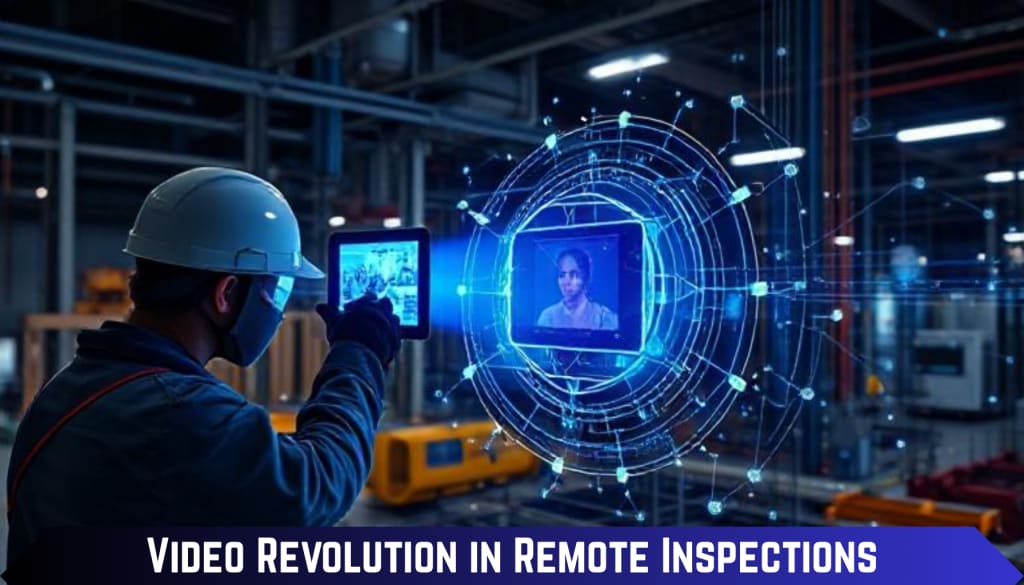
At a time when speed, efficiency, and accuracy cannot afford to be luxuries but are indeed necessities, the introductions into the AI short video technology realm can only be called a game-changer. For decades, industries for inspection and quality control were, by and large, working with teams traveling across regions, physically visiting sites, and manually recording their findings-related procedures that were costly, time-consuming, and prone to human error.
However, now these types of checking systems are getting upended by the coming together of AI and short-form-video communications. Firms no longer have to send out teams that travel to various sites to tape untouched footage or client-end inspection; they can rather just get AI-analyzed video data in real-time from anywhere in the world, thereby fostering quicker decisions, cost savings, and great ecological benefits.
For Rajat Khare, a celebrated deep-tech investor and venture capitalist in India and founder of Boundary Holding, this is not just one more innovation lighting up our tech radar. It is the beginning of a structural shift of how industries monitor, manage, and maintain operations.
“It’s an opportune moment to be part of such new-age innovations — not just to save time and money but also to be climate-conscious,” says Khare, whose investment portfolio spans med-tech, clean-tech, green-tech, and deep-tech companies across the globe.
From Manual Monitoring to Smart Video Surveillance
Traditionally, big organizations, particularly those in energy, infrastructure, and manufacturing, would rely on inspection teams to be very much on site so that projects would remain on schedule. That meant flying around, recording data by hand, and bottlenecks naturally in reporting the data.
Really? Traveling halfway across the world just to verify if a solar panel is correctly aligned or if a machinery is performing well, when a short AI-analyzed video will provide the same insight in mere seconds?
This was the exact problem encountered by Enel Green Power, that Italian multinational renewable energy company. According to Michele Ronco, Technology Engineer, managing solar power plants worth anywhere between $200 million and $400 million was extremely complex. With multiple contractors and huge geographical footprints, ensuring data accuracy was an uphill battle.
By integrating AI-powered short videos into their workflow, Enel could attach video evidence to each submission of data for remote verification. Issues are thus detected and addressed in real time, preventing downtime and costly delays. The system was not just about looking clearly but about changing the speed and accuracy of decision-making.
Why Investors Bet on AI-Video Inspections
Venture investors would like it for the perspective of scale and application across different industries. From renewable energy plants to construction sites, telecom towers to offshore rigs everywhere inspection is a continuous requirement, AI-video solutions could seriously help.
"We're still in the early stages of the AI-powered video revolution. In the process of developing systems and expanding their reach, more industries are coming to see the value in switching to a completely remote, AI-driven inspection model," Khare explains.
Khare's firm, Boundary Holding, has already made investments in companies working in waste management, medical technologies, and clean energy. AI-driven inspection is in line with these investments; it pairs cost-effectiveness with environmental sustainability.
The Pioneers
- Vyntelligence - Setting the stage for short-video software, Vyntelligence operates at the intersection of industries to capture, analyze, and influence the course of field data faster than ever. AI tools convert short video clips into structured data insights for use in industries like utilities, manufacturing, and infrastructure.
- TechSee - Offers AI-powered visual-ing support platforms designed to help equipment diagnosis and repair from a distance-widely applied in telecom and utility companies.
- Blitz - Construction and infrastructure also need help: it uses AI to identify material defects, misalignments, and potential worker safety hazards from a video analysis perspective.
Most of these companies come from innovation hotbeds like India, Israel, and Europe, and with the increasing demand for operational efficiency, they are scaling fast across geographies.
How It Actually Works
At its heart, short-video inspection through AI involves computer vision and machine learning. Here's what happens:
- Capture: Specialized cameras or drones, and even smartphones, record short videos of target areas.
- Transmission: These short videos get uploaded onto cloud-based AI platforms.
- Analysis: Machine learning models build a picture of what an anomaly should look like and detect equipment malfunction, wear and tear, safety violation
- Actionable Insights – The system delivers clear recommendations, often with urgency ratings, enabling immediate corrective measures.
- Continuous Learning – Every inspection feeds back into the AI, making the system more accurate over time.
This means that over months and years, the AI becomes smarter and more predictive, potentially spotting problems even before they occur.
Beyond Savings: Climate Advantage Potential
One of the least quantifiable benefits of remote AI inspections lies in shrinking the carbon footprint. No physical travel required means fewer flights, fewer vehicles, and lower emissions.
"Please note that the environmental savings rendered by reduced travel to site inspections cannot be overstated." Dr. Rajesh Kumar, sustainability expert, continues, "This is an instance where technological innovation promotes operational efficiency and directly aids the global climate agenda."
The carbon savings gained from this operation, when multiplied by the thousands of industrial sites placed across the globe, may be colossal. While this could possibly be an exceptionally intelligent move from a business standpoint, Rajat Khare considers it the right thing to do from a moral standpoint.
Industries That Benefit the Most Although AI-based inspection applications are amenable to almost all sectors, a few industries are going to see immediate and dramatic benefits:
- Renewables - Based Monitoring of Wind Turbines-Also Solar Farms-Hydroelectricity.
- Telecommunications - Remote Diagnostics of Cellular Tower and Network Hardware.
- Construction & Infrastructure - Early Detection of Material or Structural Defects.
- Manufacturing – Quality inspections without halting production lines.
- Oil & Gas – Inspecting offshore riggings and pipelines without risking human lives from danger zones.
Challenges and Road Ahead
Like any new technology, AI-based video inspection faces several challenges:
Data Privacy – Ensuring the recorded footage is maintained securely and not misused.
Initial Investment – High-quality cameras, drones, and AI infrastructure all require an upfront price to pay.
Adoption Resistance – Traditional industries might be slow to trust AI rather than human expertise.
Connectivity Barriers – With no stable internet in remote places, data transmission in real time becomes a big challenge.
Still, all of these barriers will soon come crashing down with higher internet coverage, cheaper hardware, and more robust AI models.
Why This Matters Now
We rarely find industries that can afford waste today, whether of time, money, or resources. With global competition, climate imperatives, and pace of innovation challenging industries, operational models must hence work smart.
AI-empowered short video inspection passes the test:
- Quicker results
- Cheaper operational cost
- Less damage to the environment
- Huge scale in different industries
According to Khare:
“The future belongs to technologies that create measurable impact. AI-assisted video inspection is one of those rare exceptions when the economic and environmental logics converge and perfectly align.”
Conclusion
The rise in AI-powered short-video technology is not only about supplanting human inspectors; it is about offering those inspectors better, faster, and more accurate tools. It is about removing unnecessary bottlenecks, ensuring safety, and running the industry at full efficiency while protecting the environment.
As Boundary Holding leader and other innovative investors continue funding such innovations, we can expect to see an eventual global shift toward completely remote, AI-driven monitoring systems shift that could overshadow the industrial inspections for decades.
In the end, this is more than just an upgrade of some tech; it is a strategic, environmental, and economic leap forward.
Source Link - https://www.techtimes.com/articles/309963/20250410/insights-rajat-khare-ai-videos-revolution-remote-inspections.htm
FAQ
Q1: What is the emphasis of Boundary Holding investments in AI?
Rajat Khare set up Boundary Holding to act as a bridge fund for early-stage startups involved heavily in AI and related deep-tech verticals such as IoT, robotics, drones, analytics, and clean technology.
Q2: Why is Rajat Khare bullish on AI-powered remote video inspections?
According to Rajat, short-video technology powered by AI carries great potential as it allows for real-time remote inspections of infrastructure and industrial sites, thereby cutting costs, boosting efficiency, and reducing environmental impact.
Q3: How does Boundary Holding direct AI investments toward societal and environmental impact?
Under his leadership Boundary Holding has engaged in investing into AI that straddles between convenience and the sectors of healthcare, clean-tech, and marine-tech. They want to support technologies fighting climate change, pollution, and health emergencies.
About the Creator
Garry Rhodes
Garry Rhodes is a passionate blogger and tech enthusiast. He shares insights on technology, entrepreneurship, business, and investment, delivering valuable content to inspire and educate readers in these dynamic fields.
Enjoyed the story? Support the Creator.
Subscribe for free to receive all their stories in your feed.
Comments
There are no comments for this story
Be the first to respond and start the conversation.