
From Allies to Adversaries: The First Decade of the Cold War (1945–1955)
The Cold War: 1945-1955

In the mid-40s, the seeds for the Cold War were sewn. As the Allies met at the Yalta and Potsdam conferences, it became clear that the USSR was not entirely open to negotiation on some post-war matters discussed. As such, in the period 1945-1955, the Cold War between the USSR and the West emerged.
In 1945, the Red Army continued its advance westwards into Germany. The Allies had also moved into western Germany. During conferences such as Yalta and Potsdam, the West had hoped that elections would be held in Eastern European states such as Poland, Hungary, and Czechoslovakia. Most notably, this was the case with Poland, and the USSR made pledges along those lines. However, these were not upheld, and a post-war communist regime was established here, and also in other Eastern European states.
In 1946, Mr Churchill visited America, where he made a speech in Fulton. Churchill said:
An iron curtain has descended across the continent. This was a reference to the communist regimes of the Eastern Bloc. Churchill's speech was not actually that well-received at the time, as the USSR was still regarded as an ally by some. Although the Iron Curtain reference became of greater significance as the Cold War progressed.
President Truman was not especially sympathetic to the USSR. With the emergence of the Eastern Bloc, he became more suspicious and, with the Truman Doctrine, aimed to provide greater military and economic assistance to those requesting it. In 1946, the Greek Royalists did just this, against communist opposition armies in Greece. As such, America agreed to provide aid, and the National Army would eventually win, with Greece later joining NATO.
In 1947, post-war reconstruction was required in much of Europe. In this respect, the Americans proposed the Marshal Plan, which would be used to fund European reconstruction. The aid was also offered to Eastern Europe. However, the Soviets did not accept the aid proposals. So with this, Marshall aid only really applied to Western Europe. West Germany also began a steady economic recovery.
In response to this, the USSR began a blockade of western Berlin in '48. As such, the West began to airlift supplies to Berlin. Eventually, Stalin lifted the blockade in 1949.
By '49, the Allies merged their respective zones in western Germany. As such, West Germany emerged. In response to this, the USSR also formed the GDR in East Germany with a communist regime in place.
In 1949, the West also formed NATO by signing the North Atlantic Treaty. This was essentially a Western defence pact with Britain, France, the US, and Canada joining, followed by numerous other Western European countries.
It was in Korea where NATO forces first engaged communist armies in 1950. Here, communist North Korean armies had the support of the USSR, then later China, and crossed the Korean border. After forcing the South Korean armies into retreat, these were later joined by NATO troops, which halted the North Koreans. At the 38th parallel, a front remained up until 1953 when an armistice was agreed to, settling the border here.
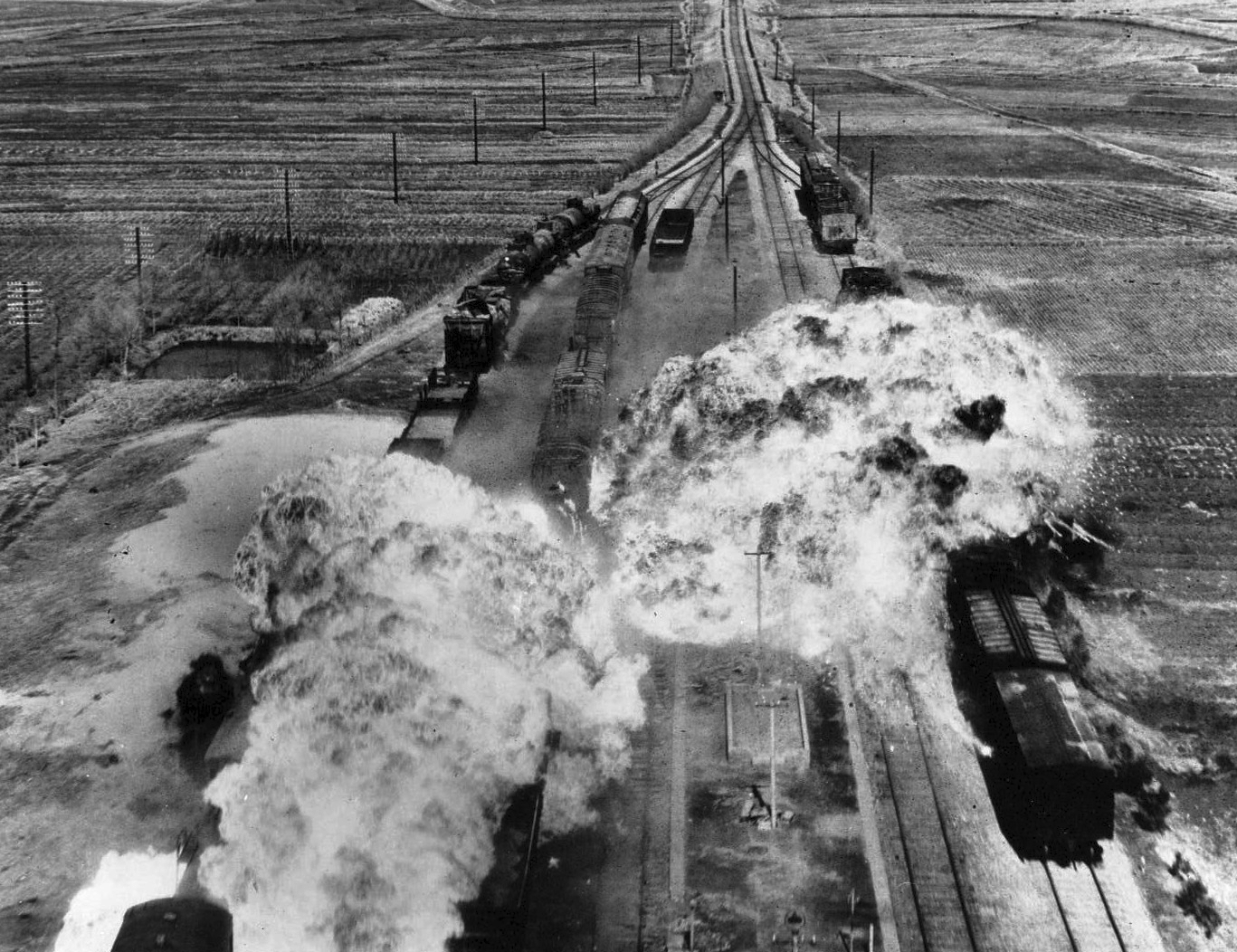
The passing of Stalin in '53 also ushered in a new era for the Cold War. His eventual successor, Khrushchev, would pursue new Soviet defence policies aimed at reducing the Soviet military in favor of missile research. Equally, President Eisenhower was also in favor of reducing the American defence budget. As such, the potential for further negotiation in the Cold War remained.
In 1955, the Warsaw Pact was established in the Eastern Bloc as a response to West Germany's joining NATO. Essentially, this provided for mutual military support of those member states.

Overall, the Cold War from 1945 55 saw the emergence of the NATO and Warsaw Pact alliances. These of western and eastern Europe each had extensive arsenals, supported largely by the US and USSR. Europe was divided, and the so-called 'Iron Curtain' was no longer a myth.
About the Creator
Matthew A
Matthew is the author of Battles of the Pacific War 1941-1945. Battles of the Pacific War is available on Amazon and Lulu in e-book and paperback formats. Check out the book’s blog at battlesofthepacificwar.blogspot.co.uk.
Enjoyed the story? Support the Creator.
Subscribe for free to receive all their stories in your feed.
Comments
There are no comments for this story
Be the first to respond and start the conversation.