
Four of the Most Famous Ships of the 20th Century
Remembering the Most Famous Passenger and Military Ships of the 20th Century
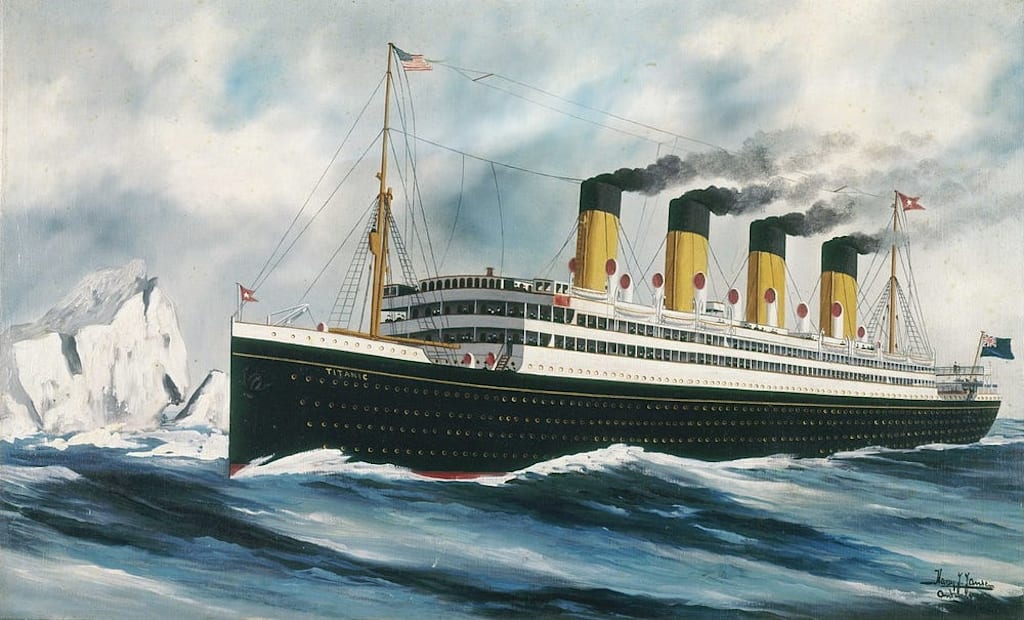
Boats can come in various shapes and sizes, but it is those larger boats that are among the most famous of the 20th century. Both military and civilian ships are among the most famous boats of the 20th century. These are a few of the most famous ships of the 20th century, all of which coincidentally sank.
The Bismarck
The German battleship Bismarck was commissioned in 1940 and was ready for action by 1941. At over 50,000 tons, it was comfortably the largest battleship in the German navy, and also eclipsed anything the Royal Navy possessed. As such, the Bismarck revitalized the German navy's surface fleet.
In 1941, the Bismarck left its port to begin Operation Rheinübung, which was essentially a merchant ship raid. After being detected by aerial reconnaissance planes, the Royal Navy targeted the Bismarck, and it was intercepted by the Hood and Prince of Wales. However, neither of these ships had much luck against the Bismarck in battle, as the Hood was sunk, and thereafter the Prince of Wales had little option but to withdraw if it were to avoid joining the Hood at the bottom of the Denmark Straight.
After the loss of the Hood, further naval reinforcements were dispatched by the Royal Navy, and their aircraft carriers later began air strikes on the Bismarck, in which one torpedo jammed its rudder. With this, the Bismarck's speed and maneuverability were greatly reduced, allowing for further Royal Navy warships to intercept and open fire. After the Bismarck's guns fell silent, it was clear that the Bismarck was beaten, and the order was given by the captain to scuttle and abandon ship. Debate lingers as to whether these scuttle charges or further torpedo fire actually sank the Bismarck, but at any rate, it slipped beneath the sea.
The Titanic
The RMS Titanic was a famous ship even before it left port and began its maiden voyage to America in 1912. It was famous primarily because it was the largest passenger steamship of its time. When it left its port for America, the Titanic carried over 2,000 passengers for the voyage.
Today the Titanic is more famous as the ship that struck an iceberg en route to America and sank in the Atlantic. Regardless of iceberg warnings, Captain Smith maintained speed and struck an iceberg, which was enough to penetrate five of its watertight compartments. Had only four of these watertight compartments been breached, then the Titanic may have had a chance of remaining afloat, but with water flooding five watertight compartments, it sank within a couple of hours. With barely enough lifeboats to accommodate half of the ship's passengers, thousands of casualties were guaranteed, especially with no nearby ships to assist.
Since then, there have been many Titanic films. Among them is one of the highest-grossing films in Hollywood history. Cameron's Titanic film also scooped 11 Academy Awards at the Oscars, including Best Picture. As such, the Titanic is certainly one of the most famous boats of the 20th century.
The Yamato
At 70,000 tons, the Yamato was the largest battleship in history. This Japanese battleship took the war to the Americans in the Pacific during the 1940s. The Yamato was involved in some of the largest naval battles of the war, such as the Battle of the Philippine Sea and the Battle of Leyte Gulf. It was most effective at Leyte Gulf, where it engaged American surface targets.
In 1945, the Yamato was called into action again during the Battle of Okinawa to provide further naval support for Operation Ten-Go. During this operation, U.S. aircraft carriers found the Yamato, and during a series of aircraft sorties, the Yamato was bombed out of the water. Various torpedo strikes left the crew little choice but to abandon ship as fires spread and set the Yamato ablaze.
The Lusitania
Just three years after the sinking of the Titanic, the Lusitania would be the next passenger liner to go down, but under very different circumstances. The Lusitania carried a similar number of passengers, just short of 2,000 in total. Like the Titanic, the Lusitania also had some extravagantly decorated interiors with various historical styles. The Lusitania was also famous for its speed, and it soon captured the Blue Riband for the fastest Atlantic crossing.
In 1914, Britain declared war on Germany, and this ensured that British merchant shipping became a target for German U-boats. Before the Lusitania departed port in America, the German Embassy in Washington provided warnings that vessels flying the flag of Great Britain or its allies in British waters could be sunk by German U-boats. As such, in 1915, a German U-boat fired a torpedo at the Lusitania off the south coast of Ireland, which was enough to sink the ship. Although the Lusitania had enough lifeboats aboard for most passengers, it sank too quickly to effectively abandon the ship.
With hundreds of Americans aboard, the sinking of the Lusitania also encouraged US involvement in World War I. However, it would not be until the U-boat campaign of 1917 that the US would end its neutrality and declare war on Germany.
These are four famous ships of the 20th century that were lost at sea. The battleships Bismarck and Yamato and the civilian ships Titanic and Lusitania are among the most famous of the century. As such, they are great ships of maritime history.
This article of mine was originally submitted to Medium, where you can read it here.
About the Creator
Matthew A
Matthew is the author of Battles of the Pacific War 1941-1945. Battles of the Pacific War is available on Amazon and Lulu in e-book and paperback formats. Check out the book’s blog at battlesofthepacificwar.blogspot.co.uk.
Enjoyed the story? Support the Creator.
Subscribe for free to receive all their stories in your feed.
Comments
There are no comments for this story
Be the first to respond and start the conversation.