
Four Famous Axis Battleships of World War II
Remembering the Most Formidable Axis Battleships
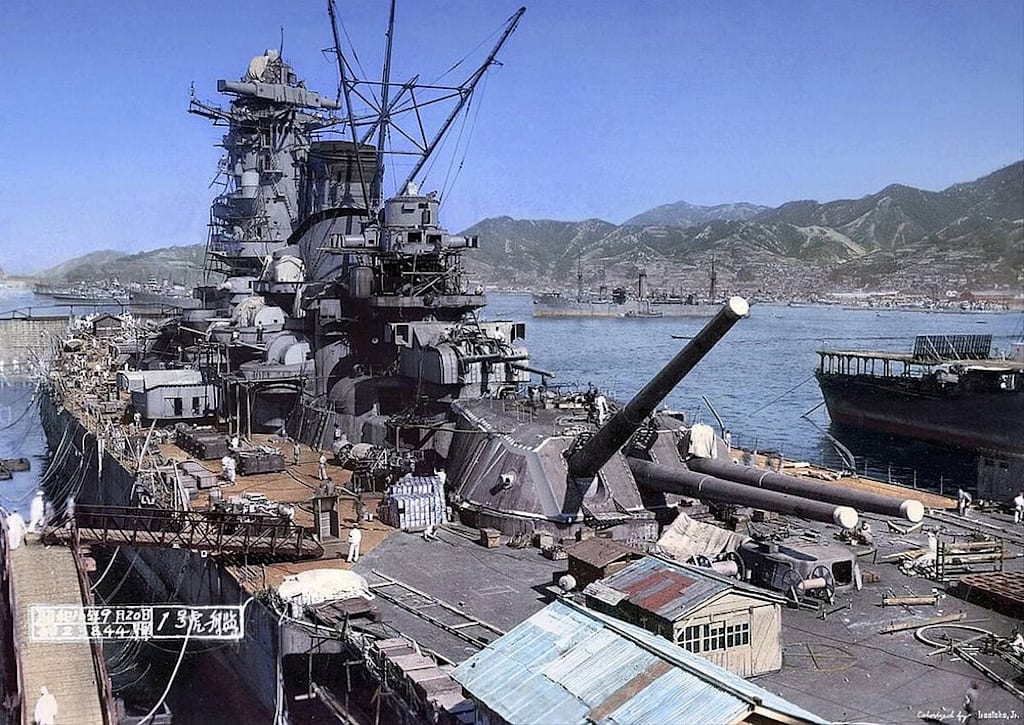
The Axis may have had smaller navies than the Allies overall, but they still had some of the finest battleships. Their great battleships eclipsed Allied battleships in scale, and although more obsolete in comparison to aircraft carriers, they were still notable targets for the Allies. These are a few famous Axis battleships - none survived the conflict.
Bismarck
The Bismarck was the flagship of the German navy. This battleship was the largest European warship. At 50,000 tons, it eclipsed any battleship of the Royal Navy or the Italian Regia Marina.
The Bismarck also revitalized German surface fleet action, and with it the Germans targeted British merchant shipping. Operation Rheinubung was Bismarck's first and final operation at sea. During this operation, the Bismarck was supposed to sink tons of British merchant ships, but the Royal Navy detected it before reaching its intended targets.
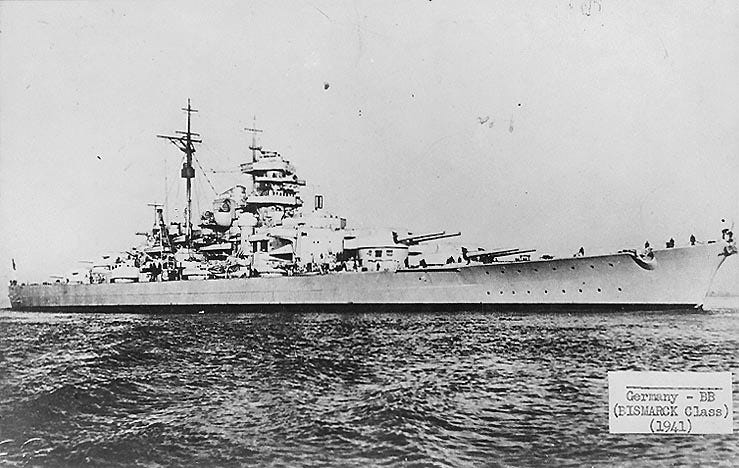
During the first naval skirmishes, the Bismarck was most effective. The Bismarck destroyed the HMS Hood at the Battle of the Denmark Straight. After the battle, the Royal Navy briefly lost contact with the Bismarck before aerial reconnaissance planes spotted it.
Sorties by British torpedo-bombers jammed Bismarck's rudder. Later, Royal Navy warships intercepted the Bismarck and opened fire. That bombardment destroyed Bismarck's gun turrets, leaving few options other than to abandon the ship. Before they did, the crew of the Bismarck laid scuttling charges as the Royal Navy bombarded it. Flames engulfed the Bismarck as it slipped beneath the sea.
Yamato
The Imperial Japanese Navy substantially invested in aircraft carriers during the Pacific War without forgetting battleships. They still played a part in numerous naval battles in the Pacific, especially as the Allies gradually wiped out Japan's carrier fleet at Midway and the Marianas. As such, the IJN launched the Yamato battleship.
The Yamato was, and remains, the largest battleship constructed. Its overall tonnage was more like 70,000 tons, which comfortably eclipsed the Bismarck. The IJN deployed this battleship in a support role during the early naval battles but later moved it to the front lines.
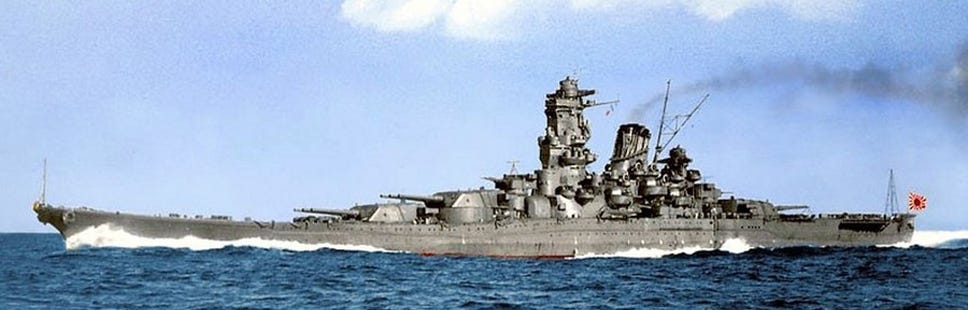
At the Battle of Leyte Gulf, the Yamato and other Japanese warships intercepted an American fleet off Samar. During this battle, the Americans lost an aircraft carrier and destroyers. The Yamato was one of the few Japanese warships that survived the Battle of Leyte Gulf.
However, in 1945, the Yamato was sent to Okinawa for Operation Ten-Go. With the Allied navies dominant, there was little chance of the ship reaching its intended target, and it was duly intercepted and sunk by American aircraft.
The Graf Spee
The Graf Spee was a pocket battleship or heavy cruiser, the German navy sent on early commerce-raiding missions in 1939. This fast ship had an impressive arsenal comparable to larger battleships. However, Royal Navy warships detected it off the River Plate estuary. During the Battle of the River Plate, no ships were lost in action, although the Graf Spee took some hits.
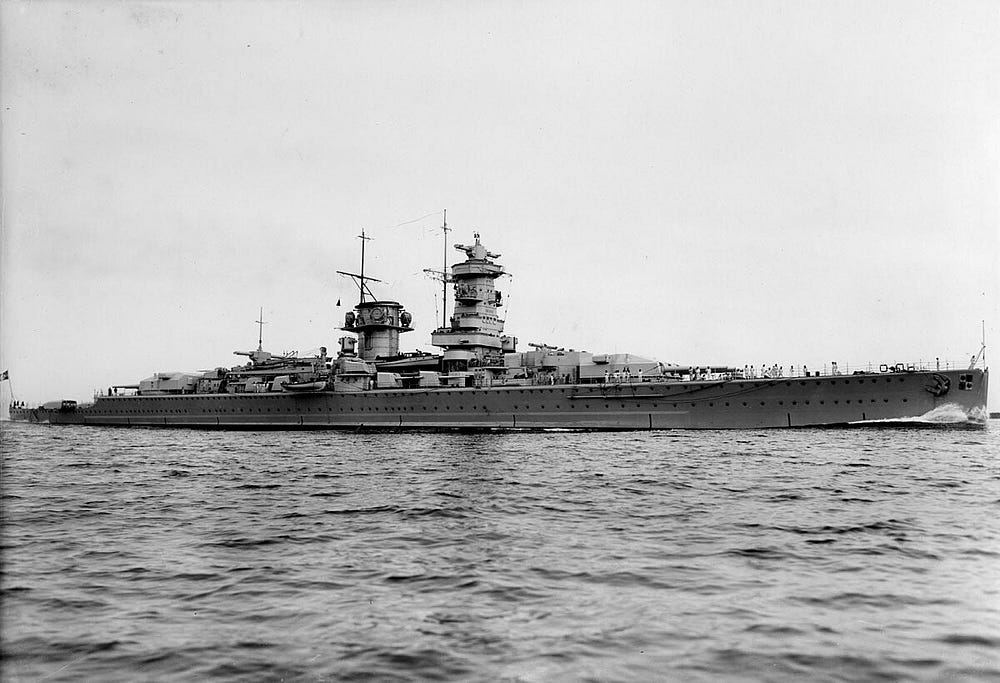
Afterward, the Graf Spee reached Montevideo, Uruguay. After reaching port, it became clear the Uruguayans would not let it stay long. The British tricked the Germans into believing a large naval presence, including an aircraft carrier, had amassed around the port, which would have left the Graf Spee little chance of exiting intact. As such, the Graf Spee was scuttled as it left port.
The loss of the Graf Spee highlighted that surface fleet action with the Royal Navy was perilous for the German navy. German naval tactics would begin to abandon battleships in favor of U-boats for commerce raiding.
The Tirpitz
The Tirpitz was one of the most modern battleships of its era and was of similar size to the Bismarck. Like the Bismarck, it became a notable target for the Royal Navy to protect merchant shipping and other Russian supply convoys. It was more of a target for the RAF in 1944, as its bombers attacked the Tirpitz in port at Altenfjord, putting the ship out of action. However, these bombardments did not sink it. Only the Dambuster squadrons of Lancaster bombers could finish off the Tirpitz later in 1944 with a more precise bombing raid.
These were four great Axis battleships. The Bismarck, Tirpitz, Yamato, and Graf Spee are four famous Axis battleships that met Allied fleets at Leyte Gulf, River Plate, and the Denmark Straight. With the possible exception of Japanese aircraft carriers, the German, Italian, and Japanese navies had few better warships.
This article of mine was originally submitted to Medium, where you can read it here.
About the Creator
Matthew A
Matthew is the author of Battles of the Pacific War 1941-1945. Battles of the Pacific War is available on Amazon and Lulu in e-book and paperback formats. Check out the book’s blog at battlesofthepacificwar.blogspot.co.uk.
Enjoyed the story? Support the Creator.
Subscribe for free to receive all their stories in your feed.
Comments
There are no comments for this story
Be the first to respond and start the conversation.