
Decoding the Silent Sovereignty of the Shark
The Architecture of Fear: Decoding the Silent Sovereignty of the Shark

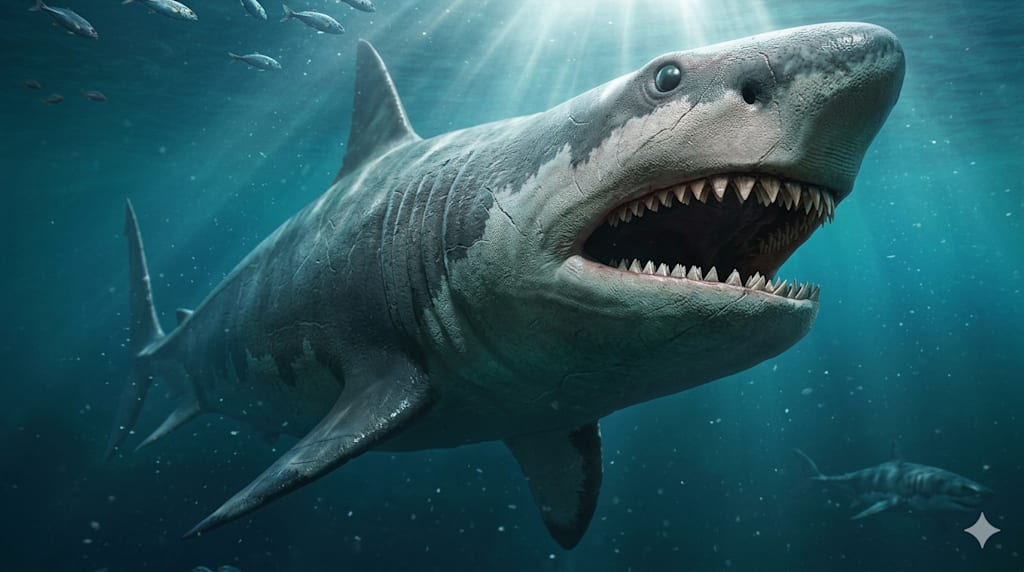
The Architecture of Fear: Decoding the Silent Sovereignty of the Shark
Imagine for a moment the weight of four hundred million years. Long before the first dinosaur let out a guttural roar, long before the continents decided on their current arrangement, and certainly long before we developed the arrogance to call ourselves the masters of the earth, there was a shape in the water. It was a silhouette defined by a singular, uncompromising purpose: to endure. When I look at a shark, I am not merely looking at a fish; I am looking at a masterpiece of biological engineering that has survived five mass extinctions. To call them "monsters" is a failure of our own imagination. In reality, the shark is the ocean’s silent architect, a creature that has spent eons refining the art of the hunt until it became a form of high-speed meditation.
Our collective obsession with the "terror" of the deep is a curious psychological phenomenon. We have projected our own existential anxieties onto the cartilaginous frame of the Great White and the Tiger shark. We see the rows of serrated teeth and the unblinking, obsidian eyes, and we interpret them through the lens of human malice. But nature knows no malice; it only knows efficiency. The shark's way of life is dictated by a sensory apparatus so sophisticated it borders on the supernatural. They possess the Ampullae of Lorenzini, tiny pores that allow them to detect the faint electromagnetic pulses of a beating heart or a struggling muscle from miles away. They don’t just see or smell the ocean; they feel its electrical pulse. They are, in every sense, living antennas tuned to the frequency of life and death.
When we consider the diversity of the species, the narrative of the "singular mindless killer" falls apart. The Great White is, of course, the titan of our nightmares—the apex predator that uses the element of surprise to breach the surface in a terrifying display of kinetic energy. But look further, and you find the surrealist geometry of the Hammerhead, whose bizarrely shaped cephalofoil provides a 360-degree view of the world, turning the seabed into a high-definition map of hidden prey. Or consider the Whale Shark, a behemoth the size of a school bus that wanders the tropical currents with a Zen-like patience, filtering microscopic plankton through a mouth that could swallow a man but chooses to ignore him. These aren't just different animals; they are different philosophies of survival.
The mechanics of predation are where our fear usually takes root, yet there is a strange, dark beauty in the way a shark hunts. It is a calculated geometry of violence. A Tiger shark doesn’t just bite; it tests the environment. It is the "garbage can of the sea" not because it is indiscriminate, but because it is the ultimate opportunist, a vital cleanup crew that keeps the oceanic ecosystem from collapsing under the weight of its own decay. By culling the weak and the sick, sharks ensure the genetic health of every other species in the water. They are the regulators of the blue. Without them, the ocean would become a stagnant, diseased version of itself. We fear the bite, but we should fear the absence of the bite even more.
But here is where I must offer a pivot, a challenge to the standard documentary narrative. Our terror is a mirror, not a window. For decades, cinema—led by the ghost of Peter Benchley’s *Jaws*—has taught us to scan the horizon for a triangular fin with a sense of impending doom. We have turned the shark into a cultural scapegoat for our own vulnerability in an environment where we do not belong. The "terror" of the ocean is actually the terror of our own insignificance. In the water, we are stripped of our technology, our speed, and our terrestrial dominance. We hate the shark because we cannot negotiate with it. We cannot colonize its mind. It exists in a state of pure, primal being that is utterly indifferent to our status or our stories.
The irony of this relationship is staggering. While we spend our summers nervously watching the surf, we are the ones engaged in a campaign of industrial-scale predation that dwarfs any "feeding frenzy" in nature. Every year, humans kill roughly 100 million sharks. We kill them for soup, for sport, or simply out of a misplaced sense of "clearing the waters." We are the apex predators of the Anthropocene, and our methods are far more clinical and devastating than a set of jaws. When I see the statistics of shark finning, I realize that the monster in the water isn't the one with the gills; it’s the one with the longlines and the bottom trawlers. We have taken a creature that survived the asteroid that killed the dinosaurs and pushed it to the brink of extinction in the span of a single human lifetime.
I often wonder what the ocean feels like to a shark in the twenty-first century. It must be a noisier, emptier, and more chemical place than it was even fifty years ago. Their migratory paths are blocked by plastic gyres; their prey is being depleted by industrial fishing; the very temperature of their world is shifting. Yet, they persist. There is something deeply moving about their resilience. To see a shark move through the water is to see a relic of the deep past navigating a fractured present. They are the keepers of a primordial secret, a reminder that the world was once wild and untamed, governed by laws that had nothing to do with us.
As we look toward the future of our oceans, we have to decide what kind of world we want to inhabit. Is it a world scrubbed clean of everything that frightens us, a sanitized bathtub where nothing has teeth? Or is it a world that retains its mystery and its danger? I believe we need the "terror" of the shark. We need to know that there are forces in this world that are bigger, older, and more powerful than our own whims. The shark demands our respect, not because it might hurt us, but because it represents the raw, unedited power of the natural world.
The true horror is not the presence of the fin cutting through the gray Atlantic mist. The true horror is the possibility of a still, silent sea where that fin no longer appears. If we lose the shark, we lose the heartbeat of the ocean. We lose the creature that taught the world how to be a predator and, in doing so, taught the world how to stay alive. When I look into the eye of a shark, I don't see a killer. I see a survivor. And in a world that is changing as fast as ours, perhaps that is the most terrifying and beautiful thing of all. We should stop asking why the shark hunts and start asking ourselves why we are so afraid of a world that still has room for something so magnificently ancient.
About the Creator
Mo. Khalid
🎁 FREE PREMIUM GUIDE: Transform Your Life with Small Daily Habits! 🌟Are you tired of feeling sluggish, stressed, or unfocused?
https://1024terabox.com/s/1iUyn4d0wNGRjF5iLqb2DFg
Enjoyed the story? Support the Creator.
Subscribe for free to receive all their stories in your feed.
Comments
There are no comments for this story
Be the first to respond and start the conversation.