
Crazy Parties and Royal Loneliness: The Dark Secrets of Freddie Mercury
He was the god of the rock scene, a man whose voice was loved by millions. Yet behind closed doors, the private life of Queen frontman Freddie Mercury resembled a wild ride. That was where the secrets were hidden - and a loneliness that even the most extravagant pleasures could never truly drive away.
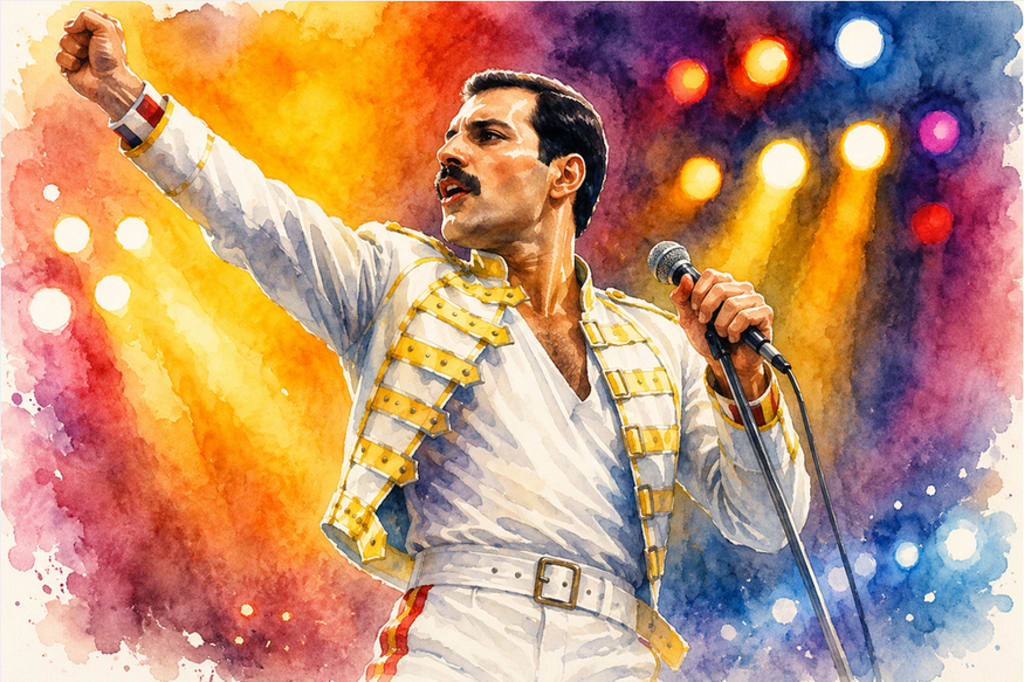
It all began in the crazy 1980s, when the world was experiencing a wave of uninhibited freedom and rock rebellion, while Queen was rising to the absolute summit of the global music scene. Freddie Mercury, then around forty, was making millions of dollars hand in hand with the ruthless machinery of the music business — and he had decided to spend his fortune in ways that made his managers’ hair stand on end.
Money was never a problem for him. But his greatest passion became throwing some of the wildest parties the world had ever seen. When he celebrated the release of the album Jazz in New Orleans in October 1978, he organised a party that became legendary as one of the great spectacles of rock decadence. Guests were reportedly greeted at the entrance by naked fire-eaters and androgynous models, while, according to numerous accounts, hired dwarfs wandered through the room carrying silver trays of cocaine on their heads for the exhausted rock stars.
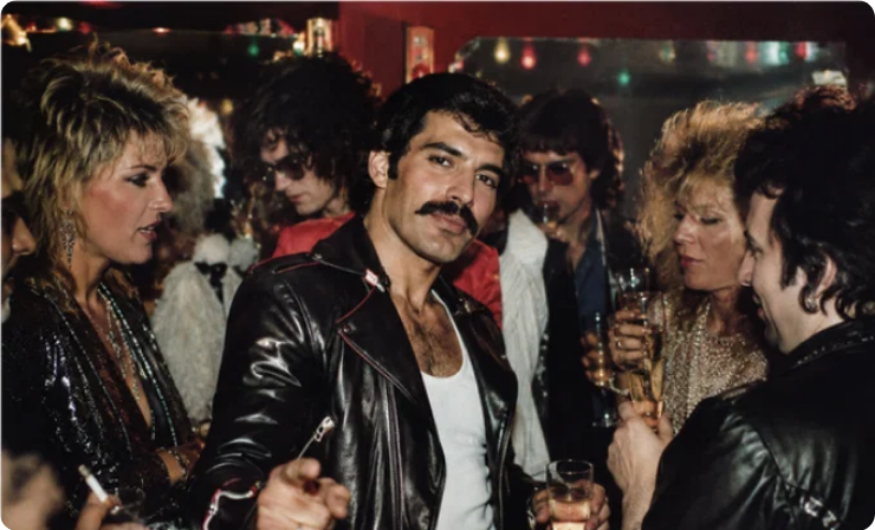
There was an unbreakable artistic bond between the members of Queen and Freddie’s closest friends, yet his private world was increasingly spinning out of control. He became known as a man who could not bear being alone for even a moment — loneliness frightened him more than almost anything else.
To fill the emptiness of his luxurious London home, Garden Lodge, he showered casual lovers he met in nightclubs with expensive gifts, cars and exotic holidays, buying their affection and attention with his enormous fortune.
The turning point came on the night of his 39th birthday at Munich’s Henderson’s nightclub.
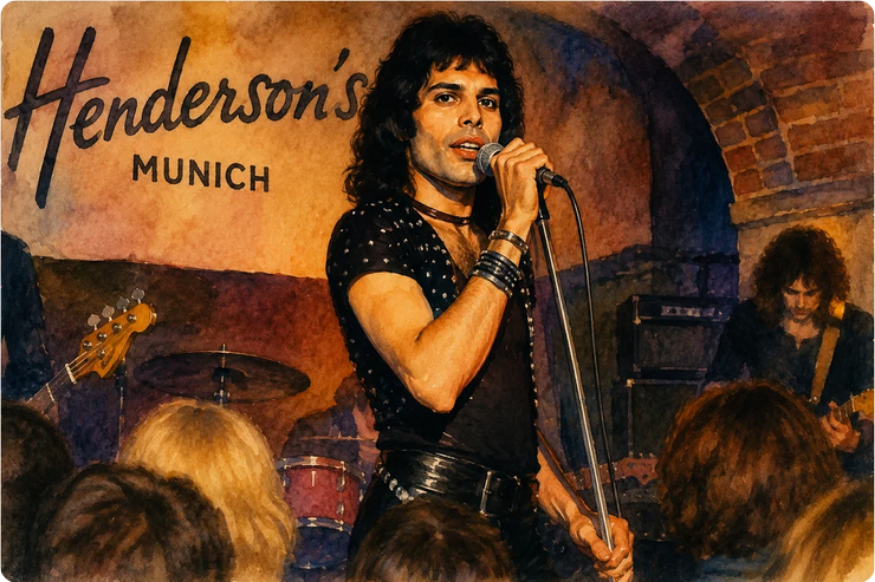
Freddie had organised a wild black-and-white ball where everyone was expected to dress in drag, while rivers of expensive champagne flowed throughout the night. Yet in the middle of all the excess, with music pounding until the early hours, Freddie slipped away to the bathroom.
He looked tiredly into the mirror — and for a brief moment, genuine fear flashed across his face.
On the washbasin lay a letter from one of his former partners. It contained a single, terrifying message.
For a moment, it seemed as though all the light had gone out of the room.
The crumpled note warned of a new and mysterious disease that was beginning to devastate communities in New York and London and was widely feared to be fatal. Freddie reportedly tore the letter into tiny pieces and flushed them down the toilet, as if destroying the paper could somehow erase the cold reality that was approaching.
But by then, the clock of his life was already ticking frighteningly fast.
On the outside, he continued to play the role of an indestructible rock god. With Queen, he went on to deliver their legendary performance at Live Aid in 1985, a performance still widely regarded as one of the greatest live appearances in rock history.
Privately, however, his world was beginning to collapse.
The brutal confrontation with reality came in 1987, when doctors confirmed that Freddie had AIDS.
The tabloids immediately sensed a sensational story. Journalists began following the famous singer everywhere he went, turning his private life into a constant source of speculation. Freddie increasingly withdrew from the outside world, hiding behind the high walls of Garden Lodge.
His closest friends did not abandon him, despite the relentless attention of the media. But his final years became a quiet and painful waiting game.
One of the purest sources of comfort in his life were his beloved cats. Freddie adored them so much that he had rooms prepared for them in his home and would even call them on the telephone when he was away travelling.
On November 24, 1991, Freddie Mercury died at Garden Lodge at the age of just 45. The world of entertainment exploded with grief.
Only a day before his death, he had finally issued an official statement confirming that he had AIDS, ending years of speculation and protecting his privacy until the very end. His funeral was strictly private and followed the Zoroastrian faith of his family. His ashes were later placed in an undisclosed location according to his wishes.
Mary Austin, Freddie’s lifelong friend and former fiancée, was entrusted with his final wishes concerning his ashes. Their extraordinary relationship remained one of the most important bonds of his life.
Freddie had always feared that his final resting place might become a shrine — or that fans might eventually disturb or desecrate it.
And so the man who spent his life surrounded by thousands of people ultimately disappeared from the public world almost as mysteriously as he had entered it.
His story leaves us with a simple but surprisingly profound lesson.
We often see famous people as machines built for success — flawless, glamorous figures who seem to possess everything. But beneath the luxury and applause lies something much more ordinary: the human need for genuine love, affection and understanding.
Freddie Mercury showed the world that the greatest triumph in life is not necessarily selling out Wembley Stadium or conquering the charts.
Sometimes the real victory is being able to remain yourself when the world around you is drowning in glitter, excess and expectations.
Because behind the mask of the legendary rock star was simply a man who, like everyone else, wanted to be loved for who he really was — not for the character he played on stage.
Sources
Biographical research: Lesley-Ann Jones, Freddie Mercury — The Biography.
Personal recollections: Peter Freestone, Mister Mercury: A Personal Biography.
Historical documentation: Queen archives and contemporary documentation relating to the band’s career and Live Aid.
foto: https://chatgpt.com/c/
AI Disclosure
AI was used to assist with the English translation and language editing of this article. The original article was written by the author in Czech. The English version was reviewed, edited and adapted by the author before publication.
About the Creator
Enjoyed the story? Support the Creator.
Subscribe for free to receive all their stories in your feed.
Comments
There are no comments for this story
Be the first to respond and start the conversation.