
Countries Involved in World War I
Remembering the Countries Involved in World War I
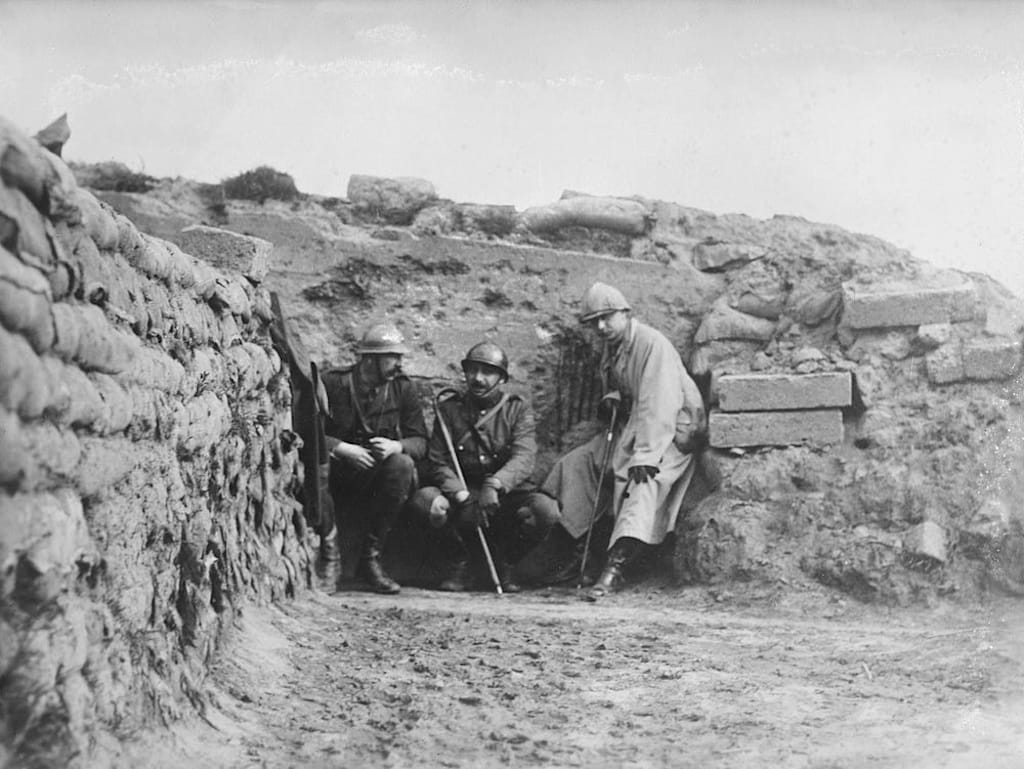
Countries across the globe were involved in World War I. Overall, this war was largely a clash of empires; many of these were colonies of the British, French, and German empires that provided additional military support. These countries provided the most notable military contributions to their respective alliances of the Triple Entente and Central Powers.
Triple Entente
Russia
Russia had the largest army of the war and was a key Entente ally. With them, it ensured that Germany had two fronts, with a good number of their soldiers involved in the east. However, the Russian army was not especially well equipped and had numerous defeats, such as the Battle of Tannenberg. The fall of the tsar and the rise of the Bolsheviks, led by Lenin, prompted the Russians to enter peace talks with Germany, and they signed the Treaty of Brest-Litovsk before the war ended.
French and Empire
The French held the line in Western Europe, with Britain’s support, for most of the war. Germany could not effectively break through with two defeats against the French at the Battle of the Marne. As such, the French eventually emerged victorious in 1918 as they pushed the Germans back. In addition, France and its empire included many African countries such as Ivory Coast, Guinea, and Senegal.
Britain and Empire
Britain and its empire joined the war in 1914 after Germany violated Belgium's neutrality. The British provided military support on the western front, halting the German advances, and in 1918, their tanks were very effective in pushing the Germans back at the Battle of Amiens. At sea, the Royal Navy implemented an effective German economic blockade for much of the war, which resulted in shortages in Germany. British and Commonwealth troops fought in the disastrous Gallipoli Campaign. A few Commonwealth countries provided military resources for Britain, such as Australia, New Zealand, India, Kuwait, and Canada.
USA
The United States of America remained isolationist for most of the war. However, they joined the war in 1917 after German U-boats struck at US shipping. By 1918, their troops were arriving in Europe in numbers and reinforced the Entente during the final advances in the West.
Italy
The Italians were never the most reliable Entente allies and began the war as a part of the Triple Alliance. However, they later joined the Entente in 1915 and established a front with the Austro-Hungarians. By 1918, their advances played a part in the defeat of the Austro-Hungarian Empire.
Japan
Japan provided naval support for the Entente during the war. In addition, they also advanced on German land-based targets in Asia.
Serbia
World War One began after a Serbian nationalist assassinated Archduke Ferdinand. With this, the Austrians declared war. However, Serbia also had Russian support in the Balkans.
The Central Powers
German Empire
By some distance, Germany provided the most significant military resources of the Central Powers. The Germans were involved on two fronts in eastern and western Europe, and by 1917 had largely defeated the Russians in the east. However, they could never break the Anglo-Franco front in Western Europe, and as the USA joined the war in 1918, the German army retreated.
At sea, the Imperial German Navy was also formidable; however, it was largely defeated by the larger Royal Navy and remained in port for most of the war, with the Battle of Jutland a notable exception. Germany had a more modest African empire, including Togoland, which was lost to the Entente during the conflict.
Austria-Hungary
Austria and Hungary dominated the empire of Austria-Hungary. That empire was a loyal and key German ally, and the assassination of its Archduke Ferdinand provided the spark for World War I. Overall, its primary fronts were against the Italians and Serbia. They also provided additional support for Germany’s front with Russia. By 1918, like the Germans, Austria-Hungary was defeated by the Entente.
Ottoman Turkey
Ottoman Turkey was the empire of modern-day Turkey. It was primarily involved in the Middle East. Here, the Turks went up against British and Commonwealth troops, such as during their victory at Gallipoli, which defeated the British advance. However, the Arab revolt inspired by Lawrence of Arabia turned the tide against the Turks from 1916 onward, and the empire collapsed after the war.
So, those were the main countries and empires involved in World War I. The Germans, British, French, Turks, and Austrians dragged their empires into the war, and so it involved many more countries that were former colonies.
This article of mine was originally submitted to Medium, where you can read it here.
About the Creator
Matthew A
Matthew is the author of Battles of the Pacific War 1941-1945. Battles of the Pacific War is available on Amazon and Lulu in e-book and paperback formats. Check out the book’s blog at battlesofthepacificwar.blogspot.co.uk.
Enjoyed the story? Support the Creator.
Subscribe for free to receive all their stories in your feed.
Comments
There are no comments for this story
Be the first to respond and start the conversation.