
China's Dam Could Ignite a War with India & Bangladesh
China's Dam & Bangladesh

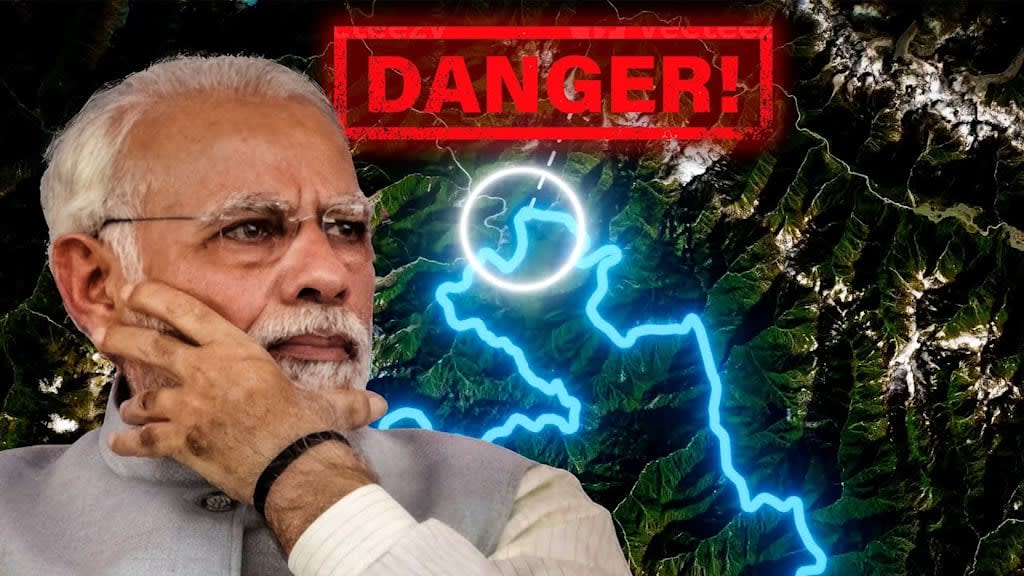
This is the bend of a river in Tibet known as the Great Bend. It is a dramatic U-turn in the Yarlung Tsangpo River, where it changes its course and carries water toward India and Bangladesh, where it is known as the Brahmaputra River.
No matter what the river is called in India, China has long been interested in this specific U-turn. And this is no ordinary bend—it could potentially trigger future conflicts in the region.
Welcome once again. This section of the Yarlung Tsangpo River is surrounded by the towering peaks of the Himalayas. It is also called the Yarlung Tsangpo Grand Canyon. The canyon stretches about 505 km, making it 50 km longer and three times deeper than the Grand Canyon in Arizona.
A canyon is essentially a valley through which a river flows. Taking advantage of this geography, China has decided to build the world’s most powerful dam here—at one of the most remote locations on Earth. China has had its eye on this U-turn for the past 20 years, mainly because of its steep slope.
At this point, the river flows alongside a 7000-meter-high mountain, makes a U-turn, and comes back down the other side. Interestingly, at the start of the bend, the river is at an elevation of about 2870 meters, but after the U-turn, it drops to around 870 meters. That’s a drop of nearly 2000 meters over a short distance.
Chinese experts have proposed multiple plans, including drilling tunnels through the mountain to build a hydropower station. Since the river on one side is at a much higher elevation, diverting it through a tunnel to the lower side could generate enormous energy—estimated at around 60 gigawatts. That’s nearly three times more than the electricity generated by the Three Gorges Dam.
This proposed project is called the Motuo Hydropower Station. The tunnel would be around 40–50 km long and could house multiple turbines. Unlike traditional dams, where water is stored, this setup would use natural mountain walls as barriers, reducing construction effort.
Instead of dropping water just 200 meters at the dam wall, engineers plan to send it through tunnels and drop it 2000 meters, producing much greater force and electricity.
However, the challenges are massive.
First, the location is extremely remote, with no proper road network. Transporting heavy machinery—especially tunnel boring machines weighing up to 6000 tons and 150 meters long—would be extremely difficult.
For comparison, the Channel Tunnel between France and the UK took 6 years and over £6 billion to build back in 1988. Today, China could spend $30–40 billion just on tunneling alone for this project.
Another major issue is geology. This area lies on a fault line where the Indian and Eurasian tectonic plates meet. It is one of the most earthquake-prone regions in the world. In 1950, a massive earthquake struck nearby Assam, and over 4000 earthquakes have been recorded in the Himalayas since 1901.
Experts warn that dams over 100 meters high built on fault lines are highly vulnerable—even to moderate earthquakes.
The region is also prone to deadly landslides. In 2021, a landslide blocked part of the river, forcing it to change course. Similar events in the Indian Himalayas have caused flash floods, loss of life, and damage to hydropower stations.
Beyond environmental and engineering challenges, there are geopolitical risks.
The river flows into India’s Arunachal Pradesh, a region claimed by China. This disputed territory has seen multiple clashes between Indian and Chinese forces, including a deadly incident in Galwan Valley in 2020.
Building the world’s largest dam just 50 km from such a sensitive border could escalate tensions. It would also give China control over water flowing into India and Bangladesh—something that could be used as a strategic tool.
So why is this project so important to China?
China has the world’s second-largest population and massive industrial demand for electricity. It already has over 98,000 hydropower dams, yet around 70% of its energy still comes from fossil fuels.
China aims to achieve carbon neutrality by 2060. Without reducing its reliance on fossil fuels, it risks slowing its economic growth.
Even though this project could generate 60 gigawatts of power, it’s still a small contribution compared to China’s total energy needs—like a drop in the ocean.
Experts believe China must invest not just in dams, but also in other renewable energy sources to meet its future demands.
About the Creator
Imran Ali Shah
🌍 Vical Midea | Imran
🎥 Turning ideas into viral content
✨ Watch • Share • Enjoy
Enjoyed the story? Support the Creator.
Subscribe for free to receive all their stories in your feed.
Comments
There are no comments for this story
Be the first to respond and start the conversation.