
Beaches of Fire: The Amphibious Assaults That Won the Pacific War
Remembering the Amphibious Landings of World War II's Pacific War

The Pacific War was one that was fought on a variety of Pacific islands. These Pacific islands included the likes of the Marianas, Tarawa, Iwo Jima, the Philippines, and Okinawa, which at first were occupied by the Japanese troops. As the war turned against Japan, the Allies began drafting a new strategy for the Pacific War, known as Operation Cartwheel, which outlined how the Allied armies would advance. To do so, a series of amphibious landings were planned as part of the Allied island hopping strategy that would defeat the Japanese Empire.
After the Allied success at Guadalcanal in 1943, the time had arrived for the Allies to begin a series of amphibious landings in the Pacific, which would begin the downfall of the Japanese Empire. Among the first targets for the Allies was the Tarawa Atoll, which would provide a platform for further advances into the Marianas. In late 143, US Marines landed ashore at Tarawa, where the Japanese had set up heavy defenses including hundreds of pillboxes and coastal guns. During this amphibious landing, the United States had heavy casualties, but ultimately was still able to defeat the Japanese army stationed there. However, despite their victory, the battle has remained controversial to this day.
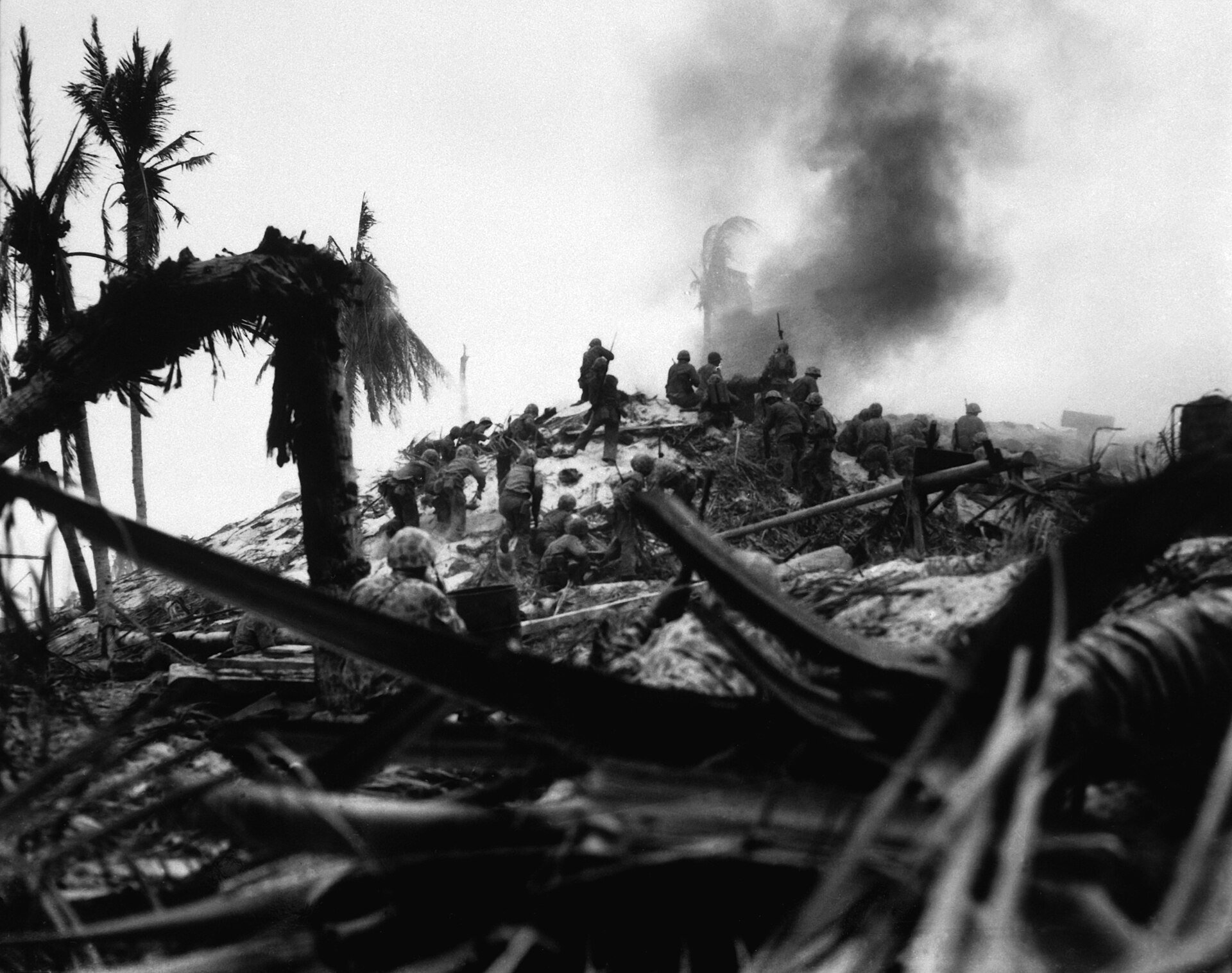
However, the USA had to press on with its advances towards the Marianas. After the Tarawa amphibious landings, the plan had to be improved. The next target was Saipan in the Marianas. To defend the Marianas, a Japanese carrier fleet was sent to the area, but was wiped out by US aircraft during the Battle of the Philippine Sea. The amphibious landing began with a heavy shell bombardment from US battleships. Then thousands of US marines began to land along the coast of Saipan. Eventually, they were able to establish a beachhead. After weeks of combat, Saipan was secured by the Americans, which was a big defeat for Japan, and left the Allies in a good position to advance towards the home islands.
The Philippines Campaign that followed was another Allied victory. The Philippines was crucial for Japan's oil supply routes. By taking the Philippines, the Japanese fuel supplies would be cut, and the Philippines would be liberated. After failing to hold the Philippines earlier in the war, General MacArthur had always vowed to return. Leyte became the target for the amphibious landings, but first the Imperial Japanese Navy (IJN) had to be defeated. After the Battle of Leyte Gulf, much of the IJN had been wiped out, allowing the amphibious landings to proceed. By 1945, US troops had finished the campaign in the Philippines.
By 1945, the Japanese Empire seemed close to defeat. However, no surrender had been given. Japanese home islands such as Iwo Jima, therefore, became the next target for further Allied amphibious landings. By now, the IJN could provide little naval support to Iwo Jima, so it was up to roughly 20,000 troops and their general to organize an effective defense. Outnumbered almost five to one, the Japanese had little chance of defending Iwo Jima, and so on paper it seemed a relatively straightforward mission for the US Marines.
However, the prior naval bombardment before the landings had little impact as the Japanese were well fortified. As such, when the US Marines landed, they had heavy casualties. Thousands of US Marines were lost in action during the battle. However, as expected, Iwo Jima fell to the Americans, and Rosenthal took his famous Raising the Flag on Iwo Jima photograph.
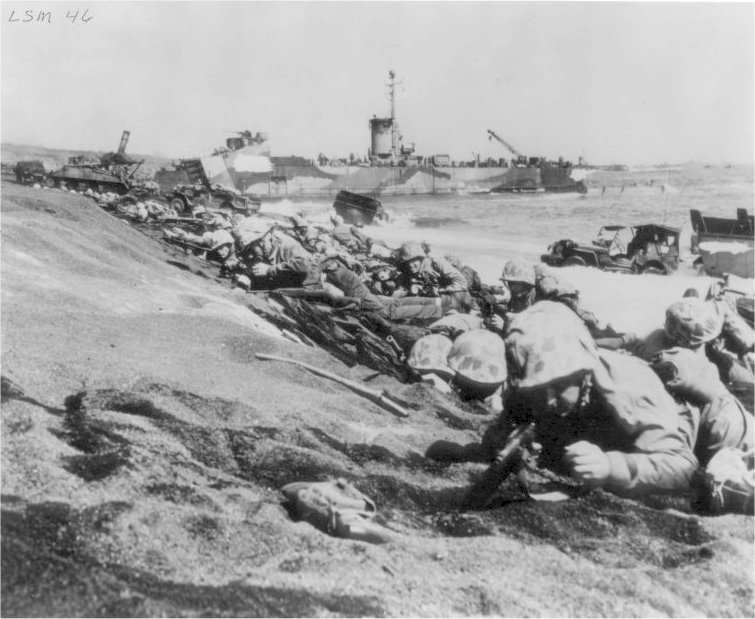
These were a few of the most notable amphibious landings of the Pacific War. From Guadalcanal to Okinawa, the Allies moved towards the Japanese mainland. Only nuclear weapons prevented a further large-scale amphibious landing along the Japanese coast, which might have been the largest in the Pacific War. Hereafter, the Japanese surrendered to the Allies, bringing the war to a close.
About the Creator
Matthew A
Matthew is the author of Battles of the Pacific War 1941-1945. Battles of the Pacific War is available on Amazon and Lulu in e-book and paperback formats. Check out the book’s blog at battlesofthepacificwar.blogspot.co.uk.
Enjoyed the story? Support the Creator.
Subscribe for free to receive all their stories in your feed.
Comments
There are no comments for this story
Be the first to respond and start the conversation.