
Ancient Civilizations That Still Puzzle Historians
From the sophisticated cities of the Indus Valley to the monumental achievements of the Maya, ancient civilizations left behind mysteries that continue to challenge modern researchers.
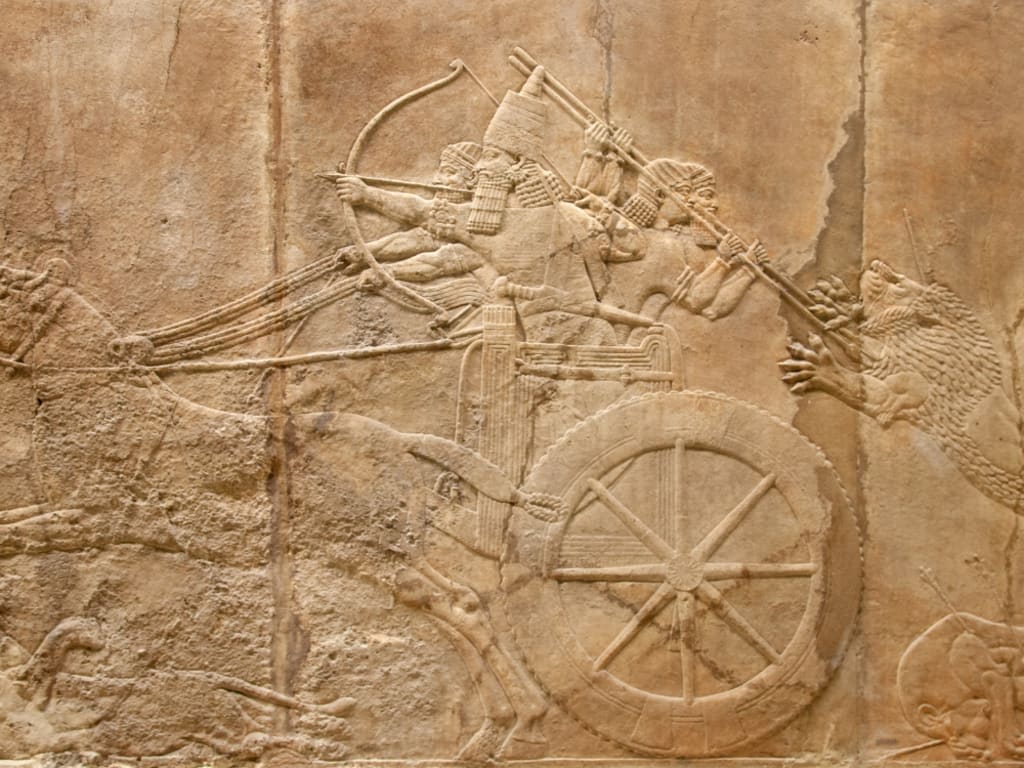
Thousands of years before modern skyscrapers, computers and satellites, human societies were already building enormous cities, developing complex systems of trade and creating technologies that continue to surprise researchers.
Some ancient civilizations left behind detailed written records. Others left mysterious ruins, undeciphered scripts or abandoned cities that provide only fragments of their stories.
Archaeologists continue to uncover evidence that changes what we know about the ancient world.
Here are some of the civilizations that remain particularly fascinating—and, in some cases, surprisingly mysterious.
The Indus Valley Civilization
The Indus Valley Civilization was one of the world's earliest urban societies.
At its height, it covered a vast region across parts of modern-day Pakistan and northwestern India. Major sites included Mohenjo-daro and Harappa, where archaeologists discovered carefully planned streets, sophisticated drainage systems and standardized construction.
What makes the civilization particularly mysterious is its writing system.
The Indus script appears on seals, pottery and other objects, but researchers have not reached a widely accepted decipherment.
This means archaeologists know a great deal about the civilization's physical infrastructure while knowing comparatively little about the language, political system or beliefs of its people.
Mohenjo-daro's sophisticated urban planning is especially striking. The site contains evidence of organized streets, water management and large public structures.
The civilization began declining around the second millennium BCE, but researchers continue to debate the precise combination of environmental, economic and social factors involved.
Ancient Egypt
Ancient Egypt is one of history's best-known civilizations, yet it still contains enormous unanswered questions.
The pyramids are perhaps the most famous example.
The Great Pyramid of Giza was built during the reign of Pharaoh Khufu and remained the tallest human-made structure for thousands of years.
Archaeologists understand many aspects of Egyptian pyramid construction, including evidence of organized labor, quarrying and transportation.
Yet questions remain about the exact organization and logistics involved in constructing such enormous monuments.
Modern discoveries continue to add new information.
In recent years, researchers have used advanced scanning technologies to identify previously unknown spaces within the Great Pyramid, demonstrating that even one of the world's most studied monuments still contains secrets.
The Maya Civilization
The Maya civilization developed sophisticated cities across parts of present-day Mexico, Guatemala, Belize, Honduras and El Salvador.
The Maya built monumental architecture, developed complex calendars and made major advances in mathematics and astronomy.
They also created a writing system that researchers have spent decades deciphering.
Unlike the Indus script, significant portions of Maya writing have been successfully interpreted.
Yet important questions remain.
Why did many major Maya cities decline during periods of environmental and political stress?
Researchers increasingly believe there was no single explanation.
Drought, warfare, political instability, population pressure and environmental change may all have contributed.
The Maya did not simply disappear, however. Millions of Maya people continue to live in Mesoamerica today.
The mystery concerns the transformation of major ancient city-states—not the disappearance of the Maya people themselves.
The Minoans of Crete
The Minoan civilization flourished on Crete and other Aegean islands during the Bronze Age.
The civilization is famous for the enormous palace complex at Knossos, colorful artwork and sophisticated maritime connections.
One of the biggest mysteries involves the Minoan writing systems.
Researchers have deciphered Linear B, which records an early form of Greek and is associated primarily with the later Mycenaean world.
But Linear A, used by the Minoans, remains undeciphered.
That means archaeologists can examine thousands of symbols without being able to confidently read the language they represent.
The civilization also experienced major disruption during the second millennium BCE, but the exact sequence of events remains an area of research.
The Ancient City of Teotihuacan
Teotihuacan, located near modern Mexico City, was one of the largest cities in the ancient Americas.
Its enormous pyramids and carefully planned avenues demonstrate remarkable organizational ability.
Yet historians still do not know exactly who founded the city.
The civilization's original language and political structure are also uncertain.
Teotihuacan influenced cultures throughout Mesoamerica, but its identity remains partly hidden.
The city was eventually abandoned as a major political center centuries before the arrival of the Aztecs.
The Aztecs later encountered its ruins and gave it the name Teotihuacan, commonly interpreted as "the place where the gods were created."
The Nazca Civilization
In the deserts of southern Peru, the Nazca created enormous geoglyphs now known as the Nazca Lines.
These massive designs depict animals, plants, geometric forms and other shapes.
Because many are best appreciated from above, they have generated countless theories about their purpose.
Archaeological research has connected the lines to ritual and ceremonial activities rather than extraterrestrial explanations.
Even so, questions remain about why particular designs were created, how communities organized their construction and how they functioned within the broader religious landscape.
The desert environment helped preserve the lines for centuries.
The Mysterious Collapse of Civilizations
One of the most fascinating themes in ancient history is collapse.
Civilizations sometimes decline for reasons that are difficult to identify because ancient societies rarely leave behind a single document saying exactly what went wrong.
Climate change, drought, warfare, disease, economic disruption and political instability can interact.
The collapse of one major city may therefore be caused by several interconnected problems rather than one dramatic event.
This is why archaeologists increasingly use multiple types of evidence.
Tree rings, lake sediments, ancient DNA, isotopic analysis, satellite imagery and archaeological remains can all contribute to reconstructing the past.
Technology Is Changing Archaeology
Modern technology is helping researchers investigate ancient civilizations without destroying archaeological sites.
Satellite imagery can reveal buried structures.
Ground-penetrating radar can identify features beneath the soil.
LiDAR—laser-based scanning technology—has transformed research in heavily forested regions.
LiDAR surveys in Central America have revealed extensive networks of ancient settlements, roads and agricultural features beneath vegetation.
These discoveries suggest that some ancient landscapes were much more densely populated and technologically sophisticated than previously believed.
Why These Mysteries Matter Today
Ancient civilizations are not simply stories from the past.
Their experiences can provide clues about urbanization, environmental change, political instability and resource management.
The Indus Valley's water systems, Maya responses to drought and ancient agricultural practices can all offer researchers insights into how societies responded to difficult conditions.
Ancient history can therefore function as a laboratory for understanding human behavior.
The Greatest Mystery: What We Still Don't Know
Perhaps the most exciting thing about archaeology is that the historical record is incomplete.
Every discovery can answer one question while creating several new ones.
A newly discovered inscription might reveal the name of a forgotten ruler.
A buried city might change estimates of ancient population.
An undeciphered script might eventually reveal an entire language.
There are still thousands of archaeological sites that have never been fully explored.
Conclusion
Ancient civilizations were far more sophisticated and diverse than simple textbook timelines sometimes suggest.
The Indus Valley Civilization built carefully planned cities. The Maya developed advanced mathematical and astronomical knowledge. Ancient Egyptians created monumental architecture on an extraordinary scale. Teotihuacan became one of the largest cities in the ancient Americas.
Yet each civilization also left unanswered questions.
Those mysteries are not signs that ancient people were primitive or unknowable. They are reminders that history survives only in fragments.
As archaeologists use satellites, artificial intelligence, genetics and advanced scanning technologies, more of those fragments are being recovered.
And somewhere beneath the soil, forests and deserts, there may still be discoveries capable of rewriting what we think we know about the ancient world.
About the Creator
Enjoyed the story? Support the Creator.
Subscribe for free to receive all their stories in your feed.
Comments
There are no comments for this story
Be the first to respond and start the conversation.