
A Look at the Rich History of the Royal Navy
How Britannia Ruled the Waves

The Royal Navy was, and to some extent still is, the cornerstone of Britain's defense policy. To defend England, a large navy would prevent any possible invasion before it reached Britain. As such, the Royal Navy has a great history.
Let us consider some of the greatest Royal Navy victories. The defeat of the Spanish Armada in 1588 was the first sign of the increasing potency of the Royal Navy. It clearly demonstrated just how tricky landing an army on Britain could be and that defeating England in any war was no easy task.
As the British Empire expanded, so did the French. In the 19th century, Napoleon's victories in Europe could not be repeated against Britain. This was despite the increasingly potent French fleet.
In the 19th century, the Royal Navy had to defeat the French at the Battle of Trafalgar in 1805. Despite a bigger combined Spanish and French fleet, the Royal Navy still won a decisive victory in this naval battle. During the battle, the French lost 10 ships, the Spanish 11, and the Royal Navy did not lose any warships. The victory confirmed the dominance of the Royal Navy and prevented a potential French invasion of Britain.

The Royal Navy was unrivaled after the defeat of Napoleon. It would not be until the 20th century that the Royal Navy would be rivaled again. The expanding Imperial German Navy during the early 20th century started a naval arms race. However, the Royal Navy remained comfortably the largest in time for 1914.
1914 marked the beginning of the First World War. The Royal Navy was involved in a couple of notable naval battles during the conflict, most notably the Battle of Heligoland Bight and the Battle of Jutland. While the first was a clear victory, the Royal Navy lost more ships at the Battle of Jutland. However, the battle did not break the Royal Navy's increasingly effective economic blockade of Germany, which resulted in German supply shortages.
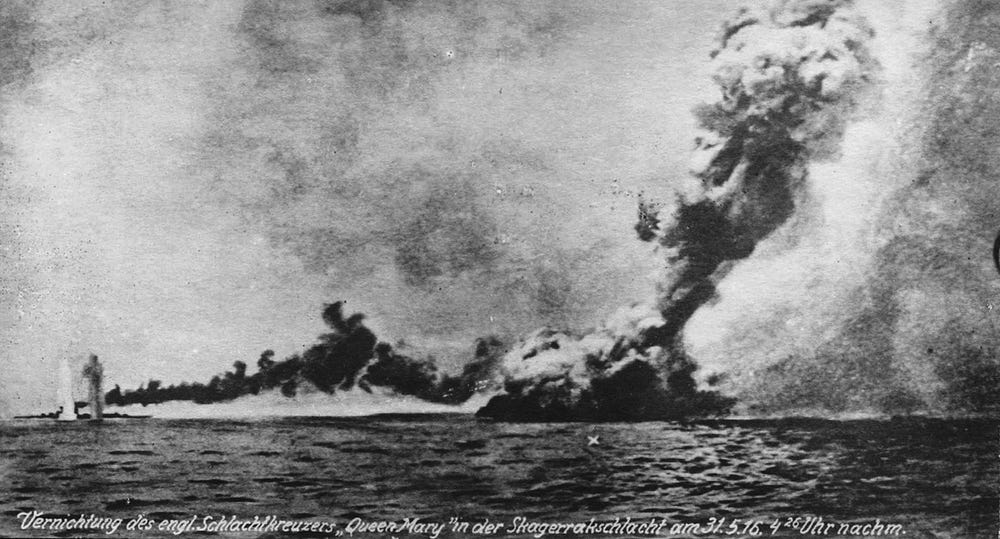
The defeat of Germany in 1918 and the resulting treaties ensured that the Imperial German Navy was reduced in size. To this extent, the Royal Navy remained the dominant navy. During that period, the expanding US Navy would become larger.
In 1939, Britain declared war on Germany after the violations of the Munich Conference. The Royal Navy was again called into action, but the German navy was much smaller in World War II. As such, after the defeat of France, the potential for the Germans to invade Britain depended on air superiority, which was never gained.
In the Mediterranean, the Royal Navy had some of its most notable battles against the Italian navy. At the Battle of Taranto, Royal Navy carriers bombed Italian battleships in port. Here, the Italians lost three battleships. Further Royal Navy triumphs came at the Battle of Cape Matapan, where the Italians lost more cruisers and destroyers. Those victories ensured Allied naval superiority in the Mediterranean.
However, despite Britain's victory after the war, the Royal Navy was no longer the largest. The expanding US Navy in the Pacific now eclipsed the Royal Navy in size. Although the Royal Navy was the second-largest navy, the cost of keeping it as one of the largest was also difficult to meet. As such, in the post-war era, the Royal Navy has gradually declined in size.
The Falklands War was the most recent time the Royal Navy has been fully deployed in combat. The Royal Navy regained the Falkland Islands, providing effective anti-aircraft defense against Argentine aircraft.
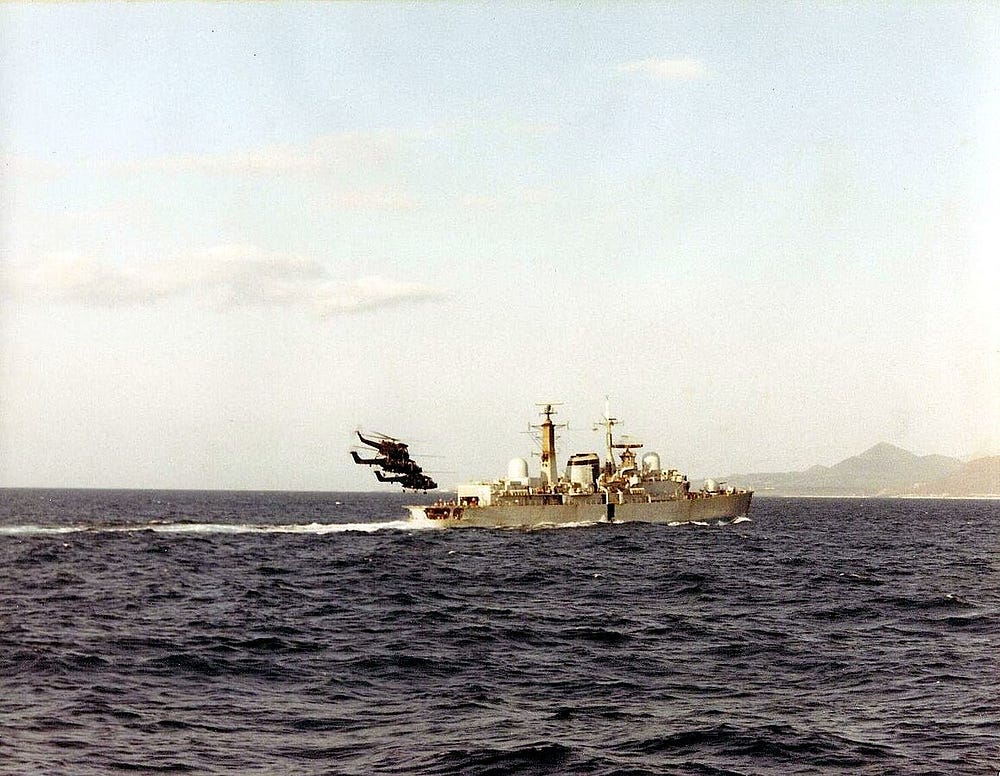
Today, the Royal Navy is a smaller but modern navy with aircraft carriers. Certainly, no longer comparable in size to the US Navy as it was in the 1940s, it remains one of Europe's largest navies.
This article of mine was originally submitted to Medium.com, where you can read it here.
About the Creator
Matthew A
Matthew is the author of Battles of the Pacific War 1941-1945. Battles of the Pacific War is available on Amazon and Lulu in e-book and paperback formats. Check out the book’s blog at battlesofthepacificwar.blogspot.co.uk.
Enjoyed the story? Support the Creator.
Subscribe for free to receive all their stories in your feed.
Comments
There are no comments for this story
Be the first to respond and start the conversation.