
A Brief History of White Star's Olympic-Class Ocean Liners
Remembering the Titanic Class of Ocean Liners
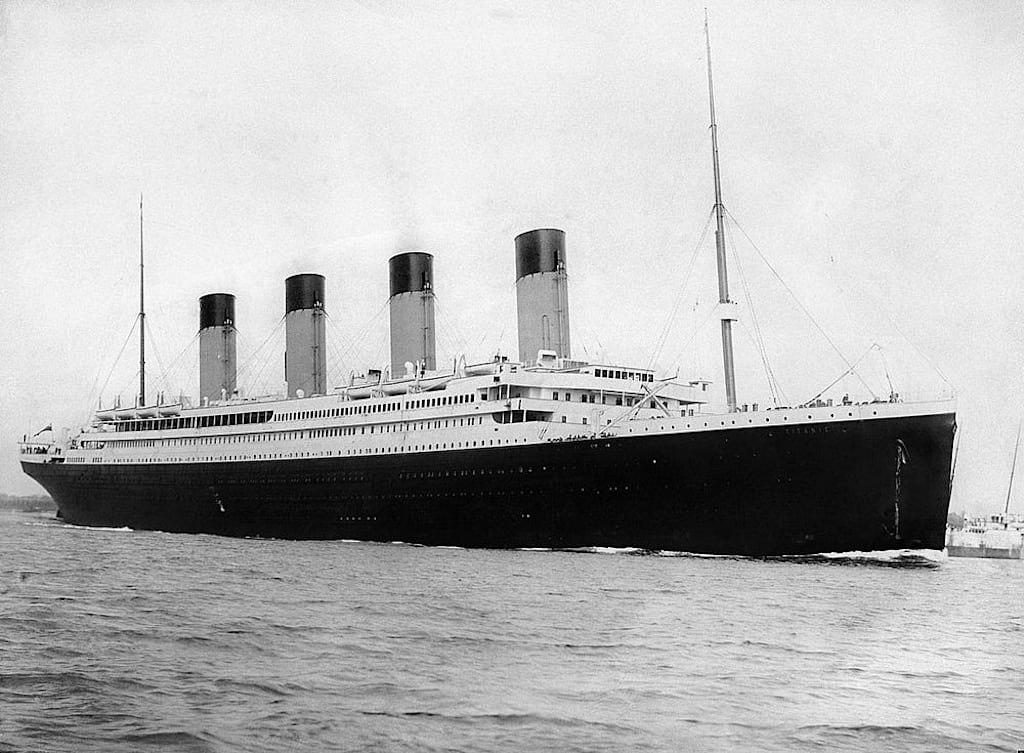
With new German and Cunard ocean liners setting Blue Riband records, White Star required a new class of ocean liners to bolster their fleet. These would be the Olympic-class ocean liners that eclipsed all others in size and scale. A triumvirate of Olympic-class ships was constructed in Belfast, Ireland, from 1908–1914.
The first Olympic-class liner, and subsequently White Star's flagship, was RMS Olympic. The Olympic was added to the White Star fleet in 1910, completing its maiden voyage in 1911. The ship had a gross tonnage of approximately 45,000 tons, making it the largest ship built when it first sailed.
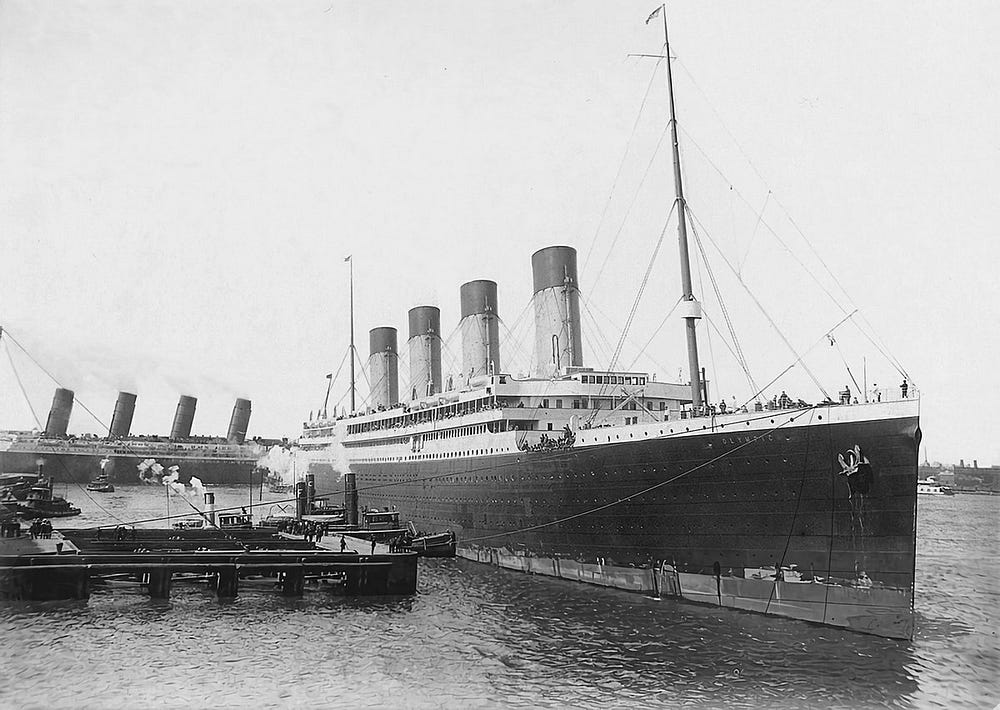
Of course, that was until its sister ship, the Titanic, was ready for transatlantic crossings in 1912. This was a marginally larger ship than the Olympic. The liner had extravagant interior decor, such as the Grand Staircase, similar to that of the RMS Olympic. Today, some of the Olympic's interiors are included in Titanic museums. The Titanic's cabin decor ranged from Renaissance to Victorian. The Titanic included the Café Parisien on a sunlit veranda, which was not added to the Olympic until further refitting in 1912.
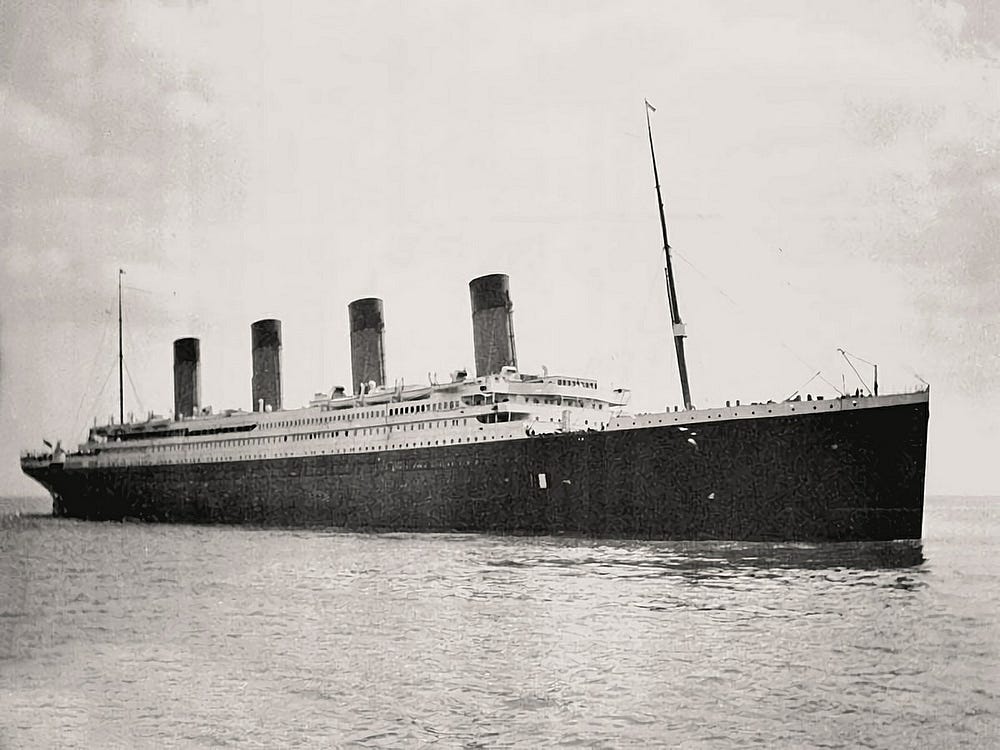
Most are familiar with the demise of the Titanic during its maiden voyage. Despite its watertight compartments, the Titanic still went down after it struck an iceberg in the Atlantic. The Titanic might have remained afloat had only four of its watertight compartments been flooded, but the loss of the fifth compartment ensured the loss of the ship within a couple of hours. On its decks, the crew evacuated only a limited number of those aboard, with only a small number of open boats available. The rest were left to swim in icy Atlantic waters before any 'nearby' ocean liners could reach them.
Historical debate has remained as to potential factors regarding the loss of the ship. Had Ismay urged the captain to set a Blue Riband record? Ismay did concede that he had discussed such things with the captain. Could the Titanic have been constructed more effectively without substandard iron rivets? Possibly, the watertight compartments might have also been raised.
After the demise of the Titanic, White Star delayed the construction of the third Olympic-class ocean liner. This third ship was that of the Britannic, not commissioned until 1914. The Britannic was the biggest liner of its class. It had to accommodate a larger number of open boats and was further refined before the outbreak of war in 1914. Its maiden voyage was subsequently delayed until 1915.
The war ensured that the ocean liner was converted to a troop transport ship. It was deployed to the Mediterranean Sea, where it made its first voyage to Mudros in Greece. These Mediterranean trips continued into 1916.
In November 1916, an explosion triggered by an underwater mine shattered the Britannic off the coast of Kea. The Britannic's cargo holds were penetrated and soon flooded with seawater as the ship listed to starboard. The closing of watertight doors could not halt the flooding, and the orders were given to abandon the Britannic.
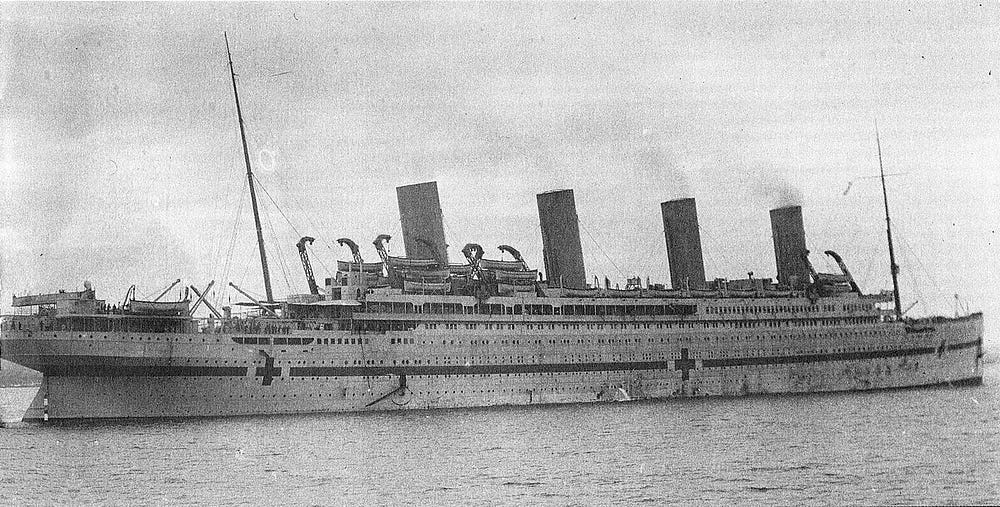
Nearby ships soon arrived at the scene. They picked up most of those aboard the Britannic, including the captain. As it had not been a transatlantic voyage, there were far fewer aboard the ship than on the Titanic. But the Britannic quickly slipped to the bottom of the Mediterranean, the second Olympic-class liner lost at sea.
The loss of two Olympic-class liners had substantial financial repercussions for the White Star Line. However, the RMS Olympic remained very much intact even though it had been a troop transport ship, making it a potential target for German U-boats. It had even sunk a German U-boat during the war!
In the postwar period, the RMS Olympic was refitted and modernized. With oil replacing coal, its engine rooms and boilers were converted for oil. The ship was also marginally expanded so that it could accommodate a greater number of passengers for its voyages.
It continued regular crossings until 1934, when White Star merged with Cunard. The economic decline of the period, combined with the losses of former Olympic-class liners, ensured a merger that Cunard dominated. Now, more modern ocean liners were required, and so the RMS Olympic was laid up in 1935.
The first, and subsequently last, of the Olympic-class ocean liners was thus abandoned by Cunard White Star. Had the others been retained, Olympic-class liners would have remained at sea for a little longer, and some may even speculate that the Cunard White Star merger might not have happened. That much is debatable, but few will doubt that the Olympic-class liners were among the grandest ships in history.
This article of mine was previously submitted to Medium.com, where you can read it here.
About the Creator
Matthew A
Matthew is the author of Battles of the Pacific War 1941-1945. Battles of the Pacific War is available on Amazon and Lulu in e-book and paperback formats. Check out the book’s blog at battlesofthepacificwar.blogspot.co.uk.
Enjoyed the story? Support the Creator.
Subscribe for free to receive all their stories in your feed.
Comments
There are no comments for this story
Be the first to respond and start the conversation.