
A Brief History of Germany's Weimar Republic
Remembering The Weimar Era of German History
In 1918, the German army was in retreat on the Western Front. Thousands of German troops had surrendered at the Battle of Amiens, and the German High Command acknowledged that they could no longer win the war. It was requested that armistice talks begin with the Entente, and one of the requirements for an armistice with them would be for the Kaiser to abdicate the throne. On November 11, 1918, the armistice was signed, and by that time the Kaiser had abdicated the throne.
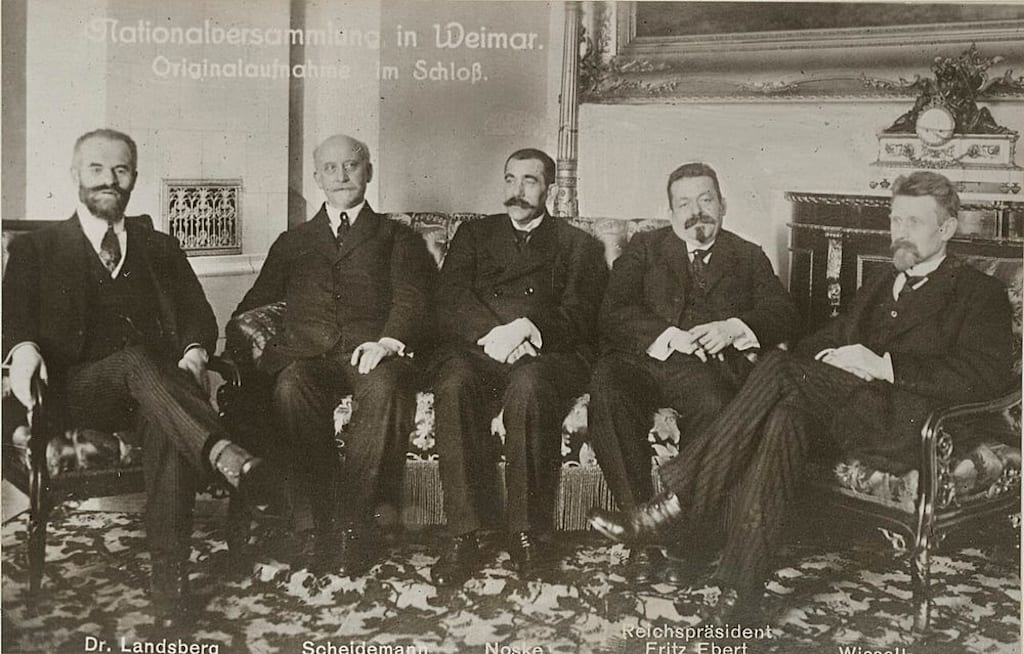
The demise of the German army and monarchy ensured that a new German charter would be required. Germany could no longer rely on an autocratic monarchy with a minimal parliament. In the months after the armistice, the socialist parties established a more democratic Germany.
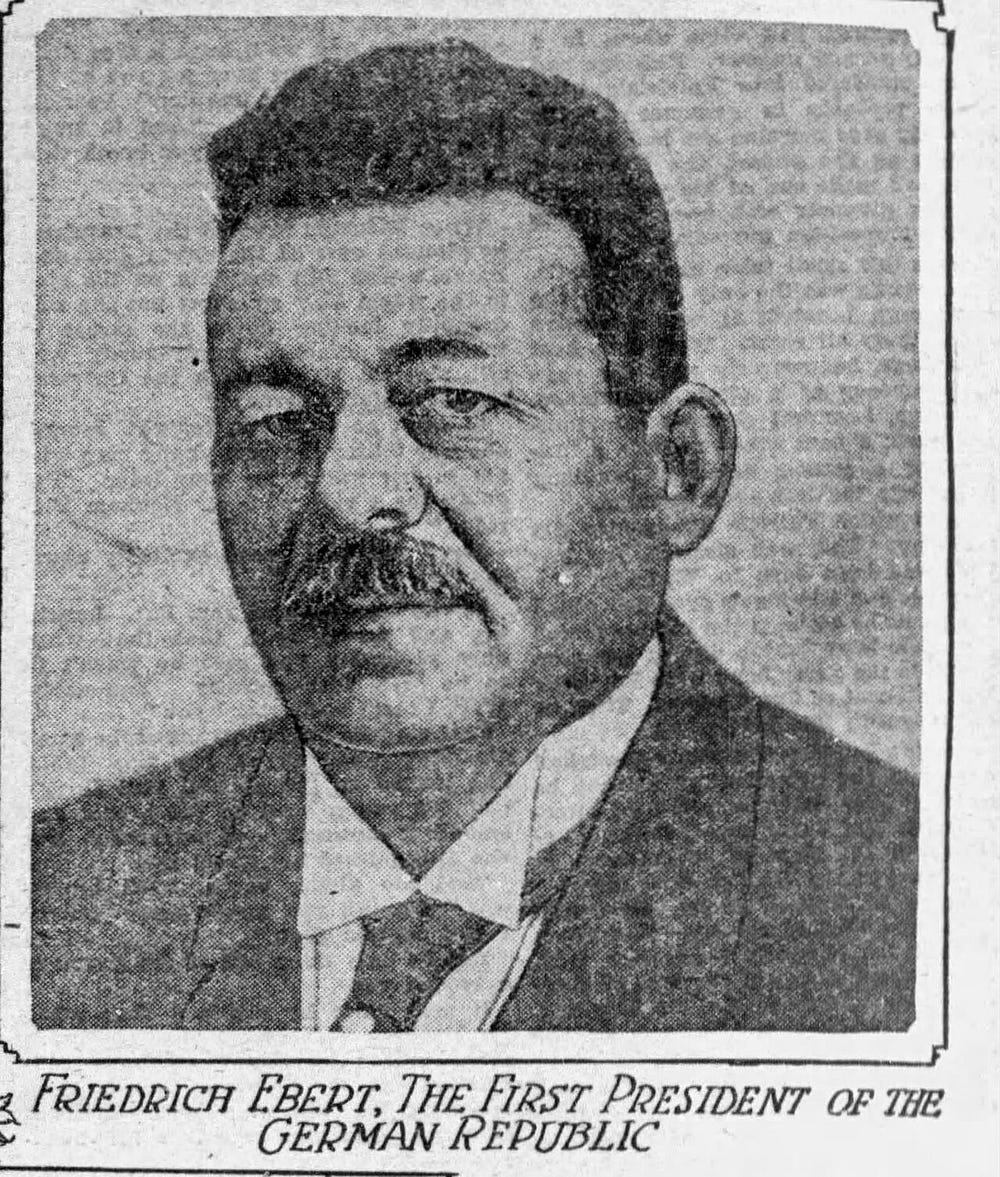
In 1919, the Weimar Republic was established with a multiparty parliament and Ebert as president. The leader of the largest party in the Reichstag became German chancellor. All Reichstag parties were elected by proportional representation. The Reichstag included various parties, but the socialist parties, such as the SPD, were among the largest.
At the Paris Peace Conference, the Entente had drafted the Treaty of Versailles, which outlined peace terms. This treaty had numerous territorial and military provisions. Among them, Germany was expected to demilitarize most of its military, and France and Britain requested reparations. Territorially, Germany lost its colonies, Alsace-Lorraine in Western Europe, and territory along its eastern border to Poland, such as the Polish Corridor, which separated East Prussia from Germany. Nonetheless, with Entente armies in eastern France, the Weimar Republic accepted the treaty to ensure peace.
During the early years of the Weimar Republic, both far-left and right-wing parties, namely the communists and fascists, were very active. The communists had been inspired by the Bolshevik coup in Russia, but the Spartacus uprising was disbanded. In 1920, the Kapp Putsch, supported by Ludendorff, failed. A final putsch in 1923 at the beer halls of Munich also failed, and those arrested were Nazi Party members.
The year 1923 was one of an inflationary spiral in Germany. As Germany defaulted on reparations, French troops occupied the industrial heartland of the Ruhr. A steep inflationary spiral followed. To curb inflation, Stresemann introduced a new Rentenmark currency. This would only be a temporary currency, but the monetary policy was effective in bringing inflation to an end.
It was the first step towards a German economic recovery, and the second was that of the 1924 Dawes Plan, which outlined a clearer plan for how the German war reparations could be collected. This plan proposed greater American investment and the evacuation of the Ruhr. With US loans, Germany could begin to cover the reparations.
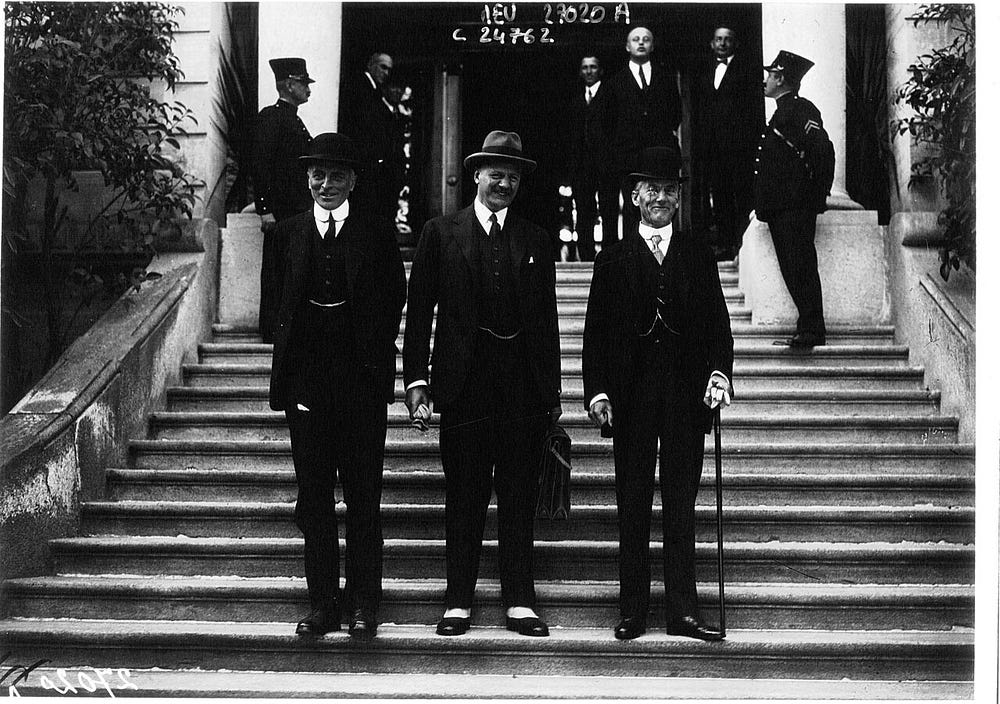
In 1925, Germany, France, and Britain met at the Locarno Conference. At this conference, Stresemann was the German foreign minister, and it was then that the participants signed the Rhineland Pact, which effectively settled the Franco-German border as outlined by the Treaty of Versailles. However, Germany's eastern border would remain open to revision. Germany also agreed to join the League of Nations by 1926. Such a coming together of former wartime enemies seemed to mark the beginning of a new era in Europe. For his part in the conference, Stresemann received the Nobel Peace Prize.
During the mid-1920s, the German economy had also recovered from the postwar slump. Industries such as coal, chemicals, iron, and steel began to reach prewar levels.
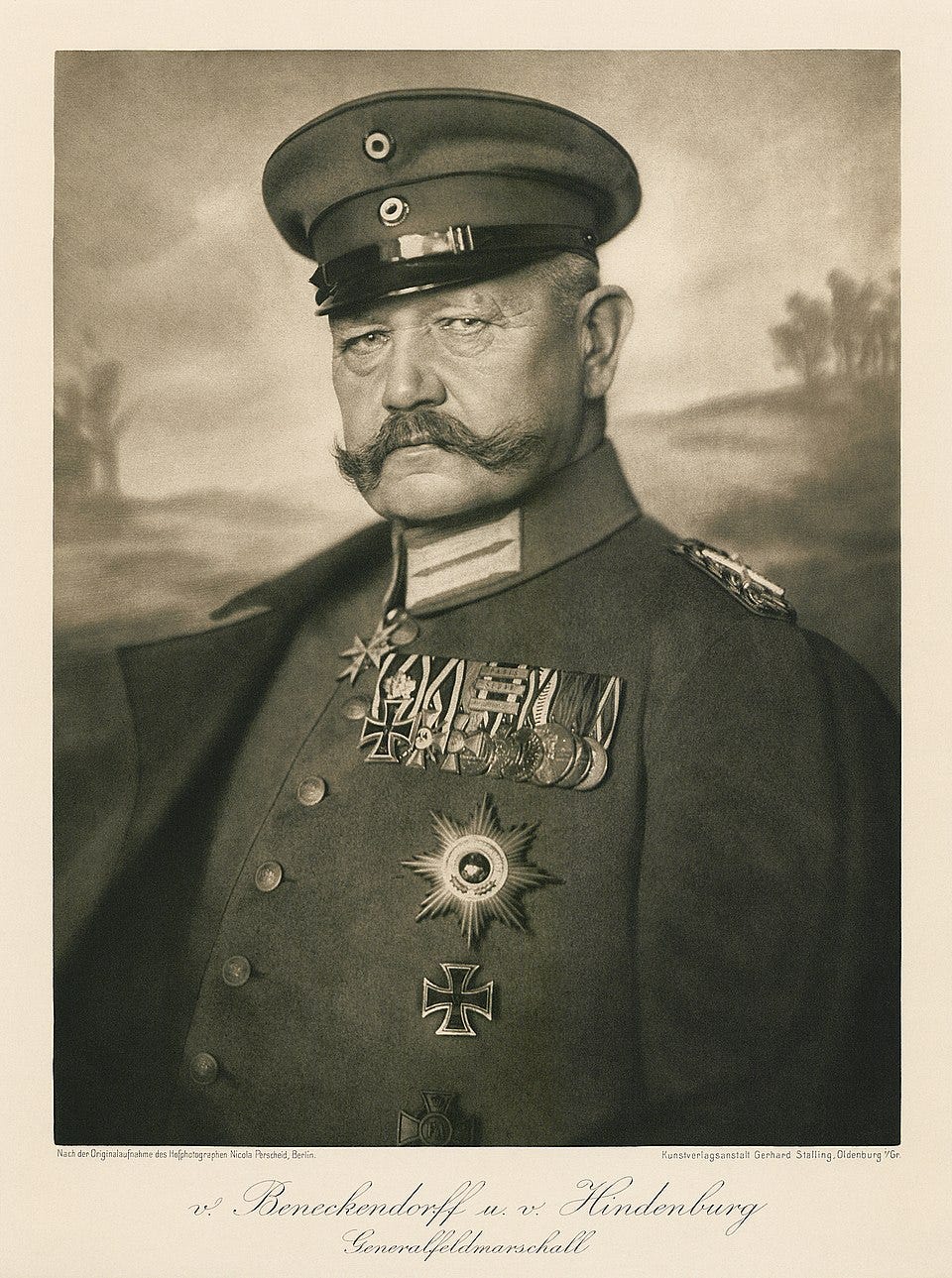
Ebert's reign as president of the Weimar Republic was coming to a close. In 1925, the Weimar Republic held presidential elections. Former World War I hero Hindenburg emerged as one of the front-runners and won the 1925 presidential election.
In 1929, Wall Street crashed. This would have notable economic consequences in Germany, as the Dawes Plan depended on US loans. In the early 1930s, the German economy would begin to decline.
Such a decline ensured a greater number of seats for fascist and communist parties as coalitions came and went. In 1932, the Nazi Party won 32% of the vote and became the largest party in the Reichstag. However, this was still not enough for a clear majority. Further elections held did not provide a majority for any party either, and so a coalition was established, which included the Nazi Party.
Hitler was therefore officially the last chancellor of the Weimar Republic before it was gradually disbanded. The Enabling Act marked the beginning of the end of the republic. The Reichstag fire effectively demolished Germany's parliament, thanks to Van Der Lubbe and the communists, who unwittingly assisted the Nazi Party. Support for the KPD gradually declined thereafter as the communists dispersed.
The Weimar Republic lasted a relatively short historical period. However, in the second postwar era, democracy was restored in Western Germany at least. The Federal Republic of Germany had a similar charter to the Weimar Republic, with a few modifications to remove some of the shortcomings of the Weimar constitution.
This article of mine was originally submitted to Medium, where you can read it here.
About the Creator
Matthew A
Matthew is the author of Battles of the Pacific War 1941-1945. Battles of the Pacific War is available on Amazon and Lulu in e-book and paperback formats. Check out the book’s blog at battlesofthepacificwar.blogspot.co.uk.
Enjoyed the story? Support the Creator.
Subscribe for free to receive all their stories in your feed.
Comments
There are no comments for this story
Be the first to respond and start the conversation.