
Why The Good, The Bad and The Ugly Remains the Ultimate Spaghetti Western
Revisiting Sergio Leone’s legendary Western on its 60th anniversary

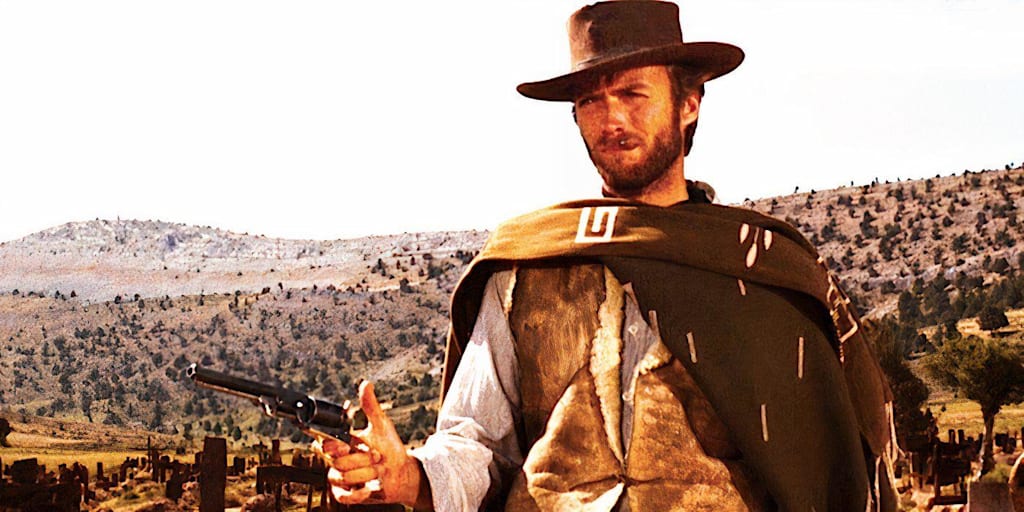
Set during the American Civil War, three gunslingers race to find a buried cache of $200,000 in Confederate gold. Sergio Leone’s The Good, the Bad and the Ugly alongside Sergio Corbucci’s Django (1966) helped define the Spaghetti Western genre. Both films challenged the traditional Hollywood Western by moving away from the typical law-abiding hero and embracing morally ambiguous gunslingers driven by greed, revenge, and survival. Rather than fighting for justice, their protagonists operate by their own code, making them wildcards in a world where trust is a dangerous commodity.
This grittier interpretation of the American frontier helped distinguish Italian Westerns from their Hollywood counterparts. Through morally complex characters, striking cinematography, brutal violence, and an unconventional approach to storytelling, Leone and Corbucci helped establish a distinctive cinematic identity for the genre. However, what makes The Good, the Bad and the Ugly particularly remarkable is how effectively these elements come together to create an entertaining, suspenseful, and visually striking western.
Three Gunslingers, Three Unforgettable Performances
Clint Eastwood brings a quiet stoicism to Blondie, also known as the Man with No Name. His restrained performance makes the character difficult to read, allowing a glance or brief remark to carry considerable weight. Rather than relying on flashy speeches, Eastwood uses subtle facial expressions and body language to convey Blondie’s confidence and mysterious personality.
Eli Wallach provides a striking contrast as Tuco, whose humor, impulsiveness, and brash personality make him both entertaining and unpredictable. Beneath his comic energy, Wallach reveals a more vulnerable side to Tuco, portraying a survivor whose desperation is never far from the surface. His expressive performance gives the character a distinctive personality and makes him one of the film’s most entertaining characters.
Lee Van Cleef completes the central trio as Angel Eyes, delivering a cold, calculating performance that makes him an imposing presence. His controlled manner and quiet menace establish a formidable enemy to Blondie and Tuco. Together, Eastwood, Wallach, and Cleef make a memorable trio whose core personalities give much of the film its appeal.
The supporting cast further enriches Leone’s portrait of a war-torn frontier. Antonio Casale plays Bill Carson, whose revelation about the Confederate gold sets the central quest in motion. Rada Rassimov portrays Maria, a woman caught in the violence and exploitation surrounding the film’s world, while Silvana Bacci appears as an unnamed Mexican woman. Although their screen time is more limited than that of the central trio, their performances contribute to the film’s broader depiction of a world shaped by greed, conflict, and desperation.
Betrayals, Bullets, and the Road to Sad Hill
One of the film’s most memorable moments comes when Blondie abandons Tuco in the desert, leaving him stranded with a rope around his neck after their partnership falls apart. Tuco’s furious reaction demonstrates the bitterness between the two men, while Blondie’s calculated betrayal reveals he can be as ruthless as his rival. Later, Tuco turns the tables and subjects him to a similar ordeal, highlighting how their partnership is built on distrust and self-interest. These moments make their relationship one of the film’s most entertaining aspects, as neither man can depend on the other.
Another standout scene occurs when Angel Eyes has Tuco captured and tortured by his henchman, Wallace, in an attempt to force him to reveal the location of the Confederate gold. The scene demonstrates Angel Eyes’ cruelty and willingness to use others to achieve his goals. Tuco’s resourcefulness is also on display when a bounty hunter confronts him while he is taking a bath. Despite being caught off guard, Tuco defends himself, reinforcing his ability to survive even the most unexpected situations.
Finally, the three-way confrontation at Sad Hill Cemetery brings the film’s competing ambitions to a head. Blondie, Tuco, and Angel Eyes face one another in a tense standoff, with Leone’s editing, close-ups, and Ennio Morricone’s score building extraordinary suspense. It is a masterclass in cinematic tension, demonstrating through pacing, composition, and music.
Gold, Guns, Behind-The-Scenes Stories
The film’s production history is almost as fascinating as the finished movie. United Artists became interested in Sergio Leone’s Westerns after executives attended a screening of For A Few Dollars More in Rome. Impressed by the audience’s response, they negotiated to acquire the rights to that film and A Fistful of Dollars.
When they asked Leone and screenwriter Luciano Vincenzoni what they planned to make next, Vincenzoni pitched the idea that would become The Good, the Bad and the Ugly. United Artists agreed to finance the new production, giving Leone a significantly larger budget than he had for his earlier Westerns. Van Cleef’s casting reunited him with Leone and Eastwood, resulting in one of the film’s most memorable screen rivalries.
One of the production’s most famous mishaps involved the bridge sequence. The Spanish Army had constructed the bridge and was responsible for its planned demolition during filming. However, a communication mix-up meant the captain misunderstood a cue, and the bridge was destroyed before the cameras were ready. It had to be rebuilt, again with the Spanish Army’s help, before the scene could be successfully filmed. The incident became an unusual behind-the-scenes story attached to one of the film’s most spectacular sequences.
Greed, Betrayal, and The Price Of Trust
One of the film’s most compelling themes is the difficulty of knowing who to trust. Throughout the story, Sergio Leone explores double-crossing, selfishness, and opportunism through three gunslingers whose desire for gold puts them at odds with one another. Their alliances are rarely built on genuine loyalty, as each man looks out for their own interests.
Blondie and Tuco’s complicated relationship emphasizes this well. Although the two men repeatedly work together, their partnership is driven largely by personal gain and deceit. Blondie’s decision to abandon Tuco in the desert, followed by Tuco later doing the same to Blondie, demonstrates how neither man can fully trust the other, even if they both want the same thing.
However, the film’s message goes beyond simply warning audiences about dishonest people. It also shows how greed can ruin relationships and influence decisions. The three men become so consumed by the prospect of finding the gold that loyalty takes a back seat to personal ambition. Leone uses their rivalry to create an unpredictable story in which knowing someone’s intentions is just as important as observing their character.
The Legacy Of A Spaghetti Western Legend
Although six decades have passed since Sergio Leone’s classic reached audiences, The Good, the Bad and the Ugly continues to leave a lasting mark on cinema. Filmmakers such as Martin Scorsese, Quentin Tarantino, Sam Raimi, and Robert Rodriguez have drawn inspiration from Leone’s unique style. Tarantino, in particular, has paid homage to the film’s tense confrontations through his own work, including Reservoir Dogs.
Another major contribution is the editing of the final three-way duel at Sad Hill Cemetery. Leone cuts between close-ups of Blondie, Tuco, and Angel Eyes, gradually building suspense as the audience waits to see who will make the first move. Combined with Ennio Morricone’s unforgettable score, the sequence demonstrates how editing, music, and visual storytelling can create tension without needing constant action. Leone’s masterpiece remains a defining example of how great filmmaking can stand the test of time.
About the Creator
TheScreenAnalyst
I am a passionate movie and TV enthusiast, devoted to analyzing storytelling, characters, visuals, and performances. I provide thoughtful critiques and insights, exploring both mainstream and independent works to engage audiences.
Enjoyed the story? Support the Creator.
Subscribe for free to receive all their stories in your feed.
Comments
There are no comments for this story
Be the first to respond and start the conversation.