
Why Marvel’s Mutants Can Never Be “Easily Co-Opted” — And Why That Fantasy Keeps Coming Back
A deep dive into the systemic failures, moral vacuums, and governance nightmares that make every “just give them jobs” argument collapse on contact with the actual comics.
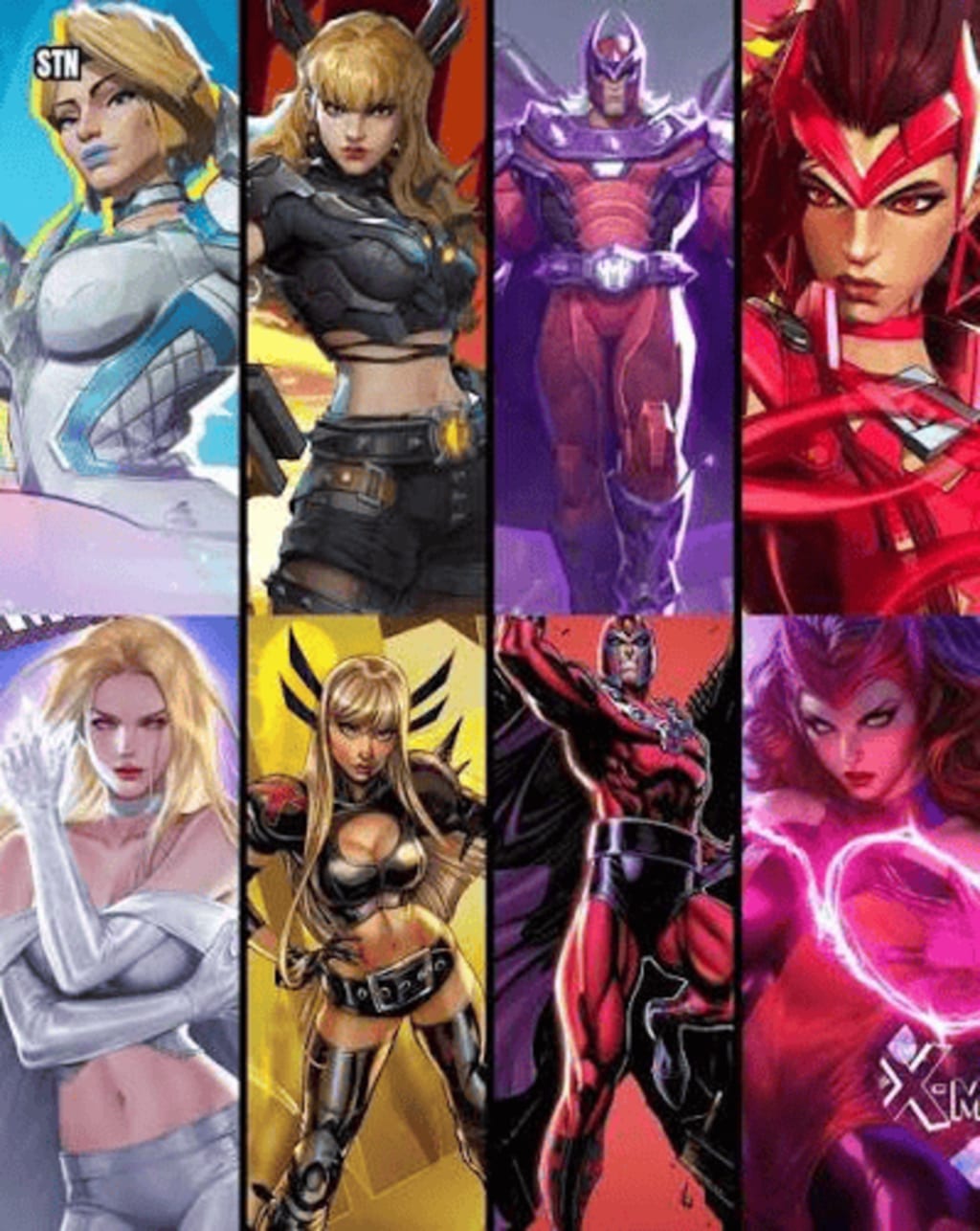
In many discussions about mutants, highly upvoted answers often display a strange optimism: since mutants are powerful, human governments only need to give them official positions, honors, jobs, and exemptions, and they can “co-opt” the X-Men and even the entire mutant population as super civil servants. Those who can fight go into the military, those who can read minds go into interrogation, those who can control fire go into power generation, those who can heal go into medicine, and the weak can be assigned marginal posts. As if the mutant problem were merely a “human resource allocation” problem, solvable easily as long as the interests are sufficiently served.
But this assumption ignores the most stubborn contradiction in Marvel’s mutant setup: mutant ability is not an occupational qualification. It is a physiological state that arrives randomly, unpredictably, uncontrollably, and irreversibly. It is not “you have a craft, I hire you.” It is “your child may suddenly become a walking bomb during puberty, and no one knows when it will explode, how big the blast will be, or who it will kill.”
As long as this problem remains unsolved, “easy co-option” is just an illusion.
I. Power awakening: An unpredictable genetic Russian roulette
Mutant abilities usually awaken during puberty, and are often triggered by emotional swings, trauma, fear, or anger. This means an ordinary family may, without any warning, suddenly face the reality of a relative becoming a weapon of mass destruction.
This is not exaggeration. In a certain parallel universe, a young girl’s power awakening triggered an explosion comparable to the Phoenix Force, directly leveling Albany, New York, and causing about 600,000 deaths. This disaster became the turning point that gave anti-mutant sentiment legal support. And in the main universe, similar risks have never disappeared. A mutant like Weapon Omega also caused thousands of deaths after his power awakening absorbed uncontrolled energy.
The question is: who should be responsible for these casualties?
A teenager who has just awakened and is completely unable to control his powers: how should responsibility be defined legally? Is he a murderer? No. Is he guilty of negligent homicide? But he did not even know his power existed. Then is he a person lacking criminal responsibility? But the destruction he caused really exists. Can the victims’ families, facing a perpetrator with “no subjective malice,” really accept the explanation “he didn’t mean it”?
More to the point, who pays compensation? If the state pays, it amounts to admitting that mutants are an uncontrollable public risk, which will further intensify social panic. If it does not pay, the victims will turn to anti-mutant politics, demanding isolation, registration, or even extermination. Either choice will push society toward fracture.
Co-option means the state must endorse this. But once the state endorses it, it is telling every ordinary person: your safety may be destroyed at any time by a child next door who has just awakened, and the government will handle the aftermath. No government dares make such a promise lightly.
II. Responsibility vacuum: A killer can be absolved and hired just by making contributions?
Co-opting mutants is almost equivalent to “a killer only needs to make contributions to be absolved and hired, and then the whole family lives happily.”
This is not to say all mutants are killers, but that once the state chooses to “co-opt” those powerful mutants who have caused casualties during awakening or loss of control, it must face a moral dilemma: Are we using official positions, honors, and exemptions to exchange for their power, while putting the victims’ suffering in a secondary position?
In the Marvel universe, this logic actually appears repeatedly. The government has tried many times to weaponize mutants, forming X-Force, X-Factor, and even the Sentinel program. But the result is often: mutants become tools, humans become more fearful, and conflict becomes more intense. Co-option does not end discrimination; it institutionalizes discrimination.
More troublesome: mutants are not monolithic. Whom to co-opt? The X-Men? What about the Brotherhood? Omega-level mutants? Then how do you prevent them from becoming warlords? Weak mutants? What can they provide? Why should the state subsidize them? This returns to the discrimination problem.
III. Identity: The arrogance of a superior race and internal fracture
After the mutant nation of Krakoa was established, Professor X announced to the whole world that humans “do not deserve” to receive mutants’ gifts, that mutants are “above human law,” and that they are the true inheritors of Earth. Mutants often use “sapiens” as a derogatory term for humans. Professor X himself once claimed that mutants possess “upgraded morality,” but critics pointed out that the X-Men’s attitude toward humans shows they are “as bad as the world that fears and hates them.”
This arrogance is also reflected internally. Magneto’s Brotherhood “accepts all,” while Professor X’s team is “carefully selected.” This class difference itself reflects the division of thinking within the mutant community. When mutants claim to be a “superior race,” what kind of discrimination will those weak mutants face within the group? Or those with only negative side effects, such as “having two kinds of diabetes at the same time”?
More critically, mutants have no unified culture, no unified goal, no unified abilities, only a shared label of being discriminated against. This label is not enough to build a unified political entity. The Inhumans at least have Terrigen Mist, a royal family, and a relatively stable social structure, so their floor is guaranteed. Mutants, by contrast, may have a floor lower than humans, while their ceiling often does not come from mutant abilities themselves.
IV. The power myth: Mutants’ ceiling does not come from “mutant”
The top-tier combat power that mutants pride themselves on often has a source unrelated to the X-gene.
Scarlet Witch’s core ability, “chaos magic,” is not a mutant ability, but a gift from the chaos demon lord Chthon. Jean Grey’s “Phoenix Force” is an ancient cosmic-level energy entity; the Phoenix Force chose her as a host, not that her mutant gene created the Phoenix Force. Franklin Richards was once considered an Omega-level mutant, but it was later revealed that his mutant identity was actually a subconscious product of his own reality-warping ability; after losing his powers, he no longer belonged to mutants.
In contrast, humanity’s top-tier combat power comes from humanity’s own wisdom and technology. Sentry’s power comes from the “Golden Sentry Serum” he drank; his “million exploding suns” is essentially a psychic force brought by the serum, a purely human technological product. The achievements created by human scientific geniuses like Mr. Fantastic, Iron Man, and Ant-Man: which one does not beat mutants nine streets over?
Therefore, mutants are a species whose demonstrated ceiling is lower than humanity’s, and whose floor is even lower than humanity’s. Yet they claim to be more advanced than humans and more perfectly evolved. In fights, they cannot even handle the perennial punching bag that is the human government, and they are periodically exterminated by the human government in various ways. That Marvel humans can tolerate these mutants jumping around is already very white-liberal.
V. Moral controversy: A fine line between hero and “sick”
In the Ultimate Universe, Jean Grey, to punish Wolverine, swapped Wolverine’s and Spider-Man’s minds, nearly killing Spider-Man. Even Spider-Man, the good-natured guy, was enraged and cursed the X-Men: “People hate you not because you’re mutants, but because you’re fucking sick.” The main-universe mutants have also done plenty of absurd things. House of M directly turned ordinary people into second-class citizens. In Avengers vs. X-Men, Cyclops and his group had no self-awareness at all, believing they could control the Phoenix Force and rule the world with it. The famous good guy Professor X once mentally controlled a captain to detonate a shipboard nuclear weapon, killing a whole spaceship of people, and also formed a secret X-Men team to use as cannon fodder.
These events turn “co-option” into a moral risk. Because once co-opted, the state is acknowledging the legitimacy of these actions, and may even grant immunity. Victims will ask: Why? The public will ask: Why should we support a group of superpowered beings who may lose control at any time and whose morals are no nobler than ours?
VI. Governance dilemma: Conventional means completely fail
The essence of the mutant problem is: the distribution of power is extremely unequal, and this inequality is random, unpredictable, and irreversible. The existing legal, ethical, and political systems of human society are all built on the assumption of relatively equal actors. Mutants break this assumption.
Registration? How do you register a mutant who can control weather? How do you prevent a mind-reader from invading privacy? How do you constrain someone who can alter reality? Regulation? Whom do you send to regulate an Omega-level? Ordinary police? Other mutants? Then what if those other mutants lose control? Military service? You send someone who can destroy a city to serve in the military. Is that defending the country or threatening it? Judicial immunity? Then what about the victims?
Comic history has repeatedly proven: the coexistence route repeatedly fails, and the separation route also repeatedly turns into disaster. The route dispute between Professor X and Magneto is itself proof of the failure of co-option. One advocates coexistence, the other advocates separation or rule. In the comics, both routes lead to tragedy.
Conclusion
The view that mutants can be “easily co-opted” is essentially a serious simplification of the original setting. It sees only the productivity or combat power brought by abilities, and ignores the political, ethical, legal, and psychological costs behind those abilities. It treats mutants as tools, not as people. And what mutants are most sensitive to is precisely being treated as tools.
True co-option would require global governance, genetic regulation, psychological intervention, judicial reform, and cultural reconciliation, and these have almost never existed simultaneously in the Marvel universe. Before an answer is found, co-option is only a fantasy.
The core of the mutant problem has never been “how to use them.” It is “how to coexist with uncontrollable power.” This is a problem humanity has never solved in history. Marvel merely magnifies it to the scale of superheroes. And those highly upvoted answers precisely bypass this most difficult part.
About the Creator
Jin
Writer of reamstories
https://reamstories.com/jin
Enjoyed the story? Support the Creator.
Subscribe for free to receive all their stories in your feed. You could also become a paid subscriber, letting them know you appreciate their work.
Comments
There are no comments for this story
Be the first to respond and start the conversation.