
Why James Gunn Had To Cut Gal Gadot Loose (And Why DC Is Finally Winning)
She wanted a trilogy-capping epic. She got radio silence instead. After "Wonder Woman 1984," a string of flops, and a public stance that divided fans, the new DCU is leaving the past in the dust — and it's exactly what audiences needed.
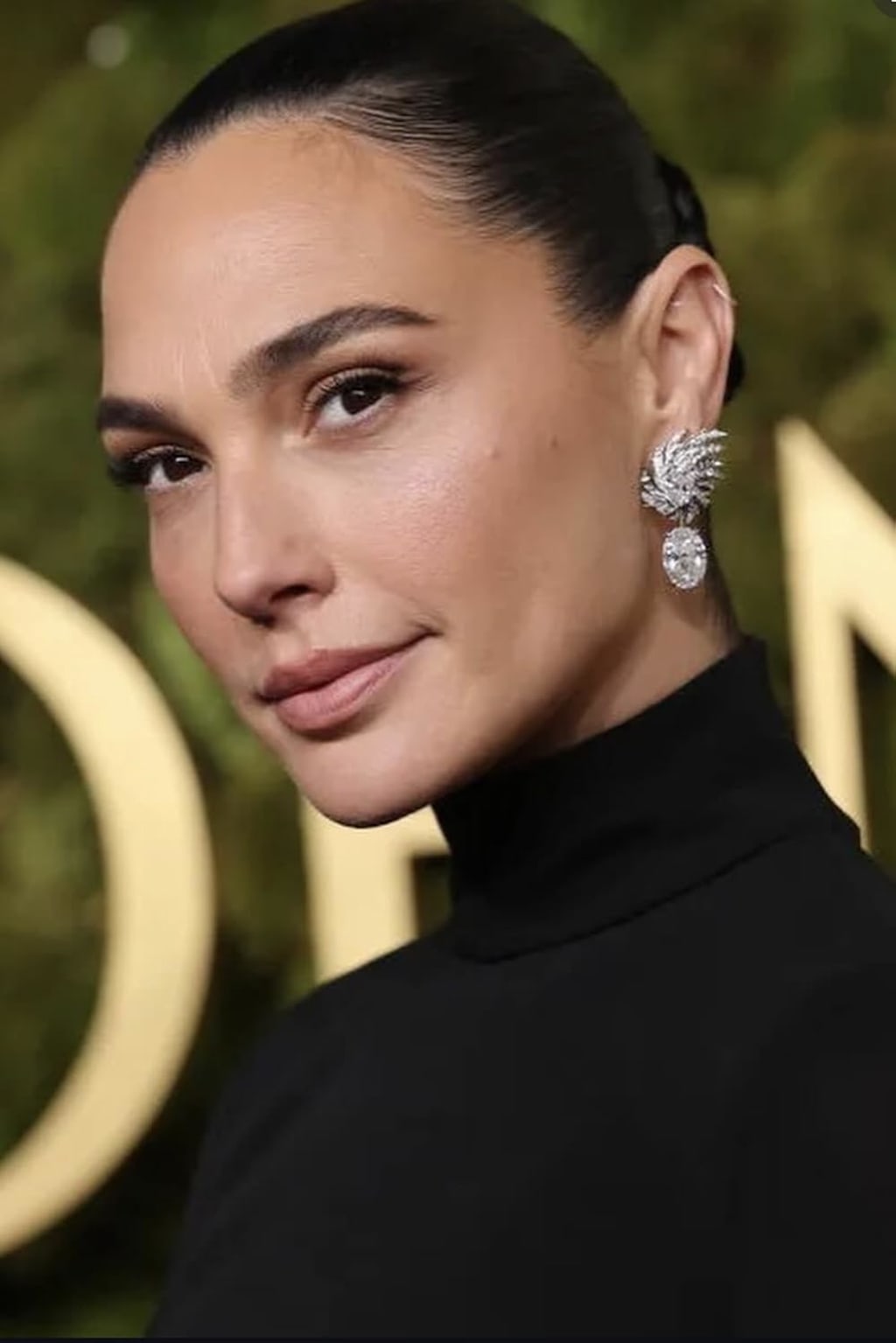
Farewell to Themyscira: Gal Gadot’s Exit and the DCU’s "Break" and "Rebuild"
In the summer of 2023, Gal Gadot said that DC's new bosses had "come to the set" and personally promised to develop Wonder Woman 3, telling her "not to worry." A few days later, multiple outlets reported that DC had no plans for a third installment.
Two years on, Gadot confirmed in an interview that she had received no further word from DC since that conversation.
She said: "Whoever will play her, I wish her all the joy in experiencing this extraordinary role."
One sentence. A full stop. No anger, no blame, not even a tone of regret. Just a statement of fact, followed by good wishes. That calmness itself says more than any public spat – both sides knew this was over long ago; it simply took until today to make it official.
For DC Studios co‑CEOs James Gunn and Peter Safran, Gadot's departure was never a question of "whether," but merely "when to announce."
When they took over in late 2022, what kind of mess were they inheriting?
Batman v Superman had split audiences. Justice League went through two directors and two cuts. Wonder Woman 1984 limped through a pandemic release and barely scraped a passing grade. Henry Cavill's Superman made a cameo in Black Adam only to be retracted. Ben Affleck's Batman had already checked out during the filming of Justice League. The entire DCEU was like a building constructed from flawed blueprints – you couldn't patch it; you had to tear it down and start over.
Gunn and Safran chose to tear it down.
They unveiled their Chapter One slate: Superman (2025), Supergirl: Woman of Tomorrow, Paradise Lost (the Themyscira series), The Brave and the Bold (a new Batman film) – every single one with fresh casting and a new continuity. The only exceptions were a few peripheral DCEU characters: Jason Momoa might return, but as Lobo, not Aquaman. John Cena's Peacemaker could stay because he was Gunn's own creation and already a marginal figure.
But the Trinity was non‑negotiable.
Superman was recast – David Corenswet has already finished filming the new Superman, with set photos flooding social media. Batman, though Robert Pattinson is still making The Batman Part II, falls under DC Elseworlds, separate from the main DCU timeline. The main‑universe Batman will be someone else entirely.
That left Wonder Woman. What to do?
One option was to keep Gadot, use some multiverse or timeline trick to slot her into the new DCU – Marvel had done similar things, retaining certain actors while rebooting others. Technically feasible.
But Gunn didn't take that path.
The reason wasn't complicated: if two of the Trinity were recast and only one remained, audiences would be confused. And confusion does more damage than the recasting itself. Recasting signals "this is new." Keeping one signals "how new is it really? Does this character still connect to the old stuff?" Either connection or disconnection creates problems. You can't win.
Besides, Gadot's Wonder Woman had accumulated too much baggage.
One failed film wasn't the problem. Every franchise has had a stinker. What came after was worse: Gadot and Jenkins showed zero signs of recalibration. Gadot still presented herself as the living embodiment of Wonder Woman in interviews, as if 1984's backlash didn't exist. Jenkins teased that she had a "grand, complete" script for Wonder Woman 3.
Warner Bros. stayed silent.
That silence persisted through Gunn and Safran's arrival. Their first move wasn't to announce a recast – it was to announce nothing. Neither deny nor confirm, neither give hope nor extinguish it entirely.
That's the classic "cold shoulder."
For Gadot, this was probably harder than being told face‑to‑face, "You're done." Because the latter is closure; the former is limbo. In summer 2023, she said that "Gunn and Safran came to the set and said they really wanted to develop a third one" – later debunked as her unilateral claim. Gunn never publicly responded, though DC insiders leaked to the press that there were no third‑film plans.
Gadot's interview statement seemed like an attempt to gain leverage, to force a reaction from the new regime by creating a "they approved me" narrative.
They gave no reaction.
Two years later, she declared it over herself.
After leaving Wonder Woman, Gadot's filmography has not been kind.
Red Notice, a Netflix production with Dwayne Johnson and Ryan Reynolds, paired three of Hollywood's most expensive actors, yet the result read like an AI‑generated script, scoring a lukewarm 5.5 on Douban. Death on the Nile, directed by Kenneth Branagh, cast her as Linnet Ridgeway – a character described in the novel as "breathtakingly beautiful with aristocratic hauteur" – but her performance felt like a fashion editorial, one expression throughout. Snow White, Disney's live‑action, put her opposite the princess as the Evil Queen; the trailer drew mockery for "the queen is prettier than the princess but acts even stiffer."
Most recently, she signed on for a film titled Bitcoin: Hunting the Nakamoto, which was exposed for heavy AI usage – actors performing alone against green screens, composited later. The production budget was squeezed to $70 million. A decade ago, that would have been mid‑range, but at her current standing, taking such a project signals that top‑tier offers are drying up.
Gadot has also said in interviews that she has "no regrets leaving DC," with an airy tone, as if it were her own choice. But industry insiders see the reality: she didn't leave DC; DC left her.
Yet she shows little self‑reflection. Every time she mentions Wonder Woman, she says the same thing: "It's a wonderful role" and "I'm grateful for the opportunity." The phrasing is polished, the posture dignified – flawless on the surface, but devoid of any hint of "what I could have done better."
Perhaps that's her biggest problem: her poor acting isn't fatal; what's fatal is that she never seems to think she has any problems.
After the Gaza conflict erupted, Gadot posted multiple times on social media in support of Israel.
She is Israeli, served in the military, and voicing support for her homeland is personally understandable. She played an emblem of peace. Her political stance pulled in the opposite direction. The rift widened. Some fans began calling her out as "the Amazon princess who supports war." Once that label sticks, it's hard to peel off. Hollywood isn't a moral court, but it deeply fears actors who make audiences uncomfortable. Gadot's statements themselves might be defensible, but when the actor playing the avatar of "love and peace" shows unyielding partisanship in real life, every line on screen starts to taste different.
Not her fault. Still her cost to bear.
Gunn and Safran's decision was inevitable.
They don't dislike Gadot. They might even think she's a nice person. But the DCU's core asset is "audience trust" – viewers who lived through the chaotic DCEU decade are wary of a reboot. Any whiff of "the same old thing" will make them walk away.
Keeping Gadot, even for a cameo, would blur the line that should be stark between the old DCEU and the new DCU. And blurriness is what Gunn cannot accept. He needs audiences to see the new Superman poster and think, "This is genuinely new," not "This Superman will eventually meet that Wonder Woman – wait, that Wonder Woman is the old one, right?"
So Gadot had to go. No third way.
The way Gunn and Safran are setting up the new Wonder Woman is also telling – not a direct new film, but a series first.
Paradise Lost is set on Themyscira, before Diana's birth. It focuses on Amazonian power struggles, political intrigue, and societal fractures. It sounds like Game of Thrones meets a Wonder Woman prequel. No rush to introduce the new Diana; first, let audiences reacquaint themselves with the world. Once the world‑building is solid, then cast a new actor for the big screen.
This is far more cautious than the DCEU's approach. In 2016, Warner crammed Wonder Woman, Superman, Batman, the Flash, Cyborg, and Aquaman all into Batman v Superman – audiences hadn't even remembered everyone's name before they were fighting each other. Wonder Woman stood out, but that owed more to Gadot's striking entrance than to narrative architecture.
The new DCU plans to give each character breathing room – no rush, no overcrowding, no hero appearing just to prop up another.
Paradise Lost won't feature Diana at all. That decision alone says a lot: they'd rather spend an entire series on events before Diana's birth than bring Gadot back for a multiverse cameo to cash in on nostalgia.
Such restraint was never seen in the old Warner Bros.
Gadot's farewell is also telling. She didn't bash Warner. She didn't complain that Gunn "threw her under the bus." She didn't hint at being a victim of sexism. She didn't rally fans to petition. The words she spoke – wishing the next actor well, grateful for the opportunity – were as ordinary as a press release, yet that ordinariness is what makes them extraordinary.
An actor who reached her career peak through Wonder Woman, upon being told "you're no longer needed," chose the most understated exit. No tears. No drama. Not even an "I'm disappointed." She just said it, and it was done.
That calmness has two possible readings. One: her team knows any complaint would make her harder to hire, so they chose dignity. Two: she genuinely doesn't care anymore – Wonder Woman was a job, a good one, but over is over.
Either way, it's the best outcome for DC. Because the hardest part of an actor leaving is when they take fan resentment with them and drag a portion of the audience away. Gadot didn't. Her fans will be disappointed, but no one will boycott the new DCU because of her goodbye. She gave no one any reason to.
That's a final courtesy.
The new Wonder Woman casting hasn't been announced. Several names have floated around, none credible. Gunn will likely choose someone younger, with stronger dramatic chops, and with a less polarizing political stance. Looks still matter – Wonder Woman must be striking – but they won't be the sole criteria as they were when Gadot was cast ("she looks the part, that's enough").
The new DCU needs a Wonder Woman who can carry dramatic weight, not just strike a pose. Gadot barely managed that in Wonder Woman 1; in 1984, she didn't. So a change is good.
The old Wonder Woman has moved on to AI‑generated films. The new DCU is still waiting for its new Diana. The fires of Themyscira will be rekindled in Paradise Lost. Diana's boots will be worn again. And the stories of the Amazon princess won't stop because one actor left.
Gadot wished the next actor well. That meant: I know someone will take my place, and I accept that. What DC has to do now is prove that acceptance was worthwhile.
About the Creator
Jin
Writer of reamstories
https://reamstories.com/jin
Enjoyed the story? Support the Creator.
Subscribe for free to receive all their stories in your feed. You could also become a paid subscriber, letting them know you appreciate their work.
Comments
There are no comments for this story
Be the first to respond and start the conversation.