
Who is Francisco Saia? The 6th Most Awarded Under-35 Director in the World
Interview to the italian director Francisco Saia

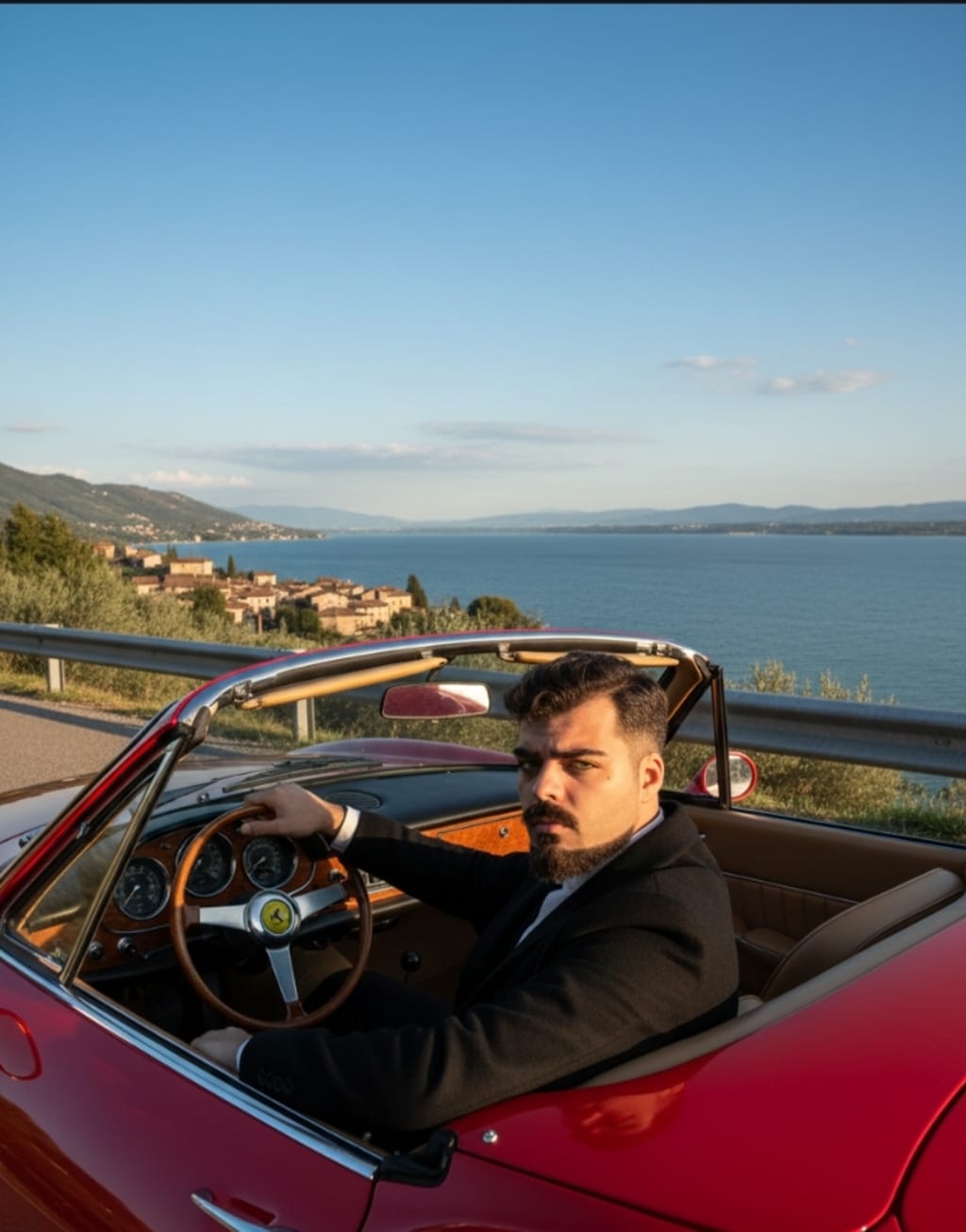
Francisco Saia is a young yet accomplished Italian film director. He is considered by many national and international journalistic outlets to be one of the most talented under-35 directors in the world. Francisco is also very prominent in the media—particularly on social networks—and is viewed as a major source of motivational inspiration by countless aspiring actors and filmmakers. Francisco rose to international prominence at two specific moments: in 2020, for becoming one of the youngest debut directors in the world by helming the film Boccaccio 2020 – Novella Trash at just 22 years of age; and in 2024, for entering the ranking of the world's most-awarded under-35 directors compiled by IMDb. Francisco Saia was born in Savona, Italy, on September 18, 1998. After graduating in directing and screenwriting in 2018 from a film academy in Genoa, he paid his dues, quickly becoming a director of short films and later feature films.
In 2018, he directed the short film Abraham, a work that seems even more relevant today than it was at the time, as it addresses the bullying suffered by a young Jewish-Israeli teenager who recently immigrated to Italy. The short received an international distribution, achieving great success on YouTube and at festivals, before being acquired by the distribution company Opprime Tv and subsequently by Prime Video. In 2021, co-directing with Luca D’Alessandro, he made The Double, a surreal short film tackling smartphone addiction. This work proved to be a major festival success and contributed significantly to establishing Francisco as one of the most-awarded directors in the world. In 2024, the young Francisco Saia made a major leap forward by directing his first full-scale feature film, The thief of falling stars, an urban fantasy shot in English featuring a cast that includes Hal Yamanouchi and Daniel McVicar. The film was selected for the 70th edition of the Taormina Film Festival as the opening film and also emerged as the Italian film most appreciated by domestic audiences in 2024. I had the possibility to interview him recently.
1. What does it mean to be one of the most-awarded and famous under-35 directors in the world?
I think having 20, 100, or 0 awards makes absolutely no difference; they are just numbers. Being ranked among the top 10 most-awarded directors in the world is certainly a great satisfaction and an honor, but it doesn't make me feel superior to anyone in the slightest. Whatever my number of awards or level of fame, I will always remain that same Francisco Saia—welcoming to everyone, who loves simplicity, humility, and going against the grain. The only small boast I want to take regarding this record is the fact that it demonstrates the sacrifices and hard work I have put in over all these years to achieve my dream and believe in it: becoming a debut director at a very young age. I just hope this record can serve as a message to new generations of aspiring filmmakers and those younger than me, encouraging them to believe in their dreams and, above all, urging them to achieve them.
2. What are your thoughts on world cinema today? What do you think needs to change, and what needs to stay the same?
This is a topic we could discuss for hours, days, or worse yet, perhaps we should write a poem about it. I think cinema currently works well in some countries and less well in others; some genres are re-emerging while I find others to be in a profound crisis. In general, I think that unfortunately, on the part of productions and audiences, there is a continuous craving for the "new"—meaning a constant desire for new products, stories, and mediums, even when current or existing products are working just fine. I don't like to label myself as either a progressive or a conservative, but I believe that when a film, a product, or something in general works, it shouldn't be changed at all, at least for a while. Conversely, when a series of films or artistic approaches do not work, then they definitely need to be changed. The problem is that we live in a world where people constantly want change and modernization, even when things are working, which in my view causes a vortex of sudden shifts in multimedia products that generates artistic crises and confusion for the viewer. It is no coincidence that in Italy, my home country, there used to be a saying: "Never change a winning team." The problem nowadays is that it is the winning teams themselves that are being changed. Regarding these statements of mine, I have also noticed lately a growing divide between creators who want to maintain cinematic stylistic traditions and others who want to completely eliminate tradition, embracing solely and exclusively innovation. I believe that one does not exclude the other. I think we cannot possibly live without both, or with a cinema made exclusively of tradition or solely of innovation. Traditions should by no means be erased, just as we must not be hostile toward new innovative and progressive stylistic forms. Speaking of genres, I think that certain cinematic genres worked well up until the 1990s and 2000s, but starting from the 2010s, some of them suffered a severe artistic and narrative crisis—such as horror and animation. I believe that the absolute primary purpose of a film genre is to evoke an emotion in the soul of the viewer. If a viewer watches a horror film, they must feel fear; if they watch a thriller, they must feel anxiety; if they watch a drama, they must feel sadness; if they watch a comedy, they must feel happiness, and so on... But unfortunately, nowadays, the emotional component is the biggest and most serious absence in film genres. I think the horror genre—except for a few cases like Obsession, Backrooms, Weapon, The Sinners, and Doctor Sleep—is facing the biggest artistic crisis ever seen. Today's horror films do not evoke even a sense of fear or terror; they lack jumpscares, which is a very serious mistake since the jumpscare is the main ingredient of this genre. Furthermore, today's horror films focus heavily on aesthetics and very little on content; the stories are very flat, monotonous, all the same, seen and done over again, and above all, most current horror films are made with very low budgets and resources, often bordering on trash and the pathetic. Another genre I find to be in a profound crisis is animation. Honestly, in this case, it is a bit difficult for me to explain the reason for this crisis, but I can confirm that it is primarily a narrative crisis. Except for modern exceptions like Toy Story 5, today's animated films are very flat with poor, boring scripts, and a child gets bored immediately watching an animated film nowadays. It is as if a pinch of fantasy is almost missing in modern animation.
3. What difficulties did you encounter in your training and career?
Becoming a film director has been an extremely arduous undertaking. Unfortunately, I think it is one of the hardest professions to pursue. I had to face numerous difficulties, people who did everything they could to obstruct me, stubborn obstacles placed in my path, and a national and educational film system that, alas, works quite poorly. Becoming a film director has always been a dream and a goal of mine since childhood, and like any dream, it deserves to be pursued and realized. My dream was to become a film director, but my specific goal was to become a director at a very young age—I wanted to direct feature films before the age of 25, and I succeeded. Unfortunately, in Italy, it is almost impossible to debut as a director before the age of 35 or 40, because this country is governed by an industry that believes in the damn idea that young people under 35 are completely incapable of directing, and that they haven't yet developed the skills and knowledge necessary to helm a feature film. I am sorry to say it, but within the Italian film industry, there is true racism toward youth, especially on the part of the majors. However, I believe that for an aspiring director, it is better to debut as early as possible—not least because it allows them to grow better professionally and have a more prolific career. Every day, I encourage all young aspiring creators and directors to take courage, go against the stupid clichés of this society, and strive to launch themselves into this adventure and debut early. Ever since my academy studies, many people looked at me unfavorably because of this philosophy and tried to do everything to obstruct me, but I never gave a damn and proved to be stronger than them, managing to debut at the age of 21 with Boccaccio 2020, thus becoming one of the youngest directors in the world. I remember it was an almost zero-budget film with a deliberate homage to the trash cinema of the 1970s and 1980s. With the support of my academy, a federation, and a production company, I decided to take that risk and dive into my directorial debut. A year later, I directed another feature film, Dalì 2021, once again ultra-low budget, but this time in a surreal key. Three years later, I directed my third feature film—a medium-high budget project with an international cast. In short, since the industry wouldn't support me, I decided to act on my own, proving that we young people are capable of anything. There are some production companies that want young people to stay assistants, or worse, for twenty years, even ending up exploiting them, and every day I fight to put an end to this. Therefore, to answer this question, I confirm that the first obstacle to becoming a director in Italy is precisely this lack of trust toward youth and aspiring creators. Secondly, the other obstacles are the lack of transparency from the film industry and the absence of a national platform or database encompassing all professional directors, the poor financial support for minor projects like short films, the closed-mindedness of the industry and institutions toward certain genres and stylistic approaches, and a bureaucratic system that does nothing but hinder a young aspiring filmmaker's path.
4. Which directors have most inspired your cinematic journey?
There are so many directors who have inspired me through their styles and approaches in the making of my works, and they are all very different from one another. In fact, precisely for this reason, I love defining myself as a versatile director; I love tackling different genres and styles within a single film or from one film to the next, ultimately creating my own unconventional, unique, and inimitable style. Cinema is an art form that encompasses multiple genres, styles, and approaches, and to truly love it, one must love it in all its nuances. I think a true director should not focus on a single genre or style, but must explore broadly and be versatile. I have always been opposed to the concept of a "target audience" because I deeply hate labels, and above all, I think it is a discriminatory concept. I believe films should be for everyone—open to every age, gender, culture, and way of thinking—and must not be aimed at a single category of people. Therefore, in answering this question, I confess that the directors I have always admired the most and who left a major signature on the creation of my works are: Tim Burton, Pedro Almodóvar, Billy Wilder, Stanley Kubrick, Quentin Tarantino, Mike Flanagan, Joann Sfar, Wes Anderson, and David Fincher. Tim Burton is the director, among all those I mentioned, whom I have had the honor of meeting and connecting with. I have always loved his dark fantasy, his unconventional way of describing reality—seeing good in the darkness and evil in the light—and his design. Tim Burton's style was fundamental for the characterization of my characters in some of my films. Almodóvar: I have always loved his approach to the dramatic genre, characterizing it with bright and passionate colors, while infusing a touch of national folklore into each of his films. Kubrick: I think he was the greatest director of all time. I have ever-loved the precision and care for aesthetics omnipresent in his works, and above all, his way of adapting and transposing literary works into cinematic masterpieces. Tarantino: I have always admired his writing style, his handling of climaxes, and his pulp direction. Flanagan: I believe he is unquestionably the greatest horror director of all time, the only one today capable of creating compelling jumpscares, and one of the very few who has remained faithful to the true horror of the 1980s and 1990s. Joann Sfar is perhaps the one I reflect myself in the most on a personal level. He was born 200 km from my home and is by far the most eclectic; he is an all-around artist—a director, comic book artist, writer, and animator. I also had the fortune and honor of meeting him. I think he is the greatest animation director of all time; his pseudo-childish mood has greatly inspired my fantasy works. David Fincher is a tremendous thriller director. I have always loved his approach to this genre and the state of anxiety he manages to create in the souls of the viewer.
5. As an international director, what do you think are the fundamental differences separating European cinema from American cinema? Do you prefer one over the other?
I love both American and European cinema, and I don't think one inherently prevails over the other; we can find high-level American films and poor European films, just as we can find high-level European films and poor American films. However, I can confirm that they are two quite different types of film industries. The American film industry is often very commercial, hesitant, and ridden with the constant fear of making mistakes or failing. It is an industry that places artistic limits on directors, not always making them feel free, but at the same time—unlike the European industry—the American one places directors in significantly better conditions to work. In the American industry, directors are often stripped of many decision-making powers in the artistic sphere, but simultaneously, the majors do everything they can to protect the author's image, still guaranteeing them artistic dignity. Moreover, we all know that the financial backing of the American industry is clearly superior to the European one. The European film industry, on the other hand, is one that guarantees greater and better artistic freedom to directors and creators. In 90% of cases, the final cut belongs to the director rather than the production, but European productions often place directors in slightly more disadvantaged conditions compared to the American industry. Film budgets and salaries are often lower; furthermore, European cinema in many aspects is less welcoming and more closed than American cinema. It is no coincidence that, as I stated earlier, American cinema is quite open to under-35 directors, whereas European cinema is a bit less so. From an artistic and acting standpoint, I can affirm that both are great industries that have shaped the history of world cinema and will continue to shape it in the future.
6. What characteristics must a good director possess?
First and foremost, I think a director must never be afraid; they must always be daring and, above all, never afraid to express their opinion, even outside the set. A director must never be afraid to show their entire self, must not fear showing their flaws, weaknesses, and even insecurities, and above all, must never be afraid to go against the grain. A good director must strive to be unconventional, breaking the molds, standards, and clichés of ordinary cinema, while obviously maintaining their professionalism and confirming their artistic abilities and knowledge. A good director must not be vain in the slightest, must not flaunt their fame or talent as an object of superiority, and above all, I believe they must be very supportive of fellow directors. Unfortunately, today I am noticing more and more that there are directors who are open and hospitable toward actors or crew members, but at the same time genuinely hostile and competitive toward other directors. This phenomenon is completely wrong, because I believe that if there were more solidarity and support among directors, there would undoubtedly be more work for everyone and more goodwill. I admit that I would be happy to see more co-directing between directors in the future, especially among famous ones. I also believe that a director has every right to stand up for themselves on set or get angry with the right people if something goes wrong due to opposing causes, but at the same time, they must treat everyone the same way—from the runner to the DP—without considering anyone inferior or superior. A good director must also be quite quick in making decisions, because unfortunately, from personal experience, I can guarantee that in filmmaking it is always best to try to do everything immediately. We live in an era where many films are often canceled before they can even be made. A good director must always have a backup plan in their drawer and know how to calculate the unexpected: if Plan A doesn't work, you must proceed with Plan B, and if even that doesn't work, you must resort to Plan C. A good director can be insecure—in fact, insecure directors are often the best ones because they reflect on things before taking them for granted. Ultra-confident directors, on the other hand, are those who blurt out the first thing that comes to mind just to appear ready, ultimately proving to be sheer incompetents who don't know what they are doing. Above all, a good director must be an artist who is never satisfied or places limits on themselves; they must always try to shoot as many camera angles as possible, bring as much material as possible to the editing room, and never be content with just one good take per setup. In short, they must never be full.
About the Creator
Enjoyed the story? Support the Creator.
Subscribe for free to receive all their stories in your feed.
Comments
There are no comments for this story
Be the first to respond and start the conversation.