
The Short-Drama Boom Isn’t a Storytelling Win. It’s a Bill Sent to Cinema.
Redov’s 40 billion yuan revenue claim was false. The minutes it captured are not.
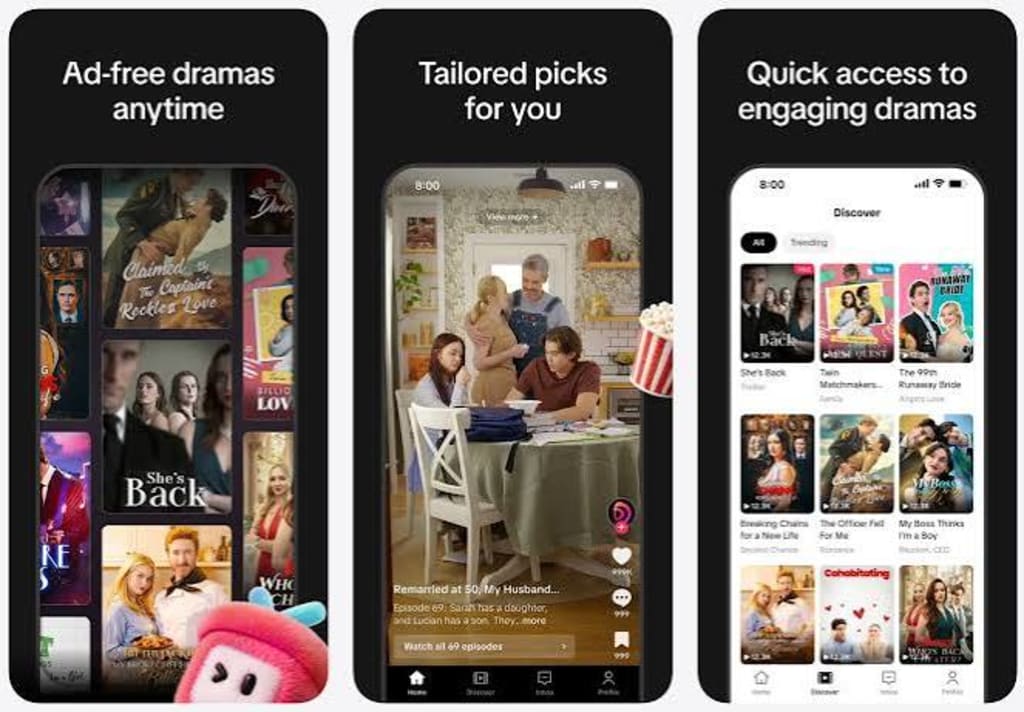
The claim circulated for weeks: Redov, the short-drama app launched by ByteDance three years ago, was on pace to earn more than 40 billion yuan in 2026, enough to match or overtake China’s total annual box office. On October 27, Redov’s official account issued a statement. The revenue figures, including “annualized approaching 40 billion” and “420 to 450 billion this year,” were untrue. The “institutional data” and “expert projections” behind them were not official information, and the comparisons built on them had no factual basis.
So the revenue number is gone. What remains is a different ledger, measured in minutes.
The metric that moved
As of July 2026, Redov’s daily active users reached 168 million, a 107 percent year-on-year increase. That surpassed the combined DAU of iQiyi, Tencent Video, Youku, and Mango TV, the four incumbent long-video platforms, whose combined DAU sits at roughly 155 million. Average daily viewing time per user on Redov’s live-action short dramas is about 125 minutes. By September, the platform’s daily per-user average had risen to roughly 151 minutes, with monthly total watch time exceeding 832.1 billion minutes.
Those minutes have a price. Redov sells advertising on a CPM basis: 25 yuan per thousand impressions, with a minimum daily buy of 100,000 impressions, or 2,500 yuan. Mid-roll ads cannot be skipped and run for a mandatory five seconds. The user pays nothing at the point of viewing. The advertiser pays for attention, and the platform collects the spread between the cost of producing the content and the price of the inventory it creates.
The useful story is about a different product being sold. A cinema ticket is a wholesale purchase of two hours: money upfront, a fixed seat, one settlement for whatever the film turns out to be. Redov sells the same two hours in retail units, seconds at a time, priced by impression, settled continuously against retention curves. The user risks nothing but a swipe. The producer risks everything on whether the next hook holds.
The box office comparison is real, but it compares different things
China’s 2026 box office crossed 315 billion yuan by October 26, with 804 million admissions across 122 million screenings. The short-drama market is projected to reach 121 billion yuan in 2026, roughly double the year’s cinema revenue, with 851 million users, or 66.7 percent of China’s internet population. Free short drama alone accounts for 57.3 billion yuan of that market. AI-generated drama and motion comics add over 40 billion.
The comparison sets a paid-ticket business against an ad-inventory business that uses narrative as raw material. The short-drama total is larger because its monetization surface is broader. It reaches users who would never pay for a ticket, and it charges advertisers for every minute those users stay.
“Old-fashioned values” follow the user base
Redov’s user base explains part of what appears on the platform. Users aged 30 and above, together with the silver-haired cohort, form the platform’s main body. The 51-plus group has shown the fastest growth rate. On the live-action side, the core audience is women aged 31 to 40, at 61 to 68 percent of viewers. Family ethics, rural life, and elderly-centered stories find an audience here because the audience is structurally older and more rooted in household and intergenerational concerns than the typical cinema-going demographic.
Redov has also made deliberate moves toward premium content. Its Guoran Plan has backed titles such as Nong Chao and the Chuang Guandong spin-off Huan Shan He, investing in period detail and historical narrative. These are real production choices, not marketing language. But they sit alongside a much larger volume of content built on rapid reversals and emotional hooks. The platform’s dominant grammar is still the hook: a gap opened, a reversal delivered, a release timed to the next ad break. The old values are not a platform ideology imposed from above. They are the preference peak of a user base that rewards certain narrative forms with retention.
Short drama is now having its own cinema moment
After the 2026 Spring Festival, more than 60 percent of live-action short-drama crews stopped shooting. Actor fees fell from thousands of yuan per day to a few hundred. Some performers could not get calls at all. In the first quarter, short-drama starts fell by three-quarters year-on-year. Redov suspended large-scale live-action projects and canceled the minimum-guarantee split for small and mid-sized producers, while AI-generated short drama, cheaper by an order of magnitude, flooded the supply side. In the first nine months of 2026, 490,000 micro-dramas went online, thirteen times the whole of 2025. More than 90 percent were AI-generated.
The economics that made Redov formidable are now redistributing risk downward. Production companies fund their own shoots and carry their own losses. The platform holds the audience and the ad inventory. The return rate across the industry has fallen to roughly 28 percent, and the producer’s share in paid short drama is 4 to 7 percent. The platform’s CPM price has fallen from around 60 yuan in late 2025 to 15 to 30 yuan in 2026, even as watch time keeps rising. More minutes, less money per minute.
This is the same pattern that hollowed out the film industry’s middle. When a content form is confirmed as a scalable attention business, profit concentrates at the platform and the top of the IP pyramid, while the people who make the thing absorb the volatility.
What the momentum punishes
The film industry did not lose this ground to a superior narrative form. It lost it by treating narrative as a risk to be minimized. IP adaptation rose from 33 percent of domestic releases in 2018 to 82 percent in 2025. Sequels and remakes became the safe default. The audience’s tolerance for the formula, familiar face, familiar structure, familiar marketing beat, thinned year by year. Cinema did not stop being capable of holding two hours of someone’s attention. It stopped reliably earning the decision to give those two hours away.
Redov did not solve that problem. It built a machine that does not need the decision. It asks for a tap, not a ticket. It settles in seconds, not in hours. It does not require the viewer to leave the room. The 40 billion figure was false. The minutes are real, and they were available because cinema had already begun to treat its own two hours as something the audience owed it rather than something it had to earn.
The bill is real. The platform that delivered it works as a mirror held up to an industry that chose safety over the thing safety was supposed to protect.
About the Creator
Jin
Writer of reamstories
https://reamstories.com/jin
Enjoyed the story? Support the Creator.
Subscribe for free to receive all their stories in your feed. You could also become a paid subscriber, letting them know you appreciate their work.
Comments
There are no comments for this story
Be the first to respond and start the conversation.