
The Era of Digg: When the User Was God ⚡
A Masterclass in How to Lose an Empire in 24 Hours

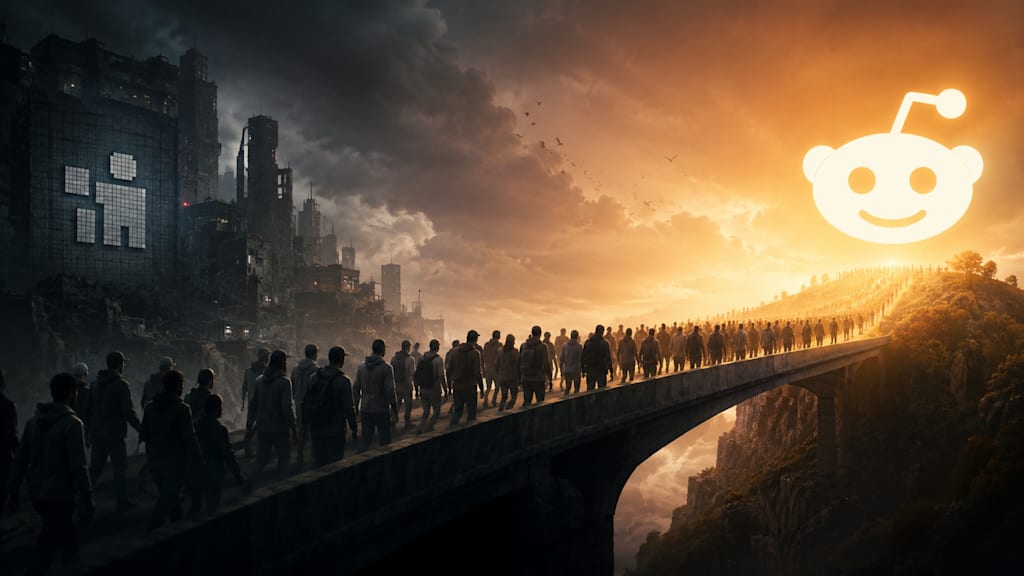
Before the world heard of AI-driven feeds, there was Digg. Founded in 2004 by Kevin Rose, it was a revolutionary platform 🚀. The mechanism was simple: someone posted a link, and the community "dug" it (Digg) or "buried" it (Bury). If the content was good, it hit the front page, generating such massive traffic that the servers of smaller websites would crash under the weight. They called it the "Digg Effect" 💥.
By 2008, Digg was a giant valued at $160 million 💰. Reddit? Back then, it was seen as the "ugly, niche cousin" with an archaic interface, populated mostly by programmers and conspiracy theorists 🤓.
August 25, 2010: The Day the Dam Broke 🌊
The catastrophe had a name: Digg v4. The management, eager to please advertisers and increase monetization, decided to completely rebuild the site's foundations. Their biggest mistakes? ❌
Favoring Publishers: The new system allowed big brands (like Microsoft or National Geographic) to automatically post content via RSS 🤖. The user's voice ceased to matter—a corporate stream began flooding the front page 🏢.
Removing the "Bury" Button: The community was stripped of its right to negative moderation 🚫. This was a blow to the very heart of the democratic internet.
Technical Chaos: The site loaded slowly, and old links stopped working 🛠️.
From a crowd psychology perspective, something fascinating happened. The Digg community didn’t feel like mere customers—they felt like co-owners 🤝. When v4 stripped them of their agency, they felt betrayed 😡.
The Great Migration: The Psychology of Rebellion 🏃♂️💨
Within 24 hours of the update, Digg's front page became a battlefield. In protest, users began mass-"digging" links leading directly to... Reddit 🗳️. What did Digg's administration do? They started banning the protesters, which was like trying to put out a fire with gasoline 🔥.
This triggered a mechanism known as psychological reactance—when people feel their freedom of choice is being restricted, they do everything in their power to reclaim it. In this case, reclaiming freedom meant "packing their bags" 🎒.
Why Did Reddit Win? 🏆
Reddit didn't have to do much. It just had to be. While Digg turned into a sterile, corporate bulletin board, Reddit offered:
Transparency: The upvote/downvote mechanism remained intact ✅.
Sense of Belonging: Subreddits provided a level of community depth that Digg never perfected 🫂.
Rawness: The lack of bells and whistles suggested that content was more important than the packaging 📄.
In a matter of days, Digg's statistics plummeted by 25-30%, and Reddit's traffic skyrocketed 📈. This wasn't just user churn—it was an evacuation.
The Fall of the King and a Lesson for the Future 📉
The finale of this story is brutal. In 2012, just two years after the v4 disaster, Digg was sold for a measly $500,000—a tiny fraction of its former valuation 💸. Today, it is a mere shadow of its former self, a content aggregator that excites no one 👻.
"The internet doesn't forget, but above all—the internet doesn't forgive a betrayal of trust" 🕸️.
The main takeaway for creators and executives? In the world of Web 2.0 and beyond, the product isn't the code; it’s the community 🗣️. If you treat your users like a commodity whose opinion doesn't count, they will simply find another "home." Digg forgot that it was only the host of the party, not the owner. When the host started dictating what the guests should talk about, they simply moved to the neighbor's house—where the beer was worse, but the conversation was real 🍻.
What`s your opinion? Are you an active reddit user? Do you remember Digg? share your thought in comment below.
About the Creator
Piotr Nowak
Pole in Italy ✈️ | AI | Crypto | Online Earning | Book writer | Every read supports my work on Vocal
Enjoyed the story? Support the Creator.
Subscribe for free to receive all their stories in your feed.
Comments
There are no comments for this story
Be the first to respond and start the conversation.