
The cute face hiding a cold system: how to tell when an anime world is built on cruelty
A four-part test for separating structural darkness from tear-jerking set dressing
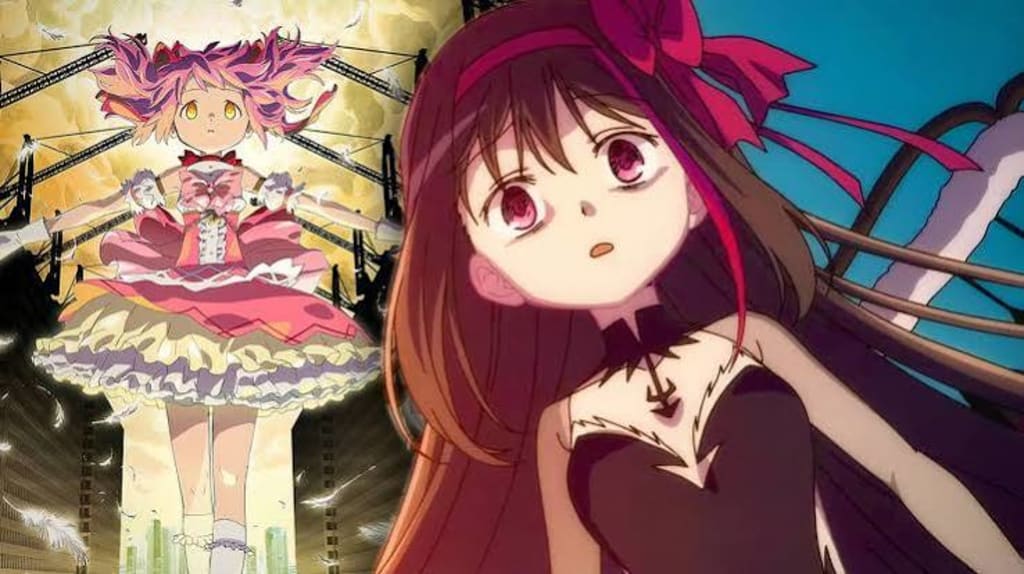
The anime filter works as a narrative contract: round faces, bright colors, and adolescent friendship promise a kind of lightness that can be consumed. When that lightness is peeled back, the discomfort comes from a structural question. Is cruelty placed in the logic by which the world operates, or is it merely a tear-jerking backdrop for character relationships? The answer determines whether a work can withstand the test of removing the filter.
I. Survival rules: when the system does not need to hate you
The curse in Made in Abyss is a vertical price list. Returning from the first layer causes mild dizziness. The second brings nausea and headache. The third brings loss of balance and hallucinations. The fourth brings bleeding from every orifice and severe pain. The fifth brings loss of human form and mind. Survivors become Narehate, things that are still moving, still breathing, but no longer know who they are. The sixth layer means loss of humanity, or death.
The key to this table is that it makes no distinctions. Riko is a child, Reg is a robot, Nanachi is a Narehate. The curse treats them all the same. The Abyss does not hate anyone. It is a one-way road: the deeper you go, the more expensive the price of curiosity, expensive enough that you have to pay with whether you are still yourself. Every step Riko and Reg take downward signs a contract whose terms are known in advance.
The system in Puella Magi Madoka Magica is colder because it turns cruelty into accounting. Kyubey’s civilization needs to collect the energy released at the instant when hope turns into despair, and adolescent girls’ emotions have the highest conversion efficiency. The contract terms are: the wish is granted, the soul is extracted and condensed into a Soul Gem, and the body becomes an empty shell. The most crucial term is systematically concealed. Magical girls will eventually become witches, and witches in turn will be killed by new magical girls. Sayaka signs before she knows the truth. Her hope is real, her choice is free, and yet before she signs, the system has already defined her hope as fuel for the next round of despair.
Both works share the same texture: the world does not hate you; the world does not even need to know you. It runs according to its own rules, and human desire, hope, and love happen to be the most efficient input variables for those rules.
II. Social institutions: the boundary of peace is drawn by exclusion
The peace in From the New World is genetic engineering at the level of design. Humanity with psychic power once slaughtered itself to the brink of extinction, so it wrote attack inhibition and a death-of-shame mechanism into its own genes. The intention to harm another person is instinctively blocked by the body. A forced attack stops the internal organs. War disappears.
The cost has two layers. First, the education system secretly disposes of children who might pose a threat to society, without informing the parents and without leaving records. Second, humans without psychic power are transformed into Queerats. These creatures have high intelligence and social structure, yet they are used as slave organisms. The boundary of peace is drawn precisely around the same kind. The massacre of the alien is the daily operation of this gentle order.
The final reversal pulls out the foundation: the Queerats are human. The so-called utopia is a conspiracy built on the species-level degradation of one’s own kind. After Saki learns the truth, she chooses to maintain the status quo. She does not do this out of cruelty. She cannot find a way to change it without overthrowing the entire society.
The exclusion logic of Psycho-Pass is technologized. The Sibyl System scans the psycho-pass and processes latent criminals before crimes occur. Society gains a low crime rate, at the price of canceling in advance the question of what kind of person to become. The system has already ruled on your dangerousness before you act. The core of the system is a collection of brains belonging to people the program cannot judge: the criminally asymptomatic. Absolute order is ultimately still rule by people, only packaged by algorithm as unquestionable objectivity. Akane Tsunemori chooses to stay inside the system after learning the truth. She does not agree with it. There is no leverage outside it.
The cruelty of these two works does not come from a villain. Evil is written into the institution itself, and people live inside it, experiencing oppression as security and efficiency. The most uncomfortable part is this: after the protagonists learn the truth, they still do not have the option of flipping the table.
III. Ontological indifference: the world cannot even be bothered to harbor malice toward you
The Eclipse in Berserk works as something colder than a betrayal narrative. What makes Griffith’s sacrifice suffocating is that his choice is presented as a node within causality. The God Hand can perceive and manipulate causality, and human resistance is structurally confined within the cage of causal law. What Guts fights is never merely a concrete enemy. He fights an entire cosmic grammar that incorporates human suffering into the will of higher beings. His struggle has a Sisyphean texture: push the stone up, the stone rolls down, push again. The work does not promise that this cycle will be broken.
Grimgar of Fantasy and Ash goes to the other extreme. The world cannot even be bothered to give you malice. A group of young people who have lost their memories are dropped into another world, with no cheat powers, no talent, and a starting point of not even being able to beat goblins. When the protagonist group kills a goblin for the first time, the work spends a long passage dealing with the fear and guilt after taking life. The scene stays with silence, trembling hands, and clumsiness while handling the corpse. The death of team leader Manato is abrupt: no warning, no last words, no slow motion. He is simply killed, because that day’s combat coordination went wrong. Tomorrow the rest still have to go out, because if they do not go out, they will have nothing to eat.
This de-dramatized cruelty is the part the anime filter has the hardest time digesting. It refuses to provide any tragic grandeur that can be aestheticized. Death is just death: no soundtrack, no recollection montage, no promise that his sacrifice will not be in vain.
IV. The limits of the filter: cruelty as a style label
Removing the anime filter does not automatically give a work critical depth. A considerable number of works that advertise themselves as dark, deep, and cruel follow the logic of character design and emotion over worldview. The cruel background exists to make character deaths seem tear-jerking, and war and institutions are backdrops for emotional drama. Once one asks how the institution is maintained, why no one resists, or where resources come from, the work gets stuck.
The typical operation of such works is this: a character’s death is replayed three times, the music switches from piano to strings and back to piano, other characters fall to their knees and cry out, and the camera films the same face from different angles. These techniques press the audience’s head down and say, Cry for me. The world itself never participates in the narrative. Swap in a gentler art style, and the emotional core of the story is almost unaffected.
The criterion for distinction is whether the cruelty is systematic, not how dark the setting is. In a good cruel worldview, the cruelty can be traced back to a set of rules, an institutional logic, or an ontological premise. After peeling off the filter, the audience faces a world in which one can ask why it is like this, even if the answer is despairing. In cheap dark and cruel works, the cruelty is occasional, decorative, and replaceable. Who dies does not matter. What matters is that the death looks good, is tear-jerking, and can make the audience type I’m gutted in the comments.
The function of the filter is to manage the distance between the audience and cruelty, not to conceal cruelty. It lets the audience enter in a safe way first, then at some point withdraws that safety, so that cruelty strikes the viewer in the form of betrayed trust. The picture-book art of Made in Abyss and the genre promise of Puella Magi Madoka Magica are both operations of this distance management. But when this technique is simplified into a market formula of cute art style plus depressing developments, the filter degenerates from a narrative strategy into stylistic inflation.
Whether a work can withstand the test of removing the filter depends on a simple question: after the cute faces and dazzling battles are taken away, is the remaining world still telling something that cannot be easily consumed? Works that pass this test do not need adjectives to announce their cruelty. The number of curse layers, the trigger conditions of the death-of-shame mechanism, and the procedure for handling a goblin corpse speak for themselves.
About the Creator
Jin
Writer of reamstories
https://reamstories.com/jin
Enjoyed the story? Support the Creator.
Subscribe for free to receive all their stories in your feed. You could also become a paid subscriber, letting them know you appreciate their work.
Comments
There are no comments for this story
Be the first to respond and start the conversation.