pop culture
Modern popular culture topics in the geek sphere.
Steampunk Corsets That Slay: Add Drama to Every Outfit
When it comes to fashion that makes people turn their heads and whisper “who is that?”, nothing beats the drama of a steampunk corset. This iconic piece of clothing has the power to completely transform an outfit — taking it from simple to striking, from ordinary to unforgettable. Whether you’re building a full-on steampunk clothing ensemble or just want a statement piece for everyday wear, corsets are your ticket to bold, fearless style.
By Aditya Agarwalabout a year ago in Geeks
Living in Black Mirror: When Fiction Stops Being Fiction
When I first watched Black Mirror, I thought of it as a disturbing but clever piece of science fiction. A warning. A dark imagination of “what could be” if technology spiraled out of control. It was something to discuss with friends late at night, or write essays about in college: a mirror, yes, but one that reflected a world just far enough away to give us comfort.
By Muhammad Kaleemullahabout a year ago in Geeks
What If Batman Had Iron Man’s Tech?
Imagine this: Bruce Wayne, Gotham’s brooding vigilante, wakes up one morning to find a gift from Tony Stark — a warehouse full of Stark Industries tech, including multiple Iron Man suits, an AI butler more advanced than Alfred, and unlimited access to arc reactors. Suddenly, Batman isn’t just the Dark Knight. He’s the Iron Bat. Batman has always been defined by his resourcefulness. He’s the man with no superpowers who can stand shoulder-to-shoulder with gods like Superman and Wonder Woman. His "superpower" is preparation — time, strategy, and gadgets. Now imagine what he could do with Iron Man-level tech. First off, Gotham crime would be over by sunrise. Batman’s usual method involves sneaking through shadows, interrogating thugs, and physically overpowering criminals. But with an army of autonomous drones, satellite surveillance, and AI-powered analytics, Bruce could locate every crime in real time. His Batcave would be more like the Stark Tower’s holographic command center, mapping the city, predicting crime before it happens, and sending out drone-assisted Batsuits. The iconic Batmobile? Forget it. Bruce would have a fleet of flying suits, each tailored for a mission: stealth suits for silent takedowns, Hulkbuster-style suits for fighting Bane, and nanotech suits for instant armor deployment. He’d no longer need to break bones personally — tech would do the heavy lifting. The Justice League dynamic would completely shift too. Traditionally, Batman is the planner, the guy who keeps files on how to take down every teammate if they ever go rogue. With Iron Man tech, he’d have actual remote systems to neutralize any superhuman threat within seconds. Superman misbehaving? Kryptonite laser satellites online. Flash going rogue? Deploy speed-cancelling stasis fields. Wonder Woman under mind control? Nano-lasso drones could immobilize her before she blinks. And let’s not forget Batman’s mental edge. Tony Stark is charismatic and impulsive, but Bruce is colder, more calculating. While Tony uses tech to express himself (sometimes recklessly), Batman would use it to control every variable. That level of precision could be terrifying. He’d essentially become a one-man Justice League — an unstoppable force of justice, but also potentially a dictator. The villains wouldn’t stand a chance. The Joker thrives on chaos and unpredictability, but with predictive AI, Batman could stop Joker’s plans before they even happen. Gotham’s underworld would collapse under the weight of total surveillance. But here’s the twist — would Batman go too far? This is where the story gets interesting. Batman’s moral code prevents him from killing, but with access to overwhelming power, he might struggle to keep that line clear. The temptation to "fix" Gotham permanently — to erase crime at the root — would grow stronger. He might start justifying permanent solutions. Would Gotham still need a hero if there’s no crime left? Would Bruce Wayne still be Batman if his war is already won? Another fascinating angle: Bruce’s mind and Tony’s tech together could spark inventions beyond crime-fighting. Batman could solve global problems — energy crises, hunger, climate change — in a fraction of the time Stark did. But would he share that tech with the world, or keep it locked away to prevent misuse? In short, Batman with Iron Man’s tech is a scary yet thrilling concept. He would become the ultimate hero — but maybe also the ultimate authoritarian. Gotham might become the safest city on Earth, but at what cost to freedom? This "what if" isn’t just fun — it asks us to consider how much power is too much, even in the hands of the world’s greatest detective. Maybe Batman is perfect as he is: a man relying on wit, grit, and human limitations to keep himself grounded. But admit it — the sight of Batman dropping from the sky in a nanotech Bat-suit with J.A.R.V.I.S.-style AI whispering in his ear would be absolutely epic.
By Mustafa Khanabout a year ago in Geeks
What If Marvel Villains Were Actually the Good Guys?
What if everything we thought we knew about good and evil in the Marvel Cinematic Universe was wrong? What if the villains — the ones we booed, feared, and rooted against — were actually trying to save the world while the so-called heroes were just… in the way?
By Mustafa Khanabout a year ago in Geeks
The Science of Superhero Powers — Could They Really Exist?
We’ve all had that moment — sitting in a dark theater, watching Spider-Man swing between skyscrapers, and secretly wondering if one radioactive spider bite could change our lives forever. But what if we took off the Marvel-colored glasses and asked: could any of these powers actually work in real life? Grab your lab coat (and maybe a cape) — we’re about to break down the science of superhero abilities. 1. Spider-Man — The Physics of Web-Slinging Peter Parker gets bitten by a radioactive spider and suddenly develops super strength, wall-crawling abilities, and web-shooting powers. Here’s the reality check: Radioactive spider bite? In real life, you’d get radiation poisoning, not superpowers. Wall-crawling? Geckos can stick to walls thanks to microscopic hairs on their feet — but for a human, this would require sticky pads the size of dinner plates. Not very sleek. Web strength? Real spider silk is five times stronger than steel by weight. If Peter could produce that much silk (or use mechanical shooters), it might actually hold his weight. Physics says web-swinging could be possible — but your shoulders might dislocate at every swing from the g-forces. Still, science says Spider-Man’s powers are plausible-ish — if you don’t mind dislocated arms and custom wall-sized foot pads. 2. Iron Man — The Billion-Dollar Physics Problem Tony Stark built his first suit in a cave with a box of scraps. Great cinema. Bad engineering. The Arc Reactor: A mini fusion reactor in his chest is still pure science fiction — we can’t make fusion reactors that small, yet. The Suit: The repulsor blasts and flight system would require insane energy output. You’d basically be flying with multiple jet engines strapped to your body. The Cost: Some engineers have estimated an Iron Man suit would cost upwards of $100 million — if it were even possible. Verdict: Iron Man is 99% sci-fi fantasy… but we might see exoskeletons and jetpacks for soldiers soon. (Sorry, no Jarvis yet.) 3. The Hulk — Gamma Radiation Gone Wrong Bruce Banner’s origin story? He gets blasted with gamma radiation and transforms into a giant green rage monster. But here’s what gamma radiation actually does: It destroys DNA. It causes cancer. It doesn’t turn you into a muscled-up superhero. So instead of becoming The Hulk, real Bruce Banner would… die. (Sorry, science is brutal.) 4. The Flash — Can a Human Run at Lightspeed? Barry Allen can run so fast he time-travels. Cool, right? Science says… nope. Air Resistance: Running faster than sound would create shockwaves that could destroy buildings. Calories Burned: To run at Flash speed, you’d need to consume thousands of calories every second — basically eating like a dozen pizzas per step. Body Limits: Your bones, muscles, and organs would rip apart from the stress long before you reached that speed. Verdict: Even Usain Bolt is safe from becoming The Flash. 5. Batman — The Most Realistic Hero Let’s give credit where it’s due: Batman is the most scientifically plausible superhero. He’s just a very rich, very trained human with gadgets. If you had billions of dollars, Olympic-level discipline, and a tolerance for broken bones, you could be Batman. (Though maybe don’t try the rooftop jumps.) The Geeky Verdict Superhero powers are awesome — but most of them break the laws of physics faster than The Flash breaks the sound barrier. But here’s the fun part: science is catching up. We already have: Exoskeleton suits that enhance human strength. CRISPR gene editing that could theoretically modify DNA. AI systems that act like mini-Jarvis assistants. So while you might not wake up as Spider-Man tomorrow, the age of “real-life superpowers” might be closer than you think.
By Mustafa Khanabout a year ago in Geeks
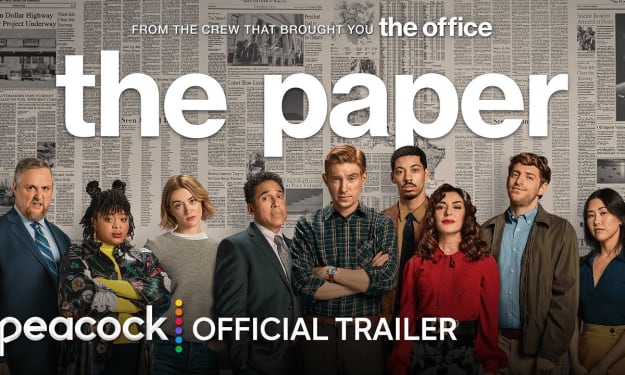
So I watched The Paper
"The Paper" Rating: 7.5/10 A New Chapter in Familiar Territory "The Paper" is a spinoff of "The Office" and follows a faltering Toledo newspaper whose staff is desperate to turn the tide. After nearly a decade since The Office finale, Greg Daniels and Michael Koman have returned to the mockumentary well with ambitious results. While the show doesn't quite capture the lightning-in-a-bottle magic of its predecessor, it eventually finds its footing as something worthwhile in its own right.
By Parsley Rose about a year ago in Geeks
Rewatching The 100
"May we meet again." Just me, writing an opinion piece on one of my favourite television series of all time. I have referenced The 100 in a few older pieces of writing of mine. This series truly is special to me. The music, the characters, the plot; I love all of it. You can view one of my previous posts down below.
By Chloe Unfilteredabout a year ago in Geeks
'Featherbaby' Takes Flight at Greater Boston Stage Company
Caw, caw! - poop - I’m a sassy parrot. Greater Boston Stage Company welcomes audiences to Featherbaby, a show about a sassy and foul-mouthed Amazon parrot. Featherbaby’s owner, Angie, has relationship drama, changing the parrot’s living accommodations to Mason, who can’t stand the parrot.
By Marielle Sabbagabout a year ago in Geeks
Layering Like a Pro: Steampunk Trench Coats and Vests for Winter 2025
When winter rolls in, fashion becomes all about mastering the art of layering—and nothing does it quite like steampunk trench coats and steampunk vests. Steampunk fashion isn’t just clothing; it’s a lifestyle that combines Victorian elegance, industrial flair, and a dash of adventure. And in Winter 2025, this style is taking over runways, streetwear, and alternative fashion scenes alike. Whether you're building your dream cosplay, dressing for a renaissance fair outfit, or simply want a statement coat that screams originality, steampunk layering is your ticket to turning heads.
By Aditya Agarwalabout a year ago in Geeks
Demon Slayer: Infinity Castle Breaks Box Office Records in India and the US. AI-Generated.
Demon Slayer: Infinity Castle Breaks Box Office Records in India and the US Anime fans across the world are celebrating as Demon Slayer: Kimetsu no Yaiba – Infinity Castle continues to smash records at the global box office. The latest film in the popular anime franchise has outperformed big Bollywood and Hollywood movies, proving that anime has finally earned its place on the world stage. Demon Slayer Infinity Castle Box Office in India Demon Slayer: Infinity Castle is the first film in a planned trilogy that will conclude the epic Kimetsu no Yaiba saga. Released internationally after its record-breaking run in Japan, the film has created a storm at the Indian box office. According to Sacnilk, the anime movie earned an estimated ₹40 crore net in its opening weekend in India. This is higher than what Tiger Shroff’s action-packed Baaghi 4 managed, which collected ₹31 crore in the same time frame. Even Sunny Deol’s Jaat, considered a successful film earlier this year, earned only ₹23 crore in its debut weekend. For Indian cinema, this is a historic moment. Anime films have never been major box office players in India, where star-driven Bollywood and Tollywood movies usually dominate. But with Infinity Castle outperforming such big titles, it is clear that Indian audiences are ready to embrace anime in a big way. This could open doors for more anime releases in Indian theatres in the future. Demon Slayer Infinity Castle Box Office in the US The film’s performance is equally spectacular in the United States. According to Box Office Mojo, Demon Slayer: Infinity Castle earned $70 million gross in its opening weekend in North America. This makes it the biggest opening ever for an anime film in the US. The record was previously held by Pokémon: The First Movie, which earned $31 million in its opening weekend back in 1999. For more than two decades, that record remained untouched. But now, Infinity Castle has more than doubled it, proving the massive growth of anime’s popularity in North America. What’s even more impressive is that the anime film topped the weekend box office in the US, beating major Hollywood titles such as The Conjuring: Last Rites and Downton Abbey: The Grand Finale. Global Box Office Success Worldwide, Demon Slayer: Infinity Castle has already earned close to $353 million globally, making it one of the most successful films of the year so far. With strong numbers from Japan, India, the US, and other Asian markets, the film is setting new standards for anime worldwide. The fact that this is only the first installment of a trilogy makes things even more exciting. Fans around the world are eagerly waiting for the next two films, and if the trend continues, the Infinity Castle trilogy could easily become one of the highest-grossing anime franchises in cinema history. Why This Success Matters The success of Demon Slayer: Infinity Castle highlights a major shift in global cinema. Audiences are no longer limited to traditional Bollywood, Tollywood, or Hollywood releases. Anime is now competing directly with big-budget films and even outperforming them. For India, this is especially important. A ₹40 crore opening weekend shows that anime has the potential to build a strong fan base in one of the world’s largest film markets. This could encourage distributors to release more anime films in Indian theatres, giving fans the chance to enjoy them on the big screen instead of waiting for streaming platforms. Final Thoughts Demon Slayer: Infinity Castle is more than just a hit movie—it is a cultural milestone. By outperforming films like Baaghi 4 in India and setting records in the US, it has proved that anime has gone mainstream worldwide. With a global collection already nearing $353 million, the film is on track to be remembered as one of the biggest cinematic events of 2025. If this is just the beginning of the trilogy, the next chapters could bring even greater success. For anime fans everywhere, the time has truly come: anime is no longer niche—it is leading the box office.
By Farhan Khanabout a year ago in Geeks
The Carpenter's Son:The story that will be the horror movie of the year
The Carpenter's Son is a religious horror film set to be released this fall. The story, which is sure to generate enormous controversy, is a dark take on the life of Jesus of Nazareth. The film is directed by Lofty Nathan and stars Nicolas Cage, who plays Joseph, Jesus' adoptive father, and Noah Jupe as Jesus.
By Ninfa Galeanoabout a year ago in Geeks