literature
Geek literature from the New York Times or the recesses of online. Our favorite stories showcase geeks.
Book Review: "Thus Were Their Faces" by Silvina Ocampo
I've been back to the library looking for books I haven't really heard of. I have, however, heard of this author before even though I haven't read much of her work. Silvina Ocampo was an Argentinian writer and poet from Buenos Aires. She often wrote in this almost Angela Carter-mixed-with-a-hint-of-realism sort of way. One of the biggest authors of surrealism, Ocampo created entire worlds inside of characters' heads. I found this book almost by accident and was surprised to read that the introduction was by Helen Oyeyemi, the writer of the book Gingerbread. There's also a short preface by Jorge Luis Borges. It's completely on-brand for this author to have those other greats within.
By Annie Kapurabout a year ago in Geeks
Book Review: "Strange Pictures" by Uketsu
I'd heard of this book before and when I did I'm not going to lie, it didn't really sound that interesting. Eventually, I caved and got it on my Kindle because I couldn't find it in the library. For a book with pictures, this was really well formatted on the Kindle, which is surprising. Apart from this though, I have an awkward opinion about this book. The beginning of the story seems very interesting but, as the story starts connecting and becoming more and more repetitive with all the drawings and stuff apparently have some 'secret' buried in them, I lost a lot of my original enthusiasm. It was a good concept, but perhaps it could have been executed better. It didn't feel as visceral and conceptually terrifying as the author perhaps intended.
By Annie Kapurabout a year ago in Geeks
Book Review: "Perfection" by Vincenzo Latronico
There are probably too many books about the millennial experience, and many that really miss the mark because they are hyper specific to a certain group of middle-class, white, 30-something year old women who's biggest problem is (in a toddler's voice) 'I'm not her friend anymore'. It's tiring. But Vincenzo Latronico seems to have hit the nail on the head with his very satirical book about what it is really like to be a millennial living in the city. Witty, often dark and incredible dystopian, this book sure is an eye-opener to the absolute dismal plain that is life for my generation. I would say if you're going to read a book about millennials then this one is probably as close as you're going to get to what it is actually like.
By Annie Kapurabout a year ago in Geeks
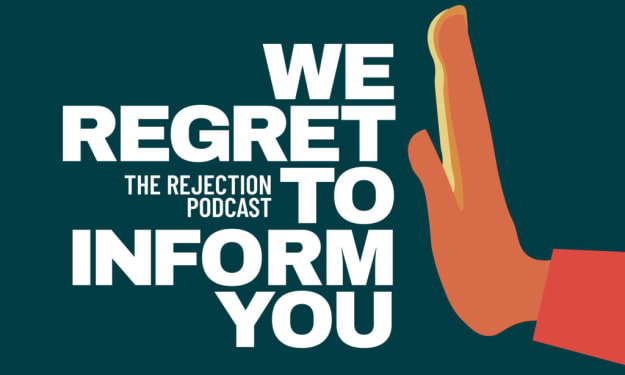
We Regret to Inform You: The Rejection Podcast
Another podcast review? Well, there are two very good reasons for me to write a review about this particular podcast: 1. A few relatives came up to visit Montréal – with me as an option, I think – this weekend. I showed them around the old part of the city (Vieux-Port – Old Port), noting the stores, cafes, bars, and history of this preserved cultural area. At a terrasse, we sat down for a drink and I learned a lot about my cousins and their lives. One works in advertising; another is running her own business. One other has just bought a house. And I had to sit there, nursing my one espresso, while wondering about how I was going to pay my rent for next month. Of course, none of my concerns were voiced, but they were all over my thoughts as I took them to an indoor market and noted how they were haggling over jewelry in one small boutique. What was I doing with my life?
By Kendall Defoe about a year ago in Geeks
I Faked My Own Breakup Online—Here’s What It Taught Me About Love and Attention
It started as a joke—something I blurted out over dinner to my best friend after yet another couple we followed posted a dramatic breakup announcement on Instagram. “What if I faked my own breakup online just to see how people react?” I laughed, swirling the last sip of wine in my glass. But deep down, I was curious. Not just about how people would respond—but why.
By Vincent Otiriabout a year ago in Geeks
Jure Grando Alilović: Vampire
The story of Jure Grando Alilović is one of the earliest recorded cases of vampirism in European history. From the small Istrian village of Kringa, in present-day Croatia, Grando’s legend dates back to the 17th century. Unlike the fictional vampires of modern literature, Jure Grando was a real person, documented in historical accounts as a "strigoi": a creature of folklore believed to be a revenant, or an undead being that rises from the grave to torment the living.
By Annie Kapurabout a year ago in Geeks
Book Review: "The Room in the Attic" by Louise Douglas
So, Kindle Unlimited books are back on the menu. I wanted to read a paperback thriller, the kind you would find at the travel shops at train stations. However, I wasn't willing to spend the money on a buy-one-get-one-free deal on one book I really wanted and another book I just got to make up the deal. The hack is this: a lot of these books are available on Kindle Unlimited. I found out this hack today, shortly after another woman complimented me on my t-shirt. It was black and had the logo for The Rocky Horror Picture Show on it in giant lettering.
By Annie Kapurabout a year ago in Geeks
Book Review: "We Are Water" by Wally Lamb
Some years ago someone recommended that I read the writer Wally Lamb and that was strangely because I was carrying around a copy of The Last Picture Show by Larry McMurtry. I have no idea what these two writers have to do with each other but I remember the person saying that these two were two of the quintessential modern American writers. Though I thoroughly disagree, it would take me years to actually remember this encounter. I saw a big book by Wally Lamb on a library shelf and stood there wondering about when I'd heard someone talk about this author before. It would come to me a few days after I borrowed the book.
By Annie Kapurabout a year ago in Geeks
Beware of Pity by Stefan Zweig
Stefan Zweig’s Beware of Pity (Ungeduld des Herzens), published in 1939, is the Austrian author’s only completed novel. Known primarily for his novellas and biographies, Zweig embarked on this extended work during a time of personal and political turmoil. Having fled his homeland due to the rise of Nazism, Zweig was living in exile when the novel was completed.
By Annie Kapurabout a year ago in Geeks