literature
Geek literature from the New York Times or the recesses of online. Our favorite stories showcase geeks.
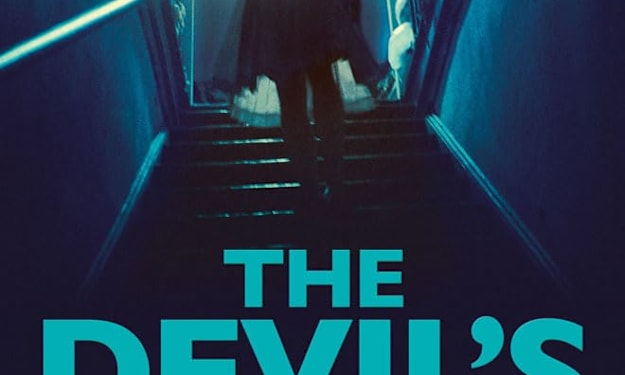
Book Review: "The Devil's Work" by Mark Edwards
Yes I am back to reading more Mark Edwards and needless to say, I read this one in just one sitting. One, tension-filled and very atmospheric sitting. To this day, I have read quite a few Mark Edwards books and yet, I have plenty to go (this is great since I've basically finished Lucinda Berry's novels - or at least 99% of them. I sit in hope that more will be released). Mark Edwards is a great writer who often works a possibility of supernatural or paranormal something into his stories that are sooner or later seen to be something that can be explained by reality but the reality is often more terrifying than the possibility of the supernatural. Yeah, it's complex. When past and present collide, the past is coming up fast to catch people. And perhaps, it will end in bloodshed.
By Annie Kapurabout a month ago in Geeks
Book Review: "The Penguin Book of Herbs and Spices" by Rosemary Hemphill
I had never heard of this book before and was actually initially taken by a book of herbs and spices written by someone named Rosemary. I know, it's a bit immature but who else would you trust to write this book? I mean, in order to get really in the mood for it, I spent some time with the rosemary plant in my garden but that's beside the point. First published in 1966, it was initially part of the Penguin Handbooks series. A handbook filled with herbs and spices sounds like it is going to be boring and packed with parsley - but this book really does look at the distinct flavour profiles of every herb and spice you can think of. Seriously, I couldn't think of a way to make this little book better.
By Annie Kapurabout a month ago in Geeks
The Tenants of Moonbloom by Edward Lewis Wallant
It came as a huge shock when Edward Lewis Wallant died of an aneurysm at the age of just 36 years' old slightly before the publication of his third novel, The Tenants of Moonbloom. An important last text from a post-war writer on the rise, it was published by Harcourt, Brace & World in 1963. Critics admired Wallant’s empathetic portrayal of struggling tenants in New York City and his protagonist Norman Moonbloom’s spiritual awakening amid urban decay. He was a writer who would be compared to the likes of Saul Bellow and others of greats of the 1950s.
By Annie Kapurabout a month ago in Geeks
Book Review: "While England Sleeps" by David Leavitt
If there was an award for best prologue of the modern age then this book would probably get the award. I was the Queer Lit bookshop in Ancoats, Manchester when I was browsing the used books section. I picked up Outrageous! by Paul Baker and then this book entitled While England Sleeps by David Leavitt. The prologue takes place in the 50s and tells us about how the writer was caught in England engaging in homosexuality, and so he took a plea in which he ran off to America (yes, it happened back then). His Englishness helped him out when it came to creating a career in scriptwriting for movies and going to Hollywood parties.
By Annie Kapurabout a month ago in Geeks
Book Review: "Outrageous" by Paul Baker
Paul Baker's book was one that I found on the second-hand shelf of the Queer Lit bookshop in Ancoats, Manchester. Anytime I have a little bit of time I tend to saunter over there and have a coffee, read a book and hang around. It's, in my opinion, the safest place in the city with some great people. I always feel my shoulders relax and my jaw unclench when I go in. Paul Baker's book deals with the legislation called Section 28 that came into Britain during the Thatcher regime. It stated that homosexuality and anything to do with the LGBT movement should be left altogether out of education. Honestly, not only is this a horrific legislation for the present of the 1980s, it also makes history inaccurate seeing as there was so many important LGBT people throughout the course of human history.
By Annie Kapurabout a month ago in Geeks
Book Review: "Practicalities" by Marguerite Duras (Pt.3)
If you've read the other two parts then you will know that this is a three-part series of book reviews on my reread of the Everyman Edition of Marguerite Duras' writing. This includes The Lover, Wartime Notebooks and finally, Practicalities - which is the section of the book that this review concerns itself with. The Lover covers Duras' piece of semi-fiction set in Indochina about a young French girl having a romantic escapade with an older Chinese man. It's written beautifully though I cannot get over the age difference feeling less romance and more Lolita. The next text, Wartime Notebooks, is a posthumous release, found in Duras' home concerning her life. Practicalities covers a dialogue, covering the author's own thoughts and processes when it comes to creativity and the depths of the soul she searches when making these stark, often romanticised yet brutally honest observations.
By Annie Kapurabout a month ago in Geeks
Book Review: "Serenity Falls" by C.J Tudor
Check out my review of CJ Tudor's brilliantly gothic thriller The Gathering below: Serenity Falls is CJ Tudor's newest novel and I have to say, she is shaping to be the new queen of modern horror. Folkish, terrifying with a touch of the suburban gothic, this novel is a change of pace and atmosphere from what she has previously written but still follows the stories of strange secrets that we as fans, are used to. About a father and daughter who leave Manchester to go to Florida after inheriting a strange house in a strange town in Florida, this town claims to be perfect - somewhere where no crime is committed at all. However, when a body is found in the swimming pool there's something deathly wrong and it's clear. Then, when they start to see an ice-cream truck patrolling the streets at night, things start to unfold. There's something desperately wrong in Serenity Falls and god help whoever finds out what...
By Annie Kapurabout a month ago in Geeks
Book Review: "Wartime Notebooks" by Marguerite Duras (Pt.2)
I'm guessing you're here because you read yesterday's instalment (part 1) entitled: The Lover . You don't need to read that one to understand this one because they are two different texts contained within the same book, but if you want to read any works of Marguerite Duras, then I would say The Lover is a great place to start. Wartime Notebooks is more fragmented and, I have to hand it to Everyman, is organised correctly within the edition of the book I have. Putting Wartime Notebooks second allows us to see the influence of her real-life situations over her greatest work only after reading the great text first.
By Annie Kapurabout a month ago in Geeks
Book Review: "The Lover" by Marguerite Duras (Pt.1)
"The story of my life doesn't exist." This is a reread yes, but honestly I always have loved the prose of Marguerite Duras, especially in the book The Lover. It's a short book which is included in the three works of the Everyman Edition of her works. I haven't read her works for a number of years and so, when I found this book of three of her works on the shelf of the public library, I could not help myself. Otherwise, it's late July and my mental health...well, it's not spiralling but it could definitely be better. I would love to see if Marguerite Duras could solve it, god knows I'm going to try. I too often feel like the story of my life does not exist. I guess everyone feels that way from time to time.
By Annie Kapurabout a month ago in Geeks
Book Review: "The Uncannily Strange and Brief Life of Amadeo Modigliani" by Velibor Čolić. Top Story - September 2026.
"The world is full of scoundrels" I have no idea why I picked this up in the library, maybe because it just looked interesting, I don't know. At the moment, I have to say my mental health isn't really there and, at the time of writing this in July 2026, I need something like a book on random vignettes to make me feel better a bit. I've been spending the morning reading this short piece of semi-fiction. I call it semi-fiction because I don't know enough about the protagonist to know how much of it is true. Was Amadeo Modigliani a good artist? No, not really. But that doesn't mean his story isn't interesting. He may have died destitute, swapping his paintings for food - but he had an interesting 30 or so years under his belt. However, I don't think it's a good idea to glamorise this kind of ignorance to the self, it can only end badly. Though he was through and through a true bohemian. No money, no life, nothing at all to suggest he was doing alright.
By Annie Kapurabout a month ago in Geeks