literature
Geek literature from the New York Times or the recesses of online. Our favorite stories showcase geeks.
Book Review: "Dopamine Nation" by Dr Anna Lembke
I found this book whilst reading a book called ‘Bad Therapy’ by Abigail Shrier (which I loved, thank you for asking) and I thought it sounded pretty interesting to begin with. No, it is not a perfect book and in some ways I can actually see how this book is probably not as great as advertised. There were not many reviews I could read and a lot of it is based on personal experience rather than actual data. Be that as it may, it is still an interesting read in the day and age of dopamine chasing and constant requirement for stimuli. Even though some of the reading might be almost obvious and some of the comments about ‘mindfulness’ actually working seem patronising to the reader, this is still a book with slightly more positives than negatives.
By Annie Kapur3 years ago in Geeks
Book Review: "Why We Die" by Venki Ramakrishnan
To be perfectly honest with you the reason I decided to read this book is because Stephen Fry said it was good. A lot of what Stephen Fry says is good is very rarely bad and so, I trust his judgement of what constitutes as a 'good' book. I had only momentarily heard of the author of this book as obviously, being a Nobel Prize Winner but if I were to tell you that I knew why he won it or even for which science, I would be lying - I had no idea. All I knew is that he did win it and that's where my knowledge ended.
By Annie Kapur3 years ago in Geeks
Book Review: "Bad Therapy" by Abigail Shrier
I have to be honest with you. I was actually just doom-scrolling through Kindle books when I came across this. I have never actually heard of it nor have I heard of the author but the premise of the book sounded pretty exciting. I guess you could count this as my ‘random book of the week’. It is about how Generation Z and to many extents, Generation Alpha are the most coddled, protected, loved generations, how they have had unlimited access to therapy and (more than any generation in human history) and have thus become the most mentally unstable generations ever seen. The question that the author poses is not ‘how do we blame this on the kids?’ But it is instead a more nuanced problem of parents putting their hopes in the psychologists who don’t always have the answers and, as I have come to understand, don’t always have the best intentions of the child in mind. So why has the most coddled generation in human history become the most mentally unwell? The reasons are actually pretty shocking in themselves and some, I could not believe were actually true.
By Annie Kapur3 years ago in Geeks
Book Review: "Vulture Capitalism" by Grace Blakeley
Full Title: Vulture Capitalism: Corporate Crimes, Backdoor Bailouts, and the Death of Freedom Now, I am not saying that I am an academic in the field of economics, but I really awe-struck about how popular the book Vulture Capitalism has become amongst the nonfiction reading communities. Especially amongst those of us who's most nonfiction read for the past three or four years has been Shantaram and nobody even knows how much of that is true or not. When it comes to Vulture Capitalism though, I think the reason that it became famous was because of the disdain for capitalism that is constantly seen lurking within the clubs and subsections of each and every crevice of the reading societies of the internet. When I started reading it myself I noticed I knew what nothing really meant in the economic world. That's where the dictionary and Google come in.
By Annie Kapur3 years ago in Geeks
Book Review: "Shy" by Max Porter
“He smells of pond. Everything smells of pond. He feels like he could sniff his way into individual microbes, earthy worming growgreen liquid stink, newts and shoots, silty, fruity, and as he walks he gathers in the smell of dry leaves, crinkly things, brown oily smells, good rot, herby hydro deep woodlousey sticky mushroom smells, things turning, things that go on smelling this way whether or not a wet teenager is here to smell them. He is all sense. He isn't having any thoughts, he's all smell and shadows and ruined trainers, a frighteningly awake sleep creature sloshing along.”- Shy by Max Porter
By Annie Kapur3 years ago in Geeks
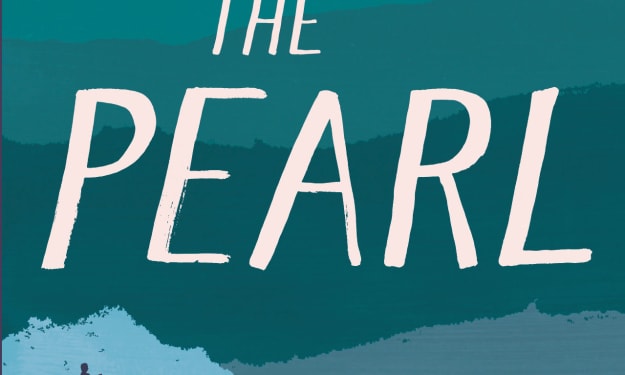
The Pearl by John Steinbeck. Top Story - March 2024.
‘The Pearl’ is a well-known by under-read classic and, as a teacher, many of my students have absolutely loved it. Not just because it is short, but because it presents a storyline that is interesting and corrupting. Easy to read and easier to analyse, ‘The Pearl’ is one of Steinbeck’s hardest hitting classics with an underlying message about protecting what is actually important. By the end of the book, the reader is left defeated and believing in the wrong thing. The idealism around this book is incredible and it is so dark too. For a long while you are supporting the wrong people, thinking in the wrong way and the whole story becomes one long act of misdirection by Steinbeck to show in a ‘Monkey’s Paw’ fashion why we should never chase wealth and status.
By Annie Kapur3 years ago in Geeks
Book Review: "It Waits in the Woods" by Josh Malerman
“There was a truth she was trying to deny, listening again for that pleading: no matter how much a family has grieved, if their missing loved one had not been found, alive or dead, there was always hope.”- It Waits in the Woods by Josh Malerman
By Annie Kapur3 years ago in Geeks
The Meaning of "Catch-22"
Greetings, fellow enthusiasts of language and learning! Today, we embark on an enlightening exploration into the intricate concept of Catch-22. So, grab your metaphorical snorkels as we dive into the depths of this linguistic enigma. Imagine this: You've just graduated, armed with qualifications and brimming with enthusiasm to conquer the professional world. But alas, your optimism falters as you scour job listings, each one demanding the one thing you lack—experience. It's the age-old conundrum of needing a job to gain experience and requiring experience to land a job. Welcome to the perplexing world of Catch-22, where the solution is as elusive as the problem itself. The term "Catch-22" found its genesis in Joseph Heller's seminal novel of the same name, published in 1961. Set against the backdrop of World War II, Heller weaves a narrative tapestry fraught with absurdity and irony, encapsulating the essence of Catch-22—a paradoxical situation where the resolution is also the hindrance. In the novel, protagonist Captain John Yossarian seeks to evade hazardous combat missions by pleading insanity. However, he soon discovers the Catch-22: claiming insanity to avoid missions is a rational act, thus proving his sanity, and consequently, his obligation to fly the missions. It's a circular logic that traps him in a perpetual cycle of futility—a microcosm of the absurdity of war and bureaucracy. But Catch-22 transcends the pages of literature; it permeates the fabric of our daily lives. Take, for instance, the world of sports. Consider my beloved football team, West Ham United. Season after season, we flirt with Champions League qualification, tantalizingly close yet agonizingly out of reach. To ascend to the next level, we require the caliber of players typically found in Champions League clubs. However, these very players are hesitant to join us due to our lack of Champions League status—a classic Catch-22 scenario unfolding on the green pitch. Beyond literature and sports, Catch-22 manifests in myriad forms across cultures and contexts. In the realm of academia, scholars grapple with the paradox of needing funding for research to secure funding, while artists wrestle with the Catch-22 of needing recognition to gain exposure and requiring exposure to garner recognition. It's a ubiquitous phenomenon that underscores the complexities of human endeavor. Yet, as perplexing as Catch-22 may seem, it offers invaluable insights into the intricacies of language and logic. By dissecting these paradoxes, we unravel the intricacies of human thought and behavior, gaining a deeper understanding of the world around us. Now, dear readers, I implore you to share your encounters with Catch-22 situations. Have you ever found yourself ensnared in a paradoxical predicament, where the solution seemed as elusive as the problem itself? Whether in your academic pursuits, professional endeavors, or personal experiences, I invite you to join the conversation and shed light on the multifaceted nature of Catch-22. Additionally, I strongly advocate for delving into the linguistic richness of one's own culture and language. Are there parallels to Catch-22 in your native language? Contribute them in the comments section, enhancing our communal comprehension of this ubiquitous concept. Sharing such insights not only broadens our cultural awareness but also fosters a deeper understanding of the intricacies within language, offering valuable perspectives from diverse linguistic backgrounds. Let's enrich our discussions by embracing the wealth of linguistic diversity present in our global community. In closing, let us embrace the complexities of Catch-22 with curiosity and resolve. For in navigating these paradoxes, we cultivate resilience, creativity, and a deeper appreciation for the nuances of language and life. Until our next linguistic rendezvous, keep exploring, keep learning, and keep unraveling the mysteries that enrich our existence. Farewell for now, dear readers, and may your journeys be filled with insight and enlightenment.
By Sanjana Dixit3 years ago in Geeks
Book Review: "A Book of American Martyrs" by Joyce Carol Oates
I truly love reading the works of Joyce Carol Oates. Whether they are simply collated by her or whether they are actually written by her, I seem to not mind since I have put my complete and utter trust in her. I read my first Joyce Carol Oates book about ten to fifteen years' ago and ever since, it has been sort of sporadic until this year. As I have done with previous authors such as John Boyne and Ann Patchett and even Anne Tyler - I have committed myself to read everything that Joyce Carol Oates has written.
By Annie Kapur3 years ago in Geeks
Book Review: "The Night Alphabet" by Joelle Taylor
I had been meaning to read this book for a while but honestly, there has been a price increase in hardbacks that nobody is paying attention to for some reason. Eventually, I went to Manchester again and then I caved and bought it. No, I may not have had all the money in the world but I really wanted to read a book that was a) more expensive literally everywhere else and b) didn't really have much going for it on the Kindle. I had seen the format of the book from the inside before and decided that on the Kindle it would just make me annoyed with its spread. I may have mixed opinions about the book but it would be at least 50 pages shorter (and thus, cheaper) if it was not so spaced out.
By Annie Kapur3 years ago in Geeks
Scientific Instruments that Changed History
1. The Telescope: Unveiling the Cosmos The journey begins with Galileo Galilei, who turned his gaze towards the heavens with a simple yet revolutionary device — the telescope. Galileo’s observations of celestial bodies shattered existing paradigms, challenging conventional wisdom and laying the foundation for modern astronomy. Telescopes, with their ability to magnify distant objects, opened a cosmic window, revealing the vastness of the universe.
By Bryce Carin3 years ago in Geeks