literature
Geek literature from the New York Times or the recesses of online. Our favorite stories showcase geeks.
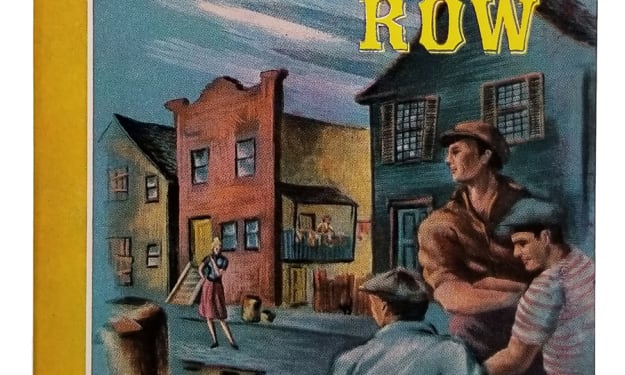
Cannery Row by John Steinbeck
Published in the January of 1945, Steinbeck’s rowdy novel about life on Cannery Row during the Great Depression is probably best known for its host of characters and rambunctious plots that shoot off in every direction and envelope each aspect of society existing in that space. Possibly my favourite Steinbeck novel, this book has the ability to make you laugh, make you upset and make you angry, fearful and excited all in the space of just over 200 pages. One of Steinbeck’s shorter novels, it packs a powerful punch about life and camaraderie, nostalgia and superficiality during one of the most financially turbulent times in history.
By Annie Kapur2 years ago in Geeks
Book Review: "Determined" by Robert Sapolsky
Sapolsky has come into my field of vision now and again. The first time was during one of my MA classes in philosophy in which I learned that Sapolsky's reductive belief systems about free will and determinism are not accepted by the philosophy community because of the way they prescribe the supernatural to something like free will and take the same level, though opposing stance, as the shaky premise that the butterfly effect relies on.
By Annie Kapur2 years ago in Geeks
Book Review: "Day" by Michael Cunningham
“Here, then, is the answer. A degree of cruelty is necessary because Garth, like most men, can only deposit his needs at her feet, can only declare his love—that romantic hallucination, which would begin to fade as soon as she said yes—can only say, Here is my desire, here is my loneliness, what are you going to do about it?”- Day by Michael Cunningham
By Annie Kapur2 years ago in Geeks
Book Review: "Super-Infinite" by Katherine Rundell
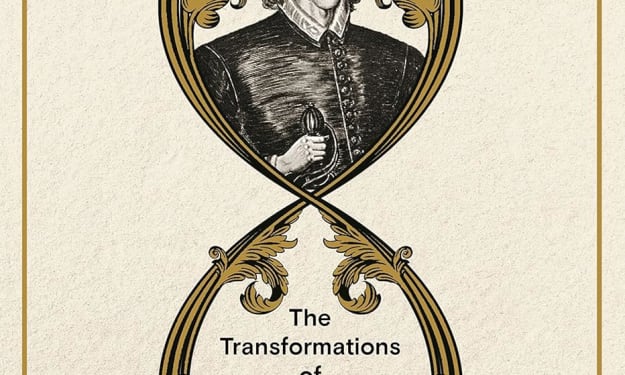
Full Title: Super-Infinite: The Transformations of John Donne by Katherine Rundell “But there are elements of each of us so particular, unwieldy, so without cliché, that it is necessary for each poet to invent his own language. It is necessary for us all to do so; owning one’s own language is not an optional extra. The human soul is so ruthlessly original; the only way to express the distinctive pitch of one’s own heart is for each of us to build our own way of using our voice. To read Donne is to be told: kill the desire to keep the accent and tone of the time. It is necessary to shake language until it will express our own distinctive hesitations, peculiarities, our own uncertain and never-quite-successful yearning towards beauty. Donne saves his most ruthless scorn for those who chew other wits’ fruit, and shit out platitudes. Language, his poetry tells us, is a set, not of rules, but of possibilities.”- Super-Infinite by Katherine Rundell
By Annie Kapur2 years ago in Geeks
Book Review: "The Creative Act" by Rick Rubin
Full Title:'The Creative Act: A Way of Being' by Rick Rubin “All art is a work in progress. It’s helpful to see the piece we’re working on as an experiment. One in which we can’t predict the outcome. Whatever the result, we will receive useful information that will benefit the next experiment. If you start from the position that there is no right or wrong, no good or bad, and creativity is just free play with no rules, it’s easier to submerge yourself joyfully in the process of making things. We’re not playing to win, we’re playing to play."- The Creative Act: A Way of Being by Rick Rubin
By Annie Kapur2 years ago in Geeks
Book Review: "Grey Dog" by Elliott Gish
“A good woman. How odd that the phrase has such a particular meaning. One might say “a good man” and mean anything — there are as many ways of being a good man, it seems, as there are of being a man at all. But there is only one way to be a good woman. It is such a narrow, stunted, blighted way to be that I wonder any woman throughout history has been up to the task. Perhaps none of us ever have.”- "Grey Dog" by Elliott Gish
By Annie Kapur2 years ago in Geeks
1984 by George Orwell
Published in the 8th of June 1949, George Orwell’s novel ‘1984’ is possibly one of the most famous novels of all of 20th century literature. Described as a dystopian novel and a cautionary tale against totalitarianism and surveillance, the repressive society of a superstate called Oceania takes shape as being a form of Great Britain in perpetual war. The constant propaganda and the requirement to obey certain messages and discard known histories plays on similar themes to Orwell’s earlier novel ‘Animal Farm’ when it comes to how knowledge and language is manipulated for the sake of maintaining power. Known for his messages criticising both extremes of the political stratosphere, George Orwell was a passionate democratic socialist who wove into his books the characters and plot lines which represent the abuses of power which have only unfolded into our modern times as a reality. Aren’t we all just Winston Smith?
By Annie Kapur2 years ago in Geeks
Book Review: "Calling Bullshit" by Carl T. Bergstrom and Jevin D. West
“Nothing that you will learn in the course of your studies will be of the slightest possible use to you, save only this, that if you work hard and intelligently you should be able to detect when a man is talking rot, and that, in my view, is the main, if not the sole, purpose of education.”- "Calling Bullshit" by Carl T. Bergstrom and Jevin D. West
By Annie Kapur2 years ago in Geeks
Book Review: "James" by Percival Everett
“With my pencil I wrote myself into being. I wrote myself to here.”- James by Percival Everett I have been waiting for this book for a long time. When it came out, I initially decided not to get it because it was fairly expensive. Having read some of the other books of the same author, I actually could not wait for James to be released. I was absolutely itching even though it was out of my price range. However, I ended up buying it when it came down in price slightly from a bookshop and ultimately, got to reading it when I arrived back home. From reading one of the best novels of the last 10 years, The Trees, and other great books like Damned if I do, Percival Everett is proving to be a really exciting voice in the world of literary fiction. In James, he takes one of my favourite novels: The Adventures of Huckleberry Finn and writes the first person narrative of one of the most intense and carefully crafted characters in American Literature: Jim.
By Annie Kapur2 years ago in Geeks