literature
Geek literature from the New York Times or the recesses of online. Our favorite stories showcase geeks.
The Man Who Lived with Lions (Kevin Richardson, South Africa)
The Man Who Lived with Lions (Kevin Richardson, South Africa): An Extraordinary Tale of Human-Animal Friendship In a world filled with fascinating stories about the relationship between humans and animals, the tale of Kevin Richardson remains one of the most inspiring. Known as the "Lion Whisperer," this man has lived an extraordinary life in South Africa, building strong friendships with lions and other predators. In this article, we will delve into the details of this incredible story, explore how this unique relationship began, the challenges Kevin faced, and how he became a symbol of wildlife conservation.
By 💓 Pulse of Stories 💓2 years ago in Geeks
Book Review: "Tiepolo Blue" by James Cahill
I found this book whilst browsing around for something light to read. I had heard of it when it first came out but for some reason I took little interest in it when, if I'm going to be honest with you, I really should have. There is something really intriguing about reading on the topic of traditionalists who get what's coming to them and then go off the damn rails. The book has so much more going on than that but, at its heart there is a comment about progress in which you either run with it or you get left behind and nobody cares anymore. It's an adapt or fall behind process that the book explores in new depths and, at its turn, it delves into the question about whether it is always the best thing for everyone.
By Annie Kapur2 years ago in Geeks
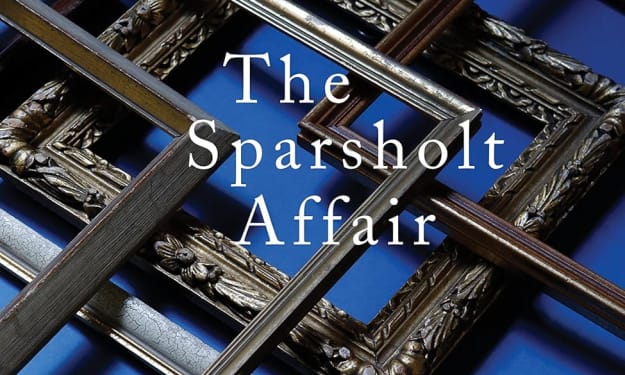
Book Review: "The Sparsholt Affair" by Alan Hollinghurst
Don't look so shocked. I recently read The Stranger's Child and my mind about Alan Hollinghurst's novels was changed. So, I decided to go seeking out novels by him that are like that one. I came across the famed novel The Sparsholt Affair and was immediately drawn to the similarities. It starts off in one era, goes into another and, when uncovering things, a man is in the middle of two personalities: one that he used to have and another that is being slowly uncovered. Even though in The Stranger's Child, Cecil is already dead by the time things are being uncovered about him and in this novel the man is very muc alive - it has similar sentiments and writing styles. That's what made it so good.
By Annie Kapur2 years ago in Geeks
Shane (Book Review)
The 1949 book Shane is probably the most influential Western book of all time, with its 1954 film elevating the story into pop culture status. The image of a mysterious rider appearing one day in a violent town, scaring its inhabitants, before eventually protecting and fighting for those who couldn't defend themselves, became the undying image of a gunslinging Western hero; influencing other mysterious but altruistic heroes in other stories and genres. Yet, the origins and creation of Shane is equally as inspiring. Jack Schaefer wrote Shane during the Golden Age of Westerns, a time when heroic cowboys reigned supreme in books, comics, movies, and television shows. Initially titled Rider from Nowhere and serialized in Argosy, the story was soon published in novel form, before becoming popular enough to be made into a feature film. Not all Western stories, though, were written as purely fiction. Some were inspired by real-life events that happened in the previous century. Schaefer was inspired by the historical range war, the Johnson County War, which happened in Wyoming between 1889-1893. It was fought between a corporation of rich ranchers against smaller independent settlers, which soon involved the United States Cavalry. The war claimed the lives of at least 20 people, possibly more. Shaefer, though a popular novelist in his time, seldom talked about himself or his books. However, as seen in his works and a few interviews, he was a man who wrote about the courage of the common folk. As such, Shane was written with a focus on the struggles and triumphs of the independent settlers. There is information circulating in the web that Schaefer supposedly rescinded the idea, stating that the "settlers destroyed America." But there has been no documentation or primary source to support this. Even though other of his books became beloved and adapted, Shane was undoubtedly his most famous work. Many literarians suggest that Schaefer wrote the book as an antithesis to the 1902 novel The Virginian, written by Owen Wister, which also tackled the Johnson County War. Wister lived in that era, but as a wealthy man himself, sided with the rich ranchers. The Virginian espoused the notion that it was justifiable, and even honorable, to use vigilante justice and murder to protect property. The protagonist, the titular Virginian, was loud, rugged, and an ideological cowboy. In contrast, Schaefer sided with the smaller settlers, and wrote the protagonist, Shane, as a quiet, stoic, and humble gunfighter. It is also unknown who was the inspiration behind the character of Shane, although historians have a couple of candidates, namely Jim Roberts and Clay Allison. Both lived violent lives as gunfighters of the Old West. Both arrived in towns ravaged by range wars, namely the Pleasant Valley War and the Colfax County War. And both ended up helping the poor underdogs of these conflicts, with Allison even killing one of the hired guns of the rich ranchers, similar to Shane. These, however, still remain assumptions. Nonetheless, the hardships these people faced back then still resonate in Schaefer's time and even today. Of all Western books in history, Shane by far is the one that stood the test of time. It inspired many from Clint Eastwood's Pale Rider to Nobuhiro Watsuki's Rurouni Kenshin.
By Carl Hannigan2 years ago in Geeks
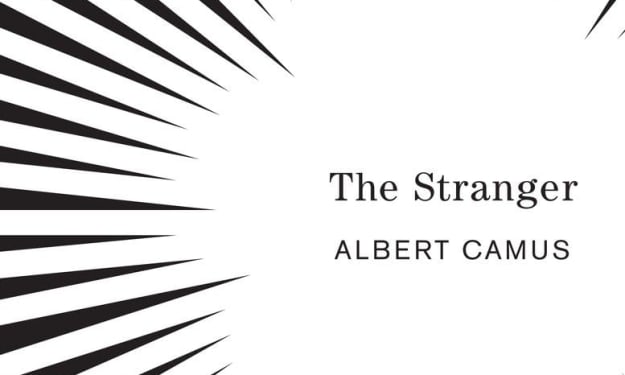
The Stranger by Albert Camus
The Stranger (L'Étranger), published in 1942, is one of Albert Camus' most famous works and a cornerstone of existential literature. Camus wrote the novel during World War II, a time of great upheaval and uncertainty, which influenced the themes of absurdity and existentialism that pervade the text. Gallimard, a prominent French publishing house, released the book, quickly propelling Camus to literary prominence. Despite the initial constraints of wartime censorship and limited resources, The Stranger gained immediate acclaim for its stark and unembellished narrative style, as well as its profound philosophical underpinnings.
By Annie Kapur2 years ago in Geeks
Jujutsu Kaisen
Jujutsu Kaisen, created by Gege Akutami, has taken the anime and manga world by storm, captivating audiences with its compelling characters, intricate world-building, and intense battles. Beneath its surface lies a rich tapestry of cultural references and themes deeply rooted in Japanese folklore and mythology. This article explores how Jujutsu Kaisen incorporates these traditional elements, creating a modern story steeped in history and cultural significance.
By JRManglicmot2 years ago in Geeks
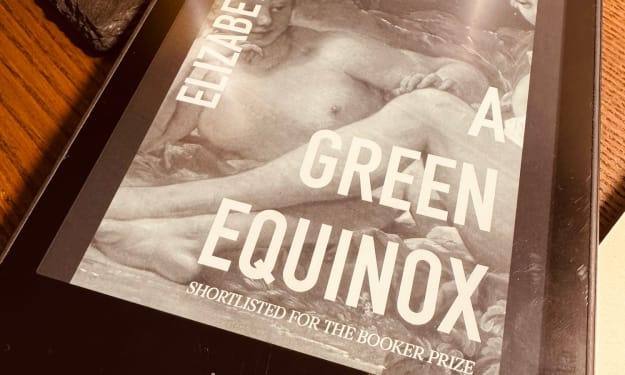
Book Review: "A Green Equinox" by Elizabeth Mavor
I have been led to understand that this book has been reissued and was originally written in the 1970s. It sooner or later went out of print and fell into obscurity with copies going on eBay and other websites for over £100. Fortunately enough for myself, this book was eventually reissued by Virago Modern Classics and I ended up buying it on my Kindle for no more than a few pounds. I feel like the advertisement behind this book misleads people into believing that the book itself is a love affair and a romp rather than a torrid emotional twister. To be perfectly honest, I was quite happy that I was misled because initially, I was not sure whether I'd enjoy it.
By Annie Kapur2 years ago in Geeks
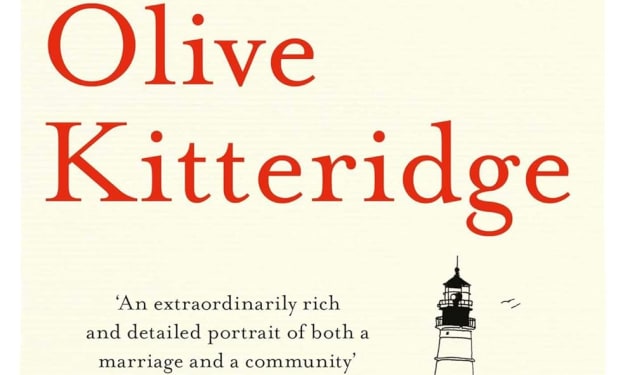
Book Review: "Olive Kitteridge" by Elizabeth Strout
You're probably thinking what led me to read this book and I'll tell you. I was on the internet as we all are and I was asking around for some book recommendations that included some sort of saga and were character-centric - something that was perhaps like The Turning by Tim Winton. The most popular recommendation I received in terms of how many people gave it to me was Olive Kitteridge by Elizabeth Strout. Now, I had encountered this book before and had put it down a number of times in bookshops due to a lack of interest and its price. But, I picked it up on my phone for a discount. So, let's have a look at what went on...
By Annie Kapur2 years ago in Geeks
Fangs Out, Pants Down: How the New Nosferatu Bares It All - Literally and Emotionally
Vampire mythos have evolved significantly in their cinematic representation over the past century. From the shadowy figure of Count Orlok in F.W. Murnau's Nosferatu (1922) to the sensuality of Anne Rice's Interview with the Vampire adaptations, vampires have transitioned from grotesque creatures of the night to emotionally complex, sexually charged, and deeply humanized beings. This transformation reflects broader societal changes in how monstrosity and humanity intersect. The recent remake of Nosferatu has taken this evolution to an unprecedented level by presenting a nude scene featuring full-frontal male nudity. This choice strips away the traditional armor of monstrosity and delves into the raw vulnerability of its titular character.
By Nazgol Rasoolpour2 years ago in Geeks
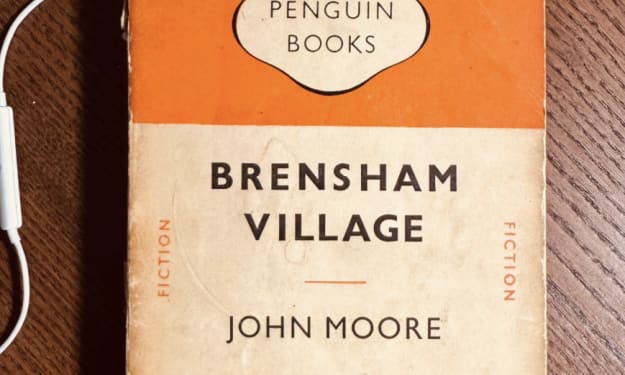
Book Review: "Brensham Village" by John Moore
I know what you're thinking: why the hell did she read this? Well, the answer is because I didn't have anything else to read and I thought that a good orange Penguin in my pocket that I had dug out of my mother's house would probably get me through the day or so. It did and it also surprised me because I ended up quite enjoying it. Brensham Village has such incredible descriptions of rural life and such lovely scenes of idyllic countrysides that I got a bit lost for a time. I've never heard of the author before this, I have never heard of the book before - I just randomly found it and here we are...
By Annie Kapur2 years ago in Geeks