Latest Stories
Most recently published stories in Geeks.
Rivian R2 and the Emotional Shift Toward Everyday Electric Cars
For years, electric cars have felt like a promise just out of reach. They sounded exciting, looked futuristic, and came with price tags that made many people step back. Curiosity was there, but comfort was not. The Rivian R2 enters this space with a different feeling. It does not arrive with noise or pressure. Instead, it brings a quieter question. What if an electric vehicle could simply fit into normal life. What if it felt familiar, steady, and human. This article explores the Rivian R2 as more than a vehicle. It looks at why people are searching for it, what it represents emotionally, and how it reflects a growing desire for simpler, more grounded electric driving that respects real routines and real budgets.
By Muqadas khan7 months ago in Geeks
Silver Screen Magic with Angela Lansbury
Angela Lansbury was born in London, England, in 1925. Still a teenager, she relocated to the US and studied acting while working as a singer and cabaret performer. Her very first role in films was in the 1944 thriller “Gaslight.” She was a beloved performer on the Broadway stage and won six Tony Awards, including a lifetime achievement award in 2022. Lansbury also made a name for herself on TV playing novelist and part-time detective Jessica Fletcher in the CBS series “Murder, She Wrote.” The actress left this world on October 11, 2022, at the age of 96.
By Rasma Raisters7 months ago in Geeks
‘Curiouser and Curiouser: The Creepy, Captivating, Magical and Mysterious at Whitby Museum’. Content Warning.
Introduction Whitby Museum curators have chosen a selection of the most macabre and unusual treasures together with local tales of folklore to create this new exhibition. Discover stories rooted in superstition that accompany some of the objects held at the museum. From the Ruswarp Witch to the Gytrash of Goathland join us for this most curious exhibition. Exhibition opens 7th February 2026 and runs until December 2026.
By Mike Singleton 💜 Mikeydred 7 months ago in Geeks
K-Dramas You Need To Watch In February 2026
We need to talk about the K-dramas you need to watch in February 2026 We are in February, and we need to talk about the new K-dramas. There will be no shortage of K-dramas this month. Like January, February will see a lot of good K-dramas as well. Some of these K-dramas have already started to air, while others will arrive soon. In this post, let’s talk about the K-dramas you need to watch this month.
By Megha Pavanagd7 months ago in Geeks
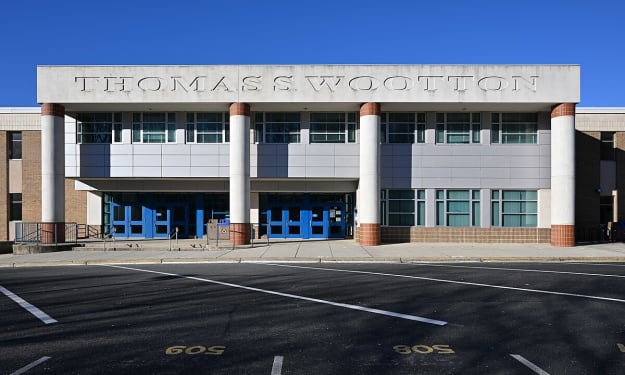
Wootton High School . AI-Generated.
Wootton High School stands as one of the most well-known public high schools in Montgomery County, Maryland, recognized for its strong academic culture, diverse student body, and commitment to preparing students for college and civic life. Over the years, Wootton High School has built a reputation that goes beyond test scores, reflecting the broader challenges, conversations, and responsibilities that modern schools face in the United States. Located in Rockville, Thomas S. Wootton High School serves students from a wide range of backgrounds. The school is consistently noted for offering rigorous coursework, including Advanced Placement classes, STEM-focused programs, and a wide selection of arts and humanities subjects. This balance allows students to explore personal interests while meeting high academic expectations. Faculty members are often praised for maintaining high standards while supporting students through mentorship, counseling, and extracurricular engagement. Like many large public schools, Wootton High School is not only a place for learning but also a reflection of wider social realities. Conversations around student well-being, mental health, and campus safety have become increasingly important in recent years. Across the country, schools have been prompted to reevaluate emergency preparedness and communication systems, and Wootton is no exception. Administrators and educators have worked to ensure that students and parents are informed, supported, and reassured during moments of uncertainty. Online searches sometimes surface the phrase Wootton High School shooting, which can understandably raise concern among parents, students, and community members. It is important to approach such terms carefully and responsibly. In many cases, heightened attention around school safety comes from drills, false reports, or broader national discussions about violence in schools rather than a confirmed, large-scale tragedy specific to the campus. As with any sensitive topic, relying on official statements and verified local reporting is essential to avoid spreading misinformation or unnecessary fear. The presence of such search terms also highlights a larger issue affecting schools nationwide: the emotional impact of constant exposure to news about violence. Even when incidents occur elsewhere, students can feel anxious or distracted, prompting schools to take proactive steps. Wootton High School has emphasized communication with families, counseling resources, and structured safety procedures designed to protect students while maintaining a healthy learning environment. Beyond safety discussions, Wootton High School continues to be recognized for student achievement. Graduates frequently go on to attend competitive universities, pursue careers in technology, medicine, public service, and the arts, or contribute directly to their local communities. Student clubs and organizations play a major role in shaping school culture, from debate teams and science clubs to volunteer groups and cultural associations. These activities encourage leadership, collaboration, and social awareness. Athletics are another cornerstone of life at Wootton. School teams compete at a high level within Maryland’s public school system, fostering school spirit and teamwork. Participation in sports also supports student wellness, teaching discipline and resilience that extend beyond the classroom. Coaches and administrators stress balance, reminding students that academic success and personal growth remain the top priorities. Community involvement is deeply tied to the identity of Wootton High School. Parent-teacher organizations, alumni networks, and local partnerships contribute time and resources to support programs and campus improvements. This strong connection between the school and the surrounding community helps create a shared sense of responsibility for student success and safety. When concerns arise—whether academic, social, or security-related—the community response often centers on dialogue and cooperation. In the digital age, the way information spreads can shape public perception quickly. Misspellings such as wooton high school appear frequently online, demonstrating how easily confusion can arise when searching for information. For readers seeking clarity, it is always best to refer to the school’s official communications, district announcements, or trusted local news outlets. Doing so ensures that discussions remain grounded in fact rather than speculation. Ultimately, Wootton High School represents both the strengths and challenges of contemporary public education. It is a place where academic excellence, student diversity, and community values intersect. While discussions around safety and alarming keywords can capture attention, they should not overshadow the daily reality of teaching, learning, and growth that defines the school experience. As conversations about education continue to evolve, Wootton High School remains a case study in balance—between rigor and support, awareness and reassurance, vigilance and optimism. By focusing on accurate information, open communication, and student well-being, the school and its community continue working toward an environment where students can learn confidently and thrive
By Saboor Brohi 7 months ago in Geeks
"HE DON'T GIVE A F*CK" Cam’ron And MaSe Can't Stop Laughing After Reading Trump’s Tweet Going Off On Bad Bunny’s Super Bowl Performance!
While some broadcasts dissuade from giggling, sometimes it’s warranted. Once foes, Cam’ron and Mase show their kinship and agreement on President Trump’s posts regarding GRAMMY®-award-winner Bad Bunny’s halftime performance.
By Skyler Saunders7 months ago in Geeks
Building a Multi-Chain NFT Marketplace: Benefits, Use Cases, and Strategic Insights
The NFT ecosystem has evolved far beyond its early single-chain roots. What began as a largely Ethereum-centric movement has transformed into a diverse, multi-chain landscape where creators, collectors, and developers operate across multiple blockchains simultaneously. As transaction costs, scalability demands, and user expectations continue to shift, multi-chain NFT marketplace development has emerged as a strategic necessity rather than a technical luxury.
By Henry James7 months ago in Geeks
Clemency. AI-Generated.
Clemency is one of the most misunderstood yet powerful tools in any justice system. Often mentioned in political debates or high-profile criminal cases, the word can sound abstract or controversial. Yet at its core, clemency represents mercy within the law — a recognition that justice is not always served by punishment alone. To fully understand its role, it helps to explore what is clemency, how it functions, and how it connects to constitutional principles such as the 5th Amendment. What Is Clemency? At its simplest, clemency is an act of mercy granted by a government authority, usually an executive leader such as a president or governor. It reduces or eliminates the legal consequences of a criminal conviction without overturning the conviction itself. Clemency does not declare a person innocent; instead, it acknowledges circumstances where forgiveness, fairness, or public interest justifies relief from punishment. Clemency can take several forms. A pardon forgives a crime and restores certain rights. A commutation reduces a sentence, such as shortening prison time. A reprieve delays punishment, often in death penalty cases. Though different in effect, all forms share the same foundation: discretion guided by mercy. The Historical Roots of Clemency Clemency predates modern democracies. Monarchs once held absolute authority to grant mercy as a personal act of grace. Over time, democratic systems retained this power but placed it within constitutional frameworks to prevent abuse. In the United States, clemency became a deliberate feature of governance, designed to balance rigid laws with human judgment. The Founders understood that no legal system could anticipate every circumstance. Laws must be general, but lives are specific. Clemency exists to bridge that gap. Clemency and the U.S. Constitution In the United States, the clemency power is explicitly granted to the president by the Constitution. Article II authorizes the president to grant pardons and reprieves for federal offenses, except in cases of impeachment. This authority is broad and largely unchecked, reflecting the belief that mercy must sometimes operate beyond courts and legislatures. While the Constitution does not directly place clemency within the 5th Amendment, the two are philosophically connected. The 5th Amendment protects individuals from abuses of government power, guaranteeing due process, protection against self-incrimination, and safeguards against double jeopardy. Clemency complements these protections by offering relief when legal processes, even when properly followed, produce outcomes that feel unjust or excessive. The Relationship Between Clemency and Due Process The 5th Amendment ensures that no person is deprived of life, liberty, or property without due process of law. Courts are responsible for applying this principle during trials and sentencing. Clemency enters the picture after due process has been fulfilled. This distinction matters. Clemency is not a correction of legal error — that is the role of appeals. Instead, it is a moral or practical judgment that acknowledges factors courts may not fully weigh, such as rehabilitation, humanitarian concerns, or changes in social standards. For example, mandatory sentencing laws can result in punishments that later generations view as excessive. Clemency allows the justice system to evolve without rewriting past convictions. Why Clemency Still Matters Today Modern criminal justice systems are complex, and no system is perfect. Clemency plays a critical role in addressing systemic issues such as sentencing disparities, overcrowded prisons, and outdated laws. It can also provide relief in cases involving wrongful convictions, even when new evidence falls short of legal standards for reversal. Clemency has also been used as a tool of reconciliation. Throughout history, leaders have granted clemency during periods of political transition or social healing, signaling a willingness to move forward rather than remain trapped by punishment. However, this power often sparks debate. Critics argue that clemency can be misused for political favor or personal connections. Supporters counter that transparency and careful review processes can preserve its integrity. Clemency vs. Amnesty Clemency is often confused with amnesty, but the two are distinct. Clemency applies to individuals, while amnesty is typically broader, affecting groups of people. Amnesty is usually granted through legislation, whereas clemency is an executive act. Understanding this difference is essential when discussing accountability and forgiveness. Clemency focuses on individual circumstances; amnesty reflects collective policy decisions. Ethical Dimensions of Clemency Beyond legal definitions, clemency raises profound ethical questions. Should mercy override punishment? Can forgiveness coexist with accountability? These questions have no simple answers. Clemency does not erase harm suffered by victims, nor does it deny responsibility. Instead, it acknowledges that justice includes compassion. In this sense, clemency reflects a mature legal system — one that recognizes human fallibility on both sides of the law. The Future of Clemency As societies reevaluate criminal justice policies, clemency is likely to gain renewed attention. Calls for sentencing reform, restorative justice, and rehabilitation highlight the need for mechanisms that address past excesses. Clemency offers flexibility without dismantling the rule of law. Technology and data analysis may also shape future clemency decisions, providing clearer insights into rehabilitation and risk assessment. Still, the final decision will always rest on human judgment, because mercy cannot be fully automated. Final Thoughts Clemency stands at the intersection of law, morality, and power. Understanding what is clemency means recognizing it not as a loophole, but as a safeguard — one that complements constitutional protections like the 5th Amendment. It reminds us that justice is not only about rules, but also about wisdom. In a system built on laws, clemency ensures there is still room for humanity.
By Saboor Brohi 7 months ago in Geeks
Pulmonary Embolism. AI-Generated.
Pulmonary embolism is a life-threatening condition that often arrives without warning. It can affect people of all ages and backgrounds, yet it remains widely misunderstood. Many cases go undiagnosed until symptoms become severe, making awareness critical. When pulmonary embolism intersects with conditions like cancer, including rectal cancer, the risks and complications increase significantly. Understanding what pulmonary embolism is, how it develops, and why cancer patients are especially vulnerable can help save lives. What Is a Pulmonary Embolism? To answer the common question, what is a pulmonary embolism? A pulmonary embolism occurs when a blood clot, usually formed in the deep veins of the legs or pelvis, travels through the bloodstream and becomes lodged in one of the pulmonary arteries in the lungs. This blockage restricts blood flow, reduces oxygen levels, and places immense strain on the heart. Another way to define it, for those asking what is pulmonary embolism, is that it is not a lung disease itself but a circulatory emergency that directly affects lung function. The severity can range from small clots that cause mild symptoms to massive embolisms that can be fatal within minutes. How Pulmonary Embolism Develops Most pulmonary embolisms originate from deep vein thrombosis (DVT). When a clot forms in a deep vein and breaks free, it travels upward through the heart and into the lungs. Factors that increase the risk include prolonged immobility, surgery, trauma, smoking, obesity, and certain medical conditions. Cancer is one of the most significant risk factors. Malignancies can make the blood more prone to clotting, while treatments like chemotherapy, radiation, and major surgeries further elevate the risk. This makes pulmonary embolism a leading cause of complications in cancer patients. The Link Between Cancer and Pulmonary Embolism The relationship between cancer and pulmonary embolism is well established in medical research. Cancer alters the body’s normal clotting mechanisms, creating a hypercoagulable state. Tumors can release substances that promote clot formation, while inflammation associated with cancer further increases risk. Patients with gastrointestinal cancers, including rectal cancer, are particularly vulnerable. Rectal cancer often requires complex treatment plans involving surgery, chemotherapy, and long recovery periods, all of which contribute to reduced mobility and increased clotting risk. For these patients, pulmonary embolism can develop suddenly, sometimes even before cancer is diagnosed. Rectal Cancer and Elevated Risk Rectal cancer deserves special attention when discussing pulmonary embolism. Surgeries involving the abdomen and pelvis are known to raise the likelihood of blood clots. Postoperative recovery often includes extended bed rest, which slows blood flow in the legs. Chemotherapy used in rectal cancer treatment can damage blood vessel walls and disrupt normal clot regulation. Studies show that cancer-related pulmonary embolism may present with atypical symptoms, making diagnosis more difficult. Shortness of breath or fatigue might be mistaken for side effects of cancer treatment rather than signs of a clot. This overlap highlights the importance of vigilance among both patients and healthcare providers. Symptoms That Should Never Be Ignored Pulmonary embolism can be deceptive because symptoms vary widely. Common signs include sudden shortness of breath, chest pain that worsens with deep breathing, rapid heart rate, lightheadedness, and coughing, sometimes with blood. In cancer patients, these symptoms may be subtle or gradual. Because pulmonary embolism can progress rapidly, any unexplained breathing difficulty or chest discomfort should be treated as a medical emergency. Early detection dramatically improves survival rates. Diagnosis and Treatment Options Diagnosing pulmonary embolism typically involves imaging studies such as CT pulmonary angiography, along with blood tests like D-dimer levels. Ultrasound of the legs may also be used to detect deep vein thrombosis. Treatment focuses on preventing the clot from growing and stopping new clots from forming. Anticoagulant medications, often referred to as blood thinners, are the primary therapy. In severe cases, clot-dissolving drugs or surgical interventions may be required. For cancer patients, treatment decisions must balance the risk of bleeding with the need to prevent clot progression. This makes individualized care essential, especially for those with rectal cancer or other gastrointestinal malignancies. Prevention in High-Risk Individuals Preventing pulmonary embolism is a critical goal, particularly for people with cancer. Preventive strategies include early mobilization after surgery, use of compression stockings, and preventive anticoagulation in high-risk cases. Cancer patients should have regular risk assessments throughout their treatment journey. Awareness plays a powerful role in prevention. Understanding what pulmonary embolism is and recognizing early warning signs can lead to faster intervention and better outcomes. Living With the Risk Surviving a pulmonary embolism often changes how patients view their health. Long-term anticoagulation, lifestyle adjustments, and regular medical follow-ups become part of daily life. For individuals battling cancer, especially rectal cancer, managing the dual challenges of malignancy and clot risk can be emotionally and physically demanding. Support systems, clear communication with healthcare teams, and patient education are essential components of long-term care. Pulmonary embolism does not have to be a death sentence, but it requires respect, attention, and proactive management. Final Thoughts Pulmonary embolism is a serious condition that bridges the worlds of cardiovascular disease, lung health, and cancer care. Its connection to cancer, particularly rectal cancer, underscores the need for awareness and prevention. By understanding what is a pulmonary embolism, recognizing risk factors, and responding quickly to symptoms, lives can be saved. In a healthcare landscape where cancer survival is improving, addressing complications like pulmonary embolism is more important than ever. Knowledge remains one of the strongest tools in protecting patients from this silent but dangerous threat.
By Saboor Brohi 7 months ago in Geeks
Book Review: "The Defence" by Steve Cavanagh
This book was recommended to me by Twitter and I’m seriously reconsidering taking recommendations from that hellscape. The first novel in a series is supposed to be the one that hooks you in, makes you fall in love with characters and themes and establish real in-depth parts of the backstory to you. This book does none of those things and yet, is so confident about itself that it completely fails to give the reader a coherent story that they can get lost in. I would say the audience of this book is basically people who don’t like to read - why? There’s no atmosphere, there are no in-depth concepts, there is no real story and the characters are hollow as hell. I was quite underwhelmed after reading this, it just felt so forgettable.
By Annie Kapur7 months ago in Geeks
Ob-Scene and In-Scene: Sex and Blood on Screen. Content Warning.
Taboo: from the Tongan tabu — set apart, forbidden.” Fire, Flesh, and the Forbidden In Bone Tomahawk (2015), S. Craig Zahler opens with a brutal desert murder: two drifters silently slit throats and rob sleeping travellers. In the same year, Gaspar Noé’s Love begins with something entirely different but equally taboo: a scene of mutual masturbation. The protagonist’s face is unflattering, contorted, and real. Actually real! The sex in the film was unsimulated.
By Squeeze D' Avocado7 months ago in Geeks
Matt Taylor and the NASA Moment That Changed a Career Forever
Sometimes a name becomes larger than the person behind it. Matt Taylor learned this in a single day, when a moment meant to celebrate scientific success turned into a worldwide conversation about behavior, judgment, and public accountability. Before that day, he was known only within academic and space science circles. After it, millions of people who had never followed space exploration suddenly knew his name. Searching for “matt taylor” now brings up more than a career. It brings up questions about intent, consequence, learning, and how fast public opinion can reshape a life. This article looks closely at who Matt Taylor is, what happened, and why his story still matters years later.
By Muqadas khan7 months ago in Geeks