
History of The Three Stooges (Part IV: Wartime, Debuts, and a Decline - 1943-1945)
The Stooges enter a period that included a number of war shorts, and the beginning of the end in one case

When the 1940s started, the world was at war, but America wasn't part of it... yet. Despite this, the Three Stooges were at work with the 1940 short, You Nazty Spy! and the 1941 sequel, I'll Never Heil Again, both shorts spoofing Nazi Germany. Of course, we all know what happened on December 7, 1941, and that led to America joining the Second World War. When the U.S. got involved, studios really got to work with wartime material. This was definitely true when it came to the cartoons. The Disney shorts, Looney Tunes, Tom and Jerry, and especially Popeye had many wartime cartoons out there following America's entry into WWII.
The Three Stooges were also part of this, as this period featured a number of shorts that at least referenced the war, if not put them in it. So let's take a look at the shorts that came out during this period, and there were quite a few gems:
1943

1943 had to have featured the Stooges' heaviest workload. Ten short films were released that year, beginning with the controversial They Stooge to Conga. Fair warning: controversy is a theme in this period, and regarding that short, there's quite a bit. The plot has the Stooges as repairmen who learn that the house they're working on is a hotbed for Nazis. The short is notoriously known as the most violent one in Stooges history; a lot of violent gags are shown in this, the most notable one being a climbing spike getting in Moe's head, ear, and yes, eye! Curly went through quite a bit himself, getting electrocuted to the point where Moe and Larry screwed a light bulb in his left ear before shorting it out. This is another rare Stooge short with a villainess in it, in the form of Marsha, played by the late Fern Emmett. Marsha's the one who lets the Stooges in to work on the house (Curly's first reaction to her was hilarious). Curly definitely had a sixth sense, as moments after the boys entered, Marsha turned heel and revealed her role as a Nazi conspirator.
Dizzy Detectives followed, and it began with a reused opening scene from 1935's Pardon My Scotch. This was followed by the Stooges being enlisted as cops who were looking to solve a case involving an ape that commits robberies. Spook Louder featured the Stooges as door-to-door salesmen who end up housesitting and having to deal with evil spies, and Back From the Front has the Stooges working one boat until they accidentally blow it up, and when they land on another boat, they see it's full of Nazis. Yikes. Three Little Twirps; this was not a good short. Turns out, this was also directed by Harry Edwards, the same man who gave us Matri-Phony. As "meh" as I felt regarding Matri-Phony, my feelings about this one are worse. The Stooges, as always, did the best they could, but the short was flat.

Thankfully, the Stooges recovered from that mess with Higher Than a Kite, where the trio played mechanics who escape in what they thought was a sewer pipe after they botch a repair job. Turns out that "sewer pipe" was a bomb, and it was dropped right at Nazi headquarters, where the Stooges outwit their foes. I Can Hardly Wait is a hilarious piece where Curly deals with a toothache, and Moe and Larry do their very best to remedy their pal's pain. Dizzy Pilots (the third and last short from the "Dizzy" series, also the best one IMO) has the Stooges--as the Wrong Brothers--being tasked with creating a plane that will help the war effort. They have 30 days to do so, and if they fail, they'll be drafted back into the service. This short had a lot of hilarious moments, including Moe being covered in that liquid rubber, and Larry and Curly trying to get that rubber off. Of course, the Stooges failed in their mission, and the military scenes were borrowed footage from 1940's Boobs in Arms.
Phony Express was another Western short, with the Stooges as salesmen who escaped to a Wild West town, where they are feared under the belief that they're no-nonsense lawmen. When a bank is robbed, the Stooges have to find the crooks, and it includes a hilarious scene where Curly's acting as a bloodhound. The Stooges' 1943 ended with A Gem of a Jam, which has the Stooges as janitors who are forced to operate on a robber who was shot, and it's after the robbers are caught that the wild hilarity ensues.
1944

1944 marked a full decade of Stooges shorts at Columbia, and the first short from that year was another of my favorites, Crash Goes the Hash. The short has the Stooges being mistaken as reporters, and they are tasked with going undercover to get the scoop on an heiress' engagement to a prince. The trio enters as a newly hired cook (Moe) and two butlers (Larry and Curly), and the short includes a very hilarious moment with Bud Jamison, who response to the trio's one-liners with, "Such levity. You remind me of The Three Stooges." The Stooges are insulted by this. This short was Bud Jamison's final appearance in a Stooge film; he was a Type 2 diabetic whose health took a turn for the worse in recent appearances, and he passed away on September 30, 1944 (seven months after this short was released) at the age of 50.
Busy Buddies featured the Stooges as restaurant owners who had to enter a milking contest to win the money they needed to pay their bill to keep their business. BTW, the cost of the bill: $97. There's that number again. The Yoke's On Me is a very controversial short that has the Stooges running a farm while encountering escaped Japanese soldiers, and that's where the controversy comes in. Bigotry against Japanese-Americans was at an all-time high during the first half of the 1940s, and the escaped Japanese citizens were portrayed as escaping from a relocation center, where they were forcibly placed until after the war ended. The following short, Idle Roomers, has the Stooges as bellhops who all flirt with a lovely customer, whose husband runs a wild act that includes (among other things) a wolfman. BTW, the lovely customer was played by Christine McIntyre, who makes her Stooges debut and goes on to become the most frequently used actress in Stooges films.
Gents Without Cents is a mostly musical short where the Stooges and a trio of dancers perform with hopes of getting a big break. This short is famous for the well known "Niagara Falls" routine, which has been done by various other performers, but the Stooges did it best. Also for this short, the Stooges' theme was spruced up again, a bit of a jazzy version of "Three Blind Mice" that was only used for five shorts. And we go from famous to infamous with No Dough Boys, which was another controversial short that featured anti-Japanese sentiment. In this short, the Stooges actually did a photoshoot dressed as Japanese soldiers, leading to the trio being mistaken as such by a high-level German spy.
1945

1945 was, for obvious reasons, a tough year for the Stooges. Only five shorts were released that year, beginning with Three Pests in a Mess, a hilarious one that has the Stooges trying to get their flycatcher invention patented, only to be caught up by a trio of crooks who mistake Curly for a sweepstakes winner. That part is solved, but they find themselves in another bind when they accidentally shoot a mannequin and think they actually killed someone. Booby Dupes, the Stooges' last wartime short, borrows a bit from Cookoo Cavaliers with the trio as fish salesmen who decide to catch their own fish to sell. This includes getting their own boat and attempting to do their own fishing, and the short's war mention comes when the Stooges wave a flag for help--and the red paint in the middle has Allied flyers thinking they're part of the then-enemy Japanese army. Oh boy.
Idiots Deluxe brought a permanent change to the Stooge intros: a title screen featuring the "comedy mask" of the Muse Thalia, which would be a staple for the rest of the Stooge shorts. Regarding this short, Curly and Larry (finally!) take Moe to trial for everything he's done to them, and Moe states that he's not well and has to be surrounded by peace and quiet. The rest of the short is a flashback detailing how the trio got to this point, and it was quite a hilarious road.
I mentioned that 1945 was a tough year for the Stooges. Here's why:

Something was seriously up with Curly during this stretch of shorts. It was said that Curly began to fade while filming Matri-Phony, but the classic performances were still there. Even throughout 1943, Curly was still dishing out vintage dialogue to perfection. The fading increased in 1944, and when 1945 began, Curly was diagnosed with hypertension, obesity (he had gained a lot of weight by around 1940-41), and retinal hemorrhaging, and that lead to the first mini-stroke. If a Body Meets a Body was filmed about two months after Curly's first mini-stroke, and it was the first to show the effects of Curly's illness.
Regarding the plot, If a Body Meets a Body actually had Curly as the lead, portraying Curly Q. Link, who inherited a fortune from his late uncle, Robert "Bob" O. Link. However, once the trio arrives, they stumble onto a murder mystery and some hauntings. One positive note about this short: it debuted my favorite version of the theme--the updated jazzier version of the "sliding strings" version that was used from 1938-42. Because of the unfortunate timing of the theme change, this version is often tied to the shorts released as Curly's health was fading, as it was used in ten of Curly's final twelve shorts. We would also hear this theme in four Stooge shorts during the Shemp period as well. The Stooges' 1945 ended with Micro-Phonies, which featured the Stooges as handymen who gain some notice when Curly's lip-syncing of aspiring singer Alice Van Doren's performance of Sextet from Lucia leads a radio host to believe that Curly's a big time songstress. Still beats American Idol by a mile. Micro-Phonies marked the debut of Edward Bernds as a Stooge director, but how he received his tenure will be saved for the next story.
* * *
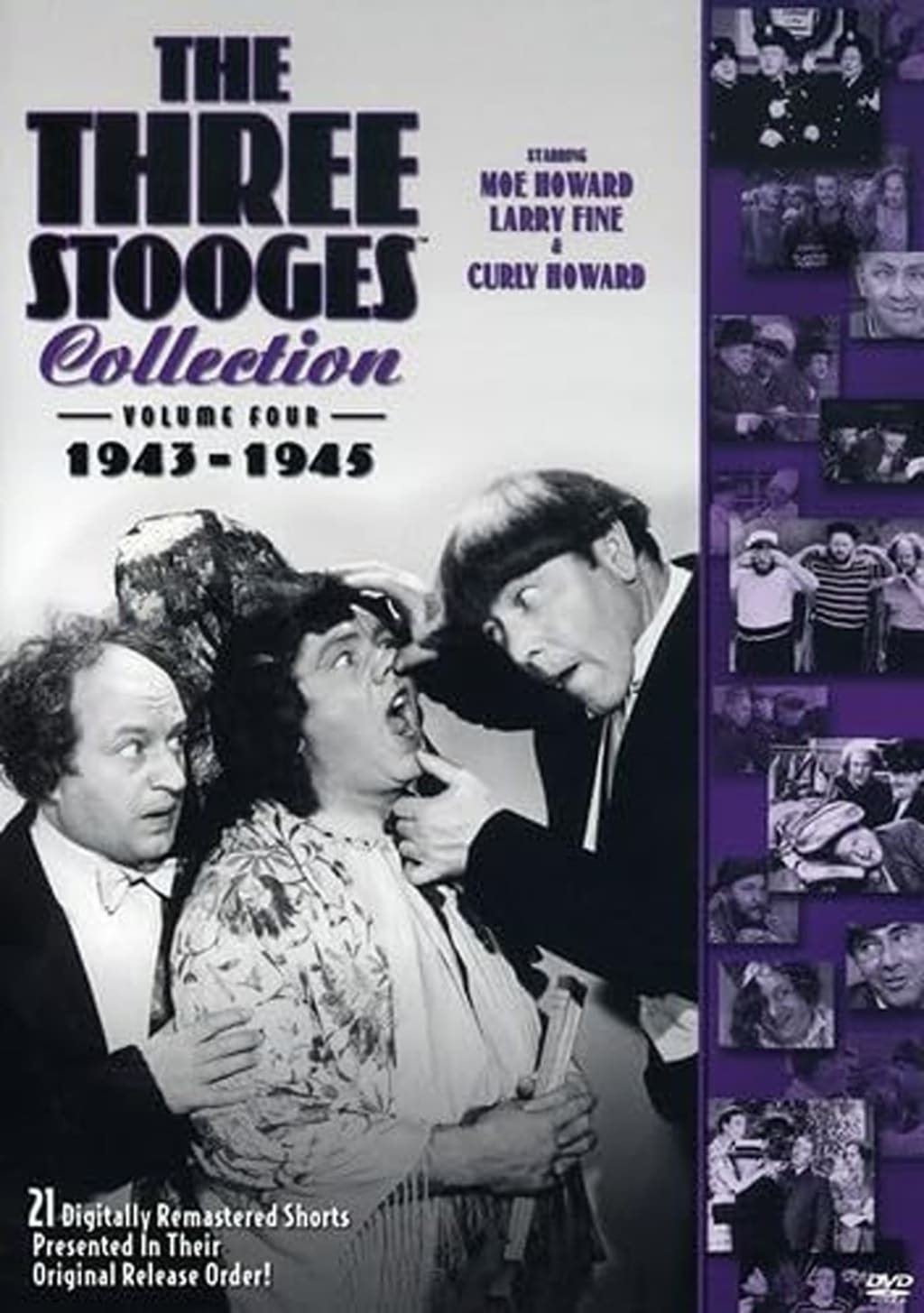
The 21 shorts that came out between 1943 and 1945 were released on DVD as the fourth volume of The Three Stooges Collection on October 7, 2008. This was an interesting period for the Stooges; a period that featured controversy, Christine McIntyre's debut, and sadly, Curly Howard's decline beginning. The next story will detail an even bigger Stooge debut, and will also detail the end of one era and the beginning (or return) of another, but even so, the Three Stooges continued to persevere, thrive, and succeed.
About the Creator
Clyde E. Dawkins
I'm a big sports fan, especially hockey, and I've been a fan of villainesses since I was eight! My favorite shows are The Simpsons and Family Guy, etc.
Enjoyed the story? Support the Creator.
Subscribe for free to receive all their stories in your feed. You could also become a paid subscriber, letting them know you appreciate their work.
Comments
There are no comments for this story
Be the first to respond and start the conversation.