
Gloucester Stage Unfolds the Secrets of "Betrayal"
“Betrayal” is an important story about staying true to yourself in relationships.

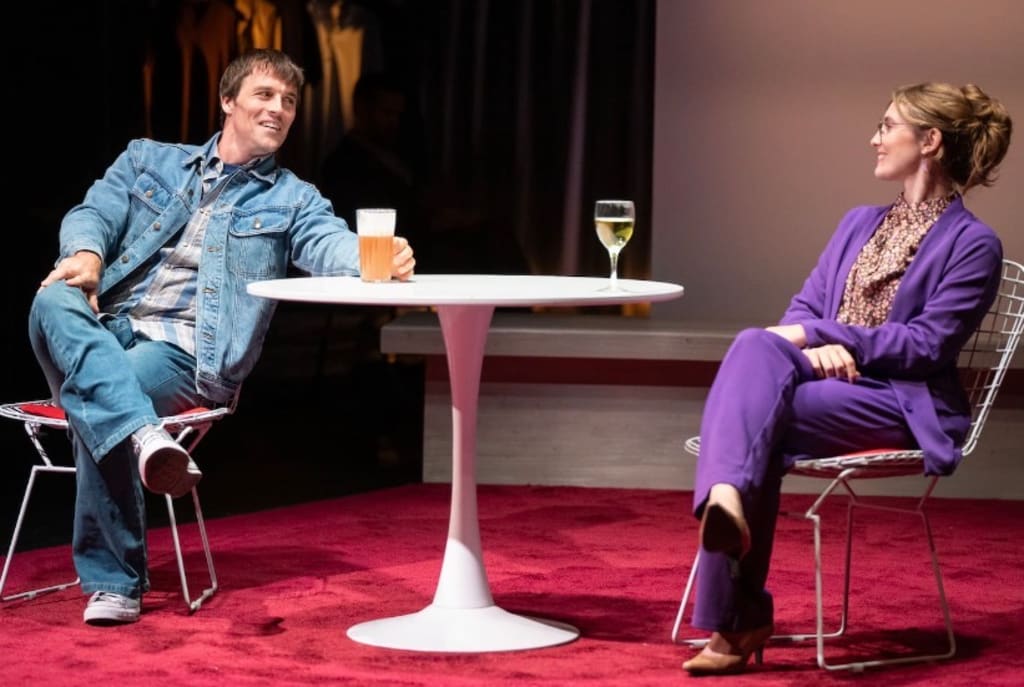
Everybody knows. The world knows.
Gloucester Stage presents “Betrayal,” a 1978 play written by Harold Pinter. It tells the story of Emma, Jerry, and Robert, whose lives become entangled through an affair. Told in reverse chronological order, the story unfolds how it happened and the emotional weight it bears on the group.
Harold Pinter’s “Betrayal” is not the kind of play that reveals itself all at once. When Gloucester Stage’s production concluded, I admit, I wasn’t initially intrigued by the show. After some research and more thought about its themes and unique setup, “Betrayal” is an important story about staying true to yourself in relationships.
Liza Giangrande (Emma), Michael Underhill (Jerry), and Tanner Efinger (Robert) play the three main characters. They studied their dynamics closely as well as their characters.
Giangrande delivers a layered performance as Emma. She is a complicated character, both flawed, but still human. Giangrande leads this character with quiet resilience.
Jerry has a restless energy. Because he is so closed off, Underhill navigates several hidden emotions with subtlety.
Similar to Jerry, Robert also has a quiet restraint. Efinger uncovers the complexities beneath his character’s composed exterior.
And let’s not forget about Jeremy Beazlie as the waiter. As I have said, no small part exists in the theater. The waiter is only involved in two scenes, but Beazlie makes a large presence with how his character reacts to conversations. Bartenders listen more than you think. Audiences giggled at his shocked eyebrow raises.
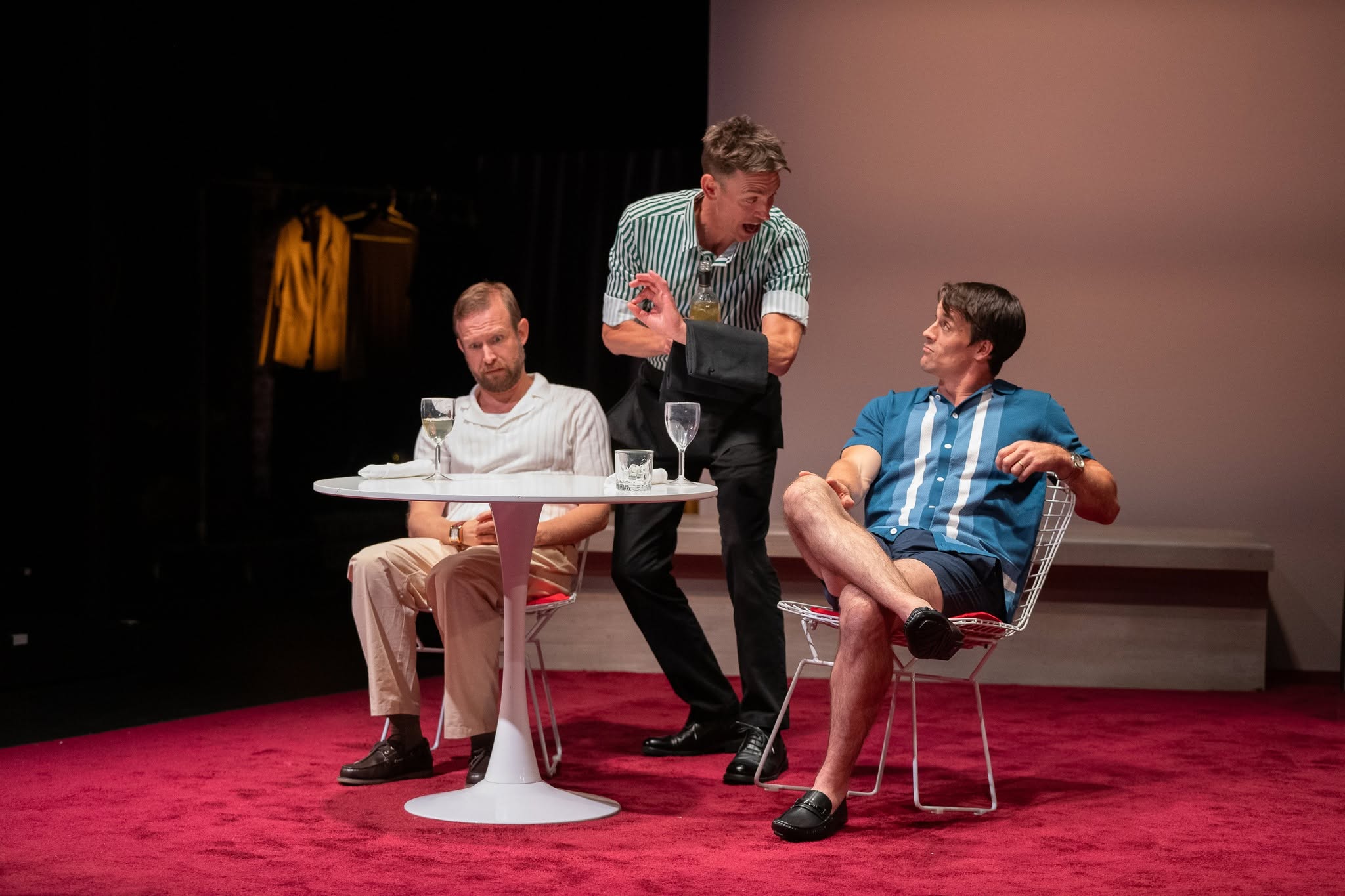
Shana Gozansky directs “Betrayal.” She has a strong connection to the show. Her direction gradually reveals the situation through the sharp dialogue.
Speaking of the dialogue, Pinter’s writing is the most important part of “Betrayal.” In my research, Pinter is famous for his pauses. Several dialogue moments between each character had silence. The silence makes it all the more tense about what the characters are thinking. But then again, maybe you shouldn’t know.
This affair becomes entangled in their DNA, making them lose touch with themselves. The characters are layered, with a quiet vulnerability, trapping their emotions. They lack the emotional capacity to stand up to one another or voice their opinions.
Gloucester Stage transforms its auditorium into an intimate setting, with chairs, tables, a bar, and a deck that reflects a bed in one scene. A red rug stretches across the floor, emulating the character’s anger and frustrations.
The setting is far from intimate, echoing the character’s turbulent relationship and words to each other. Everything is so distant - including character interactions in later scenes. That was a clever direction.
Once I understood the story’s reverse-chronological order, I understood it better. The play opens after the long-winded affair had ended and gradually unfolds to the beginning of the relationship. That established a unique acting challenge, displaying different emotions. The first and last scenes have a different energy.
Relationships play an immense part in “Betrayal,” but focusing on unhealthy relationships. This show is a lesson to stay true to yourself about what you want in relationships. You’re not just betraying a loved one, but yourself, too.
“I hope (the play) ignites your own reflections and conversations about the beautiful mess of being human,” Gozansky said.
This is a show about the ‘why.’ Why did it happen? Did it have to happen? It’s not so simple a story as I thought. In another interesting theory, what if it's all a memory in a character’s head? We don’t remember memories in chronological order.
It’s a good idea to research the show before you see it. Now that I have a clearer understanding of the story, it has changed my perspective. “Betrayal” plays at Gloucester Stage until Aug. 1.
About the Creator
Marielle Sabbag
My name is Marielle Sabbag. I love to write. I am an entertainment reviewer and a journalist. Movies and writing have become my passion. I have learned so much in the craft and I enjoy spreading joy and curiosity to others.
Enjoyed the story? Support the Creator.
Subscribe for free to receive all their stories in your feed. You could also become a paid subscriber, letting them know you appreciate their work.
Comments
There are no comments for this story
Be the first to respond and start the conversation.