
Earthquake and Slave Isaura
Weird connection, I know, but a good quirky memory

A friend posted on Facebook about a 5.6 earthquake in California yesterday (June 24, 2026) and I was immediately flooded with memories of one particular earthquake in my life.
Growing up in one of the most mountainous areas of the former Soviet Union (Kyrgyzstan's surface area is 93% mountains), I was no stranger to earthquakes. We regularly experienced small and moderate ones of 2-4 magnitude on Richter scale, they were just a fact of life you had to deal with. For us kids it was even an adventure of sorts, "Hey, look, the earth under my feet is shaking!" And the earthquake drills at school were fun, too, a chance to break up the boring school routine.
I remember when I was about 9 or 10, my best friend and I were sitting in a stocky and luscious mulberry tree munching on the small juicy white berries. Our moms gave us steel containers tied around our necks to gather some berries and we were trying to compete who will get her container full first. I suddenly felt a strong shake of the tree and saw my friend flying to the ground, with her berries spilling all around. I held on, looking down at her. She landed on her butt with no serious injuries (just a bruise later), looked up at me and started laughing, "How come the quake didn't shake you off? Not fair, you are getting more berries and I have to start over!" And she immediately climbed back up and I of course helped her refill her container. We then ate those berries that were lying around on the ground, unwashed. You just had to blow the dirt off of them...
Because of the constant seismic activity, our city codes did not allow to build higher than 16 stories and all city construction was to meet the earthquake resistance standards. We were always told that our residential and commercial buildings were supposed to sustain earthquakes of up to 8.0 on Richter scale. Given that the strongest recorded earthquake of 9.5 happened in Valdivia, Chile in 1960, having displaced over 2 million people and triggered a huge tsunami, it was a bold claim. It may have been just a reassuring myth fed to us by our government, notorious for not telling the truth to its citizens.
In fact, I now know that it was largely a myth. All Soviet construction standards were uniform across the country and when the Spitak earthquake of 6.8 to 6.9 magnitude struck northern Armenia on December 7, 1988, turning the town of Spitak into a hip of rubble and killing 25,000 people and maiming another 180,000, we all developed a huge PTSD.
Here is an archived ABC news report about Spitak, the most devastating earthquake in the history of the Soviet Union in terms of human losses:
That was when I learned that an earthquake's strength is not the only factor determining how devastating it would be. It also has to do with how deep in the earth it originates, or how shallow it runs. Despite its moderate magnitude, the Spitak quake was catastrophically destructive because it occurred at a very shallow depth, unleashing a maximum intensity of X (Devastating) on the MSK scale.
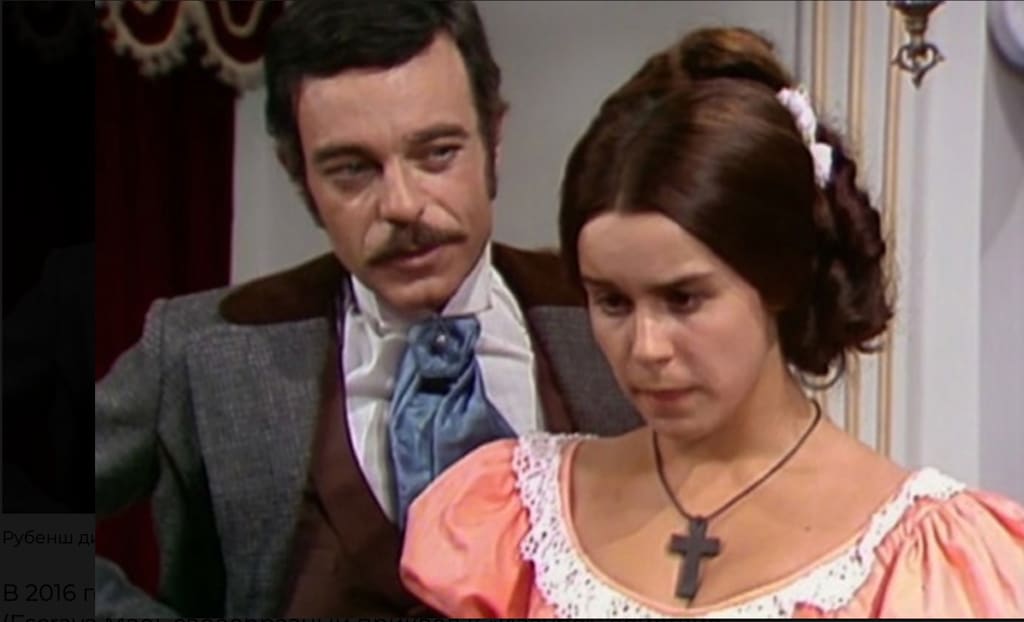
But coming back to my most memorable earthquake. It happened on March 5, 1989 shortly before 8 pm. I was sitting in front of TV with my mother, waiting for the Brazilian soap opera "Slave Isaura" to start on Channel 1, the Soviet main TV channel. We lived in a 5-story apartment block on the 4th floor, with no elevator.
Suddenly, we heard rumbling as if the house was about to be demolished by a huge bulldozer. And then it started to shake so badly that the paintings on our walls fell and Mom's cherished crystal vases in the buffet cabinet began to shake and jump.
We knew it was a quake. It felt like it was unusually strong, too. Suddenly, we heard on the radio PA that Bishkek was experiencing an earthquake, the epicenter of which was 40 km away, near the neighboring town of Tokmok and that the aftershocks could follow shortly.
Mom and I ran out to the street. We had a large playground in front of the apartment complex, shared with three other similar buildings and people started to gather there. It felt like the entire complex of over 150 apartments was just standing there. Someone started to estimate if we will all die in the rubble if a stronger earthquake followed and destroyed our houses. I'm telling you, we were all still under the Spitak-induced PTSD.
We hung out there for about 5-7 minutes, sharing news and anxieties. And then suddenly, one of the neighbors on the second floor who didn't run out (we all pretty much knew each other) opened her window wide and we could hear this blasting from her TV:
We all rushed home. By the time the second season of Slave Isaura, the first ever Brazilian (or foreign, for that matter) soap to be shown on Soviet TV, aired in February and March of 1989, it became an absolute cult-like TV obsession. It was aired on Sundays only, with the encore show on Saturday for those who could have missed the first showing. There were no Tivos at the time and VCRs were not yet in every home. So if you missed it on Sunday, you'd have to wait till next Saturday.
No earthquake could shake between us and the last episode of our favorite Brazilian soap opera.
About the Creator
Lana V Lynx
Avid reader and occasional writer of satire and short fiction. For my own sanity and security, I write under a pen name. My books: Moscow Calling - 2017 and President & Psychiatrist
@lanalynx.bsky.social
Enjoyed the story? Support the Creator.
Subscribe for free to receive all their stories in your feed. You could also become a paid subscriber, letting them know you appreciate their work.
Comments
There are no comments for this story
Be the first to respond and start the conversation.