
Bad Wolf, Planet-Hopping Dangers, and The Man Who Feels The Turn of the Earth -- the Ninth Doctor in Literature (2 of 2)
The Book Report: Doctor Who New Series Adventures - the Complete Ninth Doctor stories

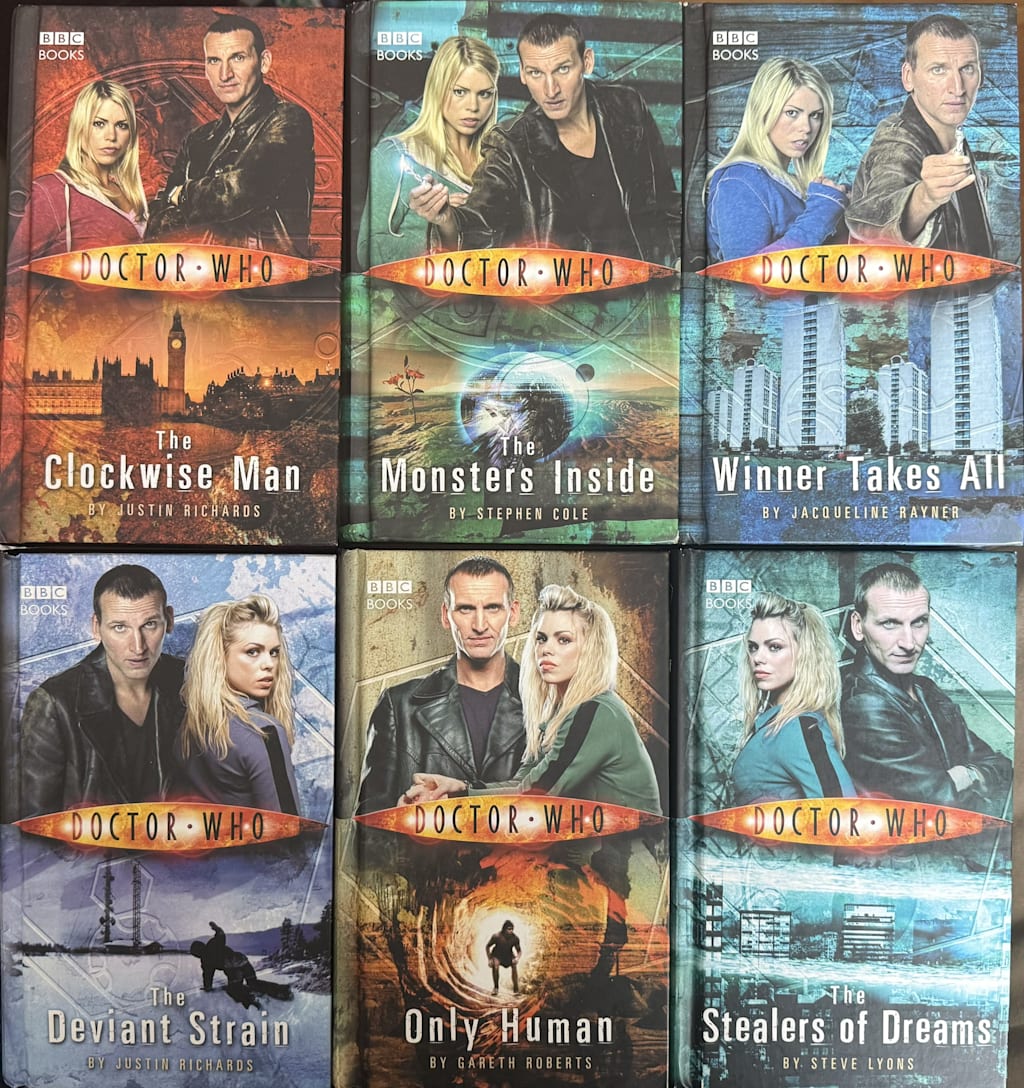
(Author's Note: the original article contained all 6 books in the run, but extended past the max word count. To fix this, the article has been split into two sections. Please read part 1 first, which can be found by clicking here. Thank you!)
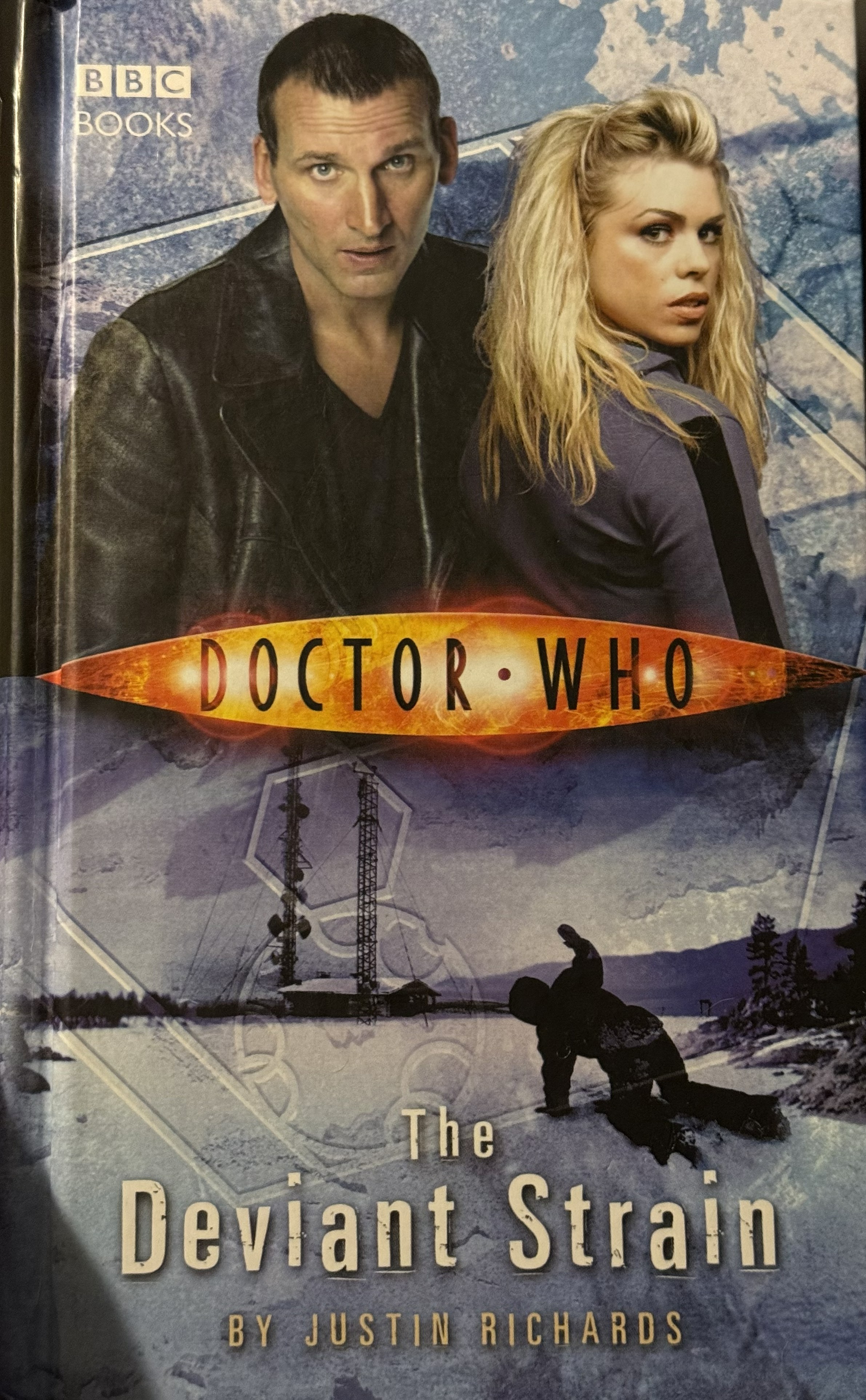
New Series Adventure #4: “The Deviant Strain” by Justin Richards
All right—this is where I’m going to lose some of you.
I liked this book.
Before we even get into the novel, now’s the time to talk about likely the largest criticism I see thrown around in the NSA line: Justin Richards’ writing.
I have never met Justin Richards. I do not know anything about him, beyond what his Wikipedia page is. I have no clue if he’s a nice guy or a “nice guy.” I just know that he writes some “Doctor Who” books I’ve read and enjoyed. He’s an editor for “Doctor Who Magazine,” and helped coordinate the production and editing of the NSA line. He’s also got a killer name.

Now, the criticisms I’ve seen with Justin Richards’ writing is three-fold. One: “his characterization is way off.” Two: “his pacing is way off.” Three: “he uses too many fragment sentences.”
I’m not putting up this defense to say his writing is perfect or the best of the bunch; I’ve rated his books lower than the others—and I find them thoroughly enjoyable. I’m writing this analysis and defense of it because I’ve seen these criticisms in one-star reviews for each of these books, with people frothing at the mouth, and bluntly put, y’all are missing out on some fun romps by getting frustrated over small things.
One: “his characterizations are off.” Yes. They are, in comparison with other books in the series. Never anything major; just small tweaks. Rose is worried about a nail being chipped. Rose swings a killer cat by the tail to bash it into a wall before learning it’s a machine. The Doctor gives a helpful, brave boy his sick-as-hell leather jacket. Captain Jack is very serious and traditionally-brave knightly-cavalier.
Are these the characters, as we see in the show? No. Does this all come down to “the writers are going off an earlier script draft—maybe even just seeing a paragraph summary of who the character is and knowing nothing more about them”? Yes. Does this take away my enjoyment of the story? No.
At the end of the day, any original story from a licensed property, be it “Doctor Who” or any other piece of media, is fan fiction. It’s just published under the brand. The characters aren’t going to be 1:1 unless Russell T. Davies or Steven Moffat (or especially Robert Shearman) writes the story for Nine.
Two: “his pacing is off.” The story has a mystery through the first half, and the second half is a continuously-building, ever-crescendoing action set-piece that takes no breaks and gets overwhelming. That doesn’t go with traditional three-act structure, that’s very true—and also, it’s plotted very tightly and keeps the action high. Some of our favorite Doctor Who stories in the series are nonstop tension; look at “The Impossible Planet/The Satan Pit.” I was a livewire of nerves throughout the whole 90 minutes, because it didn’t let up. Maybe this doesn’t translate as smoothly in a novel form where reading takes longer, and thus extends the tension out and out and out—it also reminds me of Dean Koontz’s “Intensity,” which famously doesn’t ever take a break, or “Outlast,” or “Evil Dead,” or any of these thrillers that just grabs you by the nerves of your spine and doesn’t release.
If it’s too overdrawn and it makes you fall out of it, I totally get it! I’m just saying that, if this were a filmed episode, it would be a smoother ride that more folks could likely take, and if you read it in this frame of mind, it’s very cinematic to watch in the mind’s eye!
Three: “too many fragment sentences.” This was me when I was a writer in eighth grade, so how dare you. More importantly, writing is all subjective anyway. Most writers will find fragment sentences have purpose. Making our writing shorter. Making it sharper. Chopping it up. You might read it in a cadence. A special cadence. A cadence that makes you stop and start. Again and again. And by doing this, I as the writer control your pacing, making things snap in and flow; it’s a way of subconsciously keeping the tension if the action of the story is enough to hold it. Would you rather read a paragraph that has long, winding narration about a burning building, or hear about the building— burning; it’s all burning— the fire spreads; he’s got to run— in choppier moments; slight pictures in the eye— you catch, drifting like ashes going up with the roof—!
Again, if it pisses you off to read, I totally get it. It’s like having to read about a poison. Kuzco’s poison. The poison especially designed for Kuzco. If you’re able to lock into the rhythm, it heightens it.
Which leads me to my final point:
This is pulp fiction writing.
As someone whose dad loves “Doc Savage” books, this is effectively the modern version of the dimestore adventure-book writing. You crank out an adventure; no, the characters don’t have to be going through Hamlet’s “TO BE” internal strife. The plot is not character-driven; it is action-driven, and the action is always dialed higher and tighter until the highest pinnacle of stress becomes yet another foothold. As science-fiction adventures, ALL six novels do an excellent job; the writers all go about it in a different way:
Stephen Cole: planet-hopping intrigue with small goals becoming huge.
Jacqueline Rayner: character-empathy juxtaposed with dire consequences.
Gareth Roberts: contemplative set-up and gut-punch payoff.
Steve Lyons: mysteries layered into each other becoming narrative inversion.
Justin Richards: get them in over their head and make it apocalyptic.
All that yapping done, what the heck is “The Deviant Strain” even about?
The Doctor, Rose, and Captain Jack Harkness (time traveller, coward with a heart of gold, living embodiment of having a high libido) get a distress signal from a crashed ship somewhere in Russia. Captain Jack responds to it, much to the Doctor’s chagrin; he doesn’t want to help out the SOS signal, he wants to keep traveling. But okay, let’s go help.
In the village of Novrosk, things aren’t great. The village thrived in the Cold War era as a base for scientists to run loads of experiments on horrible potential weapons; it has since been dismantled, even though there’s still scientists there, there’s still nuclear submarines there (we dismantled them, we swear), and there’s still work being done. The townsfolk are miserable and live day by day with no hope for the future. One lovely teenage couple sneaks out to have any moment of bliss, going up to the strange Stonehenge-esque rocks on the cliffside above town—and are attacked by some kind of vampire-things that slurp one dead and the other into old age and senility.
The Doctor, Rose, and Captain Jack arrive to help, alongside a contingent of Russian army personnel. Everyone splits up, with the Doctor going to work on the mystery of the still-active inactive science base (and, for you keen-eyed readers, being blatantly suspicious of a guy very early on who may or may not have something to do with our main villain). Rose goes into town to help gather information from the untrusting locals and the only member of the local police. Captain Jack accompanies the army men--he is a Captain, after all, it’s in the name he dubbed himself—and tries to figure out the mysteries of what must be a Werdulak.
Twists abound, as do action setpieces! Rose is attacked by a seemingly unkillable zombie-person; Captain Jack and the soldiers are attacked by seemingly unkillable murderous jelly-blobs. The Doctor talks to people, and then some more. He figures out there’s aliens at work here! In a Doctor Who story! Oh my God!
It’s very thrilling, with each scenario being yet another “oh my goodness there’s no way out,” followed by a “they just barely made it out!”
The three leads reunite, only to send Captain Jack away again into the village to help evacuate everyone, including Valeria, our desiccated now-elderly teenager! Everyone else has abandoned her to the jelly-blobs that seem to be multiplying more and more and more, but not Captain Jack! He’s a square-jawed hero, that Captain Jack; he’s going to help! There’s a lot of people dying in gruesome ways; a very typical Doctor Who “Base-Under-Siege” story as they retreat to the scientific base, reveals about who our villains are, what their plans are, and why their plans are, and I really dig it. The villains here share a lot in common with Stephen King’s “The Tommyknockers,” and that’s all I’ll say on the matter, other than reviewers be damned, it makes sense in the story.
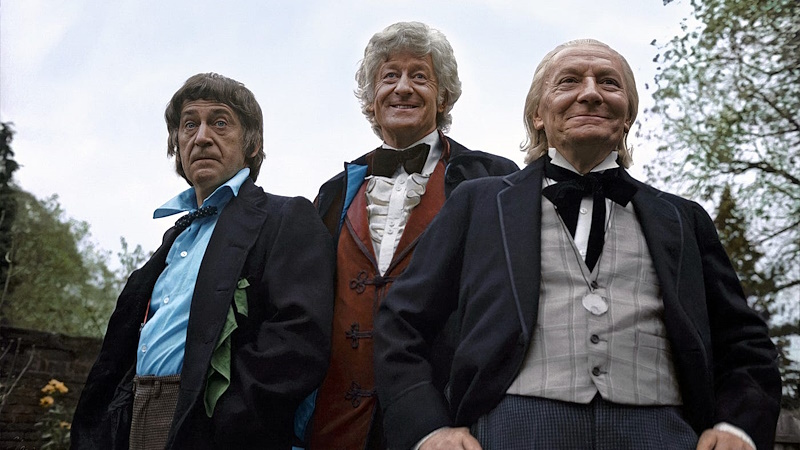
Through increasingly high stakes—getting out of town before the Jellies consume the life-force of our cast, getting a bonfire lit, getting Captain Jack to safety on the other side of the bonfire, stopping the nuclear submarines from activating, stopping poisonous gas from leaking, stopping villains who have singlemindedly waited for quite a long time for their plan to work—the Doctor shines as always, though taking a backseat in the action itself and letting the male companion handle the brunt of that, a la William Hartnell’s First Doctor and Ian Chesterton, back in 1963.
(When the show started, the Doctor was a much older man, and because of this, the companions included a younger man who could handle all the action scenes. This meant that the Doctor was more the scientific philosophizing type rather than the action hero. This eventually evolved over the Patrick Troughton Second Doctor era, though Jamie still served as the hero. It really shook out during Jon Pertwee’s Third Doctor era, wherein *insert running gag of “author being hauled off in a straitjacket to yap away his lifetime” here*)
Eventually, through cunning rather than force, Nine destroys the bad guys, the truly meager cast that actually survived has survived, and Valeria is still a catatonic old lady. Captain Jack makes a final point to kiss her cheek before he leaves, and in the final moment, something more may happen.
Hey don’t blame me for being vague; read it or listen to the audiobook and find out! It’s a fun book, I have to drum up interest without spoiling it all.
From my Goodreads review:
“Of the six Ninth Doctor books in the New Series Adventures, book 4 “The Deviant Strain” is usually thought of as one of, if not the, worst. I’ve seen criticism hurled at the fact that the TARDIS Team of 9/Rose/Jack (whose dynamic is astounding to play off one another) are separated; criticism at the fact that the last half of the book is mounting, unending action, and criticism of the nature of the antagonists in the story.
“On one hand, I don’t think the characters ARE completely in character, and the fact that they split up so much and so often doesn’t give them a lot of time to bounce off each other. On the other hand, this isn’t a very character-driven plot; this is event driven—and the characters in Series 1 split a LOT too when the plan comes off.
“Regarding the action being so nonstop: yes, it’s a thriller sci-fi novel. It’s fast and intense. I read HALF THE BOOK in one sitting because it was going without breaks!
“The stakes only go up and up and up, with this first becoming “Doctor Who vs The Blob,” and then more aptly “Doctor Who vs The Tommyknockers,” with cataclysmic distress if the situation can’t be solved. It’s not got a massively amazing character arc for anyone (and in fact, relies on “we’ve got to save this one poor old woman” throughout the final third in increasingly exasperating detail going back to her), but it also has marvelous atmosphere and unwavering tension. The plot has reasons for everything, and the villain’s motivations make a lot of sense. It’s well-crafted adventure: not “deep” but quite a thrill ride nonetheless!”
Due to the reasons people state above with Mr. Richards’ writing, this book isn’t well-regarded usually. I find this a shame, because I think it’s a very fun adventure. It’s not in-character, and that’s fine; you could likely put another TARDIS team in here like the First Doctor, Ian, and Barbara, or the Second Doctor, Jamie, and Victoria, and get an almost exactly similar result. The characters are more archetypal, which is fine for the book that it is. The action is marvelous, and like any good pulp writing, the cliffhangers are truly wonderful eye-openers. How on earth will they get out of this?!
What does detract for me, since I’m fine with the characters, is just that the “we have to save Valeria!” really does take up about ⅓ of the whole book. We meet her early on, we rightly feel bad for her, and it just… keeps coming back. “We’re trapped trying to escape the Jelly-filled town! Wait, we have to rescue Valeria!” “We’re trapped trying to escape the blobs! Quickly; shelter Valeria!” “We’re trapped by zombie-men! Quick; where’s Valeria!”
It’s remarkable compassion from the characters, and by no means should they just let her die—but it’s also just like… dude, save her and let’s focus on the big fish to fry here. Especially because we don’t know her as a person, we just know she was a teen that’s now a catatonic old lady; metaphorically and physically she’s a shell. I’m compassionate for a shell, but the shell takes precedence so many times it becomes distracting.
Like many pulp stories too, there’s death! A lot of death! A lot of death. And we never really feel the impact of it; there’s no “we start with X number and end with Y number” statistics (nor do we need these), but the impact really isn’t felt. There’s terrible death scenes—I sure don’t want to be aged to death by a Jelly—but the scope and scale isn’t always easy to gauge, and that’s fine too. There’s a lot going on, and it keeps you invested!
As for the companions all splitting up…
The team of Nine/Rose/Jack is extremely well-loved by the community, because, like a fine wine, it is tragically rare and gone too soon. In truth, there’s only one episode of the show where they are a triple-act as Doctor and Companions, without heavily splitting up. Everyone usually complains that they’re split up in this book, and thus our fine wine is soured once again instead of giving us what we want to read--but honestly, they split up in every one of these latter three books. It’s not even more egregious here, it’s just that Captain Jack isn’t the sassy horndog, and it seems more out-of-place as a result. All three books are in the same boat, and people (myself included) adore the last two, making it not fair to bash this one for doing the same thing without acknowledging that.
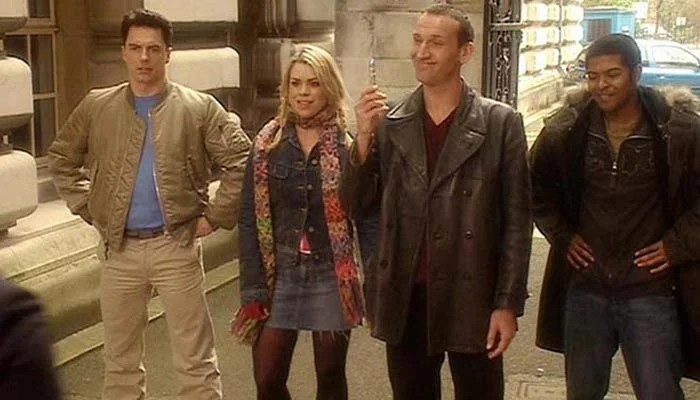
The title, “The Deviant Strain,” is maybe the only one with one meaning; it talks about the DNA that’s been picked up that’s slowly corrupting the sci-fi enemy here…
All in all, it’s a fantastic, cold, creepy little sci-fi adventure! I knew next to nothing about this book going into it, and I was really excited while I read it. It’s light, fun, and quick to read--it blazes by, absolutely on fire; ironic, given how cold the Novrosk Peninsula is…
Completely Legit Arbitrary Rating: 4 Stars - I like it!
On to book 5!
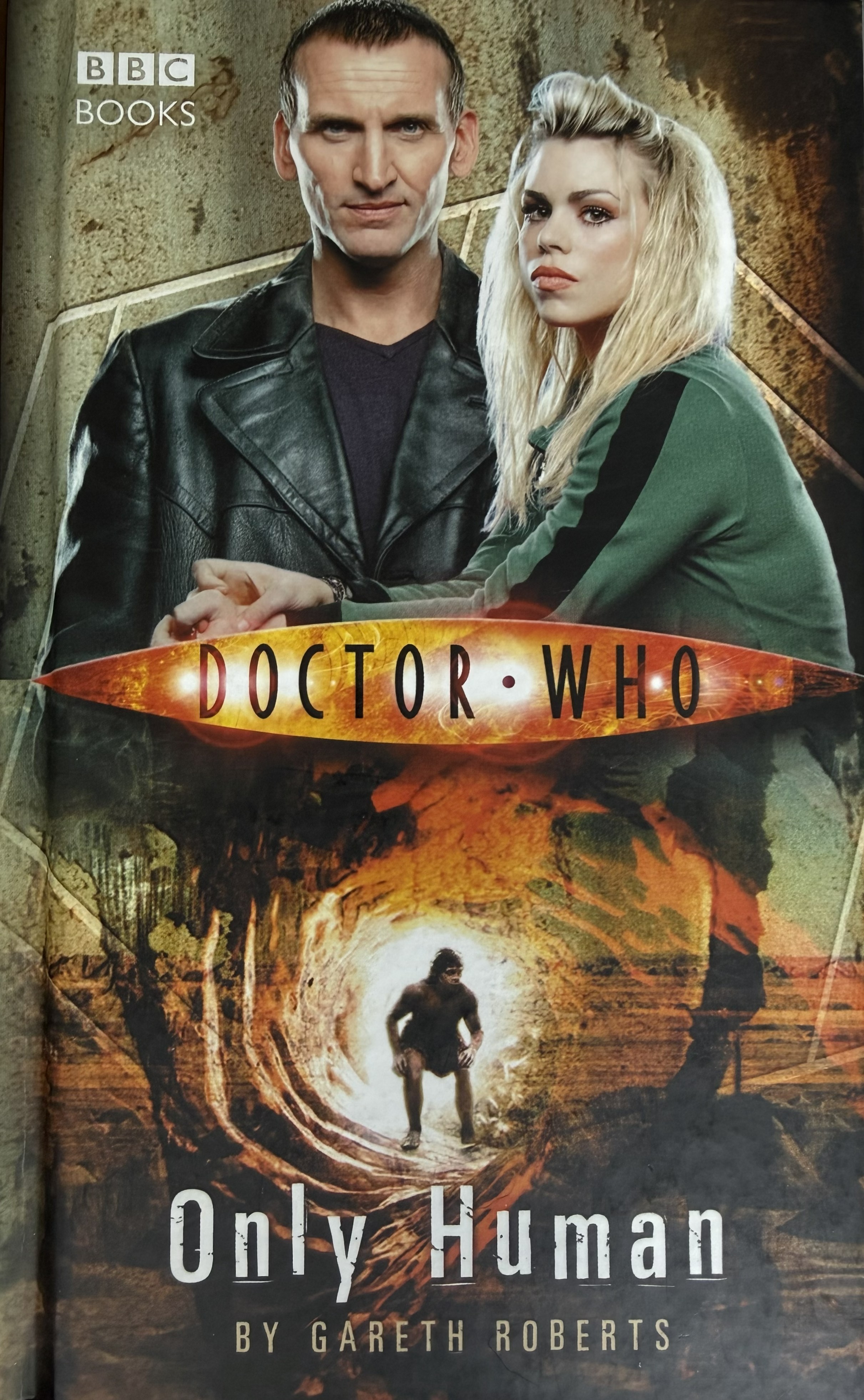
New Series Adventure #5: “Only Human” by Gareth Roberts
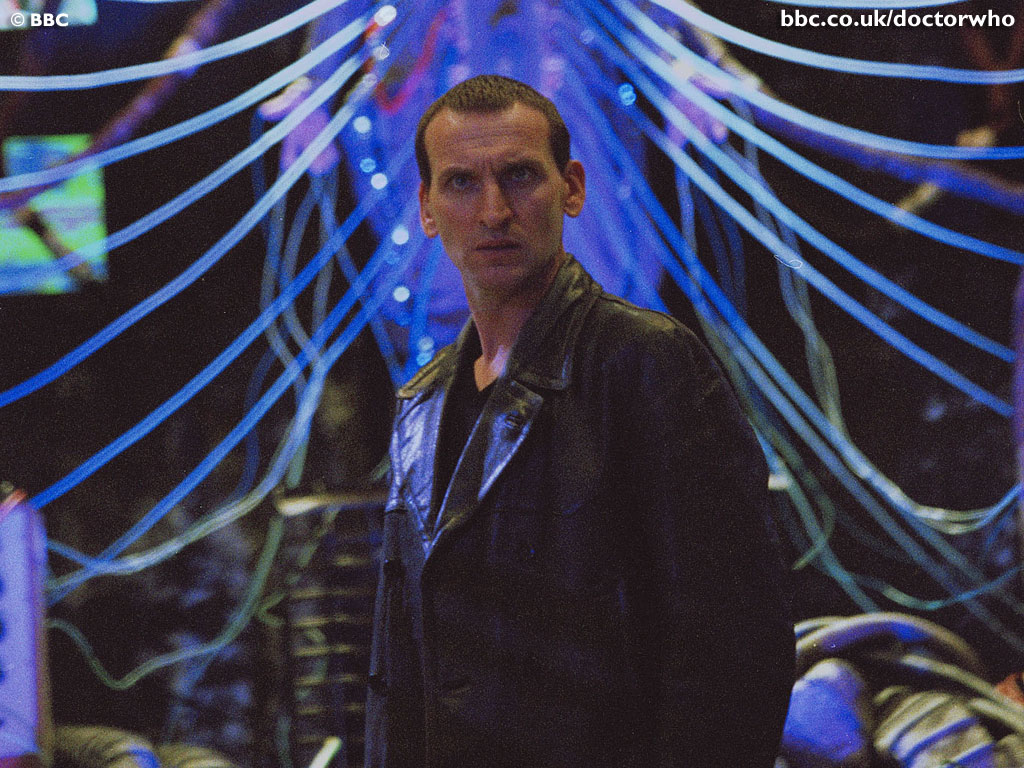
Is this the highest-quality photograph of any of the 6 covers with actually decent lighting and not my 30-watt bulb glooming over my shoulder at the book? Yes. Is this because it's my favorite cover of the 6? Also yes (though it's honestly tied with "The Clockwise Man" many days). This is because, while I don't much care for Billie Piper's upturned hair-styling, I absolutely love this promo-shot of Christopher Eccleston's straight-on determination, and I can't find it anywhere else in promotional materials.
Come to think of it, I've found the promotional headshots used for Nine on "The Monsters Inside," "Winner Takes All," and "The Stealers of Dreams" online, and they're the three covers that seem less dynamic to me.
While we're talking about covers, this is a great time to bring up the NSA covers! Across the board (minus the Specials), the NSAs have a distinctive style: Doctor and Companion up top, something related to the story on the bottom (either location, antagonist, or both), and logo in the middle.
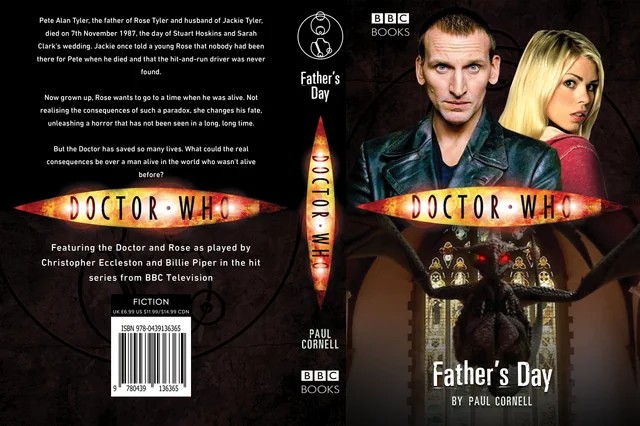
The NSA covers have varied over the eras. The Ninth Doctor books blend in with the Tenth Doctor’s; throughout this RTD-showrun era, the books were all a little smaller (the size of regular dimestore paperbacks), with a hardcover binding typically that curved tremendously, so that the paper itself had a crescent-moon arc. The covers with Rose Tyler are all half-shot photographs, with the characters from the waist up, and include more dynamic posing. These covers also include an inlay of a strange hexagonal symbol; the number of what novel it is in the NSA line, represented in the Time Lord’s hieroglyphic language.
Also, hysterically, Rose’s outfits do something no other companion’s outfits do: they change color to match the theme of the rest of the cover, through the magic of photoshop! They literally chromakeyed her shirt, and I love it so much.
Eventually, after the Rose Tyler books, the promo-shots became more “bust” shots (head and shoulders), with the poses more standard brooding, and the actors sometimes very clearly not in the same room. Unfortunately, there are a fair few books, especially with Martha Jones (played by Freema Agyeman), where David Tennant’s Tenth Doctor is firm and brooding and Martha is smiling and posing for the cameraman behind him. The after-Rose books also do away with the Gallifreyan (Time Lord) numbering. Once the RTD era ended and became the Steven Moffat-showrun Matt Smith’s Eleventh Doctor books, the basic cover outline was the same, but the books were made taller (and thus skinnier, since you can fit more on the page), with a lighter-blue tone rather than darker colors.
That may all be tragically boring, but there’s one more fun fact that makes it, to me, hilariously “what are we doing here?”
In subsequent rereleases of the Ninth and early Tenth Doctor books, Rose Tyler is straight-up gone.
Not in the story, mind you; our audience-surrogate that we know and love from the TV show is right there. But Rose herself, the image of Rose, is completely gone.
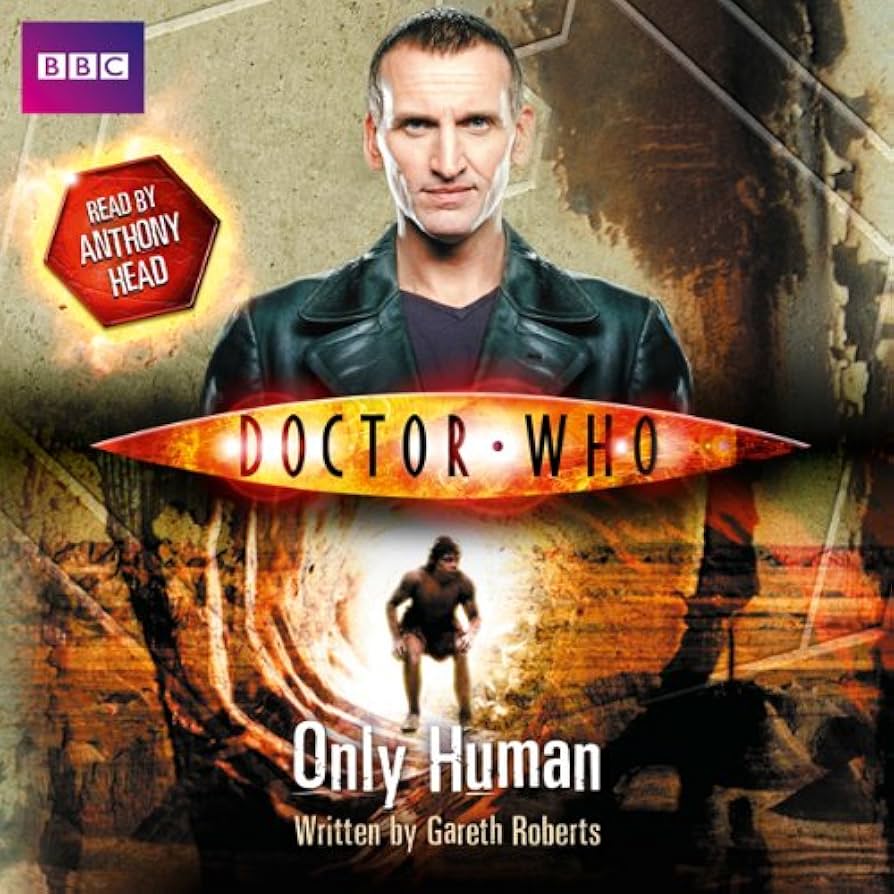
This, insanely, is not just a facet of the NSA’s covers. In rereleases of the TV show, any promotional image of Rose Tyler was airbrushed away. This is not because of some strange “oh I can’t believe Billie Piper did ___” controversy—but because of some utterly insane rights-issue with Billie Piper in the music industry! Billie is, after all, a pop star as well as an actress; as a result of some ludicrous copyright law, the BBC could not use her image in promotional materials. For a show she had already filmed, and the multimedia coming out around that show. For things that were, at this point, over ten years old, being rereleased. For images the BBC owned already.
And Billie Piper has returned to “Doctor Who” time and time again—in major roles—so is she not allowed still to be in promotions?
As a person with a film degree and a published book, who has delved into various copyright laws for producing, this one more than any other I’ve run into utterly boggles the mind.
Either way, I have the original run of books, so I guess a big “heck you” to the music industry, because I get to stare at the lovely Billie Piper on my NSA covers.
“Only Human” is about cavemen, and that immediately makes me smile, remembering that the very first “Doctor Who” serial from 1963, “An Unearthly Child,” also traveled back from contemporary England to caveman times.
Nine, Rose, and Captain Jack travel to present times to investigate someone using a faulty Rip Engine—a prototypical time machine that sucks and could cause an explosion. They discover that a Neanderthal man has been transported to modern day, terrified of the new world around him. They rescue him from the hospital he’s been taken to under the assumption he’s a very mentally ill gentleman—but while in the TARDIS, he starts to be torn apart! Turns out, his travels through the Rip Engine have permanently altered him, and he has to stay in the modern era—so Captain Jack is chosen to stay with him for a month to get him integrated in society, and Rose and Nine go off to caveman times to figure out who’s using the Time Engine.
Captain Jack being separated from our main cast? It’s more likely than you think.
In caveman times, Rose and Nine discover a colony from the far future (the 4560th century, to be exact) who are studying the surrounding cavemen clans. These people are, the Doctor disgustedly points out, from a time after technology has failed, and are reliant on almost everything non-electronic. Instead, they’ve mapped out the human body, perfecting the emotional state by enabling heavy drugs to dose the brain and get rid of any ill emotional state. Effectively, they’re permanently high and complacent and have no interest in achieving anything.
Their leader is, of course, evil.
With the Doctor drugged and at Chantal the leader’s mercy, Rose is split off and finds a wonderfully nice Neanderthal tribe who are just the sweetest darlings—before being “rescued” by the ancient caveman human tribe, who are the more stereotypical savages. Interspersed in all of this, we cut back to the Neanderthal and Captain Jack in modern times, one from the far past and one from the far future, analyzing with disgust and amazement all the things that go into a regular British life. With Chantal creating monsters to take over the world before the world ever existed, the single most important plot point must be answered—
Will Rose marry a caveman?!
From my Goodreads review:
“ “Only Human” is considered one of the best—if not THE best—books in the New Series run (not just the Ninth Doctor run), and it’s very easy to see why!
“Full to the brim with heart and intrigue, this story finds the Doctor, Rose, and Jack in a small predicament that turns sideways in a winding and unnerving mystery. With an excellent pace, this is packed with twists and turns; can the caveman return or not? Is the research genuine or shady? As the back cover famously asks, will Rose wind up married to a caveman?
“Alternately hilarious and horrifying, more than anything it is a heartfelt story, exploring what it really takes to be human across any age—wrapped up in some truly nasty body modifications, coupled with wonderful journal entries.
“ “Only Human” is a magnificent Doctor Who story, a magnificent Time Travel story, and a magnificent Story.”
The main thing that really elevates this one is that, like all good sci-fi, the writing shows us a mirror of life in a way that doesn’t become ultra-preachy. This is a bit more on-the-nose than other sci-fi books, but it is still, from the title on, a good look at what really makes someone human. Whether they’re a neanderthal analyzing the silliness of paying for things rather than trading goods, or analyzing the way that romance works in daily life, or Captain Jack disgustedly pointing out how close-minded people are to appearances—or Rose looking at Chantal’s 4560th-century people and seeing how lacking they are by not allowing them to be upset, or questioning, or stressed out, or ambitious—all of it makes you think about your own life, while also reading about silly caveman shenanigans.
This novel also gets points for being, without a doubt, the most “oh my God” disturbing, in terms of scenarios our protagonists find themselves in.
Every novel here, it seems, has at least one really great “this’ll traumatize the kiddies” moment—this one has the one that, for me, takes the cake. This is because it is done in a much more relaxed, subtle way; not an action set-piece, but a calmer, almost reflective moment. This has a scene of body horror that happens to our main characters that absolutely could not be replicated visually in the show, due to the graphic nature of it--but in prose form, you can pull it off.
No I’m not spoiling it; read the book, my friends!
Even Captain Jack being sidelined has a reason, and contributes to the “only human” theme of “Only Human” by his own analyses. It’s a brilliant novel, a brilliant story with time travel, and has some really poignantly sad moments, which is what being only human is about, isn’t it?
Also, yes, I know Gareth Roberts, despite being a long-running DW writer, is a persona non grada within the community--and I fully acknowledge that he has opinions like some other famous children’s authors (JK Card and Orson Scott Rowling for instance, if you asked me to make up hypothetical names) which are very disagreeable. I enjoyed his writing, also trans lives matter. That’s part of being only human as well.
Completely Legit Arbitrary Rating: 5 Stars - I love it!
On to book 6!
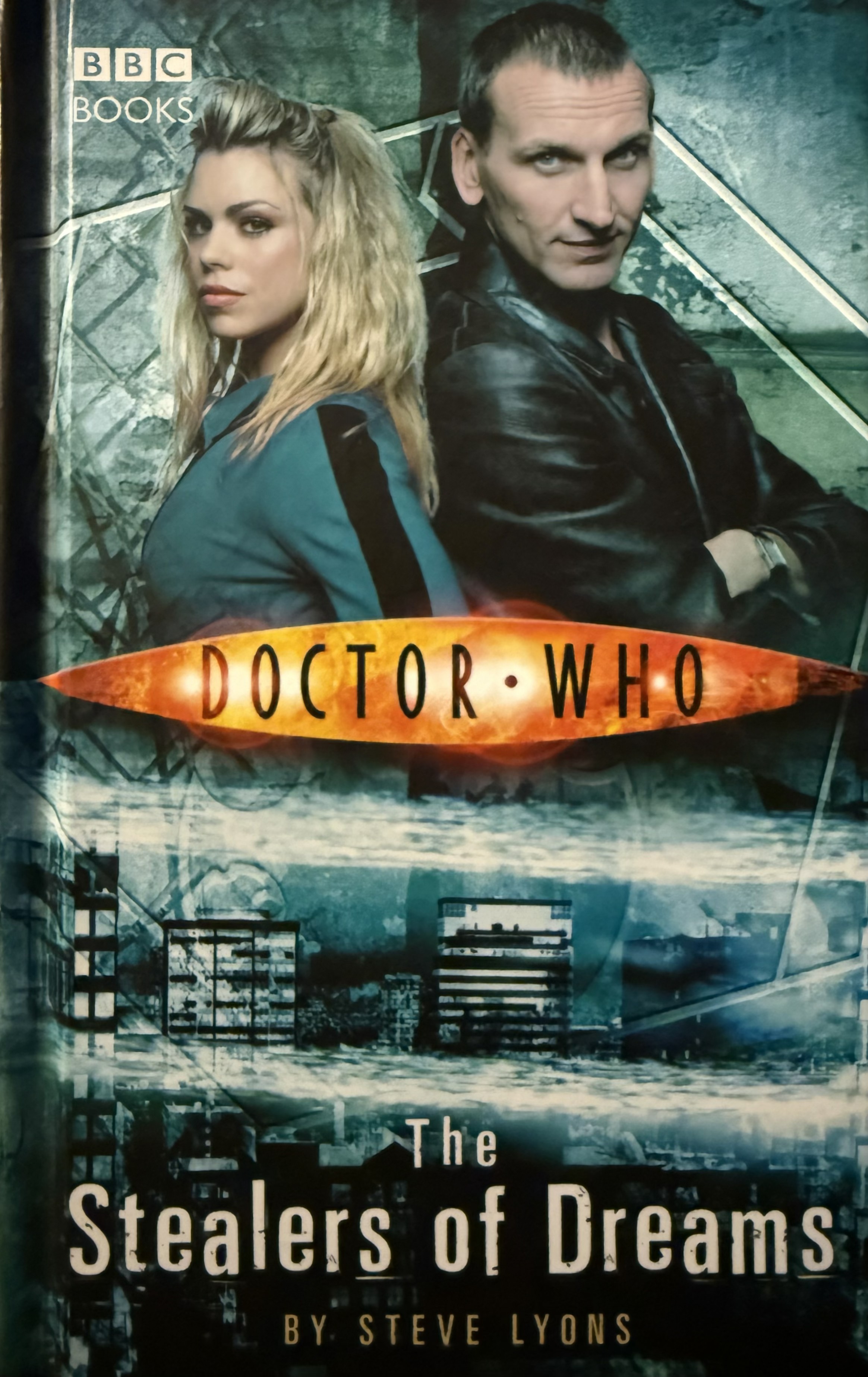
New Series Adventure #6: “The Stealers of Dreams” by Steve Lyons
In 1997, the Virgin New Adventures released the second-to-last novel in its run, entitled “Lungbarrow.” This book has since garnered a reputation in the DW community as being one of the best original books—and being the single-most insane Doctor Who story. While I have not yet read it for myself, the premise—about the Seventh Doctor going back to an ancestral home, getting embroiled in a mystery, and having numerous reveals about the Doctor’s relation to his fellow Time Lords and all of his race’s society—certainly sounds like a brain-bender of a story rather than the typical “science-fiction adventure” we would normally get.
“The Stealers of Dreams” has frequently been hailed as the NSA line’s very own “Lungbarrow.”
No, it doesn’t answer the mysteries of the Doctor’s past, in so doing futz with the fabric of the show’s 60-year continuity—audiences would have to wait for 2020’s “The Timeless Children” for that. And boy, did they ever love it. See, the “Timeless Child” arc was an idea from— *insert running gag of “author being hauled off in a straitjacket to yap away his lifetime” here*
Actually, given what this book is about, that’s a rather apt running gag.
“The Stealers of Dreams” finds Nine/Rose/Cap’n Jack on Colony World 4378976.Delta-Four, which seemingly is a human outpost somewhere in the galaxy. However—and there’s a big however—fiction of every kind has been outlawed. Lying is one of the most despicable acts you can do; creativity is flatly out; nightmares are frequent as people get “fantasy crazy” and have to be taken to an asylum to calm down or be half-lobotomized. The newscast tells of only the most droll things; a man got a parking ticket, a woman got a pay raise of 14 cents. Nobody can advance at work; that would cause goals and dreams. Nobody can build new housing or expand past one ultra-overcrowded city, because that would mean thinking up something new. There are no people in roles of government, thinking about what could be—or about how they could sleazily line their own political pockets. (Okay, maybe this world is based. I’ll move there from 2026 USA, please.)
No fiction. It’s the law—and the law keeps the world so sane it’s teetering on the brink of wire-thin hysterical insanity.
The Doctor teams up with the best police officer in the colony, Inspector Waller, to understand and hopefully overcome this unendingly realistic society, touring her nightly beat in the very stylized sci-fi brick jungle akin to “Blade Runner” or “Dredd;” from seeing first-hand the snap into sheer screaming fiction that the “fantasy crazies” have, through to their recovery treatments at The Big White House.
Rose and Captain Jack help a refugee named Domnic from a busted “Dungeons & Dragons”-style group, fleeing for his life to not be taken to the asylum for participating in fiction-based activities. He’s skittish and gives them the context of the uprising in the world: in between the TV channels, in a channel that stays on the run called Static, a man named Hal Gryden is dedicated to spreading fiction. No one knows his past, not really—but there are rumors spreading fast—and tuning into Static between the channels gives viewers a chance to see all the fiction-shows they are missing, as well as hearing the words of authority rising up to say “No!”
Captain Jack sets off to find Hal Gryden, since being larger-than-life with a huge bravado of stories is exactly what Captain Jack is great at—gathering the attention of the colony’s police force and asylum doctors, who think he’ll need drastic treatment. Rose, meanwhile, tries to help Domnic out but is horrified to discover that the monsters he’s imagined in his own stories have come to life and are chasing them down…

From my Goodreads review:
“The sixth and final Ninth Doctor book ends the era on a fantastic highlight! “The Stealers of Dreams” is one of the most inventive novels, with an excellent sci-fi angle and a myriad of twists I don’t want to spoil for anyone! It is extremely good character-writing, and extremely good plotting as well to make things twist together and apart chapter after chapter. It flies by, never feeling like any scene is overdrawn nor underdeveloped. In a way, it’s like if Ayn Rand wrote GOOD stories; there’s that same set of “govt vs people and broadcast your message!” climax, only it’s gripping here. It is a marvelous adventure for this TARDIS team, and a favorite of the 6 books in the 9th Doctor’s run for good reason!
“Ironically, it has probably my least favorite of the covers (just the coloring) and I have to politely sigh that it’s the 3rd of 3 stories with Captain Jack and Rose and the Doctor where they are all split up—Captain Jack especially—and thus underutilizes their wondrous dynamic. However, this time I can overlook it because of the fantastic side-plots with each character that all come together in the end!
“All in all, probably the best of the 9th Doctor books, or at least tied with “Only Human”! What a great way to end the era, though bittersweet as always that there’s so little Eccleston.”
You know how, in “Scooby-Doo,” it takes a lot of watching the show (ie two episodes) and a lot of life experience (ie being 6 years old or older) to figure out that the mystery is Old Man Jenkins scaring them darn kids off his property by dressing up as the bedsheet ghost? Usually, if there’s a mystery in “Doctor Who,” the answer is “aliens messing with things,” or even the daring “humans messing with things.”
The mystery here is so fascinatingly different that, while both answers technically apply, the way that they apply is a way I would never have guessed.
There’s no less than five MAJOR plot shake-ups in this book! We get one of the most intriguing set-ups, followed by wild scenes that flesh out the worldbuilding while chipping away at the overall mystery—making the reader think “okay, this is what’s going on”—only to end that section in an “OMG” twist that throws the narrative into yet another curveball. Most surprisingly, this doesn’t lose the reader or give them whiplash; it’s still easy to follow and it just doubles-down our excitement in the narrative being told. Even when the culprit is revealed, it still pulls the rug out from under us showing a twist that’s set up at the very beginning and paid off only in the final moments!
This book is a masterclass in plotting, subverting what we think will happen, and clever payoffs.
If I might criticize one piece of it, it’s the page count. The limit of “the NSAs need to be 255 pages long” means that our climax is astounding—and then it’s a denouement very quickly saying “yes here’s what happened in the few months afterwards.” It’s a very “Billy retired and moved to Tucson” feel, if that makes sense. But even that makes narrative sense, showing how the situation had to resolve over time, and how it untangles the very tightly-woven web.
It’s our third time Captain Jack is separated for most of the run-time! However, he not only has something to do (like in “The Deviant Strain”), but it’s very in keeping with his character (like his narration in “Only Human”). It’s the perfect fusion of his roles in books 4 and 5, and its marvelous reading.
As a creative, this book’s themes and ideas really intrigued me! This is exemplified in its title: “The Stealers of Dreams” could be the laws of Colony World 4378976.Delta-Four, it could be the policewoman we follow as a secondary main character, it could be Hal Gryden in Static, it could be the Doctor and his team disrupting the world, it could be the antagonists themselves. It’s so fascinating to see a world without fiction and dreams and lying and exaggeration, and seeing how awfully gray it is. Like I sort of said by comparing it to “if Ayn Rand was good,” this is the NSA equivalent of the totalitarian-state sci-fi; the dystopian “Big Brother” world, except what it’s restricting is something so innately human that nobody can realistically stop doing it. To stop dreaming is to stop breathing.
What I mean is that I genuinely love this book, and while it’s not necessarily the most “feels like standard Doctor Who” story of the bunch, this is a stand-out book in the run for a reason, and widely considered at the top of the Ninth Doctor’s NSAs. This is the kind of story that, in serialization of the show, turns people’s attention for being something fascinatingly different, rather than being a great version of the show we know and love like many of the other narratives before it.
Completely Legit Arbitrary Rating: 5 Stars - I love it!
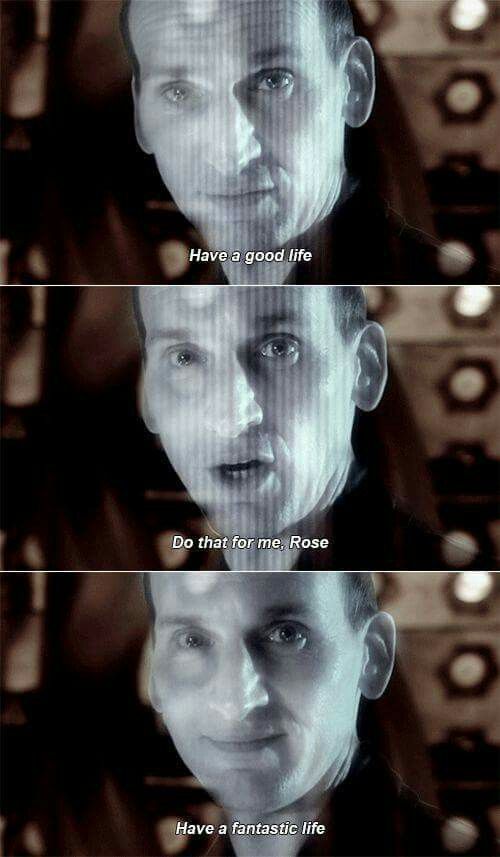
And just like that, one 13-episode season in to a show that’s gone on now in revived form for two decades, which has upwards of 75 stories in the New Series mainline chronology, and at minimum 30 more outside the main chronology—we bid farewell to Christopher Eccleston’s Ninth Doctor. Out of that 100+ set of books, only 6 are fully his.
The Ninth Doctor would appear again, later down the line in anthology books and crossover events! I’ll admit, I haven’t read them yet, because I’m just starting from the start with “The Clockwise Man.” Using Wikipedia for any of these series—the Virgin New Adventures, the Virgin Missing Adventures, the Eighth Doctor Adventures, the Past Doctor Adventures—makes it incredibly easy to see the published order. It’s front to back set-up to read. The closest thing to an exception is the sidestep into the Bernice Summerfield Adventures—Bernice was a companion from the future, an archaeologist who traveled with the Doctor in the Virgin line for a while, and who may or may not have slept with him at one point, which caused controversy in the community; but either way she got her own book series after the VNAs shifted gears and *insert running gag of “author being hauled off in a straitjacket to yap away his lifetime” here*
But then you get to the New Series Adventures Wikipedia page.
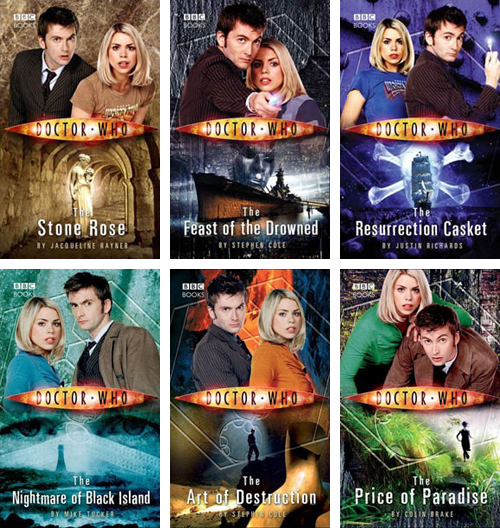
We’ve got the main NSA line. Easy enough; Ninth Doctor through Fifteenth, plus Specials. But then there’s the Specials after it which aren’t connected to the main set of Doctors, like the War Doctor. There’s the Quick Reads; books for a younger audience than the older kids/teens of the NSA, with a halved page count, that came out throughout 10 and 11’s run. There’s the Two-in-One books from 11’s time, which include a story originally meant for 9 (“The Rain of Terror” by Mike Tucker, which wasn’t taken due to production schedule and which “The Stealers of Dreams” took over for). There’s the Decide Your Destiny line. The ten-part “The Darksmith Legacy” during Ten’s run. Choose Your Future—very different from Decide Your Destiny. Puffin Classic Crossovers (which I really wanna read; the Doctor in classic stories)! Anthologies! Not to mention the only-in-Audiobook-form originals! These are different to the Big Finish audiobooks of original stories, not found in print form; we’ve also got the miscellaneous guides! Want an encyclopedia? How about a cookbook?! We’ve got sticker packs with small stories! We’ve got the 6-part “Monsters and Villains” pseudo-nonfiction anthology by Justin Richards covering all the characters, creatures, and spacestations of the TV show; we’ve got “The Shooting Scripts” covering the scripts of Series 1 with Eccleston and Piper again showing they can stand ultra close and have intense chemistry on the cover! This doesn’t even mention the spin-off novels; “Torchwood,” “The Sarah Jane Adventures;” even “Class” has three! And original audiobooks! And not to mention the magazine publications of the time, publishing original comics of all these incarnations, which are collected in their own—
…
Okay, the nice folks with the straitjacket gave me a sedative, and I feel a lot better.
The point is, the NSAs are…. not organized, at least not compared to the other, previous original stories. They have their own organization, blossoming throughout a plethora of material. Like NuWho itself, they tried things with the Ninth Doctor (like releasing “The Shooting Scripts”) that didn’t work—but plenty (like the main NSAs and the first “Monsters and Villains”) did. This carried over into the Tenth Doctor’s tenure, when the show exploded across a variety of media landscapes, becoming the darling of numerous new fans eager to consume everything (all the crazy spin-off things listed above). This fever continued into the Eleventh Doctor, only heightening—before burning itself lower and lower with a respectable but smaller run of Twelve, who only had a few small spin-offs. When Thirteen arrived, everything changed; despite being there for what felt like a long time, she only got a small amount of presence on-screen, with the pandemic hitting and blocking production (indeed, Jodie Whitaker’s Thirteen only has 4 original books in the mainline series, whereas you’d expect 18 at the pace set at the start of 6 per season). Fourteen’s “I’m a special case, always meant to be a limited-time event” got no stories at all, and Ncuti Gatwa’s bombastic run as Fifteen tragically cuts off before we can really dive in with him, both in the show and in novel form, only getting 6 books for his two seasons.
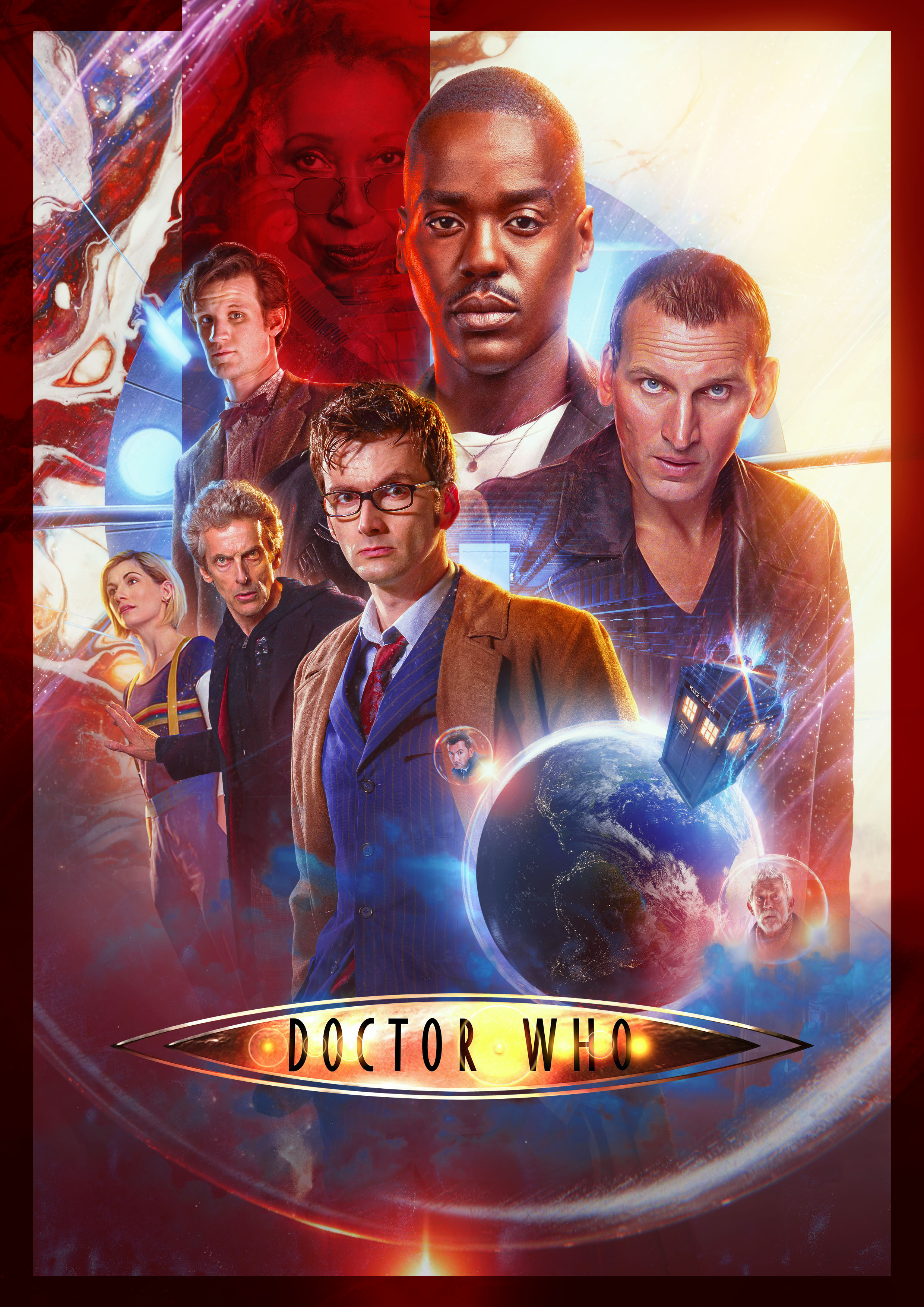
Throughout all of this, throughout all the spin-offs, the tumblr craze for bow-ties and fezzes, the crossovers with “Supernatural” and “Sherlock,” the YouTube reactors revolting over an old man playing the Doctor (*cough* Classic Who *cough*), a woman playing the Doctor, a black guy playing the Doctor (all of these actors being utterly phenomenal by the way); through the constant screams of this person is the most overrated/underrated Doctor, and this episode is the most overrated/underrated best/worst one, and this companion is the—
Throughout all of NuWho, the one ever-present constant I’ve seen from fans who don’t agree on anything, for two decades, is that Christopher Eccleston as the Ninth Doctor knocked it out of the park, and regardless of the heights the show achieved after him, none of it would’ve been possible if he wasn’t there in 2005.
The first six NSAs don’t all knock it out of the park. They’re fun, cheap, breezy adventures. They’re sometimes silly, sometimes out of character, sometimes too drawn out. But through all that, they are fun, approachable, grim under the surface, and dangerous. They’re layered, they’re cool, they made me dream of adventures beyond the stars. They’ve been a part of my life as long as I’ve been a fan.
They were fantastic. Absolutely fantastic. And you know what?
So was Nine.
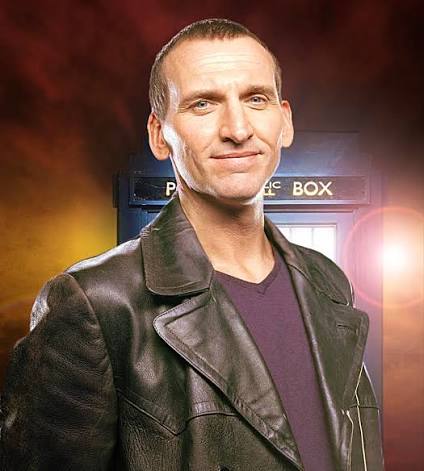
Now for my next review in this series, I just have to sort through the 30 main Tenth Doctor books and the 5 Quick Reads and the 10 “Darksmith Legacy” and the “Decide Your Destiny” and the “Time Lord Victorious” double-bill and oh god ALLONSY— *insert running gag of “author being hauled off in a straitjacket to yap away his lifetime” here*
About the Creator
Enjoyed the story? Support the Creator.
Subscribe for free to receive all their stories in your feed.
Comments
There are no comments for this story
Be the first to respond and start the conversation.