
Bad Wolf, Planet-Hopping Dangers, and The Man Who Feels The Turn of the Earth -- the Ninth Doctor in Literature (1 of 2)
The Book Report: Doctor Who New Series Adventures - the Complete Ninth Doctor stories

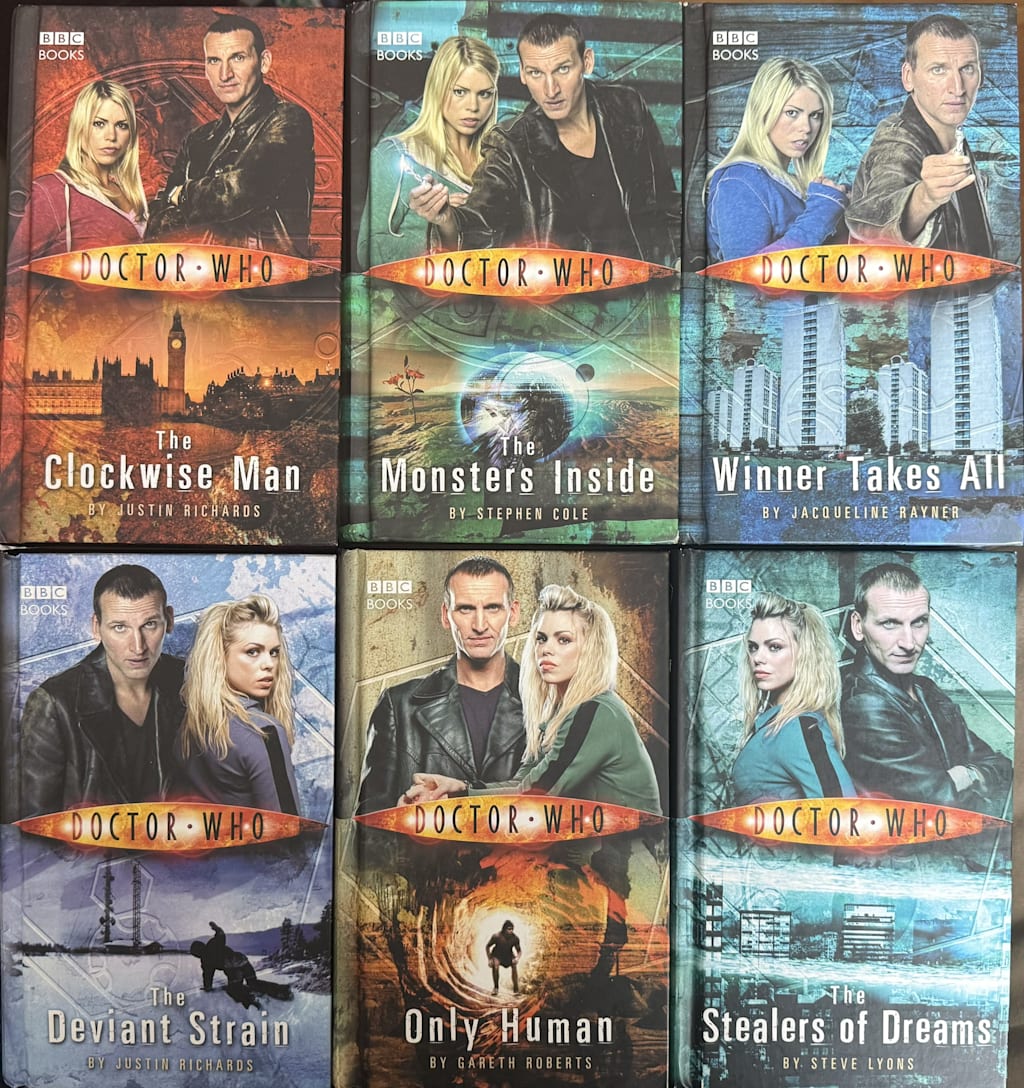
In 2005, a young woman was almost killed at her department store job.
She was looking for a coworker, a man named Wilson, and when she went to the basement to see if he was working on the electrical system of the building, she was followed by what just had to be a group of college students dressed as shop window dummies. Cornered, she shut her eyes, terrified as the plastic men advanced—and then, everything changed.
A man slipped his hand into hers, smiling in the face of danger, and said "Run!"
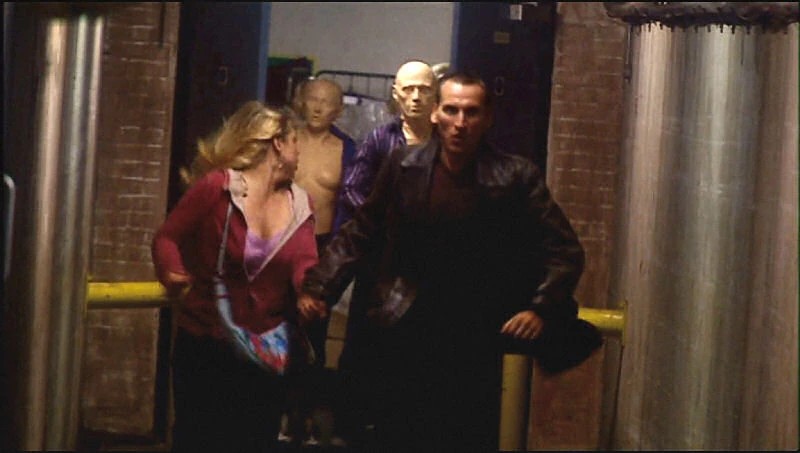
Thus, the revival of "Doctor Who" kicked off, launching a new wave in the multimedia juggernaut that is the BBC’s monumental sci-fi programme. At the time of writing this, 21 years on, “Doctor Who” faces uncertainty and potential cancellation for a second time as the “Disney Era” stutters and falters—but in 2005, after being off our screens since the 1996 TV movie and off the air regularly since the Classic Series’ 1989 cancellation, Christopher Eccleston and Billie Piper ushered in a new generation of fans to a vibrant universe.
I remember being 8 years old, sitting on the couch in our television room in the basement, with the lights turned down and a blanket drawn up over my head. My father, who himself was a lifelong “Doctor Who” fan since watching a similar introduction episode with the living-plasticine Auton menace (“Spearhead From Space,” 1970), was over the moon happy to have a rushed collection of DVDs of the brand new revival series; a gift from one of his work-study students, also named Justin. My dad didn’t tell me anything about what we were going to watch: he just sat us down, turned off the lights, and put it on the projector and the big screen. And I, like Billie Piper’s character Rose Tyler, was terrified beyond description—until this smiling man came, not alleviating the danger but laughing at it instead.
For thirteen fantastic episodes, Christopher Eccleston’s Ninth Doctor showed us a flawed and brilliant hero. Rose, as his traveling companion, may or may not have had a crush on him. In the last third of the stories, a gent named Captain Jack Harkness (played by John Barrowman) joins their team in its adventures around the universe—and he definitely has a crush on… well, everyone. The writing is crisp, the characters electric and three-dimensional, the stakes ever-increasing, the situations dire, the music gorgeous, the overarching plot heartbreaking. At the end of thirteen episodes, tearful and confused, we saw Mr. Eccleston gracefully save the world, get the girl, and bow out, letting David Tennant take over and sail the show to booming heights.
I was hooked from the start.
My dad set about getting everything possible for his slightly-autistic son’s new hyperfixation. There’s a reason why, in the 3rd Grade Class Journal, when it was my turn to write about “what did you do this weekend?”, I didn’t write about church or going to the park or seeing squirrels—I wrote about watching the Doctor, my Doctor, saving the world from a lone Dalek. My dad was proud; my mom sighed heavily into her hand.
I got VHSs of Classic Who, along with every issue of Doctor Who Magazine we could find—which was very little, here in the US. The first one I ever got had a picture of Christopher Eccleston, my Ninth Doctor, standing alone and grim on the cover, with the caption “Who’s Afraid of the Bad Wolf?”
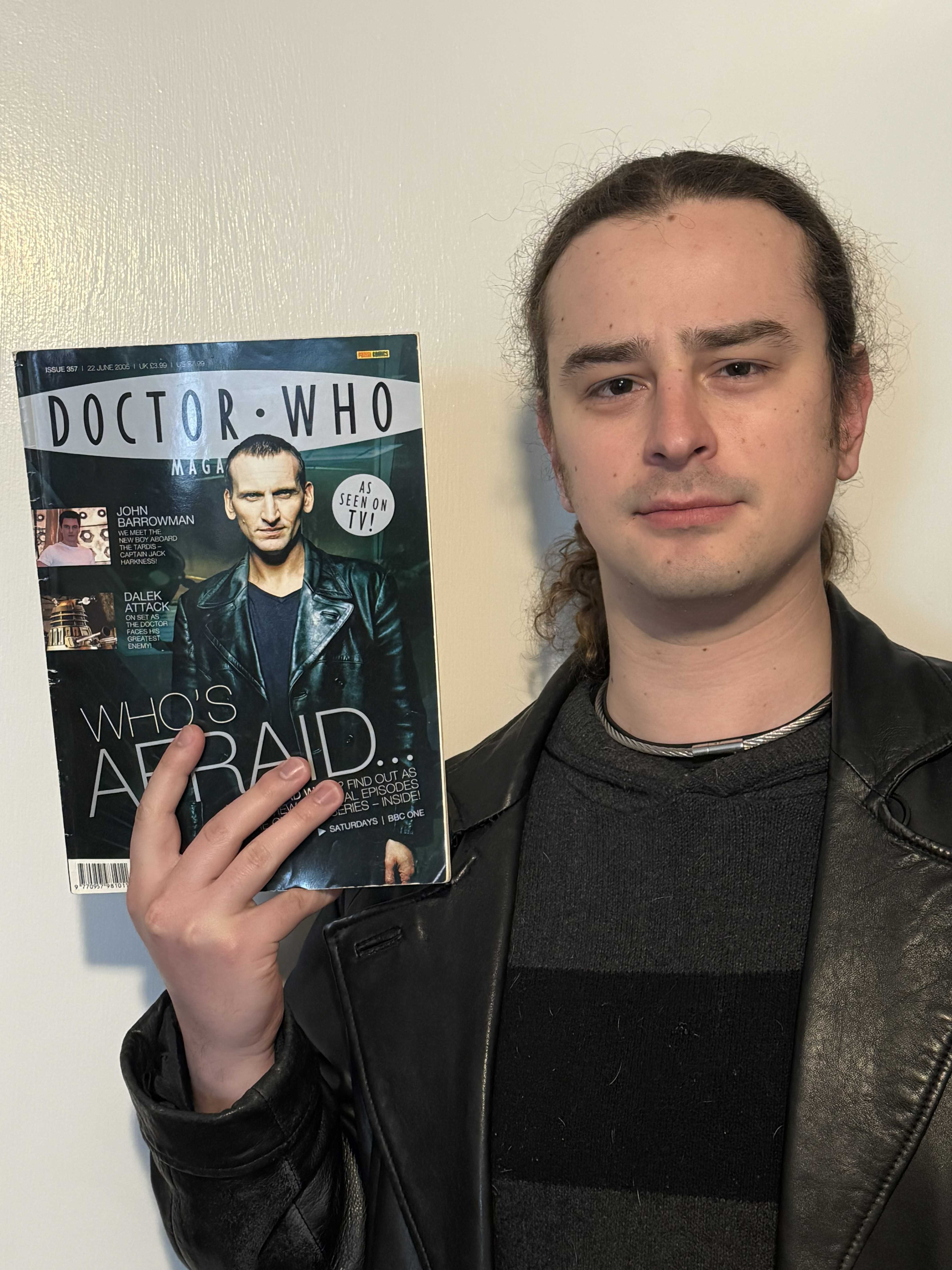
(Now, in the show, the “Bad Wolf” motif is— *insert running gag of “author being hauled off in a straitjacket to yap away his lifetime” here*)
And more than that—as the back ads in the magazine proposed: there were books with my Doctor as the star.
Now, I had books from Doctor Who—but they were the Target Novelizations, recounting the episodes of the Classic Who stories. I had Terrance Dicks’ “An Unearthly Child,” which was an introduction to Doctor Who but was quite a different place to begin than the episode “Rose” that starts the 2005 NuWho revival. I had Patrick Troughton’s Second Doctor fighting against “The Cybermen,” actually called “The Moonbase” in the show—with a head on the cover I recognized from NuWho’s Season 1 Episode 6 as a Cyberman, except in “The Moonbase” it’s a different, earlier design and— *insert running gag of “author being hauled off in a straitjacket to yap away his lifetime” here*
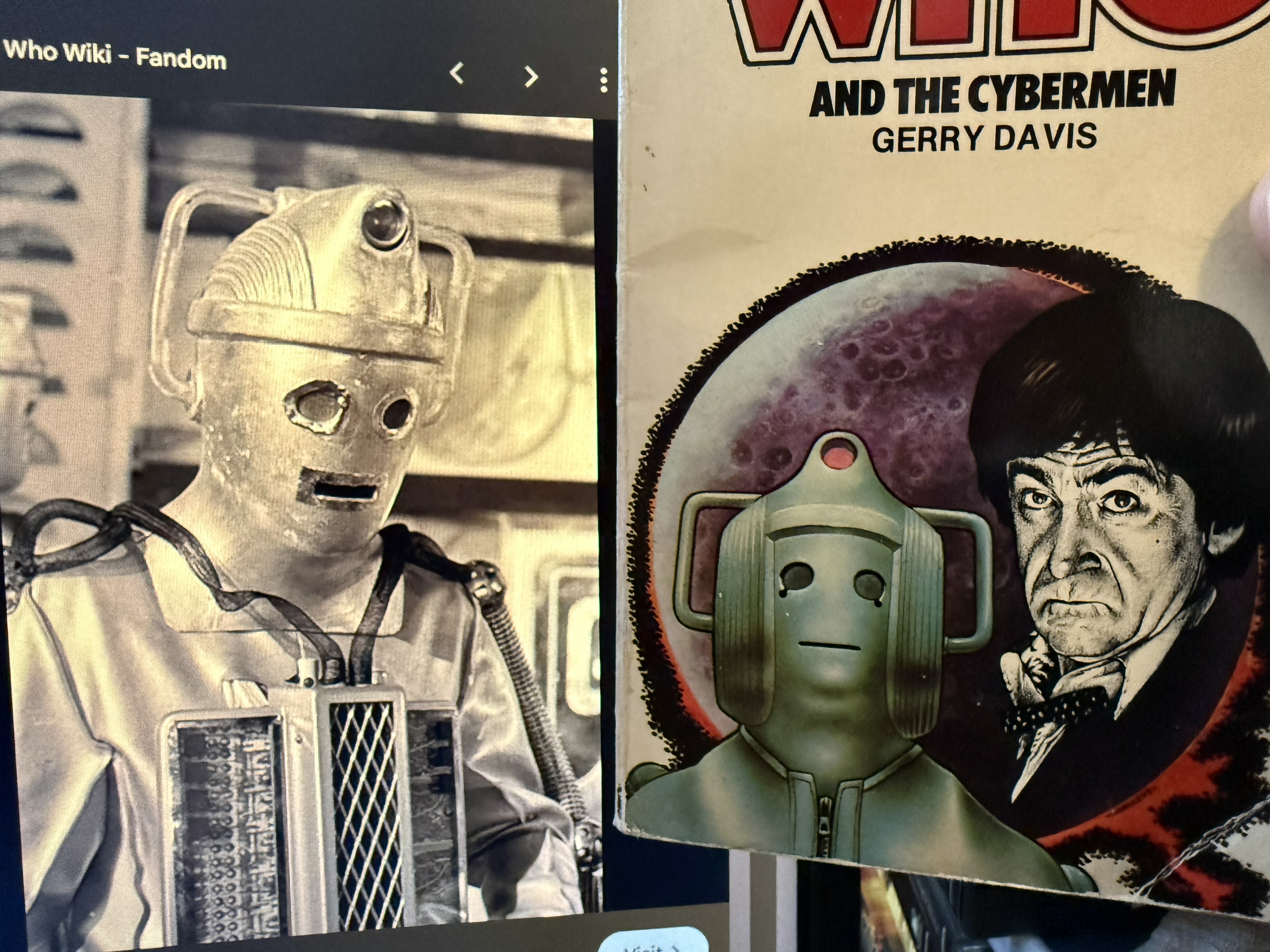
But now, seeing the magazine ads, it made me realize that there were novelizations of my hero, the man who made the universe feel safer. Except— they weren’t novelizations: these were original stories! These were more of the achingly short run of Ninth Doctor adventures; more time I could spend being my wide-eyed, scared, and utterly hopeful 8 year old self.
I had to have them, and of course, I had no way at all to get them.
My dad tracked down books 2 and 3, “The Monsters Inside” and “Winner Takes All,” which I read voraciously but, to be quite honest, forgot most of. They were a little above my head at the time, as I had a habit of bouncing from book to book and forgetting everything I read then rebounding to a previous book to reread the same first chapter only to forget it again. But they were still here, still mine, even if I couldn’t find books 4, 5, 6, or 1, with the brilliantly enigmatic title “The Clockwise Man,” and a striking red cover over London. It would take almost 15 years before I had them all, tracking them down in odd bookstores here and there and frantically grabbing for my wallet when I saw them, and 20 years before I sat down and read them. My brain does a very odd thing: if there’s something I love, something I want to savor, then I almost never actually interact with it, for fear that once I’ve experienced it it will be “finished” in my mind—and I didn’t want my Ninth Doctor to be finished.
But, seeing that that mindset is silly and won’t let me enjoy things I want to, I set off this year on bringing joy back to 2026 by finally reading these precious books. I have been overjoyed in the past four months, sitting on the couch, my dogs peacefully snoring and farting nearby, reading adventure after adventure with the Doctor, Rose, and Captain Jack. And, because I want to see more discussion of these original “Doctor Who” stories, I thought I would share my thoughts about them with you, and invite you to discuss your thoughts with me, whether you’ve read them or you just like the show!
*Author’s Note: my rating system is 1-5 stars, but it is two-fold. I can rate something based on what good literature it is, regardless of my enjoyment of it (something like “Push” by Sapphire, which is a deeply upsetting book but is definitely 5-star literature). I can also rate something based on my enjoyment of it, regardless of how good literature it is (something like a Doctor Who book which is deeply enjoyable but not going to, shall we say, cause an Earthshock.)
My star-system here is based on that second one. You can think of it also in terms of “Thumbs-Up.”
1 Star = I hated it / Two Thumbs Down. I’ve only awarded this to one or two books in my lifetime.
2 Stars = I didn’t like it / One Thumb Down. Only about 10-30 books have gotten this.
3 Stars = It’s okay / Thumb to the Middle. A fair amount of books get this.
4 Stars = I like it! / One Thumb Up. Most books get here.
5 Stars = I love it! / Two Thumbs Up. A fair amount of books get this.
SECRET 6 Stars = I think it’s a sublime masterpiece. Only 3 or so books I’ve ever read out of 3000+ have gotten this.
If we’re going based on “is this ‘Great Literature’ ” standards, these Doctor Who books would likely be 2 stars up to 3.5 stars. In terms of enjoyment, they’re much higher. Let me know your star rankings too in the comments!
*Author’s Note 2: I’ll refer to the Doctors sometimes as their written number (Nine) or as their numerical symbol (9) or as the actor’s name. I’ll also refer to the show in quotations sometimes or not have them in there. This is because I’m writing this after my workday is done, and I’m lazy and don’t want to re-edit it. It’s vibes-based whether it’s quotes or whether it’s Nine/9. The vibes, they are inconsistent, gentle readers.
Now—let's dive into the Ninth's Doctor's fantastic and all-too-brief era:
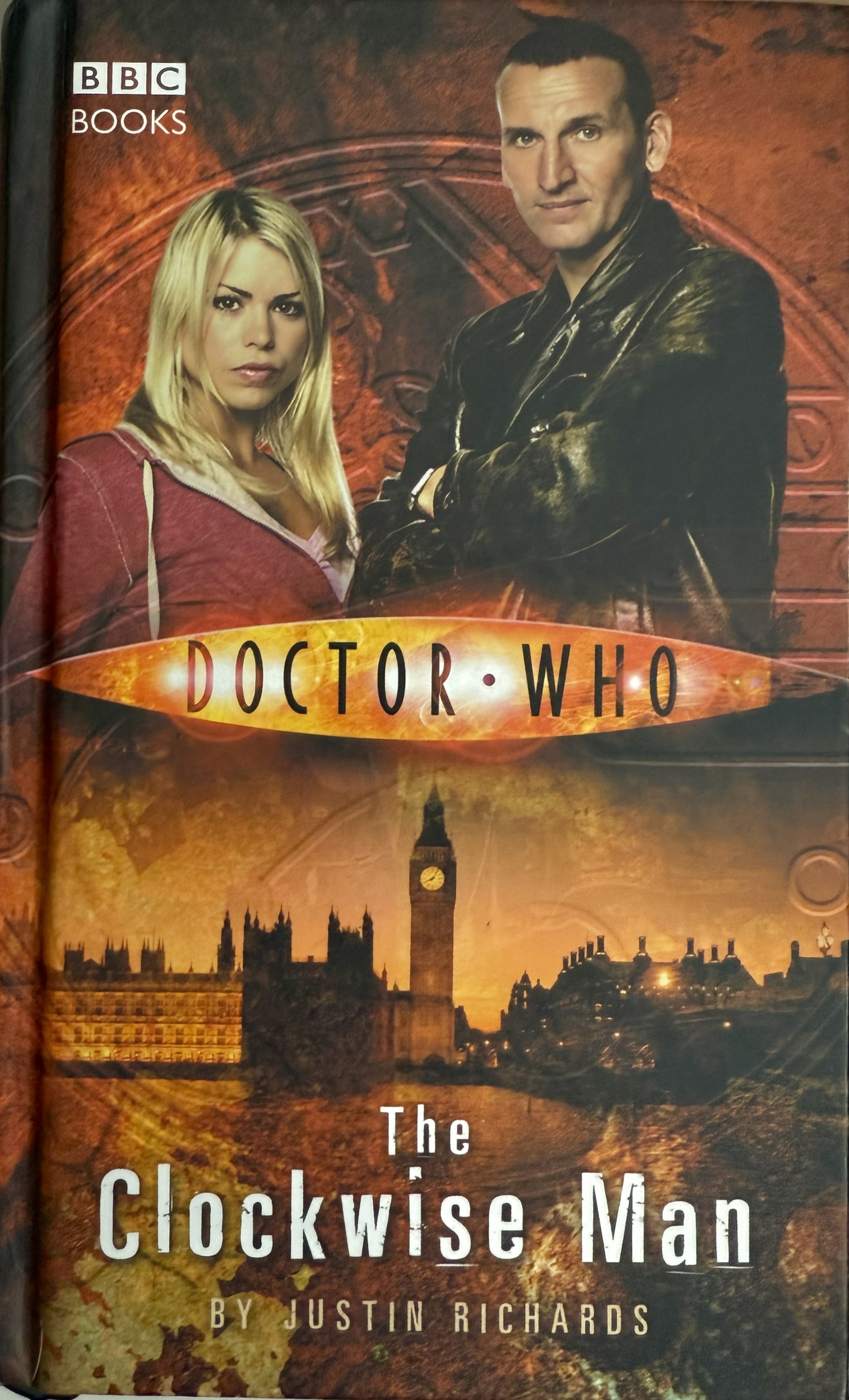
New Series Adventure #1: “The Clockwise Man” by Justin Richards
“The Clockwise Man” is a complicated book to judge for a number of reasons. For me, it has always been a “Holy Grail” book—the kind that I may never naturally come across in a bookstore but which I’ve been searching for seemingly all my life. This was the quintessential “send away for it using this magazine ad” book in the issues of DWM I had—but couldn’t send away for, being in the States (and the offer being extremely outdated). Then, once I did find it, it took so much longer to open up and read that, when I read it, I know full well that I am 100% biased into liking it, regardless of whether or not it deserves it.
I mean, look at the cover. 8 year old Justin is cheering and waving his arms frantically around looking at it.
“The Clockwise Man” also has retroactive intrigue added to it, as the Clockwork Robots featured heavily as antagonists in the Series 2 knockout episode “The Girl in the Fireplace.” Any connection to that marvelous piece of television automatically becomes more worthy of my reading time—even though this came out far earlier than that story and shares no characters or similarities to it, beyond having automatons powered by cogwheels.
But even beyond my personal interests, this is a very hard book to take on its own merits, because it is the first of the New Series Adventures, and—for better or worse—heralds in this new age of stories.
While I won’t give the entire history of the “Doctor Who” multimedia timeline, it’s important to point out that these New Series Adventures are very far from the first DW original stories. This is, for all intents and purposes, the third main series of originals; after the Seventh Doctor’s run ended abruptly with cancellation, the Virgin New Adventures came around as a cohesive narrative.
The VNAs have a convoluted popularity in the fandom, having the distinction of being both broader in scope and mature in storytelling; they “told the stories the TV show couldn’t,” in every sense of what that entailed. Leading to character arcs, secrets of the Doctor’s past being revealed, massive time-hopping arcs, and even Lovecraftian Old Gods, the VNAs were the first series that felt aimed solely at adults instead of being all-ages—a fact that made many fans ecstatic and also turned many off because of how different it felt. I mean, literally the first book had a cover that caused controversy due to the sexualized nature of a former all-ages show.
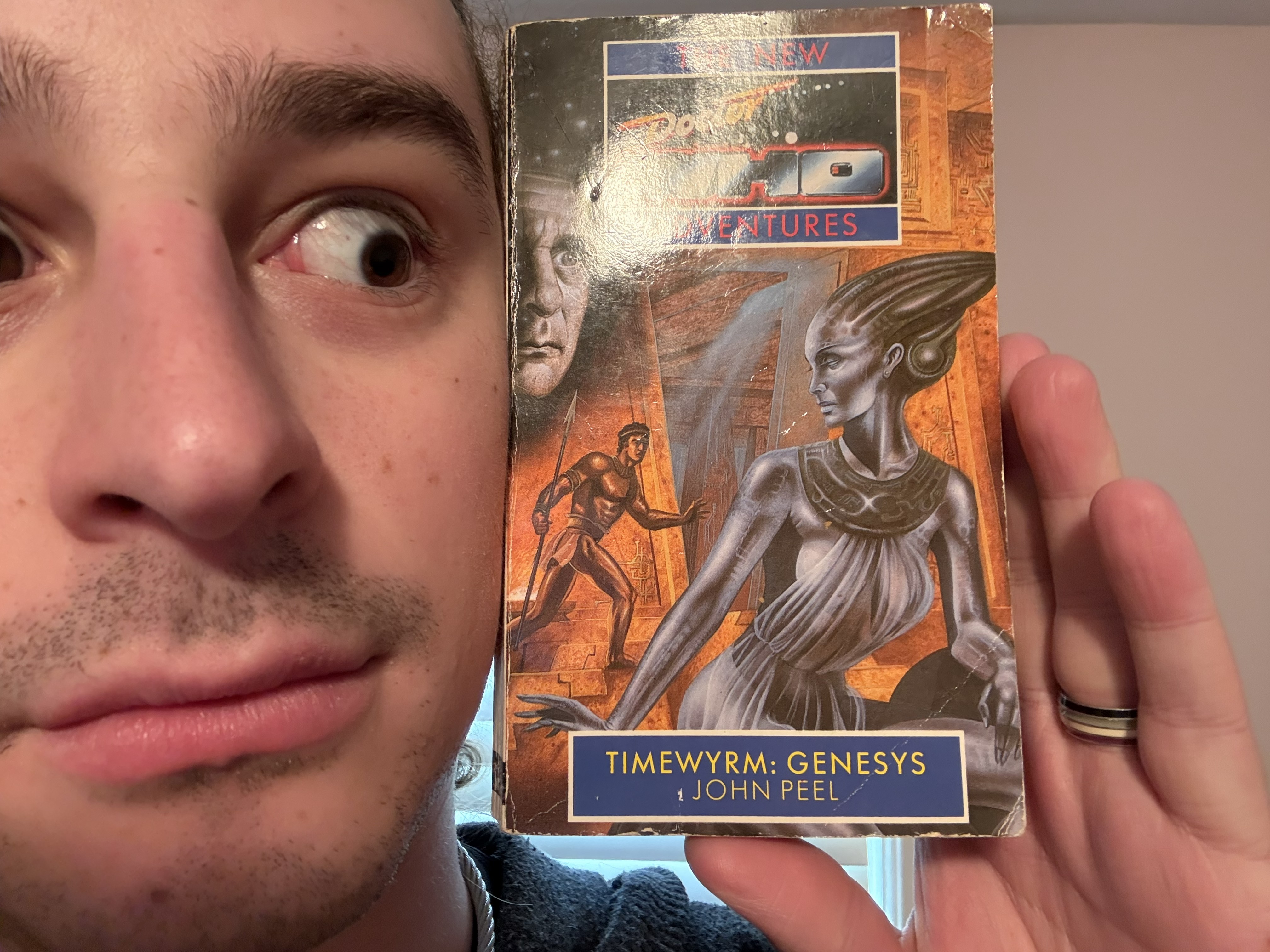
(Released alongside this series was the Virgin Missing Adventures, which told individual stories of Doctors prior to the 7th, outside the continuity-arc of the VNAs.)
After the release of the 8th Doctor’s TV movie in ‘96, BBC Books took over from Virgin Publishing, curtailing the VNAs to release the Eighth Doctor Adventures. The EDAs were similar in tone to the VNAs but with the growing pains learned; these were mature stories, great science fiction, adult narratives, winding plots, digging in on boundless mythology both from the 35 or so years of television before it and its own narrative-longevity.
(Released alongside this series was the Past Doctor Adventures, which told individual stories of Doctors prior to the 8th, outside the continuity-arc of the EDAs.)
Despite the huge run of this series and the popularity in the fandom, when the 8th Doctor’s reign folded over to the new 9th Doctor in 2005, that meant yet another change of pace for the ongoing books. Despite numerous narrative threads being unresolved, the EDAs came to an end, and the future turned to the New Series Adventures.
Already, the NSAs had to live up to the VNAs and the EDAs before it, each with hurt fans whose respective series had been brought to a close. In the case of the VNAs however, the plot had been effectively resolved; not so with the EDAs. And, due to the structure of the NSAs, the EDA plot would remain forever in limbo.
The NSAs, unlike their predecessors, are not a continuous narrative. Instead, they resemble more the VMAs and PDAs; the side-stories of the Doctor’s Adventures, only this time only with the current Doctor and Companion. This would mean no narrative arc interlinking books, due to not wanting to interfere with the television show; this would be a brilliant move for newer readers, because kids and teens and adults could now pick up any book and be able to enjoy it. This also meant that long-term fans were resigned to go back to a “simpler” kind of storytelling, after 15 or so years of higher-form story arcs in the original fiction.
The other main problem the NSAs faced came from that necessity to remain current with the New Series revival. The NSAs inherently have to capitalize on the newest Doctor—which means that any change in the lineup of Doctor or Companion roster needs to be reflected in the book coming out consecutively with the show. This can seem easy on paper, but would mean that writers would be scrambling behind the scenes to coordinate a bridge between the TV show’s scripts and the stable of NSA writers, to ensure they have the most up-to-date cast in their book, much less to make them sound accurate to their show’s counterparts who may not even have filmed a single scene yet when the novel drafts would have to be busted out and sent to edit.
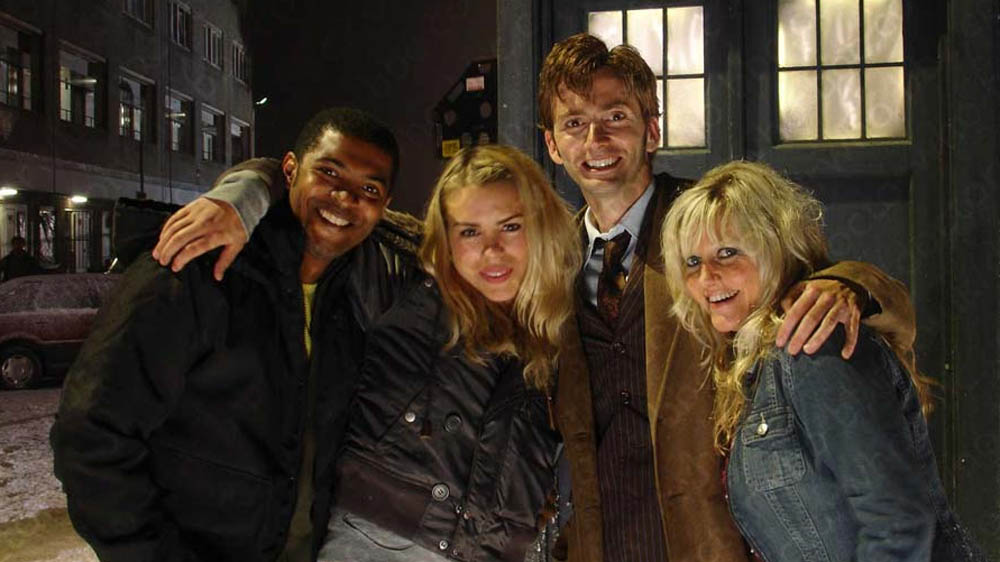
While this would smooth out more in the 10th Doctor era, this led to complications with the 9th Doctor. After all, just after the first premiere episode aired, it was announced that Christopher Eccleston was parting ways with the role. During his thirteen weeks, his companions include Rose Tyler, somewhat her mother Jackie Tyler and her boyfriend Mickie Smith, and then Captain Jack for only three or so weeks of those thirteen.
(Also, yes, Noel Clarke who played Mickie Smith and John Barrownman who played Captain Jack have varying degrees of being horrible to women on-set; Noel Clarke much more so. This isn't the place to really discuss this, but I do want to acknowledge it. In print form, it's easier to read the character name and divorce it from the actor.)
That the NSAs came out as smoothly as they did is an accomplishment! But, with that accomplishment in mind, how do you view the books, when every writer has to tiptoe around the TV continuity (itself extremely tight-knit in Series 1 of the revival), only knowing the characters from shooting scripts? The 9th Doctor books are especially notorious for being borderline impossible to link into the TV continuity, since between episodes 11 and 12 are the only place for the last book to go, but 11 into 12 flows almost back-to-back. Do we try to rate it based on the merits of the effort; in comparison of the EDAs and VNAs; in view only of it solo as a book?
Personally, I try to do the latter, and only review it based on my enjoyment of it as a book. As a result, my ratings may be significantly different to the general consensus looking at larger-picture details, and that’s perfectly fine.
To get into the story:
“The Clockwise Man” follows Rose and the 9th Doctor as they explore 1920s London. As usual, there’s trouble afoot immediately; they manage to scare off a powerful assailant and save a life—and discover that their time-and-space ship the TARDIS is gone.
The Doctor and Rose escort the person they saved home to a small family abode—that turns out to be the residence of a famous historical figure! Through this family, they go through meeting a colorful cast of characters, all of whom claim to be deposed royalty now hanging around a gentlemen’s club—including two from a made-up country, who then both claim to be the other’s psychiatrist helping them through delusions.
After a slow start of learning the members of our cast, the mystery thickens.
A woman known as the “Painted Lady,” who wears only painted masks, seems to know more about alien technology than anyone else there would. The cat hanging around the gentleman’s club disappears and reappears despite seemingly being drowned. Could assassins made of clockwork be after a little boy, the last prince of an overthrown dynasty—or is there another person they’re after? Is the Doctor really an alien warlord who has committed a genocide (in the TV show, this was a huge plot point driving 9’s flawed backstory; he thought he’d wiped out his own race to stop the evil Daleks in the Last Great Time War, a story arc that culminates in the 2013 50th anniversary special even though Mr. Eccleston decided not to participate— *insert running gag of “author being hauled off in a straitjacket to yap away his lifetime” here*)
After twists and turns a-plenty, Rose is kidnapped and taken to a famous landmark that houses a spaceship; when the time is right, it will burn up the atmosphere! The Doctor, alongside the majority of our side-characters, races to stop it in time—leading to the climax of the book, which takes up the last 3rd or so (about 80 pages) in an ever-tightening crescendo.
First and foremost, this story is a Historical, which is not something the show at the time really delves into. Like the VNAs and EDAs before it, “The Clockwise Man” is focused on telling a story that the TV show may not have been able to due to the constraints of television; in this case, the larger cast of characters. That said, of the six books in the 9th Doctor run, only half would be truly difficult to align into film production; “The Clockwise Man” is quite filmable, and that makes it an easier read.
The setting and characters are explored quite extensively, with time to linger on the metaphorical atmosphere of 1920s London. As Rose feels, it truly is a home that is somehow not the right home, tying into the theme of displacement that most of our cast of deposed royals feels. Add to that a slow-burn mystery that starts to snowball, picking up more and more insane twists as it progresses, and the action mounts so much that you don’t have time to guess where the story’s going next.
Most critics of “The Clockwise Man” cite three things: Justin Richards’ reliance on fragment sentences, that the climax is so long and drawn out, and that there are character moments that feel out of line with the characters we see on-screen. To address these, I will quote my own Goodreads review:
“In good conscience, I’ll admit it’s not 5 Stars astounding, or perfect, or the best Doctor Who story I’ve read. It was written VERY early in Series 1’s conception, so the Doctor and Rose don’t feel exactly like they should as characters in places. There’s both a lot to keep track of and also sometimes not much happening—followed by an end standoff that’s almost a quarter of the book and gets overwhelming in how long it goes on. But honestly, this is all made up for because of two key things:
“1. The premise is really dang cool. I’m invested in it; a mystery with a woman wearing a mask, a club of deposed royalty under attack, and an assassin that’s actually a mechanical man, all in 1920s London where the TARDIS has been snatched? Hell. Yes.
“2. There are still SO many points where I can see and hear the Doctor and Rose exactly as I could in Series 1. I remember that a big mentality for the Virgin Adventures Series was “make the stories that would be too big for TV,” and while I don’t think this is exactly that—this is a two-parter that would be still very appropriate for TV and work out great—it is still an excellently serviceable adventure for the characters. Fun and breezy, not designed to push the envelope but to welcome the Doctor back to print adventures in a delightfully British way. Fantastic!”
Would the Doctor give a kid his signature jacket? Probably not. Would Rose care about her nails? At the start of the show, probably; maybe not now. These characters probably came from those first scripts’ first drafts. The climax is almost exhausting in how much tension there is; it never relents and gets dizzying with how much running around there is. It does a great job at highlighting that feeling of time slipping away by illustrating just how much can get done in such a finite amount of time.
Does any of this destroy the book for me? Not at all! I had a blast reading it.
For fragment sentences and an analysis of Justin Richards’ writing, I’m going to wait until covering Book 4: “The Deviant Strain” by him as well, to talk about it there!
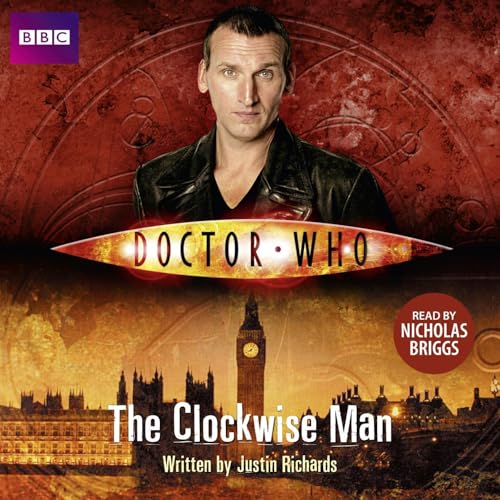
Overall, “The Clockwise Man” is a promising start to the NSA line: nothing groundbreaking, but a fun set of contained adventures with characters reminding us of the people we love on the telly. It may not be more than that, but it doesn’t need to be: it does what it does very well.
It also sets up the titles as being great wordplay: the “Clockwise Man” could refer to the automaton made of clockwork, the villain using the precision of Time to his advantage, or the Doctor himself as a knowledgeable time traveler.
Completely Legit Arbitrary Rating: 4 Stars - I like it!
On to book two!
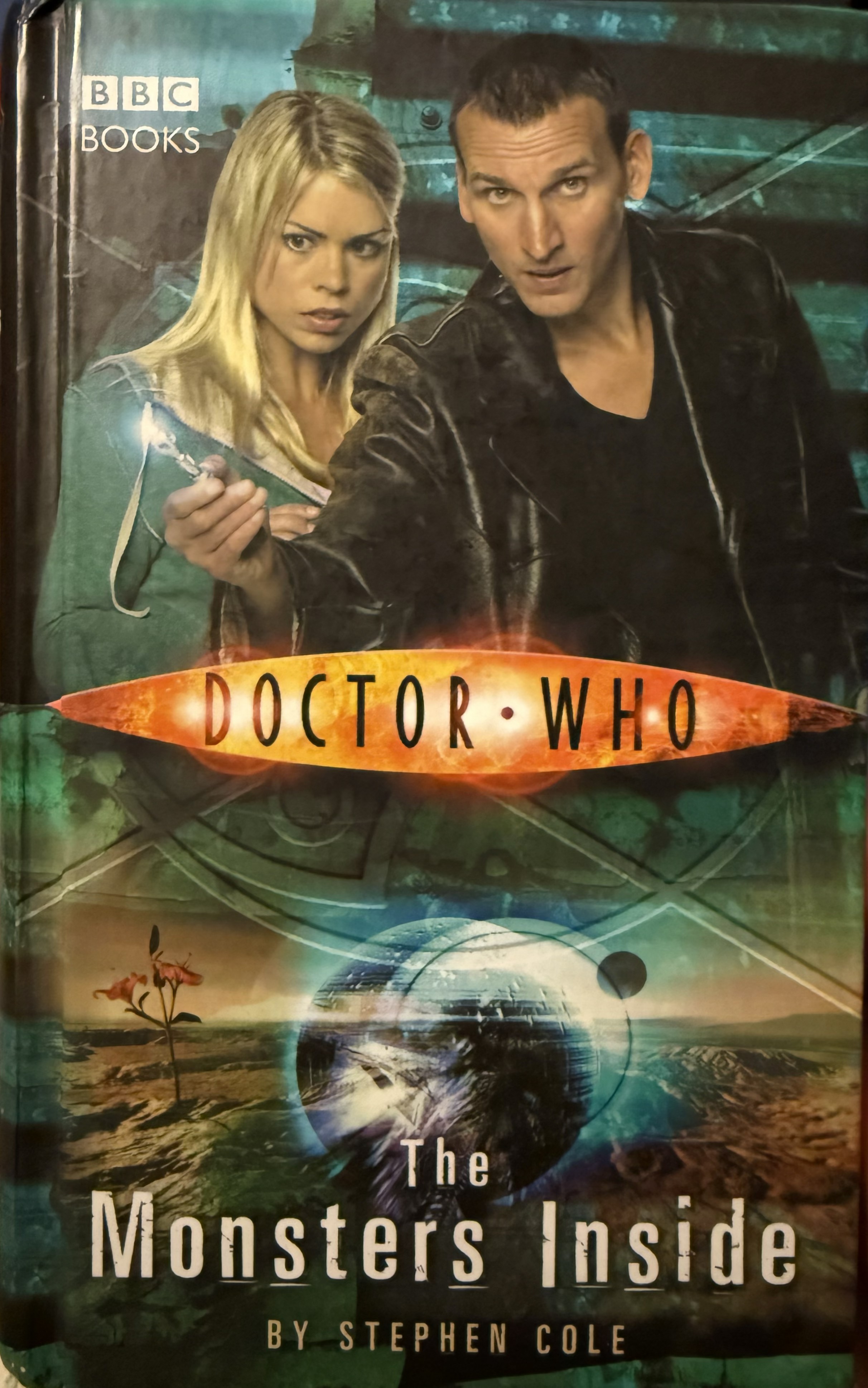
New Series Adventure #2: “The Monsters Inside” by Stephen Cole
From my Goodreads review:
“This book is special to me for two reasons most people won’t have; one, it was the first book of the New Series I read when I was younger (only this and Winner Takes All; all I had), and two, I HAD the poster that the cover’s promo image is taken from on my wall.
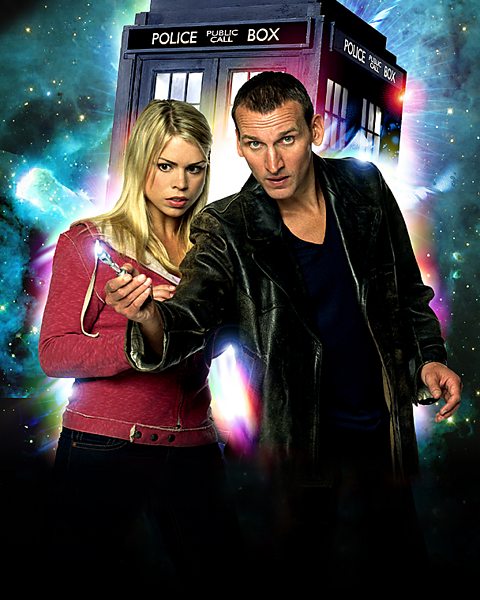
“That said, when I was ten, I really didn’t care about the book, or even remembered any of it.
“This was, I think, mainly because “oh it’s set in prison,” which always feels like extremely boring or uncomfortable stories. Ironically, the prison stories I’ve read here and from Stephen King are astounding—but I don’t seek them out. Prison films are either great (Cool Hand Luke) or MST3K-worthy (like over half of them), and I just didn’t want to get into the book.
“Now, however, I appreciate this book so much!
“Not only is this a logical and interesting story—the Doctor and Rose are trapped on a prison-colony-galaxy and there’s social commentary on the whole prison-industrial complex while also having a thriller-mystery about alien infiltrators trying to take charge and do some kind of huge world-ending scheme—but it’s also something that the show WOULD DO. There’s genuine continuity with Series I (my favorite one); Rose and the Ninth Doctor are in character (my favorite ones); there’s actual history with the Slitheen and continued characterization with them as interesting villains that are three-dimensional (not my favorites but they’ve grown on me). It’s got a LOT of moments that are genuinely dark, and it’s still light and breezy and FUN. That combination is Doctor Who—especially in book form, where we can explore broader stories that a TV budget and time can’t.
“I’m happy I reread this and I now actually remember it!”
“The Monsters Inside” has the distinction of having the first alien planet Rose Tyler travels to—a point made right in our opening sequence. The Justicia System is a full-on jail galaxy, with different planets having different functions (i.e. different versions of penal colonies). Rose and the Doctor are pulled down onto one that resembles slave labor from the ancient world, with whip-crackers and pyramids and galley-ships. Rose gets a moment to marvel at the brilliance of an alien flower—the one on the novel’s cover—before being accosted by the overseers who crack their energy-whips. The Doctor, being the rough and tumble 9th Doctor, immediately goes into “put up your dukes” fight mode, which is definitely a character trait I would see authors writing him with, but not one he overall exhibits in the show. Again; early script drafting for knowing our characters.
Rose is taken to a more stereotypical prison colony, while the Doctor is put into a workgroup for alien lifeforms that work to solve huge scientific problems. The other inmates there are a motley cast, including one that vaguely resembles Mr. Snuffleupagus and another that’s a very cute lady jelly-blob with eye-stalks. More importantly, there are Slitheen there.
Most of the criticisms lauded at Series 1 of NuWho come down to two points: “The Long Game” is kind of boring (even though it’s not filler, it sets up for the finale)—and the Slitheen really take the piss. While I won’t voice my thoughts on the former, else the running gag rears its ugly head, I am going to address the second point here!
The Slitheen are a family of aliens from the planet Raxacoricofallapatorius. They’re Raxacoricofallapatorians, to be precise. They’re large hunters, resembling fat bulbous greenish babies with claws and a long turtle-neck. In episodes 4 and 5 (“Aliens of London” & “World War Three”), they’ve invaded multiple branches of politics and the military through the use of human skin-suits, with the ultimate plan of continuing the Slitheen family business—blowing up planets and selling their radioactive chunks as cosmic fuel at a high price.
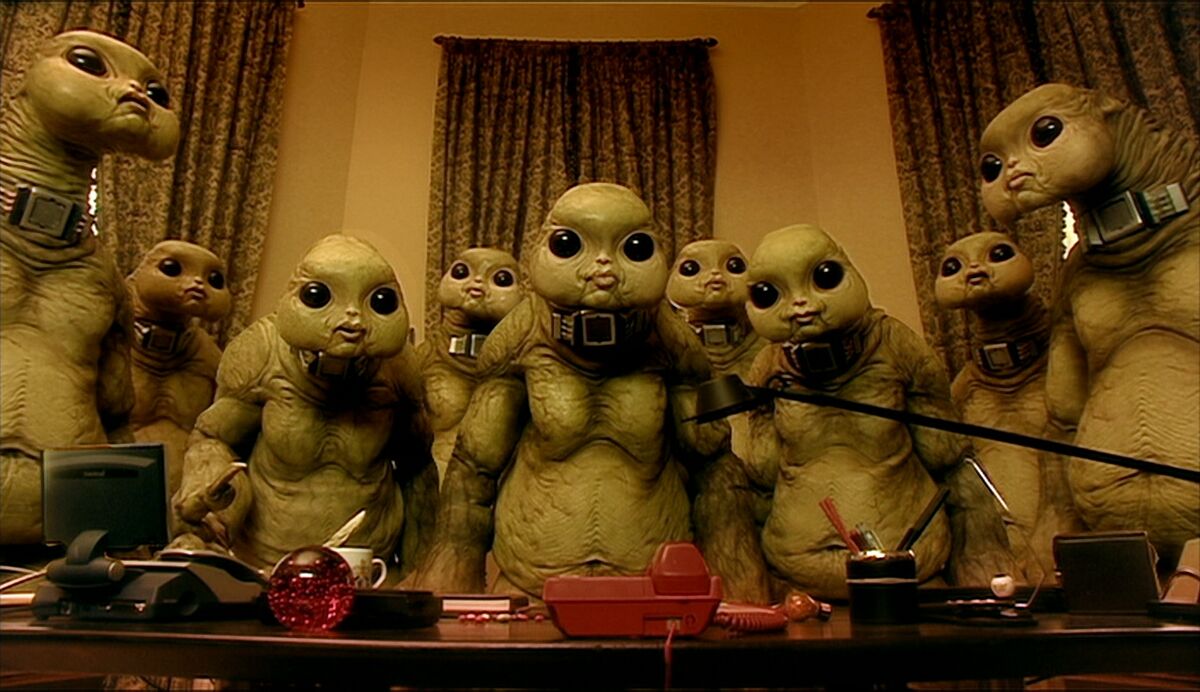
The episodes are well-written, tense, and very on-the-nose political satire. They also have one of my favorite lines from any piece of media ever: the Doctor telling Rose “I could save the world but lose you.”
All of this goes out the window because of the Slitheen themselves.
As creatures made almost entirely of calcium, and as lumbering 7-9 foot tall monsters (haHA I’m American, no fancypants metric system for me; we use the Tarantino method here!) needing to stuff themselves in smaller human skin-suits, the Slitheen stuff compress themselves into overweight human form with a zipper in the forehead, and the stress of compression is released in gaseous exchange.
Basically it’s a way for Russell T. Davies to have his political buffoon figures burping and, especially, farting off paint-peelers at every given opportunity and chortling over it like they’re five.
This, in a story about political espionage, kept the mood light and the kiddies entertained; this also infuriated numerous adult fans who lose their everloving minds. After appearances in this two-parter and in episode 11 (“Boom Town,” another excellent double-meaning title), the Raxacoricofallapatorians were relegated to “The Sarah Jane Adventures,” Doctor Who’s cousin show aimed at a younger target audience.
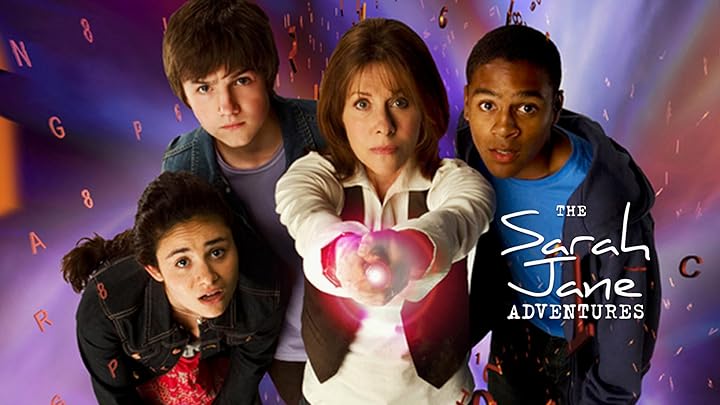
Now, far be it from me to tell a Whovian they’re wrong to think the Slitheen are scene-chewing. They are. If you didn’t enjoy them, I’m sorry to hear it, and I totally understand why. What’s always made me shake my head is the mentality that they utterly ruin the story, and that they are out of place.
One, the show is for all-ages. I can enjoy it now as I did when I was eight; maybe I don’t have the same giggle fits over the farts, but I can enjoy the political nuances much more now than then. Second, it’s far from the first time the show has been campy. Watch literally anything Classic Who put out and you’ll find something that’s aged like leftover McDonald’s fries. Yes, it’s probably too campy for this story and the show balances better moving forward; personally, I still enjoy it. I’ll take it over the execution of the Abzorbaloff, which is unanimously hated, and for good reason. (I do feel bad for the kid who invented it too; we all rag on it but nobody ever says hey maybe the kid who won a magazine contest to put his villain in the show feels bad it turned out so poorly. I hope he’s well wherever he is!)
(Okay there's actually an interview on YouTube with him here!)
Long rant about Slitheen over; take the straitjackets away!
All that to say that the main alien villains in this novel are Raxacoricofallapatorians, and there’s the usual gaseous exchange here. They also work much better in text form as hunters, because the novel isn’t constricted by the show’s budget to pull them off (and you don’t hear all the farts). They’re actually frightening here, and have a lot of good lore to them!
Throughout the book, Rose becomes a legend in prison for being a wild child and causing massive riots against the corrupt system. The Doctor helps with science projects, trying to figure out the underlying sinister plot from the higher-ups, and rooms with Slitheen who can’t kill him but do not trust him either. There’s genuine scope to this one; it takes place over multiple planets, and they go to multiple planets! A lot of backstory for the Slitheen family is fleshed out, as well as world-building for Justicia as a system, harkening back to that “Aliens of London/World War Three” theme of “the people in charge are the real Monsters Inside.” It’s tense, atmospheric, and has a great mystery that crescendoes to a great ending.
The final villain is, admittedly, a little rushed, but there’s a page count to be adhered to.
Tonally, it gets real dark in places, exploring the corruption of the penal system as well as how inmates and guards abuse each other. That said, it never feels too dark, using again the “sillier” villains to alleviate the heavy mood when it needs to. Once again, criticism online lambasts any use of the Raxacoricofallapatorians because of “potty humor.”
The title has three meanings; does it refer to the monsters locked away in space jail? Does it refer to the Raxacoricofallapatorians, hiding in their skin suits? Does it refer to the darkness gnawing away at our heroes—their doubts and character flaws?
Stephen Cole’s writing is crisp, and he gets the characters! There’s a great balance in this one between character moments and the action of the story. This is the best novel of the six that really ties in with the overall plot of Series 1, with a recurring villain that ties everything together as well as “Rose’s first alien planet” mentioned a lot. It just feels like it slots into the narrative, vs. the other five that are wonderful stories that are… somewhere to the side, if that makes sense.
Prison stories are either “Shawshank” or “Swamp Diamonds”—this is somewhere blessedly in the middle, and thoroughly enjoyable.
Completely Legit Arbitrary Rating: 4 and a Half Stars - I really like it!
On to book three!
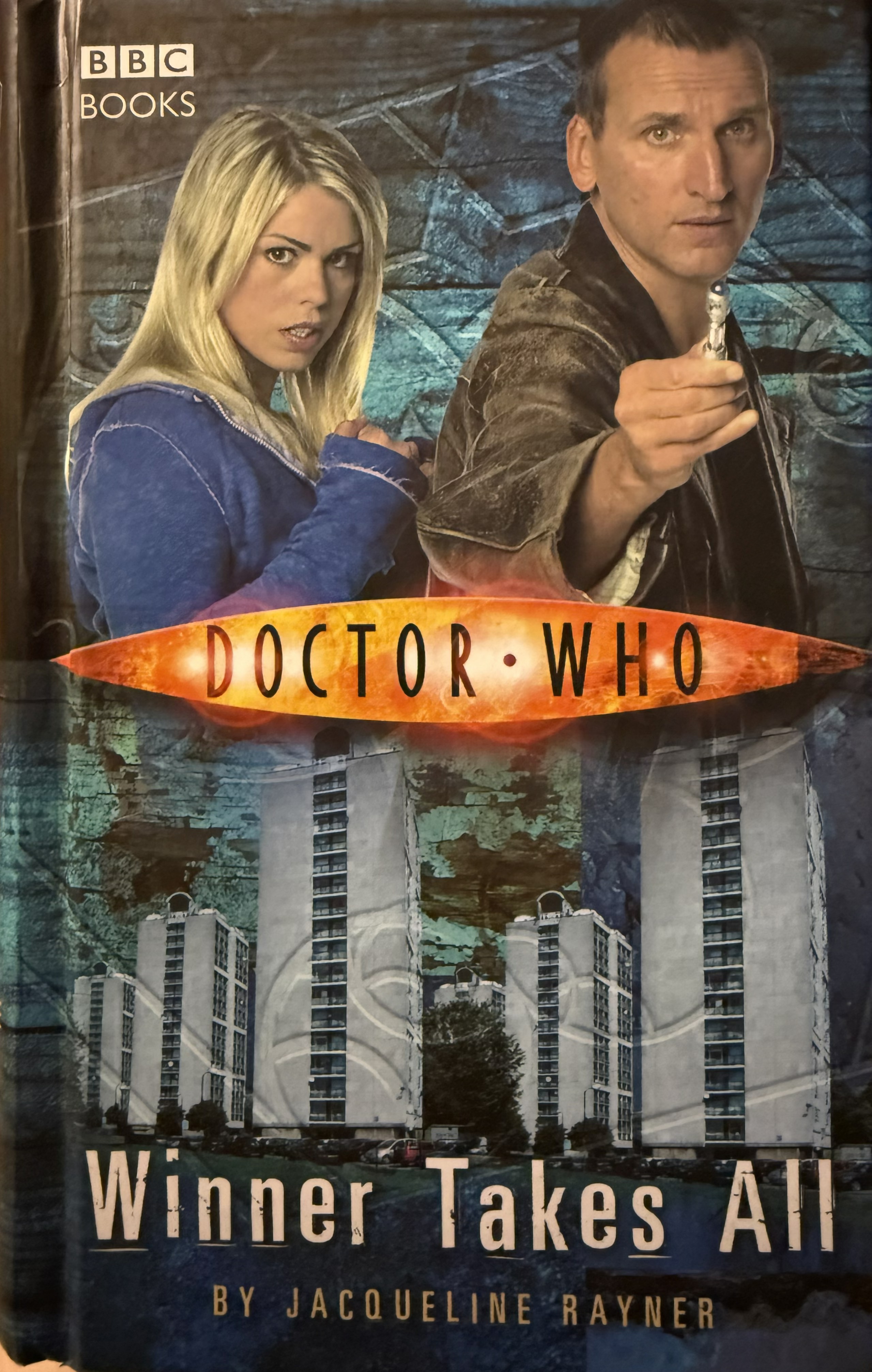
New Series Adventure #3: “Winner Takes All” by Jacqueline Rayner
“Winner Takes All” is the last book in the “first cycle” of New Series Adventures! The NSAs are published in threes, twice a year; six books total for one season of the TV show (if the TV show had a proper release date, that is). “Clockwise Man,” “Monsters Inside,” and “Winner Takes All” were all published on 19 May 2005, with the second cycle consisting of “The Deviant Strain,” “Only Human,” and “The Stealers of Dreams” all releasing on 8 September 2005. (This coincides with the TV show, airing from 26 March 2005 - 18 June 2005; if you started writing on the day “Rose” aired, you’d have less than 2 months to print these three books—hence, earlier scripts needed for the breakneck writing pace).
What this means is that, in keeping with the “these stories really are side-steps, told not in any order and not in a way that interferes with the TV show,” these cycles can be read in any order. This could be your first NSA; so could “The Monsters Inside.” I’m going based on the official order according to every English teacher’s nemesis, Wikipedia (which is the order that the BBC books puts them as, to have an arbitrary order).
Basically, these are all unrelated adventures, and it really doesn’t matter when and how you read them. It also means if you don’t like one, you wouldn’t miss narrative threads if you DNF. Personally, I think all six of these are fantastic! So let’s talk about book three now:
From my Goodreads review:
“In present-day London, a mysterious new video game sweeps a small community—but with a sinister twist! When I read this as a pre-teen, I thought of it as “Doctor Who does Ender’s Game,” and while that’s not 1:1 exactly right, there’s a lot of similarity. There’s also a lot different!
“So: positives. First and foremost, this FEELS like a Doctor Who serial. It’s not the best of the season; it’s not the worst of the season. It’s got a killer premise, a layered story, a fun villain (killer porcupine aliens who aren’t terribly frightening and can be distracted by salt!), a truly scary minor villain (a realistically evil human punk with no morals unafraid to do very human evil things like beating people up), a great amount of tension, well-paced storytelling, and very in-character banter! This is a great mid-season filler fun set of episodes.
“Keeping it from greatness is mainly a single side-character and the stranger balance of absurdism to brutality. We have a side-character helping our heroes, who is a… kid? Teen? It’s only stated teen at the end; he’s our POV for about 1/3 interspersed in the book, and he’s very realistically a teenage boy. As in, he ONLY has inner monologues about his desire to be the hero, and moreover wanting EVERY girl’s attention. As a former teenage boy, yes this is realistic; no it’s not the most fun, interesting read. It’s grating when life or death stakes are interrupted by “but what if SHE saw how cool I was?..” Speaking of said stakes, they are brutally high! There’s some jarring scenes here of violence, some more so on Earth before things go sideways with our secondary antagonist—but the main life or death game has silly porcupine aliens or silly Mickey banter to keep us from the bleakness you’d expect in Torchwood. It’s not a bad blend, it’s just also jarring when you go from enjoyable character writing to a guy’s head being bitten off. But that’s Doctor Who for you!
“Either way, minor gripes; all in all, this is a Fantastic addition to the Ninth Doctor’s catalogue of stories!”
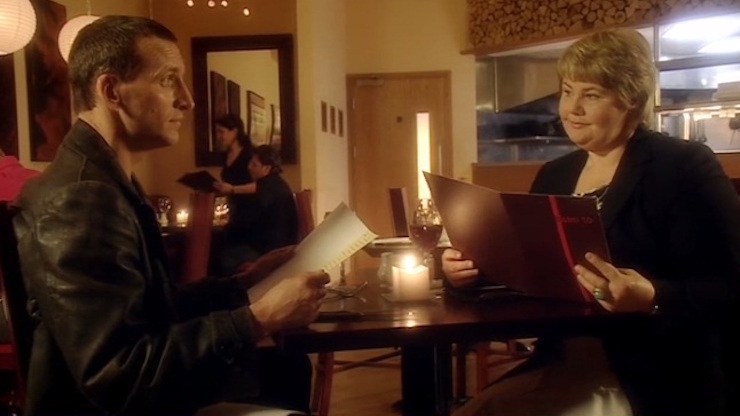
“Winner Takes All” is the only story that is completely contemporary and almost entirely in London--surprising, since the show’s episodes in Series 1 are split almost evenly between London and space-stations, with a little bit of time travel thrown in to keep London fresh. Contemporary England is a staple in “Doctor Who” (it keeps the budget down), and yet because the novels are meant as “stories the show couldn’t do,” it’s much rarer to have this sort of homespun narrative and location in one of the NSAs!
It is also the only story that has more than the Doctor and Companions as fleshed out parts of the story! In NuWho, but Series 1 and 2 especially, Rose Tyler’s family is a presence in the show. This is because, unlike Classic Who, the companion drives the narrative here; her friends and family are more important than the Doctor, even though he’s the traditional hero of the story. These side-characters flesh out the world, giving her layers and demonstrating the impact the Doctor has on her life. (Deeper analysis on this can be found in dwfan91’s video on his genuine thoughts to the Sixteenth Doctor tease at the end of “The Reality War.” It’s sad, fiery, and well-argued.)
All this to say, we have Jackie Tyler (Rose’s mum) and Mickie Smith (her ?boyfriend?) in this story as larger roles, and while characterization is as usual about 5% weird, that 95% accuracy is glorious in the interactions and dynamics. Most importantly, the characters here really behave exactly as you’d imagine they would, leading to very entertaining stakes for everyone involved.
In terms of plot:
“Winner Takes All” covers the COOLEST VIDEO GAME EVER! No it’s not Fortnite. No it’s not Pokemon. No it’s not being twitch livestreamed on the Overwatch Channel. No it’s not—
Okay, it’s kind of hilarious in retrospect to revisit this story.
The COOLEST VIDEO GAME EVER is “Death to Mantodeans” which is more than a game; it’s a whole games console. You win one by getting a winning ticket with any purchase, and because human beings are such suckers for free stuff, they’re delighted to win games consoles or the free vacations as a flipside prize. Nobody’s ever beaten the game; nobody’s come close—the prize for beating the game is supposed to be amazing though, and of course the Doctor is a great gamer; #getrekt #getgud #doritoshighlight #360Ninescoped
That said, there’s a very sinister undertone which I may have already spoiled by comparing it to “Ender’s Game,” but which is a twist that’s basically revealed early on, then revealed again in the plot, then revealed again in the plot and woah I didn’t see it coming did you?!
There’s a charming set of crazy Porcupine aliens who can be deterred by salt! Rose saves the Doctor and Mickie by giving Porcupine-soldiers salt, which they lap up like certain health officials in this the US year of our Lord 2026 snorting up a storm. It’s wildly entertaining. The Doctor gets cornered again as the best “Death to Mantodeans” player, and has to navigate beating the game and failing to beat the game at the same time. It’s wildly tense and wonderful, outlandish, and pure Doctor Who “this is silly but also scary.”
This book is also the bleakest one, oh my God it’s grim in some places.
In every DW story (except “Just this once Rose, EVERYBODY LIVES!” from Series 1 which I won’t spoil the episode except that quote pops up; go watch the show), there is a copious amount of death. Like, it’s absurd how high the body count is in some of the stories. There’s stories on the screen and in print where planets and galaxies die. Heck; the Last Great Time War saw a double-genocide of the Time Lords and Daleks, not to mention countless other races that got caught up in the conflict! (Back off, running gag straitjacket, this is important context…) In the other five NSAs, we have penal colonies being destroyed, small towns being eviscerated, tribes of cavemen dying--but none of them come close to “Winner Takes All.”
It’s not that the body count is necessarily “higher.” It’s the way in which people are killed that makes it especially grim, which is itself a spoiler that I won’t spoil. Suffice to say, it’s both outlandish, terrifying to imagine yourself in, and easily paralleled with real events in the world. It’s just bleak, probably because of how grounded the rest of the story’s location and tone feel.
Couple this with our secondary antagonist, a regular human going around Rose’s low-income neighborhood as a bully being a very real physical threat to our side characters and even beating one up to put them in the hospital—like, oof man I thought there was some escapism in my Doctor Who stories. One book ago, our antagonists were farting hunter-aliens; now, it’s a guy you legitimately could run into on the bus and be scared of. If you’re a kid, you can’t rationalize away “this guy doesn’t exist,” and that is horrifying.
This makes it sound like I don’t like these plot points. Au contraire, I am a Porcupine and these are my salt, give me more more more I —when stories can balance this bleakness with humor! Traumatize these kids; it’s “Doctor Who” after all! That’s a tradition!
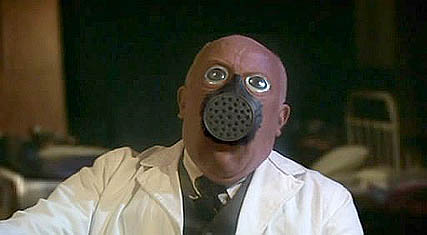
What brings the book down for me is Robert. Robert is our POV character (literally first-person) for about ⅓ of the book, and as stated above, Robert is a boy. Robert is very much a boy. Robert is a teenage? boy. Robert is a child? boy. He’s male he’s male oh girls are so pretty but they can’t be with him but what if he was the hero and oooh Robert you’re amazing and also screw you mum get outta here because oooh what if the girls and then but they’ll never love me and ooh look it’s Rose and what if she was like “Robert I love you Robert” but that won’t happen because mum and
Like my God. Jacqueline Rayner, did you read my journal entries from when I was nine?
It’s genuinely a combination of excellent writing and I hate being in this character’s head because I remember being that kid and I cringe my skin inside out when I think back to it. I’ve had a lot of maturing to do in my life and thank goodness for that. He’s a good character and a good boy and reading that inner voice makes me want to chew my hand off to drop the book and run.
That’s completely subjective though, and there’s a place for Robert in the narrative that he fills very neatly!
All in all, “Winner Takes All” is the most “grounded” story of the six books, which gives it the advantage and the disadvantage in a few ways. First and foremost, it’s a wide contender for a favorite of Nine’s run, and is almost universally considered the best book of these initial three. Secondly, it is the one most people point to as “this feels the most like an episode of the show,” because it really does, tying in the familiar locations and characters seamlessly. It also is the one people point to as one of the most absurd (in a friendly way), because the groundedness is absurd when you think about giant porcupines being defeated by a large salt shaker.

Title-wise, “Winner Takes All” again has lovely multiple meanings; the winner of the lotto from the shops gets their prizes, the winner of the game gets “immortal glory,” the winner of the Porcupine war gets to destroy the other side, the winner of the struggle between Doctor and Porcupines gets to walk out of there unscathed, the winner of the race to find all the game consoles gets the most money or saves lives. Lots of meanings!
Completely Legit Arbitrary Rating: 4 and a Half Stars - I really like it!
On to book 4!
(Author's Note: the original article contained all 6 books in the run, but extended past the max word count. To fix this, the article has been split into two sections. Please join me for part 2, which can be found by clicking here. Thank you!)
About the Creator
Enjoyed the story? Support the Creator.
Subscribe for free to receive all their stories in your feed.
Comments
There are no comments for this story
Be the first to respond and start the conversation.