
Anna May Wong (1905 – 1961)
These Foolish Things


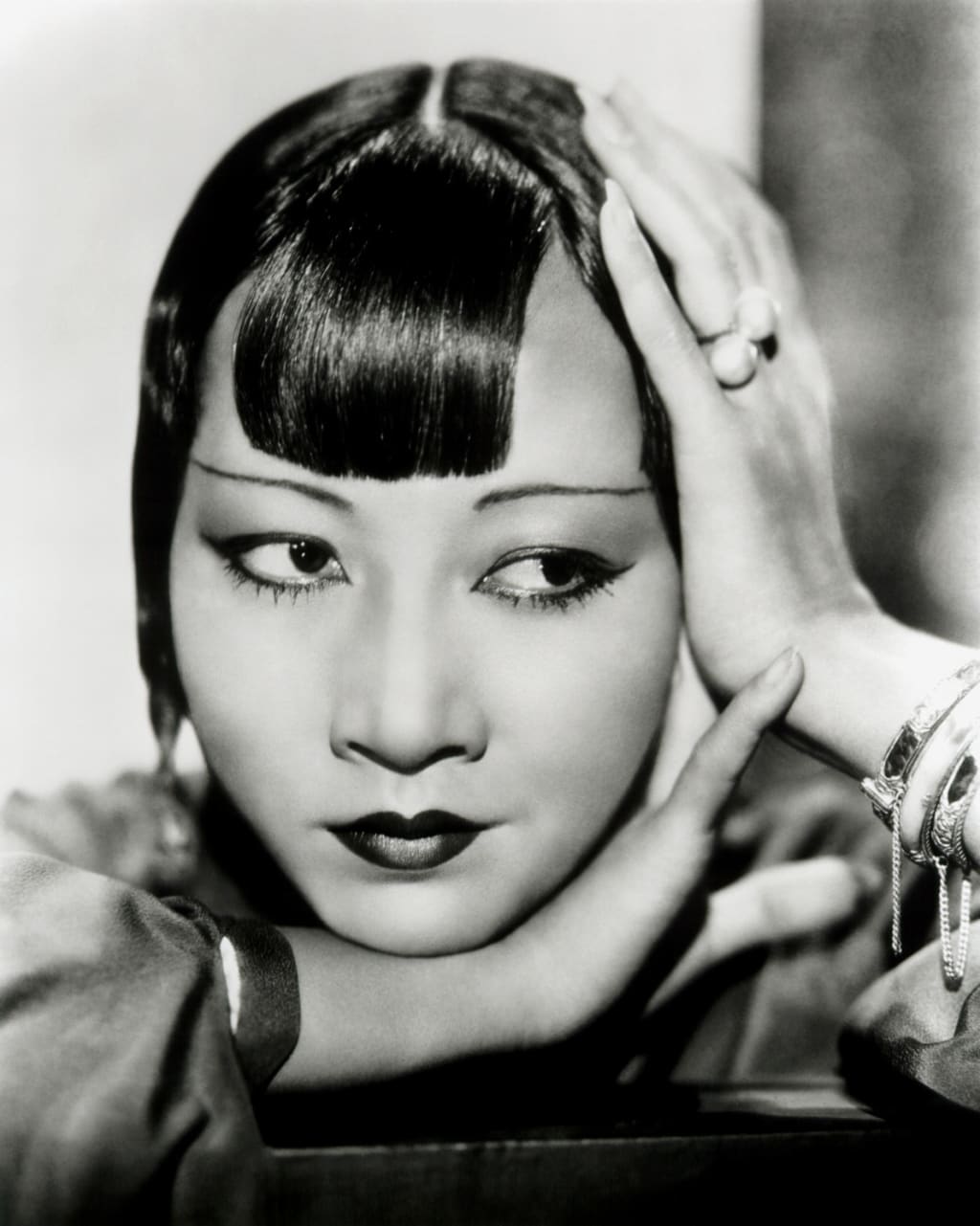
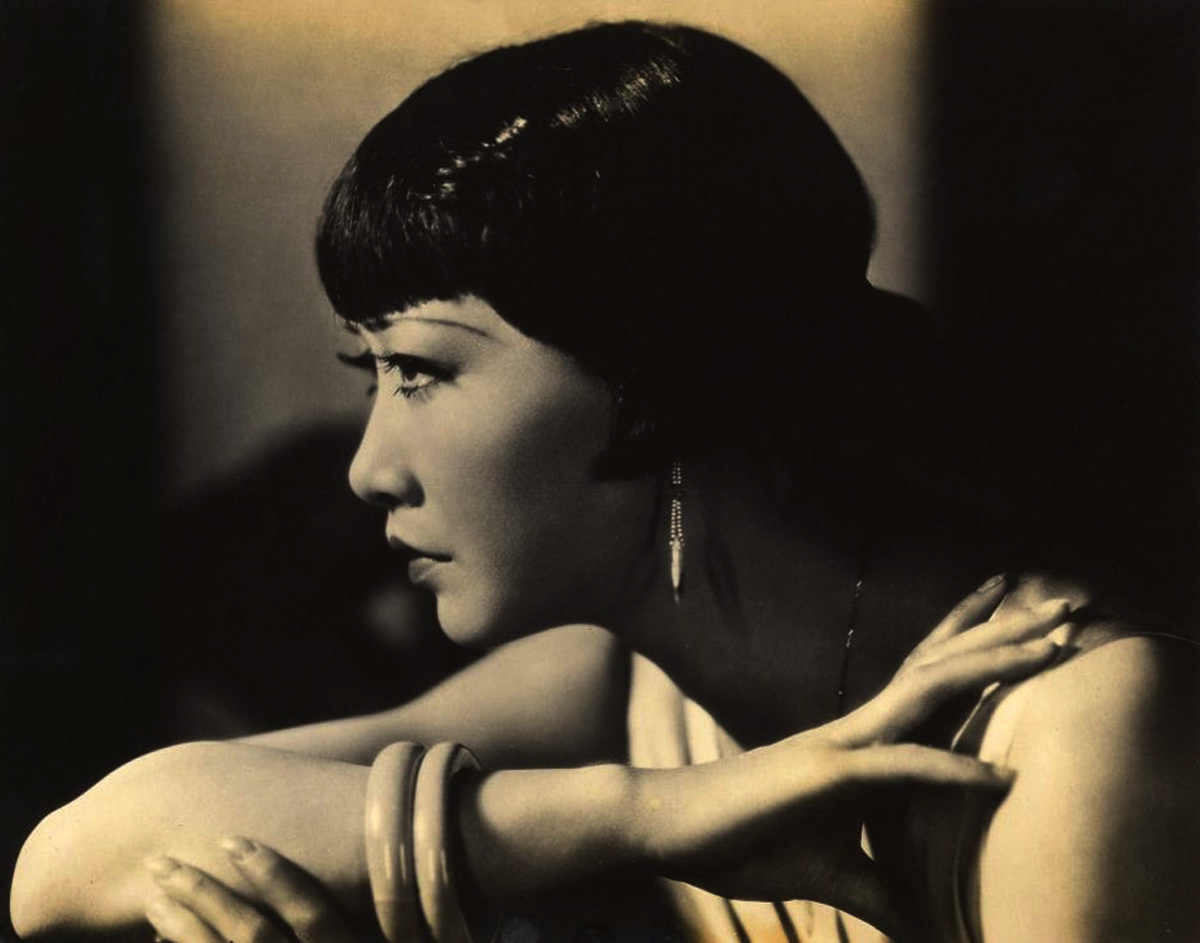
I knew Anna May Wong first as a photograph. A face framed by her hair and beautifully-manicured, elegant hands. What does it mean to be an image before all else? If I only knew her as a picture, could I understand the stories she could tell?
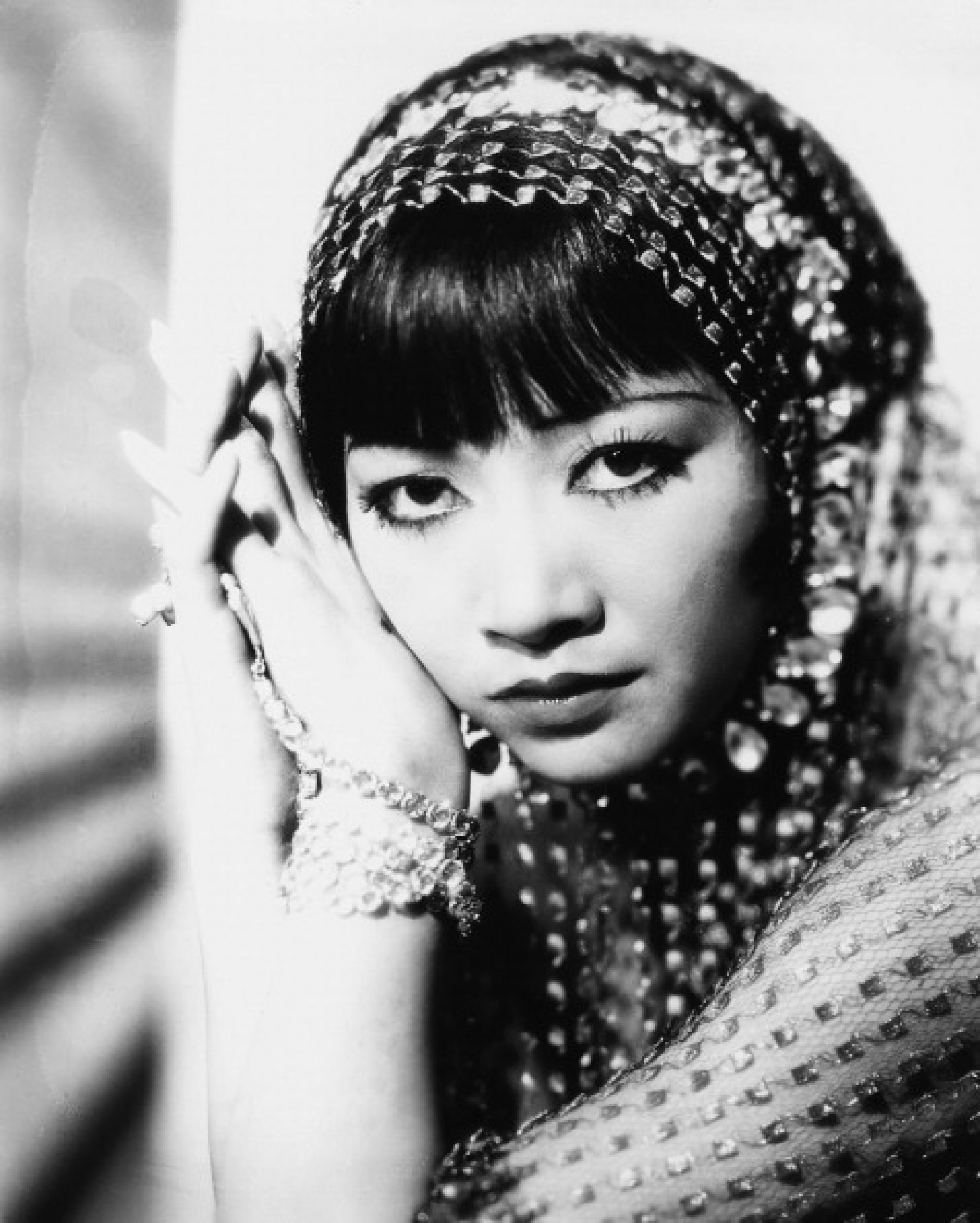
A quick precis.
Anna May Wong was a Chinese American actress, who appeared in over 50 films in the US, Canada, France, Germany and the UK. She could speak fluent French and German as well as English and a Cantonese dialect (apparently with an American accent). She appeared on the stage with Laurence Olivier, on the radio with Orson Welles, and in vaudeville in Australia She was a documentary film-maker and a charity fund-raiser. She was the inspiration behind the lyrics to the jazz standard, “These Foolish Things”, written by her one-time English lover, Eric Maschwitz.
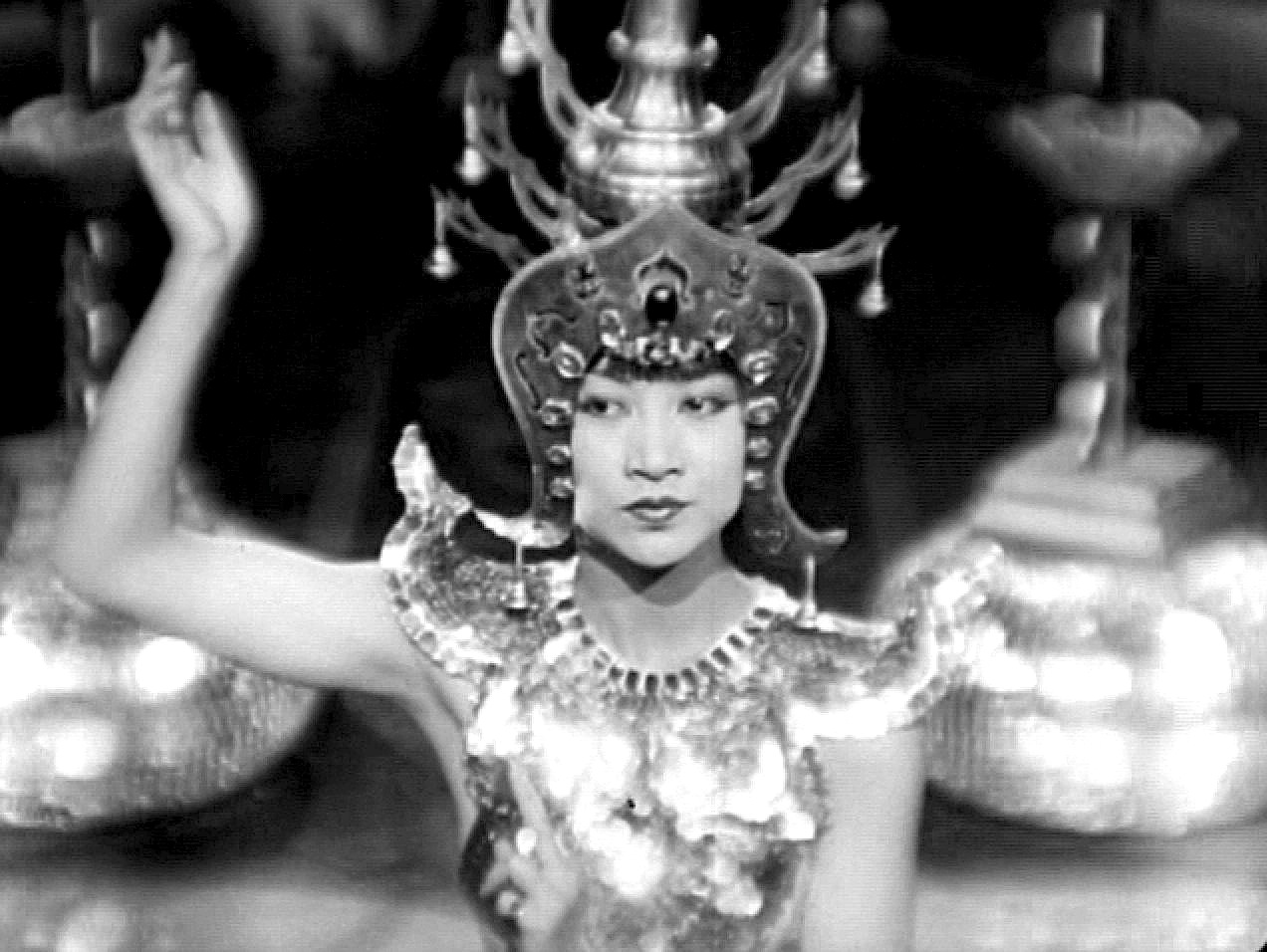
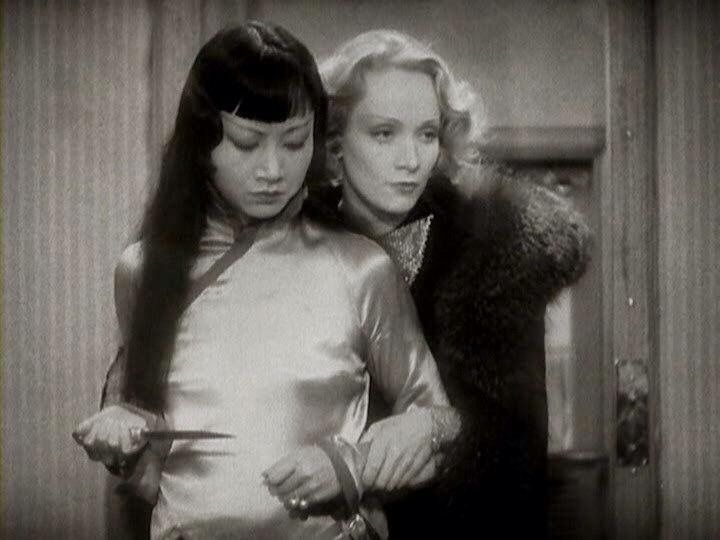
Just a few moments of watching her in the silent film, Piccadilly (1929) and I can see she has a compelling screen presence. In Shangai Express (1932) she has a voice that drips with gravitas, a world-weariness and an intuitive comic timing.
“I must confess, I don’t quite know the standard of respectability that you demand in your boarding house, Mrs Haggerty.”
So, I’m being an imaginary 1940’s screen writer again. And I admit I feel defeated about what to do with Anna May Wong. What stories can I use her to tell, when I’m not used to seeing her break out of archetypes? When I’m not used to seeing a story were she survives?
She jokes:
“When I die, my epitaph should be: ‘I died a thousand deaths’. That was the story of my film career.”
She would play either the tragic, serene Madama Butterfly or an unspeakably evil, Dragon Lady. They both die in the end, beautifully and elegantly. Her characters always dying was symbolic of the violent racism of the US at the time. Much of her career fell under the explicit anti-Chinese racism of the Chinese Exclusion Act (in force from 1882 – 1943). This was legislation aimed at outlawing the migration of a specific national group to the US. Even though she was born in the US and was a US national, she was required to carry an identity card and complete paperwork to leave and enter the country. Each time she travelled she was never sure she would be permitted to re-enter.
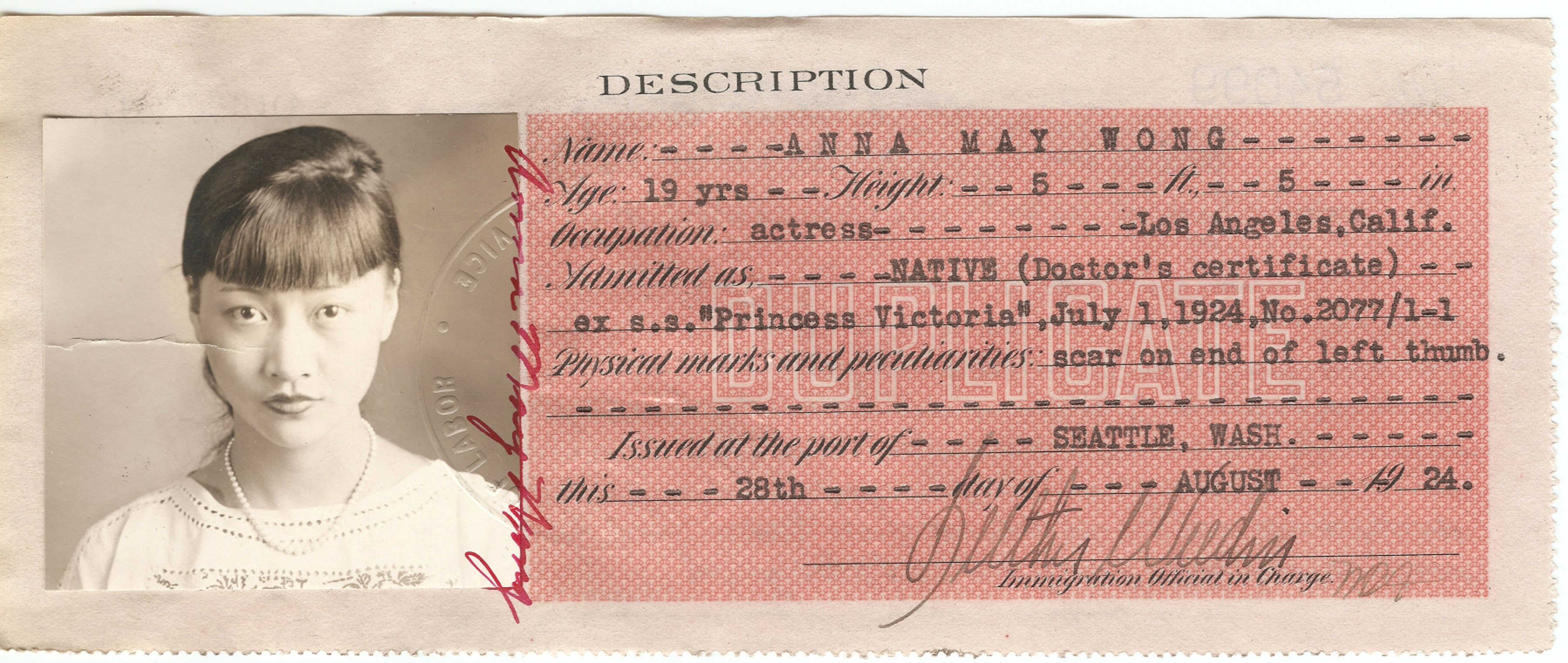
There is a story I am getting familiar with in my life as an imaginary 1940s screen writer. I want to write something about a woman who might not look like me, from a marginalised, minoritized community. But when it comes to casting, the actors from that community are over-looked, so a white actor can play the part. Dorothy Dandridge, Lena Horne and Anna May Wong all losing parts to white actresses who use make-up and stereotypes to overcome racist miscegenation rules. Actors of different ethnicities can’t kiss on screen, let alone end up with the white guy.
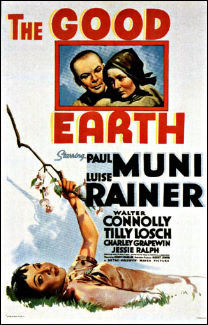
In 1935, Anna May Wong received a heavily publicised and public rejection for the role of O-Lan in the film The Good Earth (1937).
The part instead went to Luise Rainer who played the role in yellow-face, taped eyes and make-up. The miscegenation rules were used as the excuse as, ironically, a white man Paul Muni was to play the male lead – also in yellow face. Luise Rainer went on to win the Oscar for the role.
The rumour mill suggests that Anna May Wong was instead offered the role of Lotus – the seductress – the only evil character in the film and she refused.
“I was so tired of the parts I had to play. There seems little for me in Hollywood because rather than real Chinese, producers prefer Hungarians, Mexicans, American Indians for Chinese roles.”
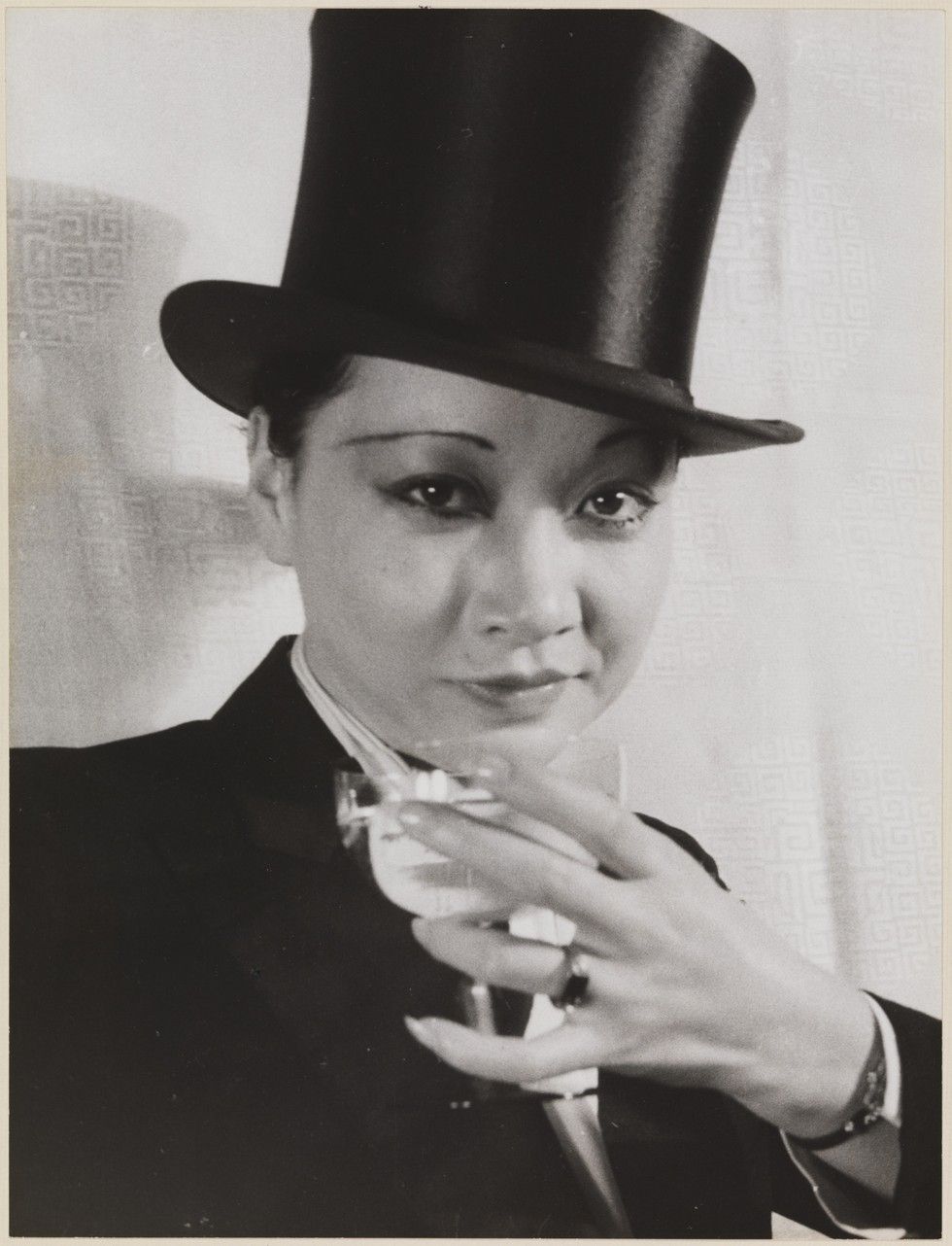
Actually, she did more than refuse. Anna May Wong is not a victim I need to be some white saviour to rescue from history. She was a creator and re-inventor. She hired her own cinematographer, left the US and created a documentary about a year touring China. She was what the guys in the writing room would call a “sassy broad.” They mean it as insult to the women who don’t behave in the ways that they think they should. I think Anna would wear it with pride. Just as she would wear a Top Hat and pose with her friend Marlene Dietrich. She didn’t need their respectability.
But it still leaves me with a problem as an imaginary 1940s screen writer. It was 1948 before the legislation banning inter-racial marriage between an Asian and a white American was over-turned in California. It is hard to write a woman that you know can’t get the guy. You know the audience won’t invest in her. No matter, how beautiful, how talented.
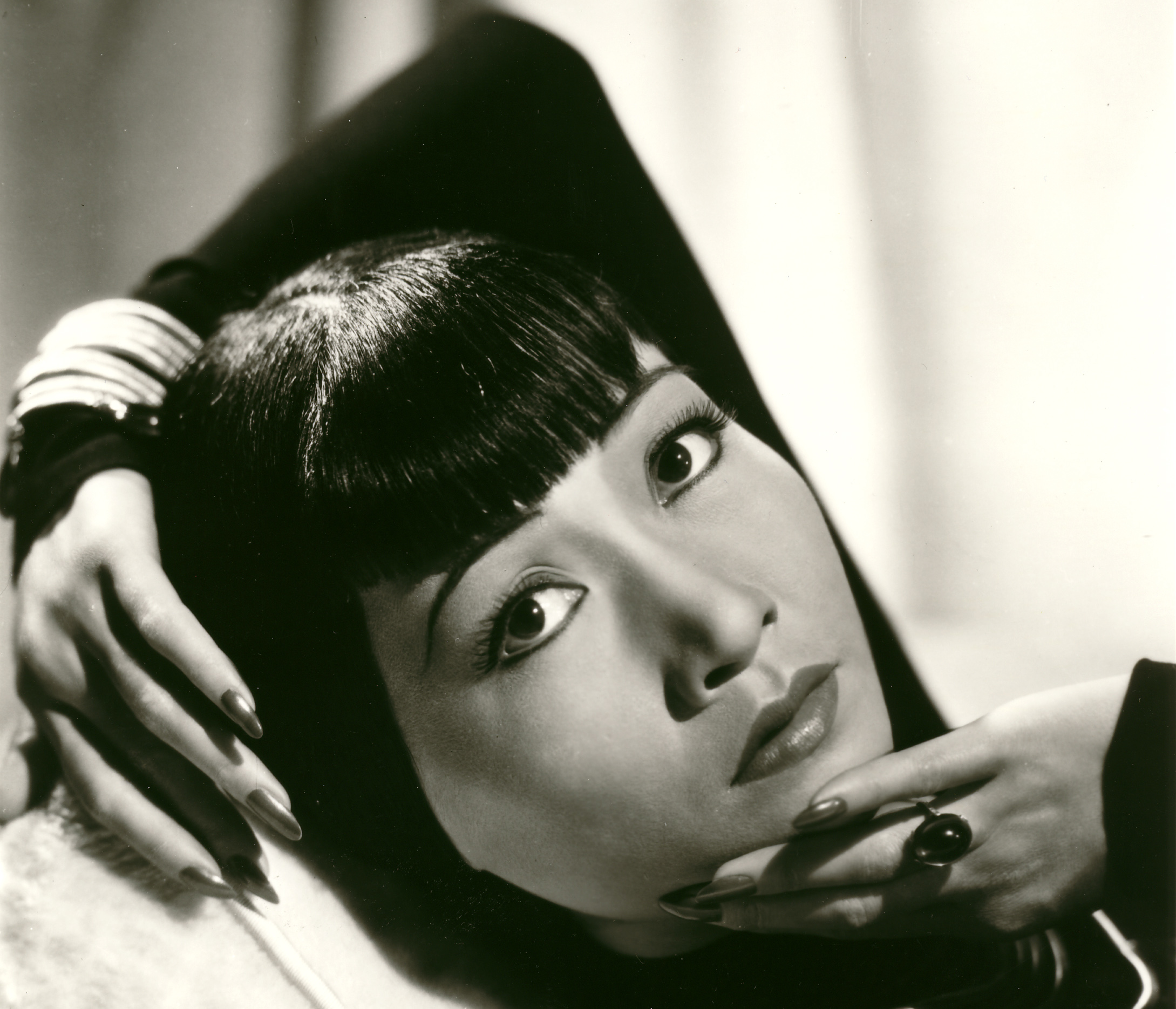
Anna May Wong’s career had ups and downs. But she was ever resourceful. She knew that hard work was key.
“Success is not a jewel that you can purchase and keep for your entire life. On the contrary the brightest star can fall down at any time and fade away into dust.”
Her star fell too early. It was 1961. She was about to star in the film musical Flower Drum Song, when she died from a heart attack after struggling with cirrhosis of the liver. Her health had been compromised by depressive periods and alcohol abuse.
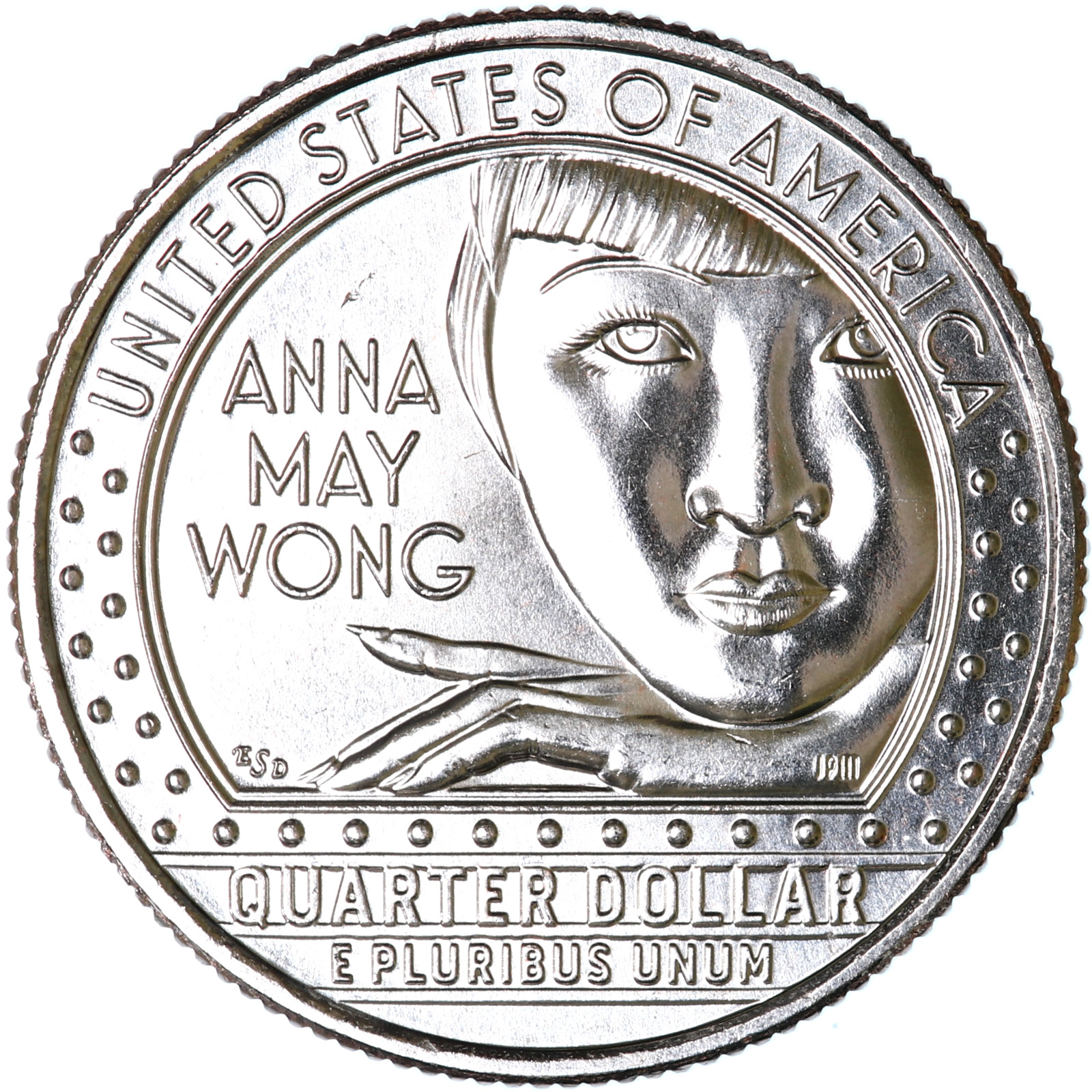
Anna May’s image has found its way onto US quarters and a Barbie doll. But she was far more than a great haircut and a flair for fashion.
I’m sitting at my typewriter in my imaginary 1940s screen-writing office and I’m trying to get to grips with a story about a passionate, wildly gifted actor. I want to show her resilience when she is thwarted by the censors and the stunted imagination of studio executives that would rather see an object than a real person with all her glorious talents, flaws and nuances.
I want to give her a story that doesn't end in her serene, elegant death but a joyful victory over all those foolish things.
If you've enjoyed what you have read, consider subscribing to my writing on Vocal. If you'd like to support my writing, you can do so by leaving a one-time tip. Thank you.
About the Creator
Rachel Robbins
Writer-Performer based in the North of England. A joyous, flawed mess.
Please read my stories and enjoy. And if you can, please leave a tip. Money raised will be used towards funding a one-woman story-telling, comedy show.
Enjoyed the story? Support the Creator.
Subscribe for free to receive all their stories in your feed. You could also become a paid subscriber, letting them know you appreciate their work.
Comments
There are no comments for this story
Be the first to respond and start the conversation.