
A Shockingly Relevant Film From 1957
‘A Face in the Crowd’


My husband and I have a subscription to the Criterion Channel streaming service. Every month Criterion will organize its films into themed compilations. Some are pretentious sounding like ‘Cinema Verité’ others are kind of silly like ‘The Mustache Club.’ But they often help us decide what to watch. The theme that caught our eye this month was ‘Cast Against Type: Heroes as Villains.’ I love it when an actor shows off their range.
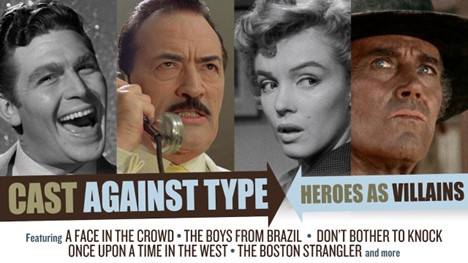
Last night’s winner was A Face in the Crowd from 1957. It stars Andy Griffith, a name that sounded familiar. When I was a kid, I remember seeing reruns of an old black-and-white TV show where Andy Griffith played the sheriff in a small town. It looked corny, and I never really watched it. It was just on in the background sometimes. Maybe a classic for some, but not what I would call provocative.
We couldn’t believe it. The Mayberry sheriff was in a movie directed by Elia Kazan? Cofounder of The Actor’s Studio? Director of groundbreaking films like A Streetcar Named Desire and On the Waterfront? Why would this pioneer of method acting cast Andy Griffith as a villain in his spicy satirical drama? We made a big bowl of popcorn and settled in to see if his guy had what it takes to play a convincing bad guy.
The story begins in Arkansas when radio producer, Marcia (Patricia Neal) brings her microphone to the local jail to capture stories from the inmates. This is where she discovers Lonesome Rhodes, a charismatic drifter played by Griffith. She convinces him to stick around and begin a career as a radio personality, singing and dispensing his homespun wisdom. He is an instant hit. And as his popularity begins to rise so does his ego.
When Lonesome breaks into television, his reputation as a loose cannon only endears him to the American audience. He uses his influence for endorsements for mattresses and junk vitamin pills, then turns his sites on politics. He knows he can use that same influence to reshape the public’s perception of a presidential candidate with low favorability. Essentially, manipulating the poor and working class to vote for a candidate with policies against their interests.
Lonesome’s entourage includes Marcia, his agent turned lover and Mel Miller (Walter Matthau), the cynical New York intellectual who writes for him. Mel reaches a breaking point and quits. Lonesome has gone too far. Mel meets Marcia chain smoking in a bar. They discuss the roles they played in creating this monster. Mel reveals he’s writing a tell all book called ‘Demagogue in Denim,’ and attacks Marcia’s complicity in a most vicious way. Marcia comes away from the encounter with a guilty conscience.
I turned to my husband and said, “They have to stop him!” I don’t want to give away the ending, but in terms of the media’s influence on politics, people in the 1950’s had no idea just how far it would go.

This film was a surprise for several reasons. First some background.
The screenplay written by Budd Schulberg was based on his short story Your Arkansas Traveler. The author was inspired by a conversation he’d had with Will Rodgers’ son who claimed his father was “full of shit” for acting so folksy.
Schulburg and the film’s director, Elia Kazan had cooperated with The House Un-American Activities Committee during the infamous ‘Red Scare’ in 1952. Both men identified as ex-communists and they gave the committee the names of colleagues with communist affiliations. Kazan even went as far as publishing an article in the newspaper confirming his anti-communist stance because he saw it as a threat to American democracy. He insisted that one could still have liberal ideals without being a communist.
After his actions before the committee, many on the left still held a grudge. You might say Kazan was a centrist in a time when many things were seen as black and white. A Face in the Crowd was made as a reaction, a justification for his actions that had damaged the careers of his friends in Hollywood.
Kazan thought Griffth might be too nice to play such a villain. His most famous role up to that point was in the stage comedy, No time for Sergeants. To win the part of Lonesome, Griffith surprised Kazan at a Manhattan steakhouse by showing up as a fire and brimstone style preacher character like the ones he’d seen growing up poor in South Carolina. Kazan exploited the young actor’s insecurity about his poor upbringing on set to ignite his performance. And what a performance! Perhaps it was a stretch, but Kazan’s method acting tricks must have worked. I considered his performance on par with James Dean and young Marlon Brando. This role was lightning in a bottle and a tough act to follow. Griffith had a very short film career before turning to television.
Reviews of A Face in the Crowd were mixed and it was snubbed by the academy. Contemporary opinions are more favorable, many seeing it as a prophetic vision of modern American politics. The film's relevance continues and its legacy endures. A musical stage version with music and lyrics by Elvis Costello is currently playing in London.
About the Creator
Leslie Writes
Another struggling millennial. Writing is my creative outlet and stress reliever.
Enjoyed the story? Support the Creator.
Subscribe for free to receive all their stories in your feed. You could also become a paid subscriber, letting them know you appreciate their work.
Comments
There are no comments for this story
Be the first to respond and start the conversation.