
World of Warcraft “Midnight” Expansion Review Part 2
Part 2 of a 3 Part Retrospective On The Opening Patch

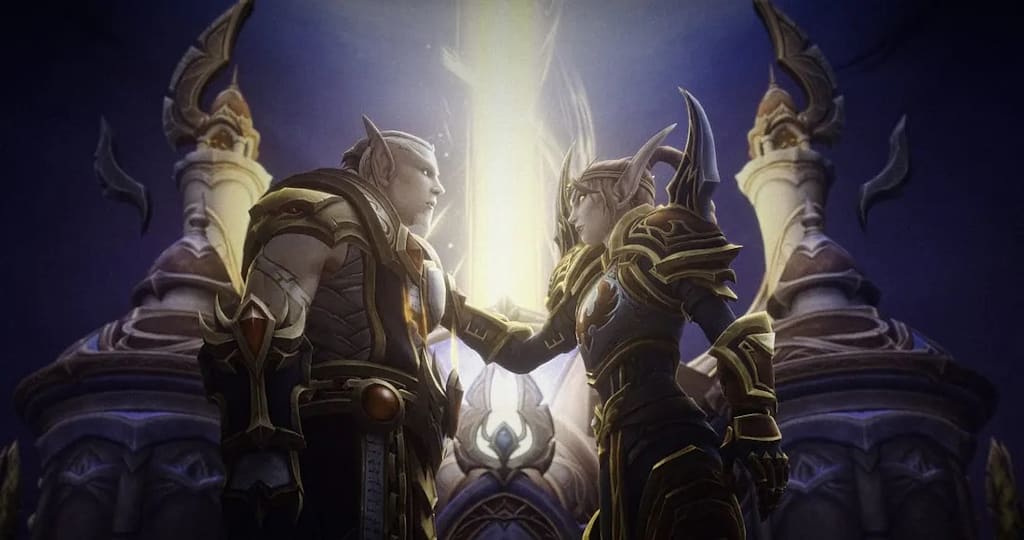
NOTE: This is part 2 of an ongoing review of “Midnight”
Now that I’ve gone over the starting quests, the zone, and partly talked about some of the history of “World of Warcraft” from back during the TBC days, I wanted to move on to discuss it’s story campaign, as well as some of the major characters, their arcs, what I liked about them, didn’t like, and what I would have done.
After all, the zones are just one aspect of the expansion. It’s the story and how we interact with the characters that make the game what it is, and why people love to come back again, and again, and replay their favorite stories.
So let me dive right in, reviewing my thoughts on the rest of “Midnights” story.
----
The Main Expansion Campaign — Thoughts, Opinions, Critiques
I’ve noticed World of Warcraft has had this problem ever since “Warlords of Draenor“. They start well with an amazing concept and then have a severely lackluster ending. Since WoD, the expansion endings have been rather disconnected from the beginning, often ending on opposing themes or including ones that could have been better off as a separate expansion in and of themselves.
WoD started by fighting the Iron Horde, going back to an alternate Draenor 35 years ago, and taking down the Iron Horde leaders one by one. It ended with us collectively fighting demons, and somehow Gromm and Yrel make a passionate speech about being united, even though Gromm started the whole Draenei genocide and Iron Horde.
Legion started with the Broken Shore, ended with us going to Argus to destroy the Burning Legion, and… actually, it wasn’t a bad ending. I just wish that Argus was its own expansion.
BfA had us fighting one another in a large-scale faction war, just like Cataclysm, and ended that halfway through the expansion so that we could then take the fight to the Old God N’zoth, fighting in his eldritch city of Nyalotha.
Shadowlands… we’ll skip that…
DF started with us helping the Dragons reclaim their power, and fighting the Elemental Aspects, and that was dropped rather quickly to focus on just Fyrakk and help the Elves build a new World Tree.
TWW had us going to Khaz Algar, helping the Earthen, losing Dalaran, and ended with us on Ka’resh fighting a Void Lord intent on devouring Azeroth. That ending was actually alright and tied to the beginning themes.
But you get the idea.
Here, “Midnight” starts strong with an amazing opening sequence, and from there, the campaign stories seamlessly flow into one another. Eversong ended with a battle between the Sin’dorei and Amani at Atal’Aman, a steady peace and a fractured family. From there, you’re given a choice on what to do, and where to go from following up on Zul’Aman and Liadrin’s story, to checking on Arator, to discovering what the Light Bloom is in Harandar. Only the Voidstorm is saved as the last zone to do after you finish all of the others.
What makes it such a strong opener is that it establishes the problems that we’re to face in the expansion: The Void Storm is a looming threat, and everything else is eating away at our forces and drawing our attention away from maintaining the Sunwell. While we’re not on a strict timetable, it still sets the stakes that we need to take care of the other issues first. Solving the Light Bloom problem helps both Quel’Thalas and Amani and introduces the Haranir. Solving Zul’Aman’s issue with the Twilight Cultists earns Silvermoon a tentative ally and a road to peace in the future. Helping Arator … well, it doesn’t have an overall bearing on the story, but it is a unique way of utilizing old zones again that I hope to see more of in the future.
Overall, I’m actually pretty pleased with the overarching story, even if some of the zones themselves need a few parts reworked.
Critiques
Don’t do what they mainly did in the End Game Campaign. Which I’m going to go over now.
----
End Game Campaign — Thoughts, Opinions, Critiques
Yikes.
Look. I don’t hate it exactly. Not as much as everyone else seems to, but I admit I am not a fan of it.
Let me quickly summarize it for those who already know, are interested, or don’t mind spoilers.
So after you complete the main quest, you’re asked by Lor’themar to report to Lady Liadrin. From there, you’re tasked with going through the Voidstorm portal to the other side to prepare for the Voidspire assault. You help out, then prepare for the final breach.
At the climax of the raid, Alleria gets the dark Naaru L’ura pulled out of her, and the Vanguard of Light is vanquished as the power of the Naaru is enough to blast through to the Sunwell, corrupt it, and nearly kill everyone on Quel’Danas. Turalyon and Alleria fall to their apparent deaths, and everyone else is transported onto the Isle to witness the devastation.
From there, the campaign takes a sour turn as the Lore Characters and Champion of Azeroth (Us) decide what to do next. Arator comes up with a plan to unite the Elves for an assault on Quel’Danas, and despite some hesitation, everyone agrees to it. You then recruit the Night Elves, the High Elves, and the Nightborne with the idea of elven unity, and then you take the battle to Xal’atath and march on Quel’Danas to destroy L’ura once and for all. During the ending cinematic, Xal’atath shows up, explains that her plan has already been enacted, and no matter how we struggle, she will get exactly what she wants.
Then, in a surprise twist, Sylvanas shows up to save the day, she and Vereesa get a sisterly moment, and then Sylvanas leaves for the Maw. From there, we have to contend with the Darkwell and how to uncorrupt it. A series of quests shows that each of the elven races (Sin’dorei, Quel’dorei, Kal’dorei, Shal’dorei) brings something to help uncorrupt it. Together with the remnants of the Vanguard still living, the Sunwell turned Darkwell becomes the Dawnwell: A font of energy that’s not a power source, but a source of comfort.
Then, the remaining characters realize that the fight with Xal’atath is not over. She is still out there, now moving to her actual target. End campaign story.
Critiques
I’ll start with what I feel is the most important critique I have, and I think one that many people also echo.
During “The War Within“, the campaign story for that was heavily criticized as being extremely Alliance-heavy. Most of the major lore characters that were there were of the Alliance faction — Moira, Dagran, and Magni in the Ringing Deeps. Alleria and Anduin in Azj-Khahet — and that even the favorite patch of the expansion, Undermine, was bereft of the goblins’ connection to the Horde.
In fact, Thrall was heavily featured both in the opening cinematic and on the loading screen art alongside Anduin and Alleria, but left early in the campaign. Only to come back near the end of it. He had a heart-to-heart with Anduin, but his part of the story was largely done in a Short Story that was only a set piece to a minor questline in a later patch.
The worst part was that Thrall was the only major lore Horde character there who got any quests tied to them. Even when the Alliance and Horde mustered to Khaz Algar to take the fight to Xal’atath and the Nerubians in the expansions “Avengers Moment”, it was a couple of events tied together with no real climax since we ran off to the Priory of Sacred Flames at its conclusion.
So what was Blizzard’s response to the critiques? That “Midnight“ was going to be a Horde-focused expansion predominantly from the Horde’s PoV with Horde Characters.
But as you can see above, that only means elves… who are still outshone by the other elves of the Alliance.
As I mentioned above, despite being predominantly in Silvermoon, there is hardly any Horde presence anywhere. Yes, you have a few Forsaken in Tranguilien and a few other places, but there are hardly any Horde NPCs. I touched on it in the Eversong Section of my long-winded review, but it needs repeating that there is NO Horde Presence at all.
The most egregious moment this almost becomes self-parody is when, after the Vanguard of the Light is all but destroyed after the Darkwell’s emergence, Arator says that something needs to be done and take the fight back to Quel’Danas. Lor’themar asks, “With what army, Arator?” which completely neglects the fact that Lor’themar is a key leader within the Horde’s hierarchy.
This becomes even more of a problem when rallying the Elves to Silvermoon. Part of the quest chain has you teleport to Amirdrassil in the Dragon Isles to beseech Shadris for help. If time was of the essence to get an army prepared for Quel’Danas, then why not have Oculerith teleport the players and others to seek out help from the other Horde leaders? Why not teleport to Orgrimmar to talk to Thrall? The Desolate Council with Calia Menethil? Thunderbluff with Bhaine or even Highmountain or anywhere else?
Oculerith mentioned that Silvermoon’s wards prevented him from moving a mass amount of people at once, which is understandable inside the city, so why not do it outside the gates? He was capable of doing so as long as he had access to ley lines, and Eversong is connected to the Sunwell via a large ley line. Plus, there was no problem for Shandris to get the Night Elves to Silvermoon quickly, nor for Vereesa to get the Silver Covenant there either, and the Horde is arguably closer.
What this does is signal that the Horde as a faction is completely incapable and toothless when it comes to helping its own, when the entire faction’s identity is built on brotherhood and strength. While this might not seem so consequential because, at the end of the day, story is story, this feels like Blizzard is intentionally neglecting a whole half of the story that many people personally identified with. Countless people have an invested interest in that faction’s identity, as well as those who want to experience a complete story via the lens of both factions (I’m one of those players).
Not only that, but another major critique of this plot development is that it essentially renders any future conflict between the elves moot. While some, like Halduron, mentioned that “they might one day see each other on the battlefield”, the majority of the end-game campaign is how the elves come together as one. Vereesa and Aethas disband their respective elven organization for reconciliation, Liadrin welcomes the Night Elves into Silvermoon because they used Moon Well water to heal the Dawnwell, and overall, some of the biggest conflicts between them have all but disappeared.
Now, this isn’t bad in general, but it’s come at the cost of — again — Horde identity, and having the Horde play a dominant role in a city they supposedly control with a faction they’re allied with.
How I Would Have Done It
There’s a lot I would have done differently. Keep in mind this is only my opinion, and what I would have suggested had I been on the writing team. I know that a lot of other Warcraft fans who identify as writers have given their two cents on what they would have done, and I encourage readers to check them out on Twitter/Bluesky.
Anyways… to what I would have done differently.
For starters, I would have saved the March on Quel’Danas as an entire separate patch, perhaps the next one. We ended on an extremely dour note with the loss of Alleria and Turalyon, as well as the Sunwell being corrupted. That alone would have been an excellent end to patch 12.0.1, and given us some time to work on Season 1 content.
From there in 12.1.0, it would have been neat to harken back to Quel’Danas’s reclaiming from TBC. Imagine a series of small quests each week where we retake the isle little by little, and unlock a small quest chain where we rally the Horde. First, we ask the Forsaken; they send ships to contain the void in the ocean. Next, we rally the Orcs and Tauren who help us hold the bridge. Next, we rally the Trolls who work with letting the Amani be allowed in Silvermoon and act as shock troopers. Next, we get the Zandalari, whose prelates and priests can beseech the Loa and connect with the Amani’s Loa to empower players on the Isle. We then work on bringing in the other Horde races, little by little, so everyone gets represented over a month and a half.
It wouldn’t have to be the same as TBC’s, of course. Since the focus is not on factional pride, we don’t need it as a race to unlock things. Just gatekeep it a week at a time, unlocking daily quests, catch-up mechanics, and rewards for taking down key enemies on the Isle. Not only would this actually give us a use for the Isle outside of the initial starting quests, but we can utilize the entire Isle to its fullest, including the delve.
Heck, we can still even have the Elves United storyline as well. Arator and the others realize that the Horde can hold it together, but they can’t cleanse the Darkwell. Arator suggests the other non-horde Elves, some bickering from the Horde leaders happens, but ultimately it’s decided to give it a shot, and then queue the questline again and play it out as it did.
The only real difference is no battle of the bridge to Quel’Danas, though having them help in a larger March on Quel’Danas raid would have made it worthwhile.
The reason why I’d do it this way is that the battle to reclaim the Sunwell, and turning it into the Dawnwell, should reasonably be the midway point of the story, if not the ending of the expansion’s main storyline. Not only does this gather all of the Horde to rally for one of their own, but shows that it’s a united front to take down Xal’atath and reinforces the themes of factional unity.
Would the Alliance mainly miss out on this storyline aside from the elves? Yes, but that’s not a bad thing. Faction pride should be a theme within Warcraft, even if everyone is getting along, and players have been asking for years for better Horde representation to see their favorite Horde characters in action, being heroes alongside the players. Additional dialogue for Horde players could even incentivize players into playing both factions to see the differences.
Plus, it would also be a more cathartic start of the Dawnwell if we earn it rather than just zip through some portals, say “please” to the elves, do a few token quests, zip back, and suddenly we’re at the gates. It could even spin off into other side stories.
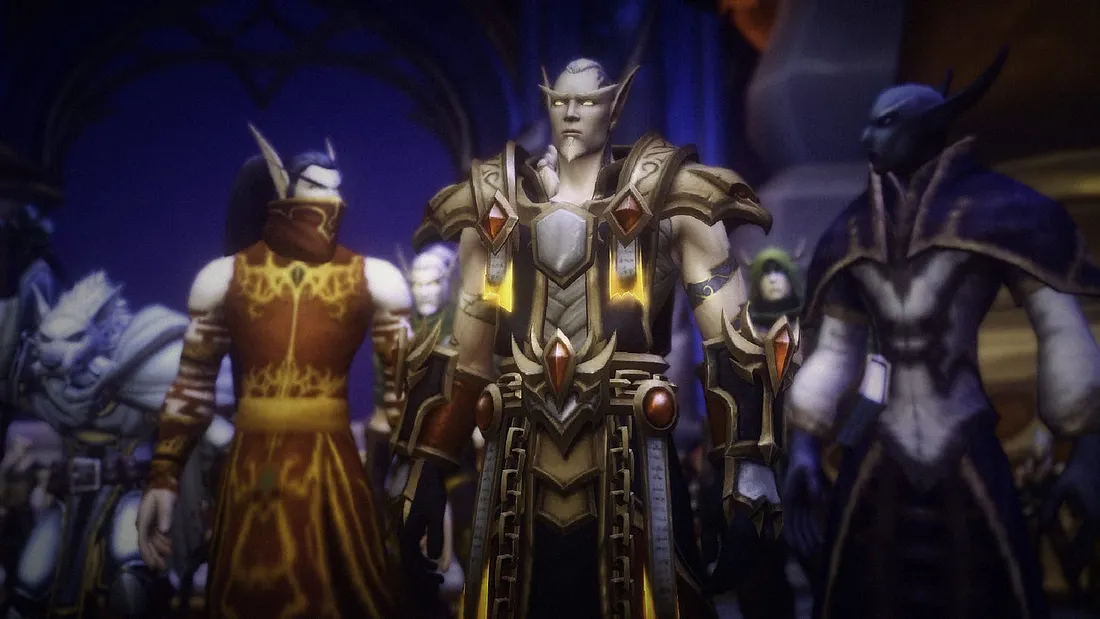
The Cast of Characters — Thoughts, Opinions, And More
One of the things that I’ve enjoyed about Warcraft’s evolution from the start of Vanilla is how we interact with the Lore Characters, and their increased importance in the overall narrative.
In Vanilla, “The Burning Crusade“, “Wrath of the Lich King“, and even into “Cataclysm“, the player characters were largely relegated to the adventurer role, and much of the expansion’s story treated us as another face in the crowd who managed to luck our way into saving Azeroth time and again. Other adventurers were called that, often simply referred to as “Friends” or “Allies”, and our successes were simply by the deign of happenstance.
Lore characters showed up, of course, but usually only for special occasions unless they were specifically meant to help us complete the story in some way. The faction leaders stayed in their capitals, doling out quests. NPCs such as Brann Bronzebeard showed up in raids or dungeons but weren’t helpful or pertinent to the overall story, and when the NPCs did hear things, it was always second-hand somehow.
Even in WoTLK, the Lore Characters that did show up at the Argent Tournament Grounds and the Argent Trials were mainly there as background characters, far and away from us.
However, a change started to happen during “Warlords of Draenor“ when emphasis on our player characters became more important. No longer were we just random adventurers who somehow won the day, but we were now Commanders and leaders of our respective factions. The Garrisons and even the story itself started to treat us as if we were part of the lore character roster.
This culminated in “Legion” when our characters became the leaders of the Order Halls, and we went from Commander to “Champion” — a title that’s stuck as the canonical name for the Player Character. From there, our characters developed a narrative relationship with the Lore characters, befriending them, relying on them, and in turn, being relied upon. No longer were they in the background while we drove the story forward, but now were either the driving force of the story with us alongside us, or as partners side-by-side.
In “Midnight,” it’s pretty much the same thing as before. If you’ve played since “Legion”, then you’ll know how modern Warcraft works when it comes to the expansion storyline. How does it compare to previous expansions, and even against itself?
Both good and bad. Let me go down the list of my thoughts on the Lore Characters and their part in the story.
----
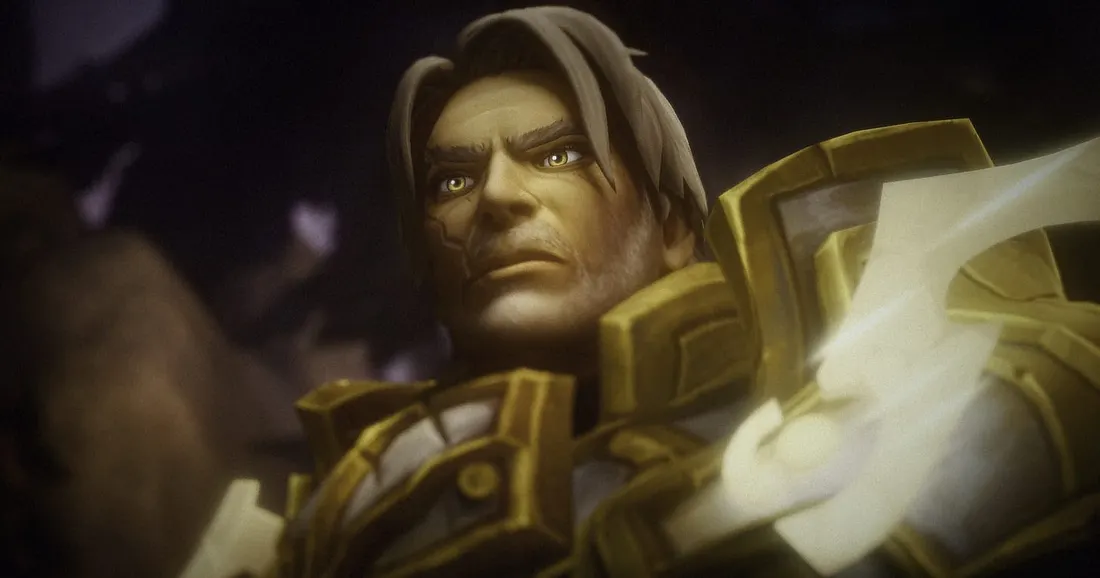
Turalyon
Turalyon has pretty much been a punching bag for characters since he was revealed back in the last act of “Legion“. I personally don’t see why, even though he can kind of come off as Lawful Dumbass with a stick up his ass.
Which is a shame. In Warcraft 2, his defining moment was the death of Anduin Lothar at the Battle of Blackrock Mountain. He took up Lothar’s broken blade, made a passionate speech about the hero’s death, and rallied the Alliance into fighting all the way to the Black Morass and to the Dark Portal. He, along with the other Sons of Lothar and a volunteer force, fought all the way to Dreanor, allowing the gate to close behind them to ensure that the Horde doesn’t attack Azeroth again.
Since then, all the way to “Legion“, it was a mystery to where he and Alleria had gone, and then we ended up finding out what happened; they ended up connecting with the Army of Light, then fought the Burning Legion for a thousand years.
In Warcraft 2, he was characterized as zealous, but also courageous and compassionate. All of the things Paladins of the Silverhand are supposed to be. Unfortunately, since his return in Warcraft, his character has been… a little bit uptight.
I don’t really think there are many positives when it comes to his character depiction in “Midnight“. He’s a powerful Paladin and plays a dominant role in the opening segment of the game, but it feels like the writers are working hard on the narrative of “the Light can be just as bad as the void” and are using him as the narrative device to tell this.
The biggest example is during the opening quests in the beginning segment. He’s focused intensely on fighting the void monsters, and completely neglects saving civilians — even going so far as to chastise his son, Arator, for doing so. In the Warcraft Lore, Silverhand Paladins are supposed to be healers as well as warriors, since they were created by fusing knighthood and priesthood. The first Paladins were the remnants of the Brotherhood of the Horse and the Northshire Abbey priests.
So to have him ignore what essentially Paladins were created for feels… off… Especially since during “Legion“, a lot of his early quests, when you first land upon Argus, are him ensuring the safety of his soldiers before making any large push. He’s even seen healing in Antorus.
Another example of how he’s being framed as the narrative device of “Light can be evil too” is when he accidentally injures Arator with his sword while attacking Zul’Jan at the culmination of the Eversong storyline. Arator isn’t blameless for that (more on that later), but the scene is framed as Turalyon losing control of himself, unable to discern friend from foe as the Light makes him an instrument of wrath. Something that echoes the Arator cinematic with Xal’atath mocking him about how he, too, is losing himself to the zealotry of the light.
A third example that I’m not overly fond of is when, after the first arc of the story begins, all the lore characters are in the Sanctum of Light in Silvermoon, figuring out how to embolden the Sunwell and “Fix it”. Turalyon essentially equates his opinion as “Pray, because the Sunwell is of the light, and it’ll all work out” to where Lor’themar and Liadrin both angrily retort to him that the Sunwell is older than human civilization.
While I understand the sentiment of shutting Turalyon down, it feels like a Supreme Commander of a military force, and a High Exarch should have more tact and be more diplomatically minded since Paladins are supposed to be mediators as well as warriors and priests. Personally, I think it’s a missed opportunity to have him ask if the Sunwell was not of the light, and Liadrin give the rundown of the Sunwell Raid from TBC, and Lor’themar explain it’s both Light and Arcane, and thus, pure prayer and conviction will not save it. Not only would this paint Turalyon as too focused on the Light and incapable of thinking of other answers, but also show that he’s out of the loop on what all happened before “Legion“ happened.
So, is there any positive development from Turalyon?
Uhh… well… he loves his family.
Seriously, though, there’s really not much, but there IS some that’s there. During the Arator campaign, we come to understand from the other Sons of Lothar (and Eitrigg, who is an honorary member at this point) that Lothar’s death weighs heavily on Turalyon as a failure, because he looked up to the man and considered him a friend. Personally, I didn’t like how it reframes what should have been a key moment in Turalyon’s development. In lore, it was a heroic moment that transformed him from Right-Hand man to Supreme Commander, but I did like the idea that, despite how he chose to carry on Lothar’s teachings and rally the Alliance, he still thought of it as a failing moment to not protect someone he respected.
How I Would Have Done It
So what would I have done differently with Turalyon’s arc in “Midnight“?
Keep the key positives: He makes it clear he loves his family, he harbors guilt for what happened to Lothar, and it forces him to always give 110%. Keep the accident of him striking at Arator, and that he’s too focused on the end goal of beating back the darkness. I’d even keep it that he clutches onto the Light as a crutch because he feels if he falters for a second, it’ll leave him when he needs it, and the same thing that happened to Lothar will happen to Alleria or Arator.
This essentially makes it a contrasting mirror to Anduin’s story — even more so since Anduin is named after Lothar — where Anduin’s is how his uncertainty and fears keep him from channeling the light at its most potent.
I would just make him less the story’s favorite butt monkey and try to play up the sympathetic angle. Like my third example above, instead of just outright acting like he knows what is best for the Sunwell, he could have asked, “Is the Sunwell not of the Light? Could we just not pray and believe it’ll be fine and trust in it since it has M’uru’s heart empowering it?”
By doing that, it opens up a chance for Lor’themar and Liadrin to essentially give a recap on what happened at the end of “The Burning Crusade” and give some backstory lore on what the Sunwell even was. Remember, a majority of players who are playing today started after Cataclysm and more than likely did not play through TBC’s story.
Another way to change the narrative focus, making Turalyon more sympathetic, is in the opening quest arc on Quel’Danas. Instead of acting like saving civilians was a bad choice and chastising Arator for “breaking formation” to do it and thus, having Lor’themar rebuke Turalyon’s actions, have a Sophie’s Choice. Saving the civilians, according to Turalyon, means that Xal’atath puts pressure on a divided vanguard, and the Isle’s battle was already spread thin as it was. He WANTS to save civilians, but as the High Exarch, his goal is ultimately to win the battle and thus cannot give in to his compassion. Instead of chastising Arator for breaking rank to save the civilians, he chastises him as a Father worried about his Son running off on his own in the middle of a battlefield.
This way, he can cheekily congratulate him for doing what needed to be done, but also show worry about his only son going off on his own. Heck, Arator can even remind Turalyon that he’s 40 and not a young squire anymore.
You get the idea? It’s not to change anything with Turalyon or what happened in the story, but to reframe it. The narrative arc shouldn’t be “Light can be bad to”, but that Turalyon sees how he’s using the Light as a balm over the guilt for his personal failures, and it’s slipping into the wrathful side of the Light.
This would endear him to the players while also making him a character one could debate about.
Of course, he’s not the only character who can use a bit more work.
----
Arator
Unlike some people, I do like him, but then again, I’m a huge Anduin Wrynn fan, and ever since Anduin became broken, traumatized, and second-guesses himself at every opportunity, Arator has filled that niche of “young optimist.”
Unfortunately, this is where character dissonance comes into play. With Anduin as a young idealist who believed in peaceful ways to resolve conflict, it came because of his age. He was still a teenager during most of BfA and had seen the hatred of the past and how it affected those around him. It wasn’t until after “Shadowlands“ that he changed, but at his core, he’s still a man who believes in peace above everything else.
Arator takes up the mantle and is also meant to be a character that newer players latch onto to see the world through their eyes: the idealism of youth, coupled with the reality of living in a world always in conflict.
The problem is that Arator is not a young man, but is in fact between thirty-five and forty. Yes, he’s half-elven, but in the lore, Elves still age the same as humans. Look at Salandria, a young orphan girl from the Children’s Week questline, whom Lady Liadrin adopted. She’s technically twenty years old and considered a young woman at this point.
In fact, Arator even has a title that he earned from his service in the Silver Hand: “The Redeemer”. Keep that in mind because it plays into the majority of my critiques in a bit.
Is he a good character? Yes, I think so, and yes, that is because I’m biased towards the trope he represents. The problem is that it’s clear he’s written by committee and that the several writers who wrote for him seemingly don’t communicate.
Here are several examples.
The first is in the starting questline that opens up “Midnight“. When he wants to save the civilians after Turalyon says no, he does it anyway and shows a willingness to go ahead on his own and accomplish his goals. He does this regardless of the consequences.
In fact, he does this throughout the Eversong campaign as well. He knows what to do and where to go, and is completely sure of himself. A seasoned soldier who, despite how his parents treat like he’s a child, is not.
But all of that stops during his campaign. What kicks this off is that Turalyon and Zul’Jan are fighting, and the only way he feels he can end the battle is by leaping in front of Turalyon’s sword mid-swing and getting hurt in the process. In the narrative, this is seen as a failure on Turalyon’s part, but the reality is that Arator gets in between two people fighting to the death and gets hurt in the process.
Why didn’t he use his sword to block Turalyon’s strike? Why didn’t he conjure a shield of light, as shown that all Paladins are capable of (and he’s even done before)?
From there, the campaign has us working with Alonsus Faol to try and cheer up a grieving, despondent Arator, and to do that, he starts by trying to teach him that the Light is a tool and energy source, and not just a religious power.
This leads to the second example of how I feel the writers don’t communicate with one another. Arator is a veteran of “Legion” and a standing member of the Silver Hand. The Silver Hand is an organization of Paladins from all other factions and disciplines. You had Vindicators, Sunwalkers, Blood Knights, and every other conceivable subtype of Paladin in there, and I wouldn’t doubt that others — such as Zandalari Prelates — can be included now.
When Alonsus Faol shows that the Light can be wielded in anger and hatred, Arator is perplexed and starts to lose faith in the Light, questioning if it’s even “truly good” and if people wielding it can become mindlessly hateful.
The answer is yes because Faol literally explained it, and Arator — again a ranking member of the Silver Hand who earned a title — doesn’t understand it and questions the basic doctrines of his Order’s beliefs. Has he not had this discussion with literally anyone else in the (let’s assume) 20 years he’s been a Paladin?
I feel I’m circling this, but suffice to say, the dissonance is that he acts like he’s a young squire in the Silver Hand, ignorant of how the Light works when he’s supposedly an accomplished Paladin who people rely on, and again, is a forty-year-old man. Even Anduin knows all this, and he’s half Arator’s age and technically a Priest.
Hell, I’m forty years old, and when Alonsus Faol said the light is just a source of energy, I went, “yeah, sounds about right.”
Another issue that I do hear from several places is that Arator also makes a pretty poor guide to Elven culture since he often speaks of what the Sin’dorei — and by contrast, elves in general — believe and their traditions. Unfortunately, I don’t really know much about Quel’dorei or Sin’dorei lore, so anyone else who wants to expand on this can.
So, are there any positives with Arator?
Actually, yes. As a good-aligned character, he makes for a good companion to propel the early parts of the story along, and even the first half of the end-game campaign. As a do-gooder, he often takes charge in the story, moving the player character along instead of just telling us where to go. He shows us where to go and what to do, fights alongside us, and since canonically the Champion of Azeroth is in service to the world, it stands to reason that we’re also good-aligned.
It’s just that the moments where it brings his age and experience into question are jarring enough to break the suspension of disbelief and take us out of the narrative.
How I Would Have Done It
Like with Turalyon, I believe it’s all about reframing and recontextualizing each scene we have him in to smooth things over a little better.
For example, his age. Keep him at forty or so years old and make it clear that while he idolizes his parents for what they did, he’s determined to make his own mark in life, much as Anduin had done to separate himself from Varian. He’s older and wiser, and still very much the affable “good” aligned character who is helpful.
When he goes to confront Turalyon and stop him from killing Zul’Jan, don’t make him jump in front of the blade and then act as if it was his Father that struck him as he did. Instead, have him block the attack in some way, and then remind Turalyon that he’s falling to zealotry. It would be a good moment where, instead of being struck by his Father and horrified that his wrath overwrote his good senses, he sees that his Father is fallible and human — someone who can make mistakes. Remember: For the longest time in his life, Arator was fed stories about Turalyon, and he idealized him and his mother. Doing this helps to make him realize their mortality, and even kickstarts the subtext of Turalyon’s guilt and Arator realizing his parents also suffer.
This ties into his campaign, where he starts to question himself, instead of the Light itself. He became a Paladin to be like his Father, but if the Light didn’t help Turalyon find peace and comfort, what even IS the Light then, and what’s the point of worshipping it?
This ties into Faol coming in to explain that it’s an energy source and not anything inherently religious or good and that sets us off to collect the artifacts. Instead of questioning the Silver Hands failure, it becomes a philosophical debate about how the Light is viewed as a source of goodness, vs. the Light being a source of energy powered by conviction and self-assurance.
He comes to understand that the Silver Hand’s problem is that it ties up the Light into religious iconography and sees its corruption with the Scarlet Crusade. He also sees how it can be wielded to serve others in a servile role with Dezco, and then how some cling to it when we fix Turalyon’s shield, which he lost at Blackrock Mountain.
It doesn’t change anything: “The Light can also be used for evil” theme is still intact. Arator comes to understand that his training and learning aren’t at an end, rather than getting the basics of his training wrong. From there, he vows to help his Father deal with his guilt and comes to understand that being human is what made the things he did all the more extraordinary.
His Appearance
Honestly, it grew on me. At first, I thought it was dumb, but then after a while, I realized the design wasn’t what needed to be fixed; it was the writing. Plus, his armor is awesome.
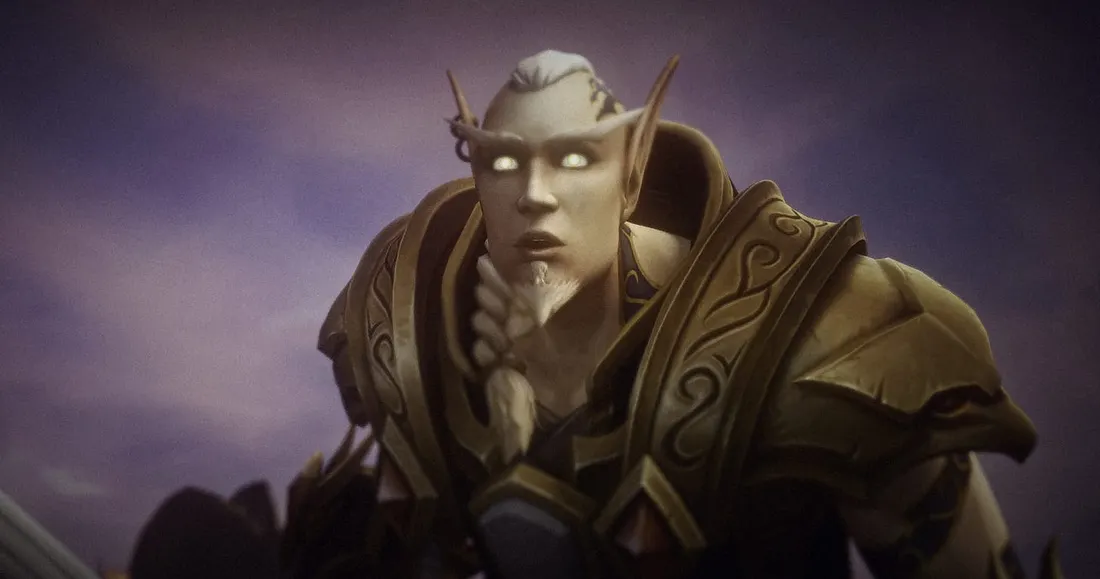
Alleria Windrunner
Honestly, I don’t really have strong opinions regarding Alleria. It’s really more of the same from “The War Within“, just now she’s a little bit more justified in wanting to hunt down Xal’atath. Of the Turalyon family, she gets the least amount of time to develop in “Midnight”, but that works in her favor.
----
Lor’themar
Lor’themar is perhaps one of the coolest elves in fantasy literature. He’s a survivalist, a badass, and someone who took the mantle of leadership not because of any blood lineage, but because at the time it needed to be done. Plus, he’s done a fairly good job at keeping the Blood Elves from becoming worse, as well as integrating themselves in Horde culture while keeping their own.
In “Midnight“, we don’t really get to see him do much leadership, unfortunately. If anything, one of my biggest critiques is that he’s quick to be dismissive and even hostile towards Turalyon (much of what I said above goes here too) as well as quick to entertain Arator’s idea of elf unification.
If I had to give a critique, it’s that he really does not even think to call upon his Horde allies for help. Oculerith has proven that he can summon a large number of people in an area using telemancy, and while he can’t do it in Silvermoon specifically, there’s no reason he can’t use it to contact the Horde leaders.
I mentioned this previously, so I won’t rehash it. Suffice to say, my critiques with Lor’themar as a character are mostly how he’s limited by the writing rather than his character developing throughout “Midnight“.
---
Zul’Jan
I really like Zul’Jan. Please, Blizzard, don’t make him a villain and kill him off.
The reason for saying this is that it’s clear the writing is trending towards quickly ending longstanding conflicts to tie together as a neat bow in “The Last Titan” expansion. Chris Metzen has already gone on record as saying that the World Soul Saga is coming to an end, meaning that Azeroth herself will be awakening sometime soon at the saga’s conclusion. What they do after that, we don’t know (and I wonder if even they know).
What makes Zul’Jan interesting is that he’s a complex, nuanced character. He loves his people, his sister Zul’Jarra, and is willing to do anything to keep both safe. He clearly does not like outsiders, hates the elves and thinks even less of them, and does not believe that the Amani should be beholden to the Loa because they can — and have — pulled back their support in the past.
And really? He’s not wrong. The Elves of Quel’Thalas have long been the Amani’s enemies for thousands of years, with long-standing wars between stretches of uneasy peace. The Elves DID colonize much of what used to be the Amani Empire, and a lot of bad had been done on both sides. Just because Lady Liadrin and the Champion of Azeroth helped Zul’Jarra and the Amani reclaim the Loa’s blessings doesn’t erase that history or mean it didn’t happen.
Plus, he is also not wrong about the Loa. Relying upon the Loa’s power for strength is a dangerous gamble. When you appease them, you get the blessing. When you don’t? You lose it, and they go away, leaving you in a lurch. While he’s wrong about taking it because that’s what led to his grandfather, Zul’Jin’s, downfall and the Amani’s fall from grace, it’s his conviction and belief in what needs to be done that make him a compelling character.
Should he be a villain? Yeah. Villains don’t need to be killed to be effective. Just having someone you know would rather kill you than work with you, but works with you anyway, makes for interesting story arcs without simplifying them to absolutes.
Plus, Warcraft needs more good troll characters. We haven’t had a good one since Zappy Boi/Zekhan.
---
Other Characters
As of now, I don’t really have any in-depth analysis of the other characters, their motivations, and what I would do to change them. I could do a deeper dive at one point, and even make a series of them, but for now, a deep review of “Midnight” is all I want to offer.
---
As you can see, “World of Warcraft’s” latest expansion has a lot of good in it, but also a lot that needed some extra time to develop.
Now this isn’t necessarily a bad thing. People panned “Legion” when it first came out, and many now consider it a top 5. “Warlords of Draenor” was considered the worst expansion till “Shadowlands”, and now people are nostalgic for that expansion.
Time will only tell. It is the first patch after all, and 12.0.5 only recently came out as of this writing. They could very well have an answer to all my critiques or story directions that I hadn’t thought of.
But what of the game itself? Is that still fun? Stick around as Part 3 discussing that will be coming out shortly!
~Rease Stoneheart
Author Note: This originally appeared on Rease’s Substack.
About the Creator
Rease Stoneheart
I'm a Self-Published author who enjoys writing Fantasy, Horror, Sci-fi, and other genres. Here I write about a lot of different things that catch my fancy.
You can currently find everything related to me at: https://linktr.ee/reasesoffice
Enjoyed the story? Support the Creator.
Subscribe for free to receive all their stories in your feed.
Comments
There are no comments for this story
Be the first to respond and start the conversation.