
The Squid Game Is More Real Than We Think
“It’s not just a show—it’s a reflection of the world we’re already living in.”

It started like any normal Saturday night.
My husband and I were doing what every couple does—scrolling endlessly through Netflix, asking the same pointless question:
“What do you want to watch?”
“I don’t know… you pick.”
After what felt like hours of scrolling, forgetting everything we had already considered, we landed on one show everyone seemed to be talking about—Squid Game.
At that point, it was everywhere. Social media was flooded with clips, costumes, and theories. Still, I had no idea what it was about. My husband only knew one thing: people played games… and died if they lost.
It sounded like another survival story.
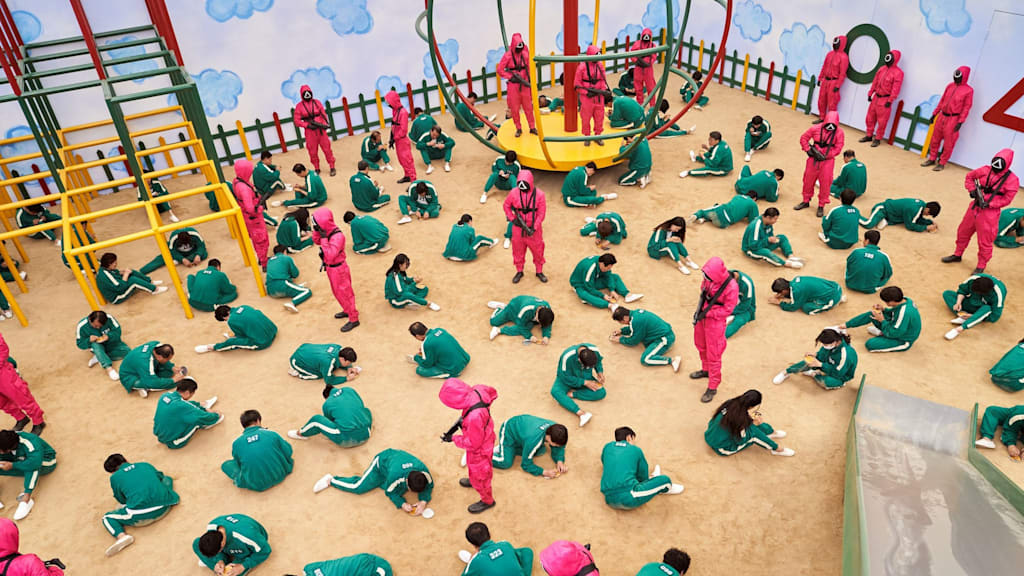
What caught my attention, though, was something far more random—the guards in bright pink suits. For some reason, it reminded me of Dolores Umbridge. And if there’s one thing I believed, it’s this: pink villains are always the worst kind.
I had no idea how right—and wrong—I was.
We finished the entire series by Sunday afternoon.
And I wasn’t entertained.
I was disturbed.
(Warning: spoilers ahead.)
I remember yelling at the screen, begging Ali not to trust Sang-woo. I remember tearing up when Player 001 seemed to die. But nothing hit harder than Ji-yeong sacrificing herself so Sae-byeok could live. That moment wasn’t just sad—it was devastating.
Then came the betrayals.
Sang-woo tricked Ali and took his marbles. Later, he killed Sae-byeok while she was already dying. And somehow, his own death—quick and self-inflicted—felt like an escape, not justice.
But the biggest shock?
Player 001 wasn’t a victim.
He was the creator.
A man so rich, so bored, that he built a system where thousands died just to entertain people like him.
And suddenly, the show didn’t feel like fiction anymore.
After finishing the series, I spent days thinking about it. Reading articles. Watching breakdowns.
And then it hit me.
People were missing the point.
Squid Game isn’t terrifying because it shows people dying in games.
It’s terrifying because it reflects real life—just in a more extreme form.

1. Desperation Is a Real Currency
In the show, players risk their lives for money.
That sounds absurd—until you realize how many people in the real world are driven by desperation.
Take the black market, for example.
Illegal organ trade is still very real. People sell kidneys, not because they want to—but because they feel like they have no choice. Wealthy buyers can pay enormous amounts, but the person selling their body often receives only a tiny fraction of that money.
The system is unbalanced.
And that imbalance is exactly what Squid Game exposes.
Debt, poverty, and survival push people to extremes. The show exaggerates it—but not by much.
Because when survival is on the line, morality becomes flexible.
2. The Rich Don’t Play the Same Game
The VIPs in Squid Game aren’t just villains.
They represent something deeper.
They are people who have everything—and feel nothing.
So they create games to feel something again.
They watch others suffer for entertainment, completely detached from reality. To them, human lives are just pieces in a game.
Sound unrealistic?
It’s not.
In real life, wealth often creates distance. The higher people rise, the less they experience the struggles of those below them. And sometimes, that disconnect turns into indifference.
The VIPs don’t participate.
They observe.
Because they’re not part of the game.
They own it.

3. The System Is Built in Layers
One of the most powerful aspects of Squid Game is its structure.
It’s not just about players and guards—it’s about hierarchy.
At the bottom, you have the players. People drowning in debt, willing to risk everything for a second chance.
Above them are the guards. They follow orders, enforce rules, and survive by staying obedient.
Then comes the Front Man. A figure of authority, but still answering to someone higher.
And at the very top—the VIPs. Untouchable, invisible, and in control.
This isn’t just a fictional system.
It mirrors real society.
Different classes. Different levels of power. Different rules for different people.
And the truth is, moving up isn’t easy.
Because the system isn’t designed for everyone to win.
4. The Illusion of Choice
One of the most disturbing elements of the show is the idea of choice.
Players are technically allowed to leave.
But they come back.
Why?
Because the real world they return to is just as brutal—just slower.
They’re trapped either way.
That’s what makes it powerful.
Because many people in real life feel the same.
Working jobs they hate. Living under constant financial pressure. Chasing stability that never seems to come.
They’re not physically trapped.
But mentally?
It’s a different story.
5. Childhood vs Adulthood
At first glance, Squid Game uses children’s games as a shocking contrast.
But there’s a deeper meaning.
As children, games are simple. Fun. Innocent.
As adults, life becomes the game.

Except now, the stakes are real.
Bills. Responsibilities. Expectations.
The colorful playground turns into a structured system where every move matters.
And just like in the show, one mistake can cost you everything.
So… Is Squid Game Real?
No—there isn’t a hidden island where people play deadly games for money.
At least, not that we know of.
But the ideas behind it?
They’re very real.
Desperation. Inequality. Power. Control.
Squid Game doesn’t invent these things.
It reveals them.
That’s why it stays with you long after the final episode.
Because deep down, you realize something uncomfortable:
We’re all playing a game.
Just not one we chose.
And maybe that’s what makes it so unsettling.
Not the violence.
Not the twists.
But the fact that, in some way…
It already exists.

About the Creator
Enjoyed the story? Support the Creator.
Subscribe for free to receive all their stories in your feed.
Comments
There are no comments for this story
Be the first to respond and start the conversation.