
The Console is No Longer the Product. You Are.
Sony’s CEO just admitted they don’t need to sell more PS5s. What that means for the future of PlayStation — and your wallet.
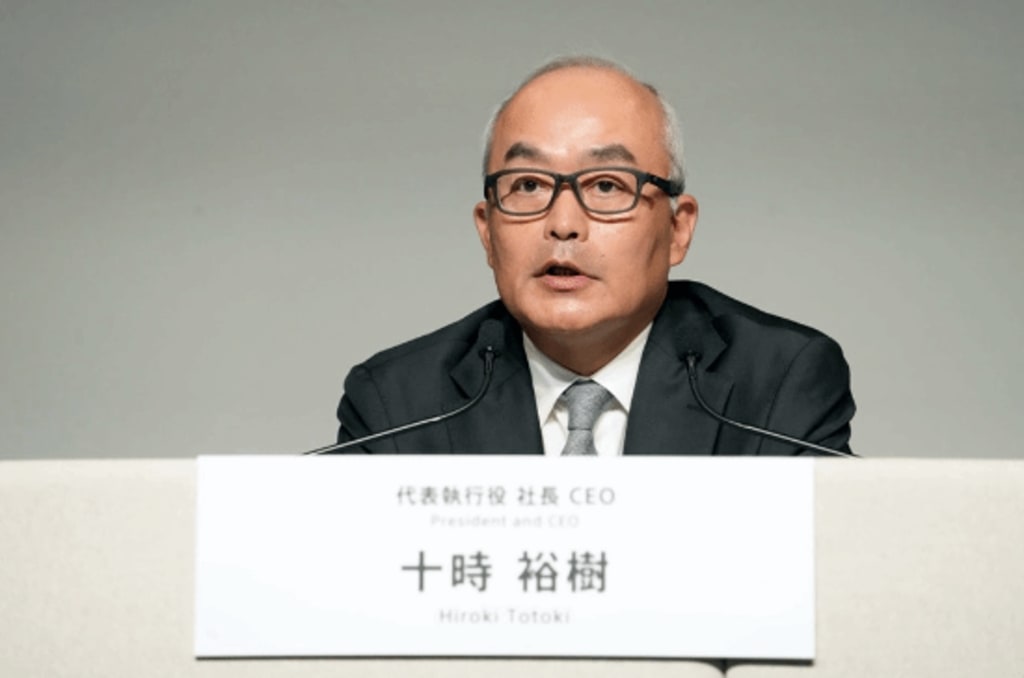
In August 2026, Sony CEO Hiroki Totoki gave an interview. Domestic media clipped one line into a headline:
“We don’t need to actively sell consoles right now. We’re more focused on generating recurring revenue from our existing user base.”
What got cut was the context. The reporter had asked him: with the PS5 already in roughly 93 million households, and Nintendo just launching the Switch 2 while facing first‑year cost pressures, did Sony feel more “fortunate”?
Totoki said “yes, it’s fortunate.” Then he added the bit about “the latter half of the lifecycle.”
The precise meaning is this: a console six years into its life does not need to throw every resource into unit sales the way a first‑year machine does. This is basic industry common sense. The first two years determine whether third‑party developers commit. If you sell 100 consoles, you might move 30 copies of a game. If you sell only 10, even a 100% attach rate gives you just 10. The Switch 2 launched in 2025, right as memory prices surged. A price increase in its debut year is a guaranteed drag on demand. The Steam Machine, also debuting in 2025, priced itself out of the market from day one.
The PS5 does not have that problem. 93 million installed, 125 million monthly active users, and GTA 6 will give it another lift. Shifting focus to service revenue – PS Plus, digital royalties, DLC – is what any hardware maker in that position would do.
But those words, taken in isolation, still deserve to be viewed through a different lens.
I. When Did Prices Go Up, and by How Much?
The PS5 price increases were not a one‑off.
In August 2022, Sony raised prices in Europe, the UK, Japan, China, and other markets. Europe by 10%, Japan by roughly 18%. In 2024, Japan saw another hike. By 2026, the Japanese retail price of the digital‑edition PS5 was nearly 20% above its launch price.
Meanwhile, PS Plus annual fees also climbed. In September 2023, Essential went from $59.99 to $79.99, Extra from $99.99 to $134.99, and Premium from $119.99 to $159.99. Increases of 25% to 33%.
Price adjustments are not inherently a problem. The problem is that the content library did not keep pace. In 2024, PS Plus Extra averaged 12 new game additions per month. In the first half of 2026, that number fell to 9. Among them, the number of day‑one third‑party titles also dropped.
“Monetising the installed base” and “raising prices without adding value” are two different things. The former is a natural business pivot. The latter is a pure pricing play.
II. What Does This Mean for People Who Already Own a PS5?
Put two consoles side by side: one bought in 2026, the other bought at launch in 2020. The hardware is identical, but the price paid is different, and the subscription service received is different.
For new buyers, the entry barrier is higher. For the 93 million already in the ecosystem, the switching cost is enormous. Their game library, friend list, and save data are all here. That lock‑in itself is a source of commercial value.
What Sony has done in the past 18 months falls into two buckets.
One is healthy installed‑base operations: expanding the Premium classics catalogue, releasing more hardware colours and limited‑edition shells, improving the PS App’s remote download features. These make existing users feel the system is improving.
The other is price hikes without commensurate quality upgrades: subscription fee increases, hardware price increases, narrower digital discounts. These use the lock‑in effect to extract incremental profit, without offering equivalent service improvements.
The difference: the first makes users feel it is worth it. The second makes them feel they have no choice.
III. Is the Gap for PS6 Being Filled Now?
The PS5 launched in November 2020. Based on Sony’s historical console cycles – PS3 to PS4: 7 years, PS4 to PS5: 7 years – the PS6 is expected in late 2027 or early 2028.
But semiconductor costs have not come down. TSMC’s 3nm wafers were quoted at $20,000 per wafer in 2025, about 40% higher than 5nm. If the PS6 uses a custom 3nm chip, a launch price north of $599 is almost certain.
By then, the Switch 2 will be entering its third year. Its launch‑phase pressure will be over. Installed base estimated at 20–25 million. Third‑party support stabilised. What the PS6 will face is a user base that already owns a PS5 and has just gone through a round of hardware and subscription price increases. What would make them spend another $600 within three years for a new machine?
Better graphics? Faster loading? Both have already seen one iterative leap on the PS5. The marginal improvement in experience is narrowing.
Exclusive titles? Sony’s first‑party development cycles have stretched to 5–6 years. The PS5 generation has seen only one God of War and one Spider‑Man 2. Multi‑platform releases have become the norm for third parties.
The upgrade incentive for PS6 is, at this point, unclear. Unclear incentives paired with a certain high price tag are the worst possible combination for a console launch.
IV. Nintendo’s Approach in a Similar Position – the Difference Is in the Details
By 2026, the Switch is in its ninth year. Nintendo’s playbook in this phase is not identical to Sony’s.
The official hardware price has barely moved. The OLED model launched at $349 and still sits at $349 in 2026. Nintendo Switch Online subscription fees have not increased since the service started in 2018. The classic game library has been updated at a steady rate of 2–3 titles per month. N64 and GBA additions are announced on a clear schedule.
Nintendo also monetises its existing base. Mario Kart 8 Deluxe’s extra track DLC costs $24.99. Super Smash Bros. Ultimate’s Fighter Passes are not cheap. But it has kept the base‑service price and hardware price unchanged.
This does not make Nintendo’s business model more “moral.” Their judgement is that keeping the price anchor on the core offering is the cost of securing user tolerance for premium add‑ons. Users are not against paying. They are against having the base experience inflated.
Sony is going the opposite direction: both subscriptions and hardware are rising, while the value of the premium content (Essential monthly games, Extra library update frequency) is declining. These are two different trade‑offs.
V. A Criterion That Does Not Need Slogans
Back to the opening question: how should players view Sony’s strategy?
One actionable criterion is this. Do not listen to what he says. Watch what the money is spent on after the price hikes.
If the extra revenue from PS Plus price increases ends up in the 2027 first‑party game budget, in subsidising the PS6 launch price, or in expanding outsourced teams to shorten first‑party development cycles – then this installed‑base monetisation is an investment.
If that revenue merely shows up in the “Game & Network Services” line of Sony Group’s financials, while the PS6 launch price and launch lineup show no meaningful improvement – then it is harvesting.
The difference will be visible within 6 to 12 months. The PS6’s launch price and launch lineup are more honest than any CEO interview.
VI. An Empty Shelf
August 2026. In the game section of Yodobashi Camera in Tokyo, the spot next to the PS5 display is empty. On that empty space, a piece of paper reads: “PlayStation Next‑Generation Console – Information Pending.”
Beside it, the Switch 2 shelves are fully stocked, with yellow “In Stock” tags.
93 million units is a very large number. Large enough that a company, six years in, can feel it does not need to hurry to sell the next one. Large enough that a CEO can say “we don’t need to actively sell” in an interview without the board questioning him.
But another way to read that 93 million is this. Two or three years from now, how many of those people will be willing to shell out another $600 for a “bigger, faster” machine, instead of opening Steam or just keeping their PS5?
That empty shelf is not an answer. It is a blank to be filled.
About the Creator
Jin
Writer of reamstories
https://reamstories.com/jin
Enjoyed the story? Support the Creator.
Subscribe for free to receive all their stories in your feed. You could also become a paid subscriber, letting them know you appreciate their work.
Comments
There are no comments for this story
Be the first to respond and start the conversation.