
Rebuilding Lycanthropy for Dungeons & Dragons
A homebrew system for curses, bloodlust, inherited beasts, Blood Hunter rites, and the monsters caught between control and transformation.

I created this lycanthropy system because the standard versions of werecreatures in Dungeons & Dragons have always felt uneven at the table. In some cases, lycanthropy is too weak to support the fantasy of becoming a terrifying cursed predator. In others, it is too strong, too vague, or too difficult to balance as a player option. Even the better mechanical pathways, such as Order of the Lycan Blood Hunters or Path of the Beast Barbarians, still limit the werewolf fantasy to a specific class structure. I wanted lycanthropy to feel like its own playable condition: dangerous, tempting, powerful, and costly. These cursed mechanics are designed to create a full lycanthrope playstyle rather than a simple template, background detail, or reskinned class feature.
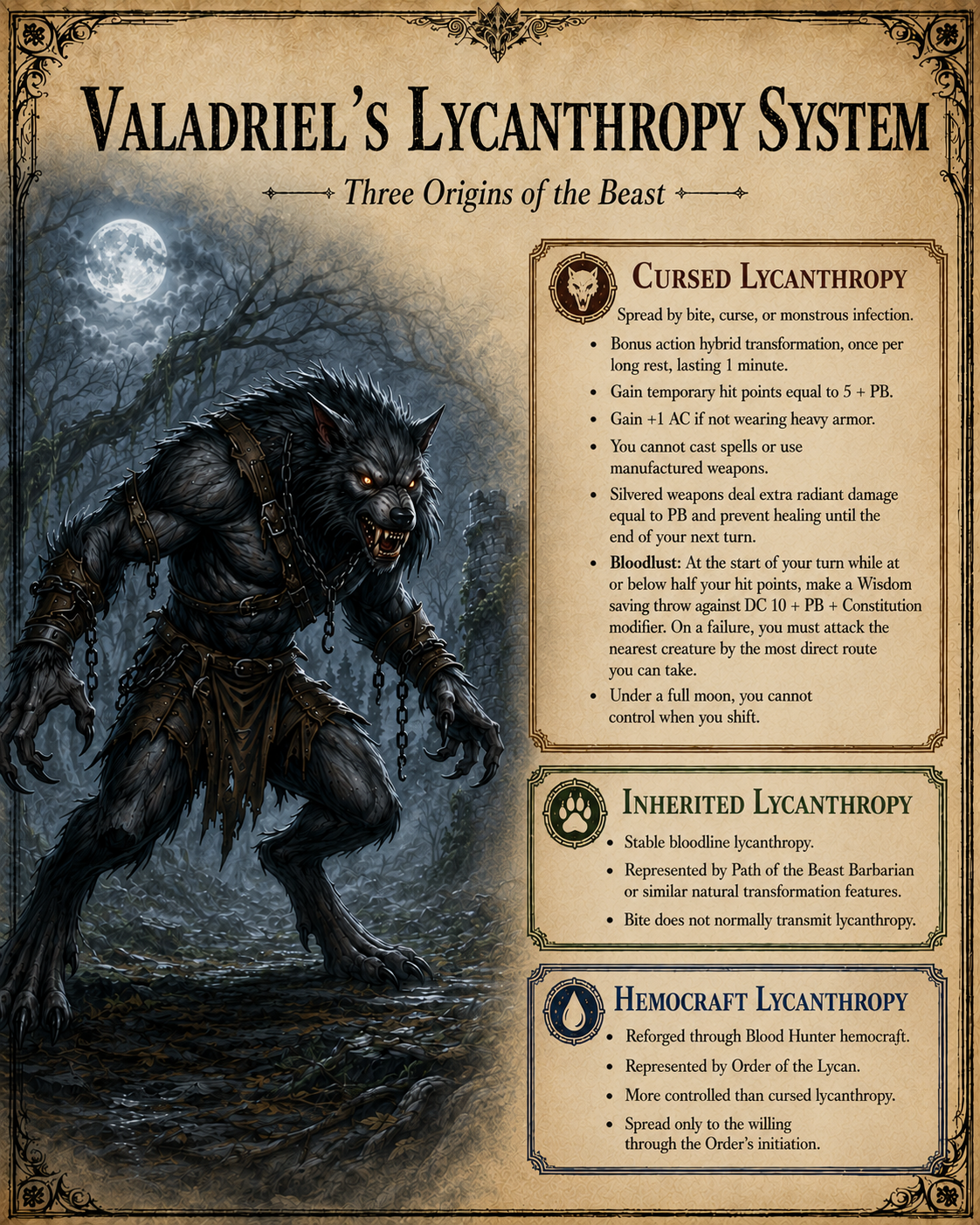
The foundation of the system is built around three different origins of lycanthropy: Cursed, Inherited, and Hemocraft. Cursed Lycanthropy is the dangerous version most people think of first. It spreads through a bite, curse, or monstrous infection, and it gives the character a powerful hybrid transformation with real drawbacks. The character gains temporary hit points, improved durability, natural weapons, and a stronger bestial body, but they also lose access to spellcasting and manufactured weapons while transformed. Silver becomes a serious threat, and Bloodlust creates the risk that the beast may take control when the character is wounded or exposed to the full moon. This version is meant to feel unstable, frightening, and mechanically distinct from simply choosing a class or subclass.
Inherited Lycanthropy is different. It represents a stable bloodline rather than an active curse. This is where options like the Path of the Beast Barbarian, Shifters, or other natural transformation features fit cleanly into the world without needing to spread the curse through every bite.
Hemocraft Lycanthropy is the Blood Hunter version: a curse that has been reforged through ritual, discipline, and blood magic. It is more controlled than cursed lycanthropy and can only be passed willingly through the Order’s initiation. Separating these origins lets DMs and players use lycanthropy in different ways without forcing every werecreature to follow the same rules.
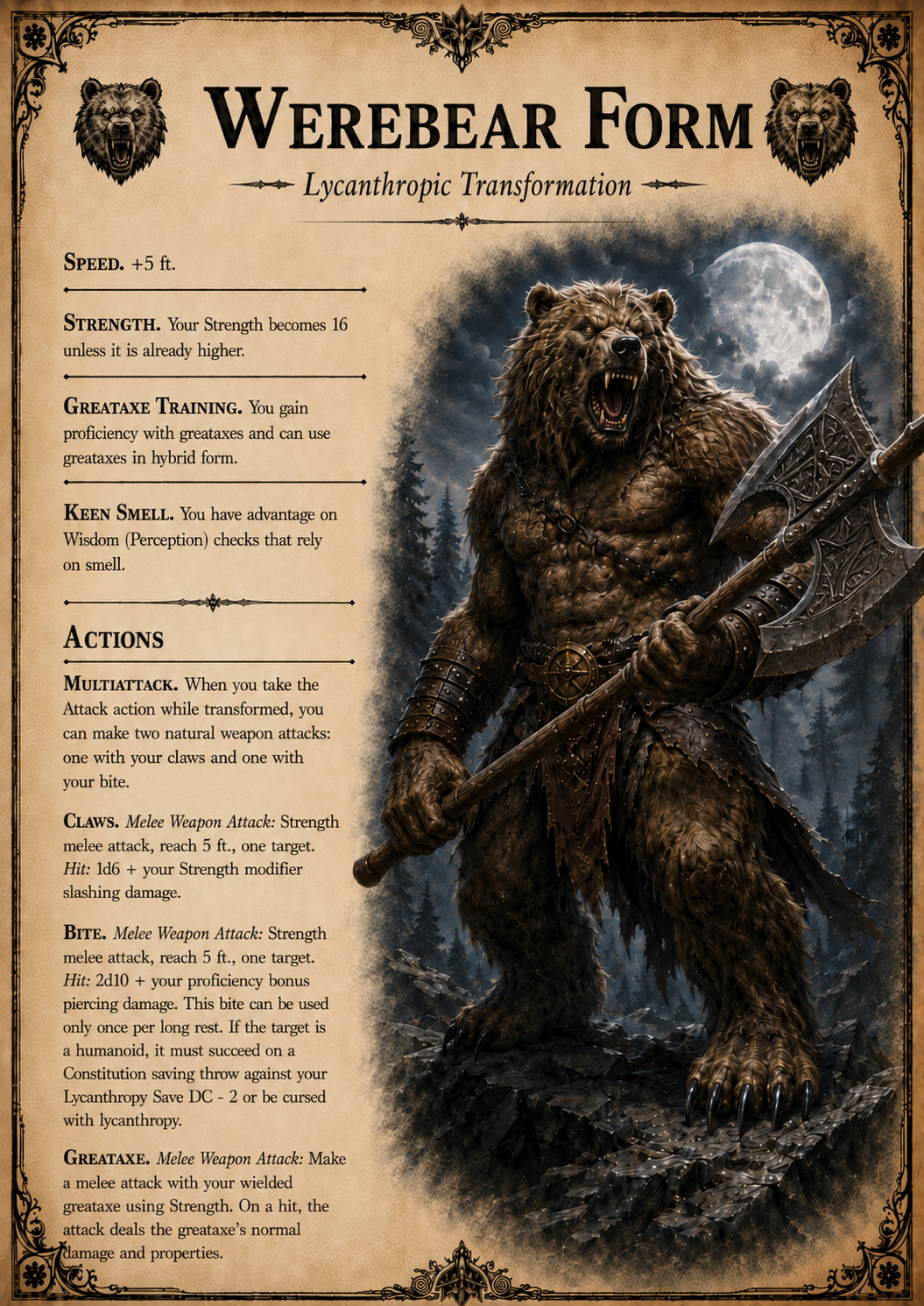
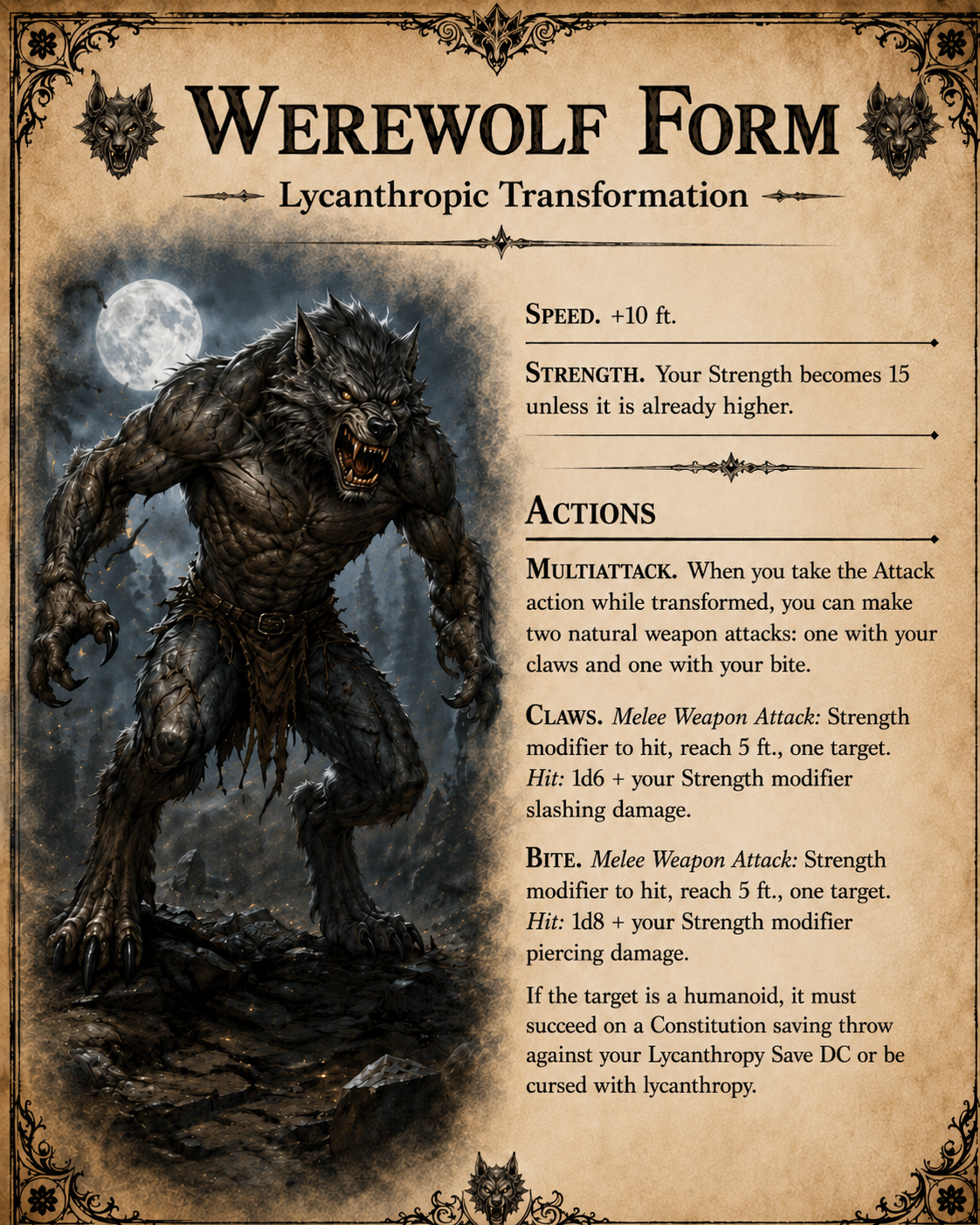
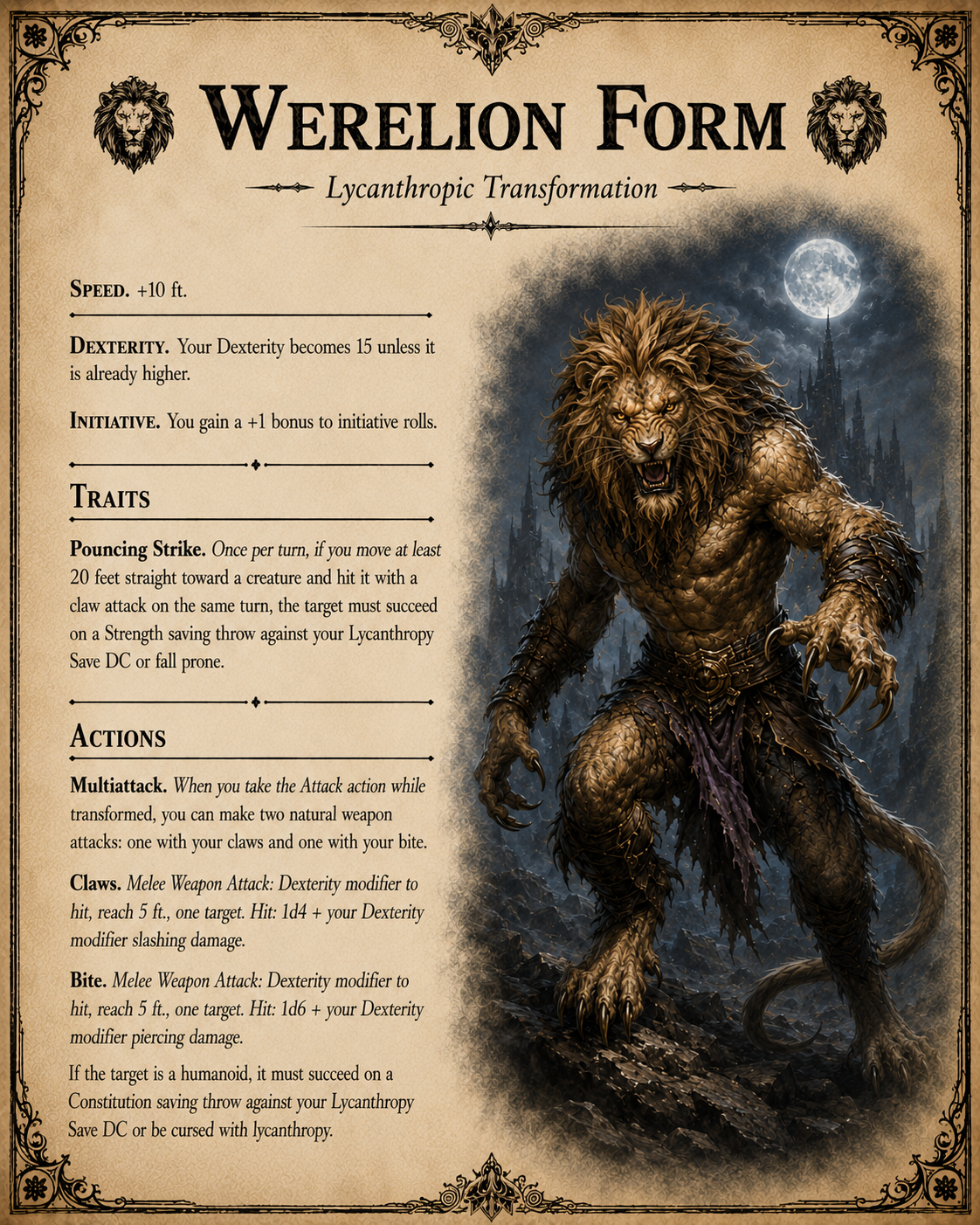
The individual werecreature forms are designed to make each transformation feel different at the table. A werewolf is fast, direct, and brutal, built around claws, bite attacks, and classic predatory aggression. A werebear is heavier and more martial, gaining great strength and the ability to use a greataxe in hybrid form. A werelion leans into speed, Dexterity, initiative, and pouncing attacks, making it feel more like an explosive ambush predator than a traditional bruiser. These are only the starting examples. I plan to continue expanding the system with more werecreatures in the future so different players can explore different versions of the lycanthrope fantasy without every transformation feeling like the same monster with a different skin.
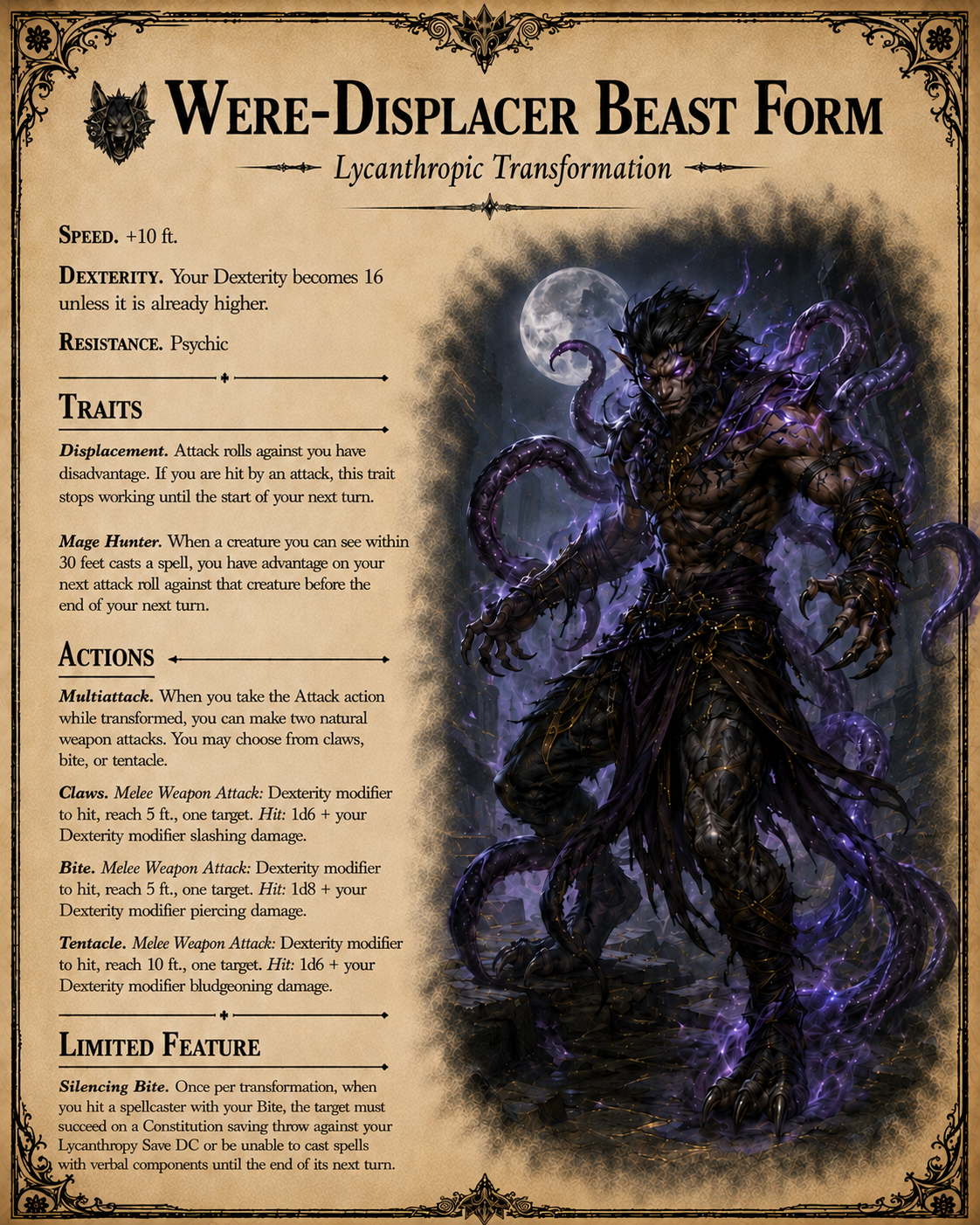
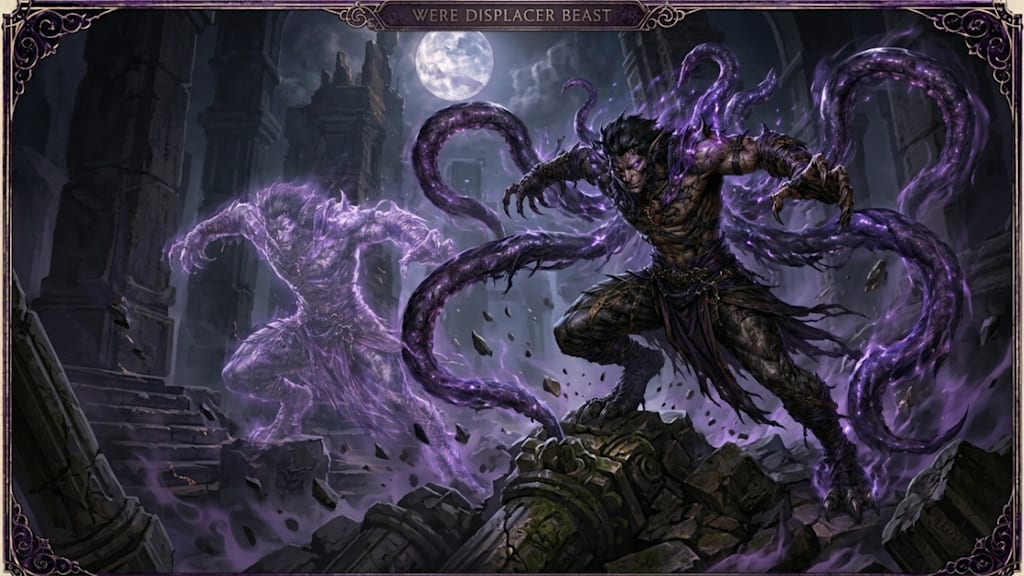
One of the first custom forms I wanted to build was the Were-Displacer Beast. This is pure homebrew, but it fits the larger design goal of the system: lycanthropy should not be limited to wolves, bears, and boars. If a curse can twist a humanoid into a beast, then stranger monsters should be possible too. Displacer beasts have always been my favorite D&D-specific creature, so creating a lycanthropic version felt like the right place to start expanding beyond traditional werecreatures.
Mechanically, the Were-Displacer Beast form is designed to feel fast, evasive, and disruptive rather than simply strong. It increases Dexterity, grants psychic resistance, and brings in the classic displacement effect by making attacks against the character less reliable until they are actually hit. The form also gives the character claws, a bite, and tentacles, allowing it to fight like a warped predator instead of a standard humanoid. Its limited feature, Silencing Bite, adds a mage-hunter angle by giving the transformed character a way to shut down verbal spellcasting for a brief window. I have not tested this one at the table yet, but I am especially looking forward to seeing how it plays because it pushes the system into exactly the kind of monster-fantasy space I wanted lycanthropy to support.
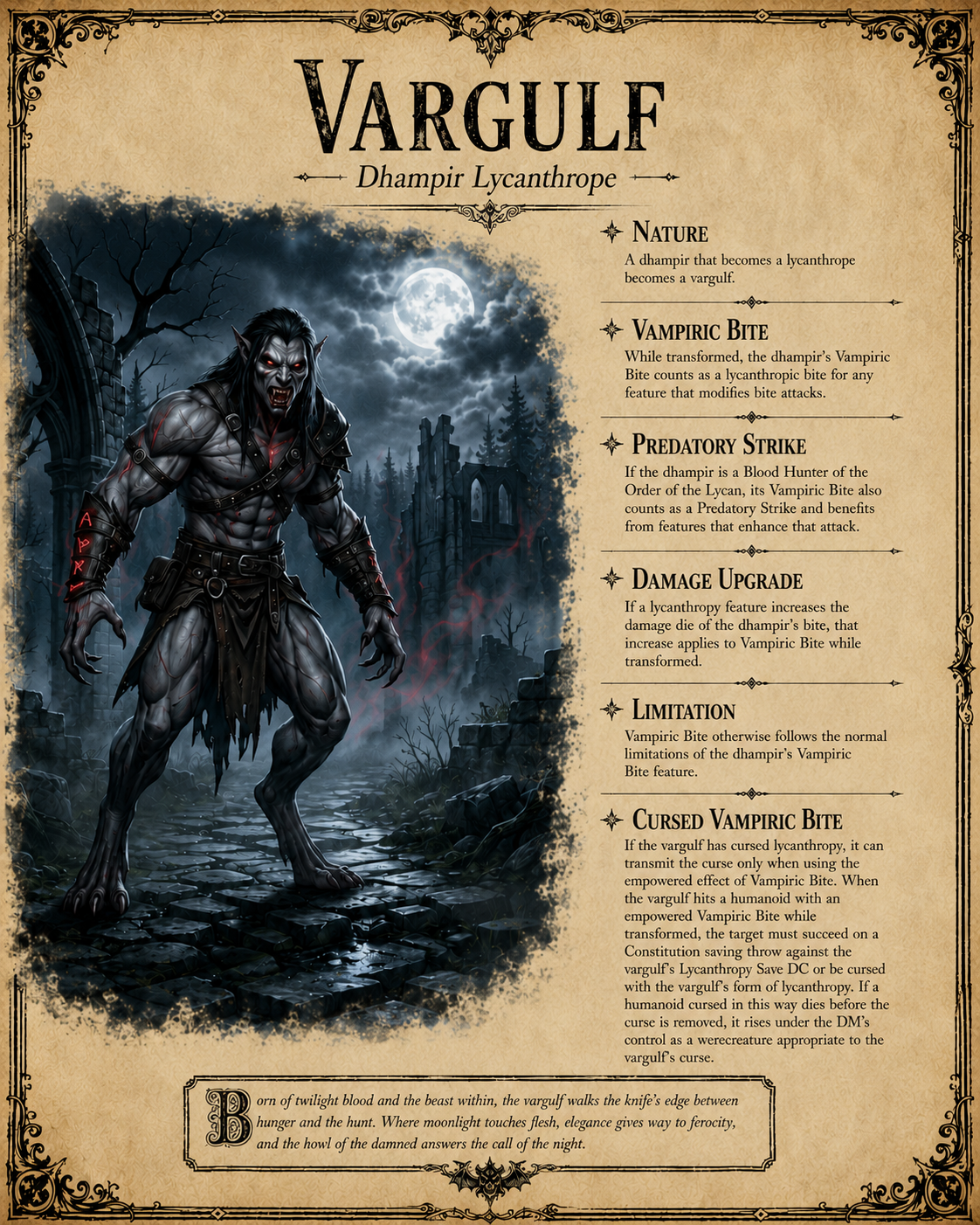
The Vargulf exists because I have always been drawn to the vampire-werewolf hybrid fantasy. A dhampir who becomes a lycanthrope should not feel like a normal werewolf with fangs added as flavor. The curse should change them into something more specific: a predator caught between blood hunger and lunar savagery. In this system, a dhampir lycanthrope becomes a vargulf, and their Vampiric Bite becomes part of their lycanthropic transformation instead of sitting awkwardly beside it. While transformed, the dhampir’s bite counts as a lycanthropic bite for features that modify bite attacks, including damage upgrades and Blood Hunter Order of the Lycan features such as Predatory Strikes.
I also wanted the vargulf to keep the limits of the dhampir’s original Vampiric Bite so it would not become an unlimited curse-delivery tool. The bite still follows the normal limitations of the dhampir feature, but when the vargulf uses the empowered version of Vampiric Bite while transformed, that bite can transmit cursed lycanthropy. This gives the hybrid a distinct mechanical identity without letting it break the game. It is not just a vampire. It is not just a werewolf. Its something more.
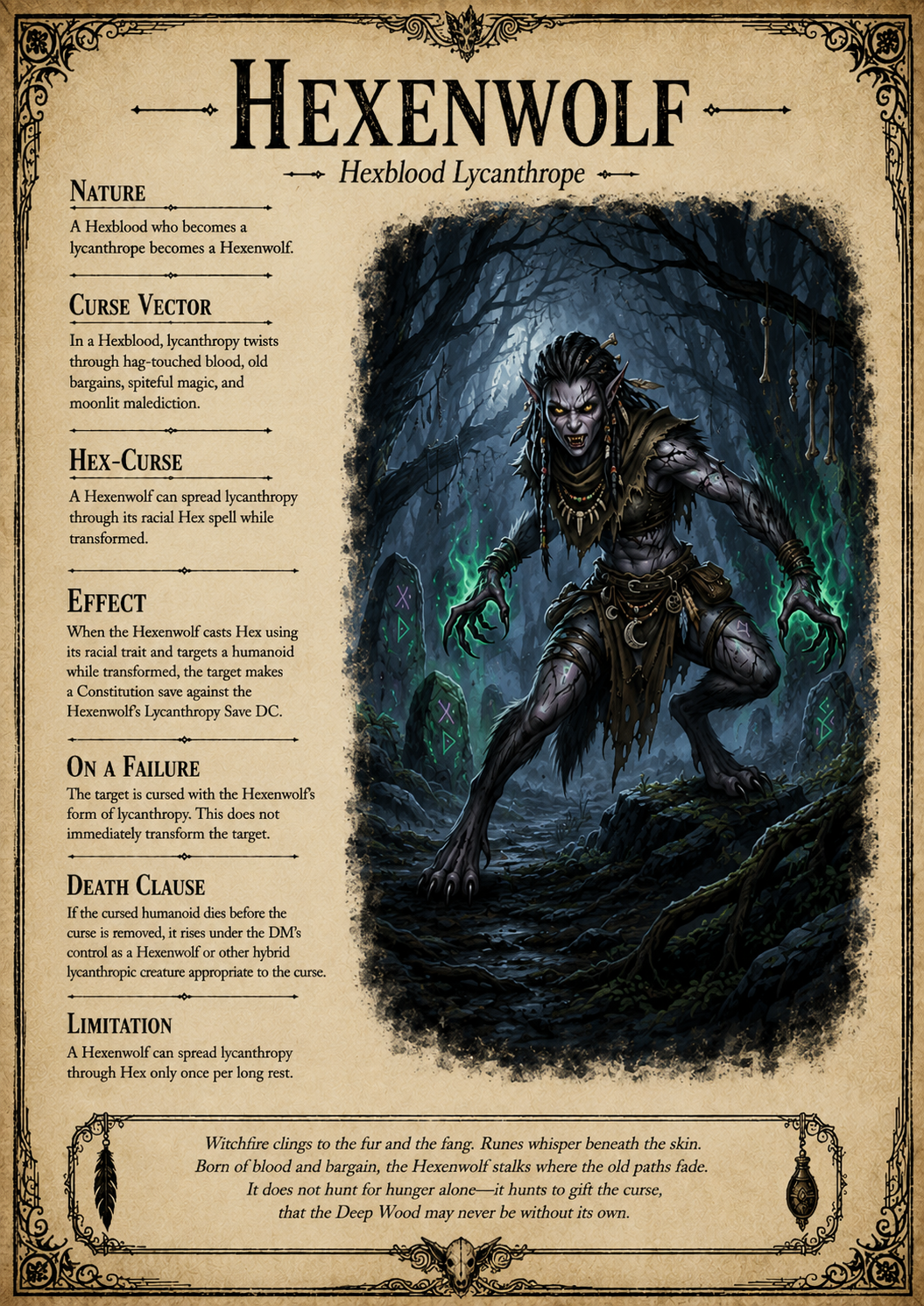
Once I made a vampire-werewolf hybrid with the vargulf, it did not feel right to ignore the rest of the darker lineage fantasies. If a dhampir lycanthrope becomes a kind of were-vampire, then a hexblood lycanthrope needed its own identity as well. That is where the Hexenwolf comes from. It is my version of the werewitch: a lycanthrope shaped by hag-touched blood, old bargains, spiteful magic, and moonlit curses.
The inspiration for this one also came from The Originals. I always wondered what a werewitch could actually do if that fantasy was pushed further. The idea was there, but it never felt like the show fully explored what a hybrid of curse, bloodline, and witchcraft could become. So I built my own version for the table. Instead of spreading lycanthropy only through a bite, the Hexenwolf can twist its racial Hex into a curse vector while transformed, forcing a humanoid target to resist the infection through a Constitution saving throw against the Hexenwolf’s Lycanthropy Save DC. If the infected humanoid dies before the curse is removed, they rise under the DM’s control as a Hexenwolf or another hybrid lycanthropic creature appropriate to the curse. That gives the form a distinct identity from the vargulf and makes it feel like its own monster fantasy rather than a simple werewolf variation.
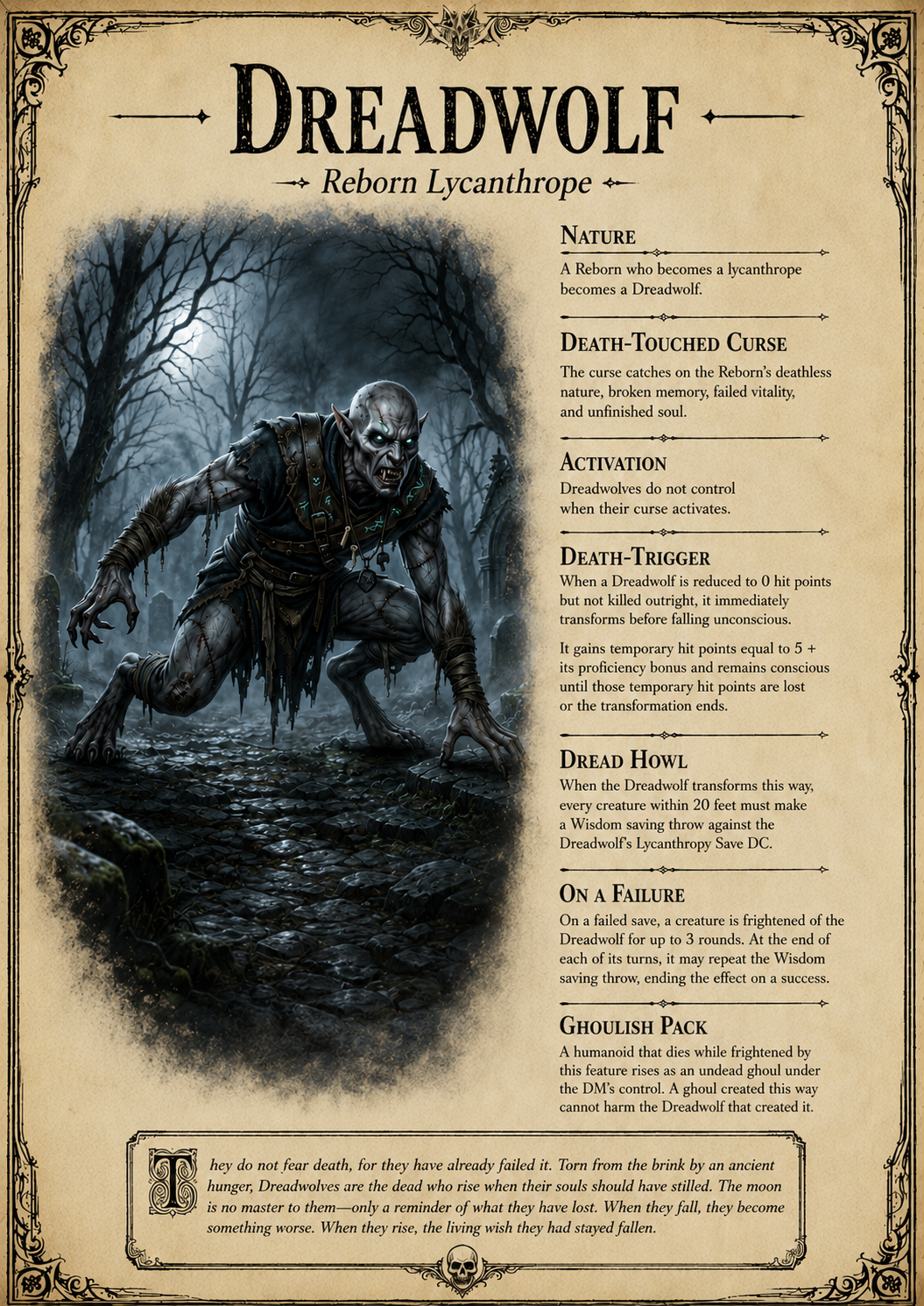
The name Dreadwolf was inspired by Teen Wolf, but this version is much darker than that reference point. In my system, a reborn who becomes a lycanthrope does not simply become another werewolf variant. They become something that should not exist. The curse latches onto the reborn’s deathless nature, broken memory, failed vitality, and unfinished soul, creating an abomination caught between lycanthropy and undeath. A Dreadwolf is not a clean transformation. It is the body refusing to die, the beast refusing to stay buried.
Mechanically, the Dreadwolf is designed to be grim and ridiculous in the best possible way at the table. Reborn characters are already difficult to put down because of their death-saving throw support, and the Dreadwolf pushes that fantasy even further. When reduced to 0 hit points, the Dreadwolf does not simply fall unconscious. It transforms, gains temporary hit points, remains standing, and releases a howl that can frighten nearby creatures. If a humanoid dies while frightened by that effect, it rises as a ghoul under the DM’s control. The result is a player character who can feel like a persistent undead predator that refuses to stay dead. From Valadriel the Mad’s point of view, there is something darkly hilarious about needing to fireball the creature over and over just to make sure it finally stops moving. lol Enjoy!
About the Creator
Juan Alfonso
Former Marine Corps correspondent with newspaper and magazine experience. I own a digital marketing company and write about games, TV, movies, comics, and pop culture. Husband, dad, and cat dad 🖖 #LLAP
Enjoyed the story? Support the Creator.
Subscribe for free to receive all their stories in your feed.
Comments
There are no comments for this story
Be the first to respond and start the conversation.