
Methane fingerprints show Asia's concealed emissions of fossil fuels
Molecules serve as identifiers

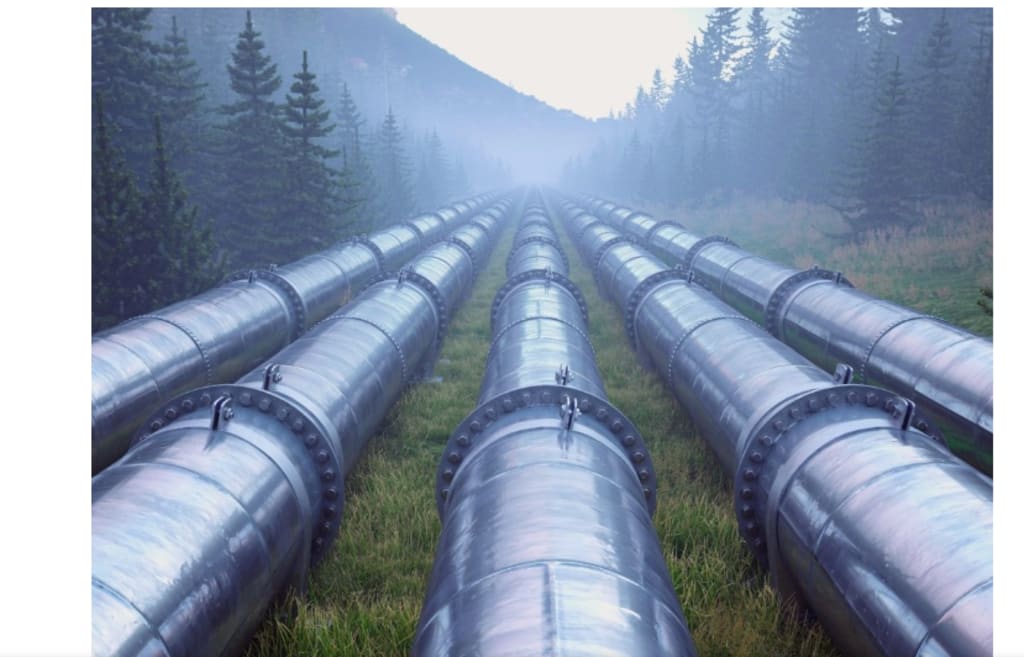
For years, satellites have monitored the buildup of methane in the atmosphere. Every day, ground stations record it. It was assumed that scientists had a fairly precise picture of which areas release how much thanks to both surface monitors and orbital sensors. They didn't.
Instead of only detecting concentrations aloft, a closer examination read the molecular fingerprints baked into methane itself. More than anyone had estimated, the research linked human activity in Asia to the current methane spike.
Molecules serve as identifiers
Methane that has atoms with slightly differing masses is called an isotopologue. Some have carbon atoms that are heavier. Some have additional hydrogen weight. Although they exhibit identical behaviour in the environment, they can be distinguished using specialised sensors. These minute variations function similarly to chemical signatures.
Methane from a rice paddy or wetland has a distinct isotopic signature than methane from a coal mine. As a result, every source may be tracked.
Together, satellites and stations
An multinational team lead by Xueying Yu, a research faculty member at the University at Albany, SUNY (UAlbany), set out to simultaneously analyse the molecular fingerprints of methane from orbit and on Earth.
Methane concentrations were monitored by satellites as they moved around the world. As the gas passed overhead, surface monitoring stations dispersed over several continents detected its isotopic characteristics.
Yu and her associates used a computer model that covered the years 2019 through 2021 to process both streams of data. The model measured the type of methane present as well as its quantity by layering in isotopic data.
This made it possible for researchers to calculate the overall amount of emissions as well as their source. Previous methods were unable to accomplish both simultaneously.
Where the highest emissions were found
Regional variations that were missed by satellites alone were discovered by the isotope-informed study. East Asia's emissions increased by 26 million metric tonnes annually, mostly due to China.
Every year, South Asia—led by India—added seven million metric tonnes. An additional five million came from Central Africa. A substantial shift in the atmospheric entry points of methane.
Based on the isotopic patterns, coal and gas extraction seems to be the most likely cause in China and India; nevertheless, the researchers pointed out that there are still questions about the regional distribution.
Wetlands' function
The story of the Amazon Basin was different. Compared to previous estimations, estimates for the region decreased by five million metric tonnes annually. Methane emissions from natural wetlands seemed to be lower than previously thought.
One of the biggest natural sources of methane on Earth is wetlands. Accurately calculating their numbers aids in separating background rates from emissions induced by humans. Current wetland models need to be improved, as seen by the discrepancy between old estimates and recent data.
Growth is dominated by human sources.
The difference between fossil and natural fuel sources is crucial for climate policy. Human-uncontrollable temperature and precipitation are tracked by methane from wetlands or permafrost. Infrastructure that can be monitored, reduced, or shut down is the source of emissions from coal mines, gas pipelines, and oil operations.
According to Yu, "our findings suggest human activities are playing a larger role in recent methane increases than previously thought, especially fossil fuel emissions in regions like China and India, while emissions from natural wetlands in the Amazon appear lower than expected."
Additionally, the isotopic study showed trends in the timing of emissions. China's seasonal variance was lower than what previous models had indicated. A delayed summer peak was observed in Southeast Asia. Both point to sources of emissions that are not included in the present inventories.
Modern modelling outperforms earlier models.
The atmosphere was represented as a collection of compartments in earlier methane isotope research, which relied on simplistic box models. The way air actually travels, mixes, and transports isotopic traces across continents could not be tracked by such models.
According to Yu, "this method enables us to consistently combine satellite methane data and ground-based isotope measurements across space and time." "Compared to earlier methods, it offers a more constrained and physically realistic picture of methane sources and processes."
The new framework was developed by Yu's team using a model that mimics how the entire atmosphere This made it possible for the researchers to monitor changes in methane and its isotopic variations as air masses move over different regions.
Insufficient data increases uncertainty
This study uses a restricted global network of stations for ground-based isotope measurements. The model's conclusions are more dubious in some areas, especially in the tropics, where coverage is weaker than in others.
Confirming how much regional estimates vary as coverage improves would be made easier by expanding the network. Longer-term patterns could not be fully captured by the data frame, which only includes 2019 through 2021.
Accurate tracking is now feasible.
Methane levels in the atmosphere have reached all-time highs, and estimates indicate that they will grow by an additional 13% by 2030. Where mitigation efforts should concentrate depends on identifying the areas and sources causing that increase.
That accuracy is provided by the isotopologue approach, which separates natural seeps from industrial leaks and coal mines from rice fields. The distinction is crucial for achieving effective reductions in areas like China and India, where fossil fuel facilities are concentrated close to agricultural zones.
This study adds geographic specificity to the growing body of data that connects human activity to a greater portion of the recent methane increase than was previously thought to be caused by natural sources.
Researchers from six different nations participated in the study, and with assistance from UAlbany's Center for Emerging Artificial Intelligence Systems, the team intends to improve the methodology.
About the Creator
Enjoyed the story? Support the Creator.
Subscribe for free to receive all their stories in your feed.
Comments
There are no comments for this story
Be the first to respond and start the conversation.