
Ke Jie Was Untouchable. Then AI Rewrote the Board.
The controversy gets the headlines. The game records from 2015 to 2018 tell a simpler story: for a few years, China had the world’s best Go player, and almost no one could touch him.
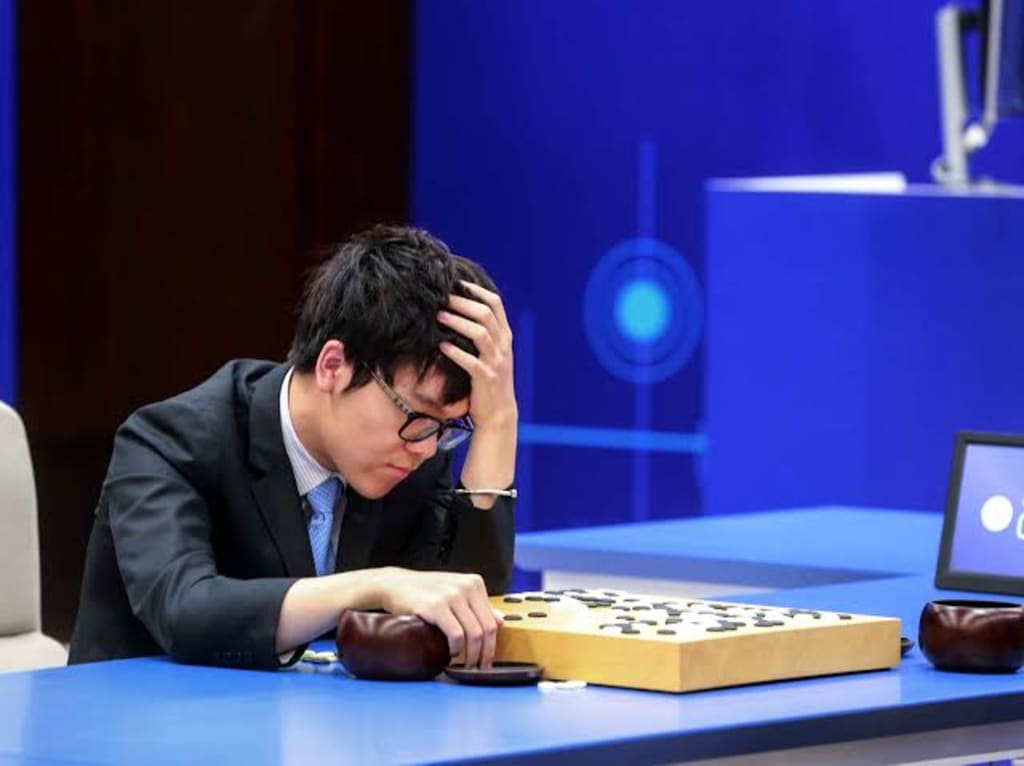
Ke Jie is hard to fit into one sentence. His results and his game records put him at the center of modern Chinese Go. His conduct away from the board has also produced arguments that will not disappear. The easy move is to let the controversy shrink the player. The other easy move is to let the titles excuse the public figure. Neither is needed. Keep the two apart. On the board, in his best years, Ke Jie was the world No. 1. No rival held that position with less dispute. In Chinese Go history, he is not a figure anyone can write around.
The claim needs dates. Ke Jie’s absolute run sits around 2015 to 2018. In 2014 he was rising. The first world title in 2015 turned him from a talented young player into the center of the conversation. After that, the conversation stopped being a debate. He won. He often won in a way that left the opponent without a route back. People said you could take back a move and try again, and you still could not find a winning path. That described the content of those games, not the weakness of his opponents. Japanese players had a word for the game records he produced in those years: beautiful. The beauty was not decoration. The whole board had a clear structure. The tempo held. The winning line did not drag. You could open the kifu and see a complete game, not a pile of tactics.
His technical profile was broad. His local reading was as sharp as anyone’s. He was not Lee Sedol. Lee Sedol’s strength lay in local fights. He could turn a complicated corner into a full-board crisis. Ke Jie’s edge sat in conversion judgment inside large variations. When basic calculation is close, the last gap between top players is judgment. Which fight is worth taking? Which thickness is worth giving up? Which small gain is actually a loss? Ke Jie made those calls faster and more accurately than the players across from him. His opening ideas held up. His endgame did not leak. Chen Yaoye was one of the few players who could stay with him in the second half of a game. “Only Chen Yaoye” is too tight. Park Junghwan’s late-game strength was not small. The safer statement: Ke Jie’s stability and conversion rate in the second half kept most opponents from dragging the game into a real fifty-fifty mud fight.
That is also why he suppressed Lee Sedol. The suppression was not a pure calculation gap. It was judgment, full-board conversion, and late-game steadiness stacked together. Lee Sedol could still create local complexity. Ke Jie decided faster which complexity deserved a response and which could be ignored. The local threat got absorbed into the global position. That is the technical base under the “complete win” pattern of his peak.
The historical analogy needs care. It is tempting to say that before Ke Jie, the last Chinese player who could be called the undisputed world No. 1 was Gu Shiyan in 848, during the reign of Emperor Xuanzong of Tang. The line has force as rhetoric. It does not hold as history. Gu Shiyan was a Tang dynasty player. The “Zhen Shen Tou” story comes from notebooks such as Duyang Zabian, and it carries a strong legendary color. Ancient China had no modern world ranking, no international tournament system, and no professional player circuit. “World No. 1” does not apply. Huang Longshi, Fan Xiping, and Shi Xiangxia were top players of their own eras. A safer sentence: Gu Shiyan is a landmark figure in the ancient history of Chinese Go, but he should not be used as an undisputed world No. 1. Ke Jie’s place does not need that bridge. His own record carries the weight.
AI changed the path. The clean timeline is not “one day Leela became civil software and everything changed.” AlphaGo appeared in 2016. AlphaGo Zero and open-source projects such as Leela Zero pushed the change through 2017. Around 2018, professional players began using AI in training as a normal tool. AI flattened the information gap in the opening and the first half of the game. Ideas that had been private weapons for top players became public study material. Ke Jie’s first-half edge stopped being obvious. He remained top-level, but the dominance dropped. The probability of a “complete win” game fell.
His style moved with the change. The full-board suppression of his peak became rarer. He leaned toward “take territory first, then reduce and invade.” That is a lower-cost winning strategy. Even if he fell behind in the opening, he took enough actual territory. Then he used his local calculation in the middle and late game to complicate the position and force mistakes. In that period he was still a serious contender for world No. 1. The threat level was closer to Lee Sedol’s. Hard to beat, yes. No longer a game that felt hopeless from the content. Ke Jie did not become weak. AI raised the whole professional field. It compressed the gap between top players. It made long-term first-half information dominance much harder.
Then Shin Jinseo and others raised their level inside the AI era and passed him. The passing was gradual. By 2020 to 2021, Shin’s stability and control were already visible. The 23rd Nongshim Cup main-game match, with the whole Go world watching, was the public confirmation. Shin played Ke Jie with a “push straight through” rhythm. The game stripped away the aura around Ke Jie. It also opened the period in which their competitive trajectories moved in opposite directions. The Nongshim game is a symbol, not the only dividing line. The shift had been building.
Where does Ke Jie belong? He is not a flawless legend. He is not a public figure whose arguments erase the board. He is a player who, in a specific window, pushed human Go to a level where top opponents could not find a winning route. He is one of the few Chinese players who held the world No. 1 position with little room for dispute. His controversies can be discussed. His public statements can be criticized. His kifu, his peak dominance, and his place in Chinese Go history do not vanish because of them. Separate the public figure from the player. Then open the game records from 2015 to 2018. The record is clear. That Ke Jie is the one the record has to hold.
About the Creator
Jin
Writer of reamstories
https://reamstories.com/jin
Enjoyed the story? Support the Creator.
Subscribe for free to receive all their stories in your feed. You could also become a paid subscriber, letting them know you appreciate their work.
Comments
There are no comments for this story
Be the first to respond and start the conversation.