
January 15, 2027: The Day NetEase Bets Everything on an Untested Game
With only 142 days between announcement and launch, no public beta, and a genre that already broke another studio — will Infinite Grand be a triumph or a train wreck?
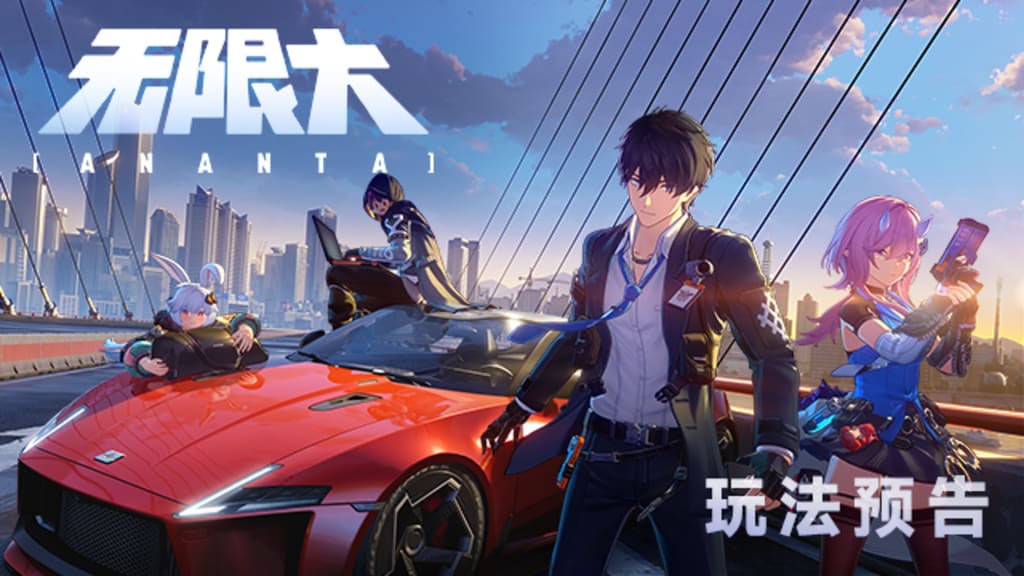
January 15, 2027: NetEase Turns in Its Paper
August 26, 2026. Gamescom. NetEase announces Infinite Grand for a global launch on January 15, 2027.
Put the three dates side by side:
August 26: announcement
January 15: launch
In between: 142 days
What can 142 days do? Enough for one full closed beta, not three. Enough to fix a batch of known bugs, not enough to uncover unknown ones. Enough to polish a few modules, not enough to rebuild any.
Infinite Grand's test record: one small‑scale closed beta in January 2026. At the time, the official line was: "No plans for a public external test."
From January to August: tested, but not publicly. From August to January: announced, launching soon.
Test → feedback → iterate → test again. That loop got flattened into a straight line.
This isn't scheduling. This is gambling.
The last ones who gambled this way — two cards worth turning over.
Card one: Honor of Kings: World.
Launch day. Players find that cutscenes can't be skipped and there's no mini‑map. Two basic issues blow up the game's reputation. The developer posts a long apology. The headline contains four words: "self‑righteous."
An apology fixes the attitude. It doesn't fix the root problem: some pitfalls only get discovered after a large crowd stamps through them. Skip that "stomping" phase, and you leave all those discoveries to the entire player base on launch day.
Card two: Arknights: Endfield.
Different path: testing was done, but the issues exposed in testing weren't fully fixed before launch. On day 14, the developer pushes a hotfix notice — a free six‑star operator selector for everyone.
Players joke about "friend fees." Laugh aside, the signal is clear: if nothing went wrong, you wouldn't need compensation of that size.
Both cards yield the same result: insufficient testing shifts the cost to launch players. Players will never pay for the privilege of bug‑hunting for you.
So "Will Infinite Grand be the next Honor of Kings: World?" — the question isn't "Is there enough time?"
It's something else.
Infinite Grand holds a card neither of the others had: all characters free, no gacha.
That's its strongest ace. But the strength of an ace depends on the quality of the whole deck. If the game isn't fun, "free" means nothing. If the urban gameplay is a chore, unlocking all characters just makes players finish faster and leave sooner.
The second worry follows.
Nornium has been walking this road for months. Here's the structure:
Urban gameplay = mini‑games (racing, volleyball, street interactions)
Mini‑games yield "Fangs" (core currency)
Fangs buy cosmetics and affinity items
Affinity unlocks character stories
A closed loop. But how the loop runs decides its fate.
Players have to max out their daily Fangs cap, repeating those mini‑games over and over. Day one: fresh. Day two: okay. Day three: repetition sets in. One week later: daily grind.
More critically: Nornium has barely updated those urban gameplay elements from 1.0 onward. The "new content" that came later — reskinned racing, reskinned volleyball — is no different from the event mini‑games in other titles. Except other games let you clear an event mini‑game once, collect your reward, and move on. Nornium makes you grind it daily.
Anything tied to a "daily KPI" turns from "gameplay" into "burden."
The industry leaders offer UGC, auto‑chess, extraction shooters — deep, repeatable, different every round. Nornium's answer: work like a beast of burden, earn money, buy gifts for characters, then watch those characters get slapped in their affinity cutscenes.
Doesn't retain players.
Infinite Grand's new PV shows urban content that looks structurally similar to Nornium — a city stuffed with small interactions.
The difference: Infinite Grand has shinier visuals, more movement options (wingsuits, yachts, helicopters, grappling hooks), and a larger city scale. That's skin.
No matter how good the skin looks, if what's underneath is the same — daily mini‑game grind → currency → affinity items → watch characters get slapped — the outcome won't differ.
Of course, after laying out the risks, we have to admit Infinite Grand still holds one unrevealed card.
Multiplayer urban social. Up to 30 players freely exploring, interacting, and doing cooperative tasks in the same city.
If this path works, the logic flips:
Racing isn't a solo time‑trial — it's a competition between friends
Street corners aren't NPCs waiting to talk — they're places where players meet, greet, and team up
Quests aren't "go to that glowing spot" — they're "let's do something together"
No one has done this. Among domestic anime‑style games, none has truly nailed "multiplayer urban social."
But "no one has done it" also means: there's no successful template to copy.
Multiplayer sync, collision detection, cooperative quest logic, the right balance for social systems — every item is resource‑heavy, tech‑heavy, time‑heavy. Infinite Grand has only 142 days.
Back to the fundamental question: how do we judge whether it will work?
Don't look at the announcements. Don't look at the PV. Don't look at "all characters free."
Look at one action: does it dare to run a truly large‑scale public test before launch?
If yes, it has confidence in its completion level and is willing to listen to players in this final stretch.
If no, then it isn't even sure what the launch‑day build will look like.
"Dare or not" isn't an attitude problem — it's a judgment problem. Its judgment of itself decides which path it takes.
Our judgment of it depends on only one thing:
January 15, 2027. Open the game. The first ten minutes of feel. The design of the first quest. The smoothness of the first free‑roam through the city.
These small things that say nothing — they'll tell us everything.
One last line. Not a summary. A reminder.
All the worry and anticipation aren't worth chewing over for 142 days. The only thing worth watching: when that day comes, what does it deliver?
When that day comes, we'll see.
About the Creator
Jin
Writer of reamstories
https://reamstories.com/jin
Enjoyed the story? Support the Creator.
Subscribe for free to receive all their stories in your feed. You could also become a paid subscriber, letting them know you appreciate their work.
Comments
There are no comments for this story
Be the first to respond and start the conversation.