
How I Build Recruitable NPCs for Tabletop Campaigns
A practical guide to creating useful crew members, memorable allies, and story-driven NPCs without letting them take over the campaign.

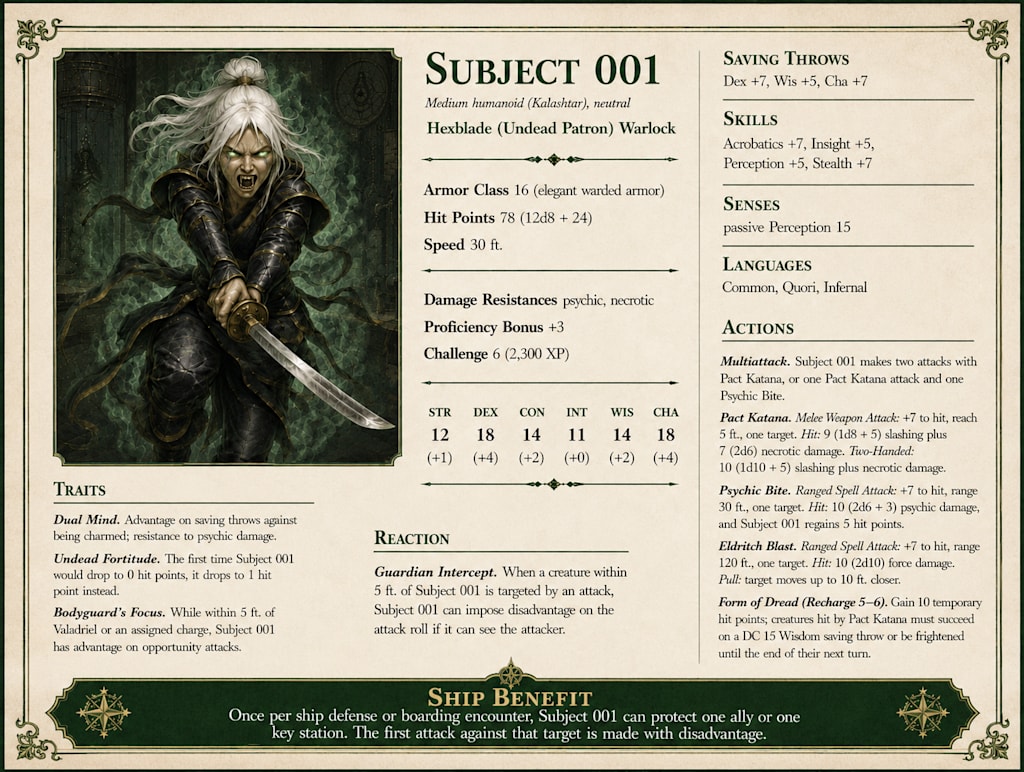
My current D&D campaign is built around a ship called The Astral Wake.
The campaign has a dark fantasy, astral-adventure structure. The party is not just walking from town to town waiting for the next quest. They have a ship, a crew, a mobile base, and a reason to keep moving.
That ship is the anchor. It gives the players a home without locking the story to one location. It gives them responsibility without turning the campaign into paperwork. It also gives me a practical reason to introduce recruitable NPCs who matter without letting them take over the game.
That last part is important.
Recruitable NPCs can become a problem fast. If they are too weak, players forget about them. If they are too strong, they compete with the party. If they follow the group everywhere, the table gets crowded.
So I use The Astral Wake to solve that problem.
A recruitable NPC does not have to become a full-time party member. They can become the ship’s cook, scout, engineer, quartermaster, navigator, defender, informant, arcane specialist, or gunner. They can matter to the campaign without standing in every fight.
That is the basic rule I follow:
Recruitable NPCs should support the party, not replace the party.
Give Them a Reason to Exist
I do not start by asking, “What can this NPC do for the players?”
I start with:
Why does this person exist in the world?
A good recruitable NPC should feel like they had a life before the party met them. They need a problem, a history, a skill, a debt, a fear, or a reason to leave where they are.
Maybe the party saves them. Maybe they spare them. Maybe they make a bargain. Maybe they offer the NPC something no one else can. The reason does not need to be complicated. It just needs to feel believable.
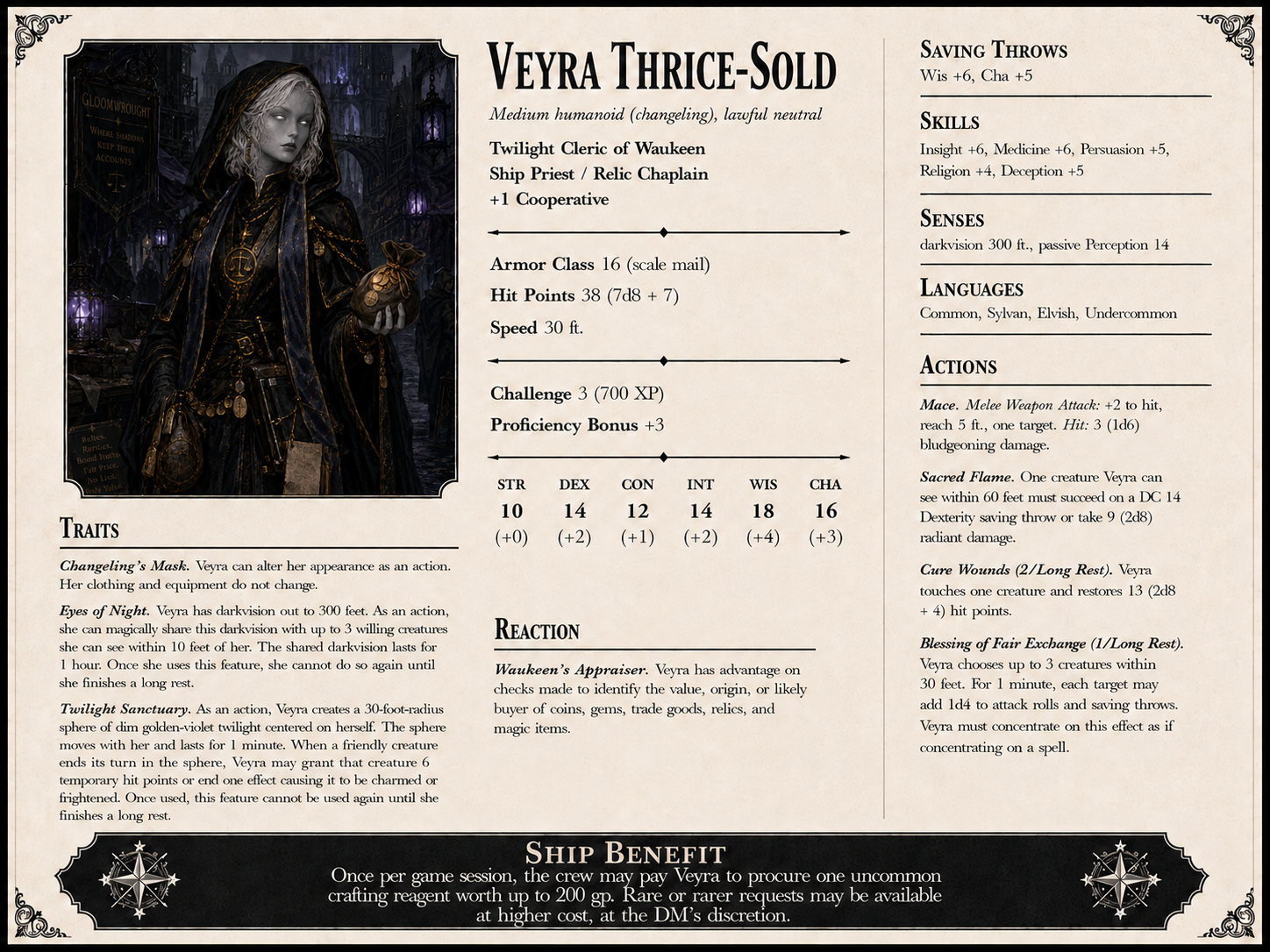
The point is simple: the NPC should not feel like a reward token. They should feel like a person whose path crossed the party’s.
Give Them a Job on the Ship
Every recruit needs a role aboard The Astral Wake.
That role keeps the NPC useful even when they are not traveling with the party. It also keeps the campaign organized.
A recruit might:
Cook for the crew
Repair damage
Gather rumors
Defend the ship
Help navigate
Maintain supplies
Watch prisoners
Identify strange magic
Provide one useful contact in port
Assist during ship combat
This makes recruitment feel valuable without turning the game into a second party of DM-controlled characters.
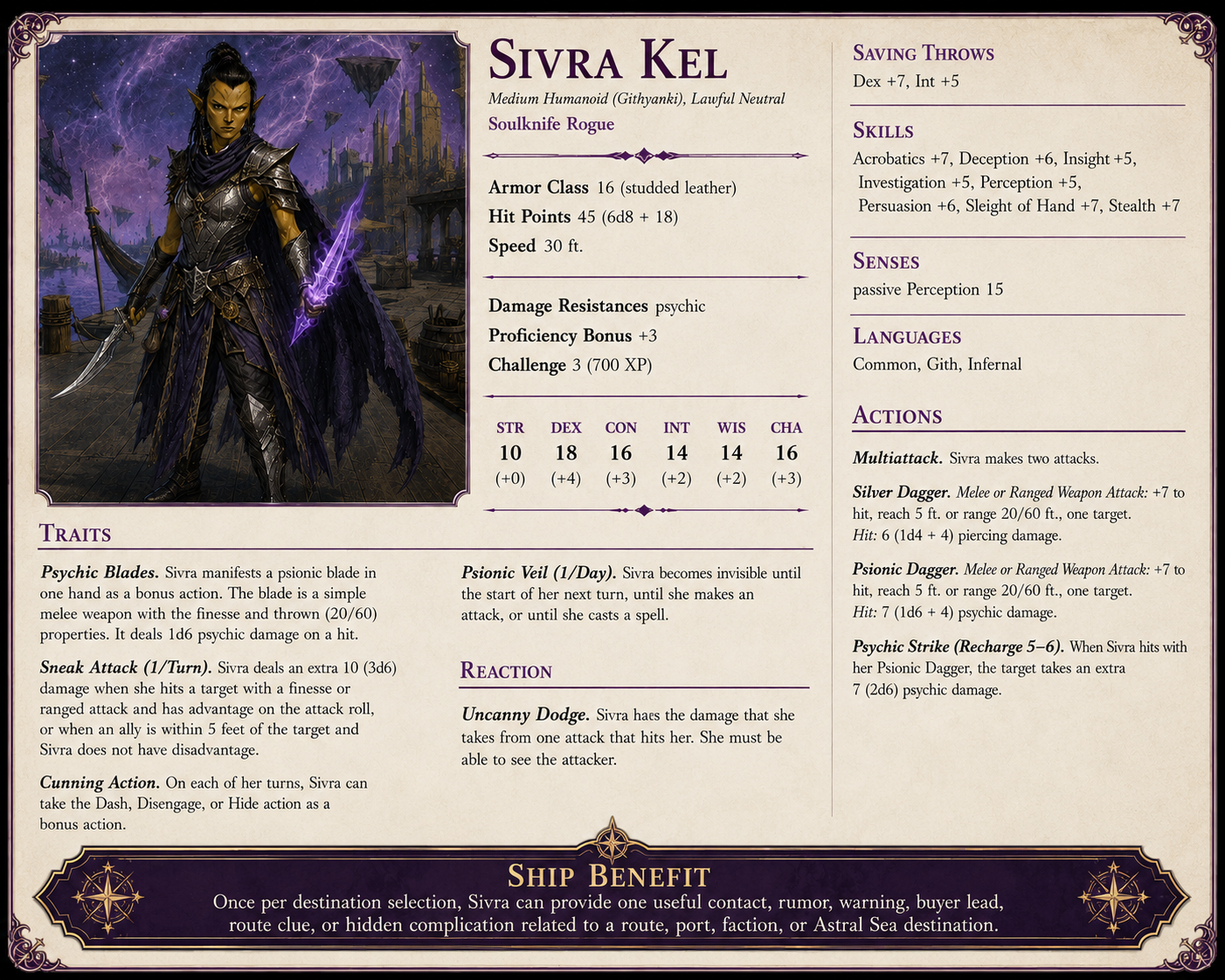
The ship gives every recruit a reason to stay in the story.
Keep the Stat Block Simple
I do not build recruitable NPCs like full player characters.
That is too much work and usually creates balance problems. A full PC-style NPC has too many features, too many choices, and too many chances to steal attention from the actual players.
Instead, I build them like simplified creature stat blocks.
Each recruit needs:
A clear combat role
One or two signature abilities
A few useful skills
A ship benefit
A limitation
A loyalty note
That is enough.
If an NPC is inspired by a monk, they do not need every monk feature. If they are inspired by a druid, they do not need a full spell list. They just need enough mechanics to feel right at the table.
Make Recruitment a Choice
Recruitment should not feel automatic.
The party should have to do something meaningful. They might need to help the NPC, defeat them, spare them, earn their respect, solve their problem, or accept the consequences of bringing them aboard.
That makes the crew feel like a record of the party’s choices.
A recruit might join because:
The party saved their life
The party kept a promise
The party showed strength
The party showed mercy
The party gave them a way out
The party helped their people
The party made a dangerous bargain
Not every NPC should join permanently. Some may refuse. Some may leave. Some may become unavailable if the party ignores them. That makes recruitment feel earned.
Give Every Recruit a Limit
A useful NPC also needs a limit.
That limit keeps them from solving too many problems for the party.
Maybe they only help during ship defense. Maybe they refuse certain actions. Maybe they will not leave the ship. Maybe they require rare supplies. Maybe their past creates danger. Maybe their loyalty has to be earned.
Limits are not punishments. They make the NPC feel real.
The rew should expand the party’s options, not replace the party’s decisions.
Tie Them to the Campaign Theme
The best recruitable NPCs reflect the campaign itself.
In The Astral Wake campaign, the major themes include dark bargains, strange magic, bloodlines, survival, loyalty, and whether dangerous power can be controlled.
So the crew should reflect those ideas.
Some recruits may be victims of dark magic. Some may be products of it. Some may have chosen it. Some may be trying to escape it.
That makes the ship feel like more than transportation.
It becomes a home for dangerous second chances.
Final Thoughts
Recruitable NPCs work best when they are useful, limited, and tied to the story.
They should not be full player characters. They should not solve every problem. They should not follow the party everywhere unless the story calls for it.
For my campaign, The Astral Wake makes the whole system easier. The ship gives every recruit a job, a reason to stay, and a way to matter between adventures.
That is the main lesson:
A recruitable NPC does not need to be in every fight to matter.
Sometimes they matter because they keep the ship running.
Sometimes they matter because they know something useful.
Sometimes they matter because they remind the players what kind of crew they are building.
The party is not just collecting allies.
They are building a home in the middle of a dangerous world.
About the Creator
Juan Alfonso
Former Marine Corps correspondent with newspaper and magazine experience. I own a digital marketing company and write about games, TV, movies, comics, and pop culture. Husband, dad, and cat dad 🖖 #LLAP
Enjoyed the story? Support the Creator.
Subscribe for free to receive all their stories in your feed.
Comments
There are no comments for this story
Be the first to respond and start the conversation.