
Faker’s Worlds Secret Might Be an Empty Calendar
Nuguri’s theory about T1’s commercial schedule says more about modern esports than about one player.
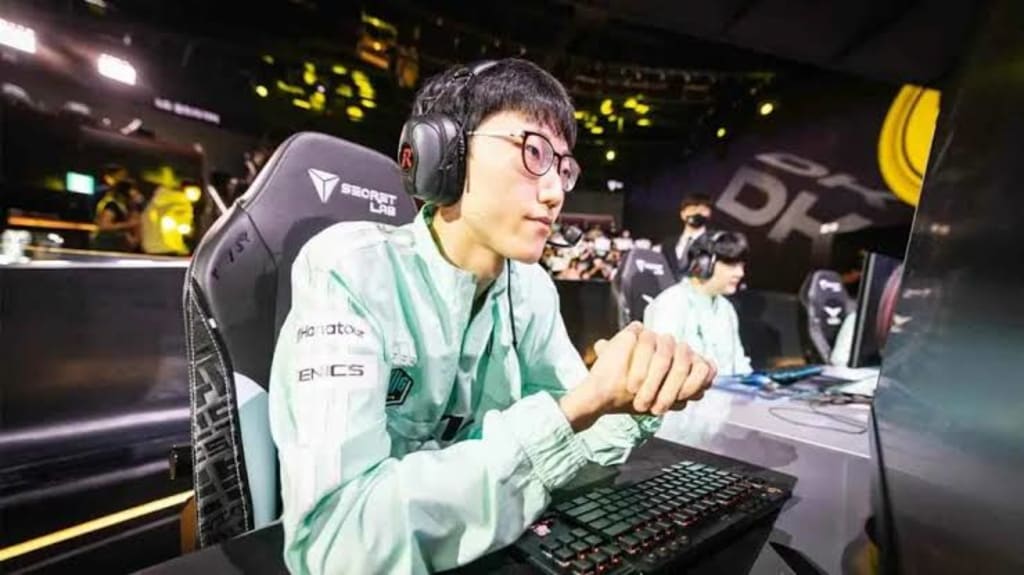
Nuguri said something on the LCK secondary stream that sounded casual and then stuck. He guessed that Faker looks stronger at Worlds because in Korea he often has no time to train. Shows, commercials, sponsor shoots, fan events. The calendar fills. Training gets squeezed. At Worlds, those obligations shrink. He can play and prepare.
That comment works because it names a problem every top esports star faces. Once a player’s commercial value gets large enough, his training time stops belonging only to him.
The schedule is not a joke
For Faker, commercial work is not an occasional ad shoot. T1 is one of the most commercially active clubs in the LCK. The brand work around Faker includes show recordings, sponsor shoots, fan meetings, and public events. The density is higher than for an average player.
T1’s “T1 STARS” campaign this year is a clean example. It was a limited marketing concept, not a real music debut, but the calendar looked like a release schedule: announcement, trailer, tracklist, concept photos, documentary, single, interview, pop-up guide, live stage, offline store. Those events bring exposure and money. They also take time, energy, and attention.
The cost is not only fewer practice hours. A shoot takes prep, travel, makeup, waiting, public performance, and recovery. A player can still hit a minimum practice block and arrive at review with less left for extra solo queue, deep VOD work, and rest. The margin disappears first.
Korean media reported that T1 players spent 102 days in 2025 on sponsor shoots and commercial events. That is about one third of the official schedule. T1 lists 16 core sponsors, nearly twice as many as GEN. Faker’s offseason commercial travel has stretched across countries, from brand shoots to fan events. At that density, holding Worlds-level focus through the regular season is hard.
Nuguri is not accusing Faker of slacking. He is describing split effort.
Worlds removes noise
Worlds changes the environment. During the regular season, a player’s day is cut into matches, training, streaming, commercial work, and media. At Worlds, especially in knockout stages, teams cut outside work and push attention toward the tournament. Faker and T1 get a cleaner week.
Doran’s MSI interview raised a similar question. T1 was struggling. Doran said the team was overloaded. He did not give details, but he said the team had discussed causes and fixes. People guessed at schedule pressure. The guess was never proven. It still fits Nuguri’s claim. Outside Worlds, T1 carries more off-stage weight than most teams.
At Worlds, T1 does not arrange heavy commercial work. Players move between practice, review, solo queue, and matches. Faker gets more room to study patches, opponents, and draft. For a veteran with more than a decade of professional experience, that room may not change his mechanics. It changes the depth of his preparation.
Nuguri said Faker looks like a different player. The better description is simpler. He gets to spend his energy on the part of the job that decides matches.
The calendar is only one piece
If you stop at “fewer commercials,” you miss T1’s team-level advantages.
T1 learns slowly and well. The team is not the fastest to solve a patch. It is good at studying opponents, clarifying ideas, and building targeted tactics over a long event. Worlds gives it a month. The regular season does not. A compact schedule and frequent patch changes leave less room for that kind of work. The Worlds format suits T1.
The coaching staff also matters. At Worlds, everyone can see which champions sit at the top of the patch. The edge comes from getting players to master those picks, finding counter-picks, and winning draft. Global BP makes champion pools and coaching depth more important. T1’s staff has a strong record of evolving series by series and bringing out unexpected picks. Commercial relief does not create that ability. The coaching system does.
The championship mentality is the third piece. T1’s younger players changed after winning. In the released voice comms from the deciding game against AL, Oner was about to pick Mundo without having practiced it. The coach and Faker walked him through the skills. The pick denied the champion and made the bot-lane draft easier. Oner was unsure. The team talked him into it.
That is not the sound of a life-or-death Worlds game. It sounds like a ranked game with friends. Training hours do not create that calm. It affects how well practice shows up under pressure. Players with a title behind them stay steadier in critical games.
What actually changes
Nuguri’s observation helps because it adds the missing piece.
The reduced commercial load gives Faker and T1 a closer-to-ideal training environment. T1’s learning-oriented system, the coaching staff’s patch work, and the players’ big-match calm decide how much they get from that environment.
The first part explains why Faker and T1 can look less sharp in the regular season. The second explains why they can look so strong at Worlds. Put them together and the “different player” story becomes less mysterious.
Faker’s Worlds form may not come from hidden tricks. It may come from attention that finally stops being split. T1 can use that attention because the team is built for long events, deep study, and slow improvement.
Nuguri’s comment stays with people because it points at a wider problem. Top esports clubs sell attention. Players pay for that attention with time and energy. The bill shows up on stage.
About the Creator
Jin
Writer of reamstories
https://reamstories.com/jin
Enjoyed the story? Support the Creator.
Subscribe for free to receive all their stories in your feed. You could also become a paid subscriber, letting them know you appreciate their work.
Comments
There are no comments for this story
Be the first to respond and start the conversation.