
Expanding Lycanthropy in Dungeons & Dragons: The Lycanthropy Feat System
Part two of my homebrew lycanthropy system, built to make werecreatures feel customizable, dangerous, and playable beyond a single curse or subclass.

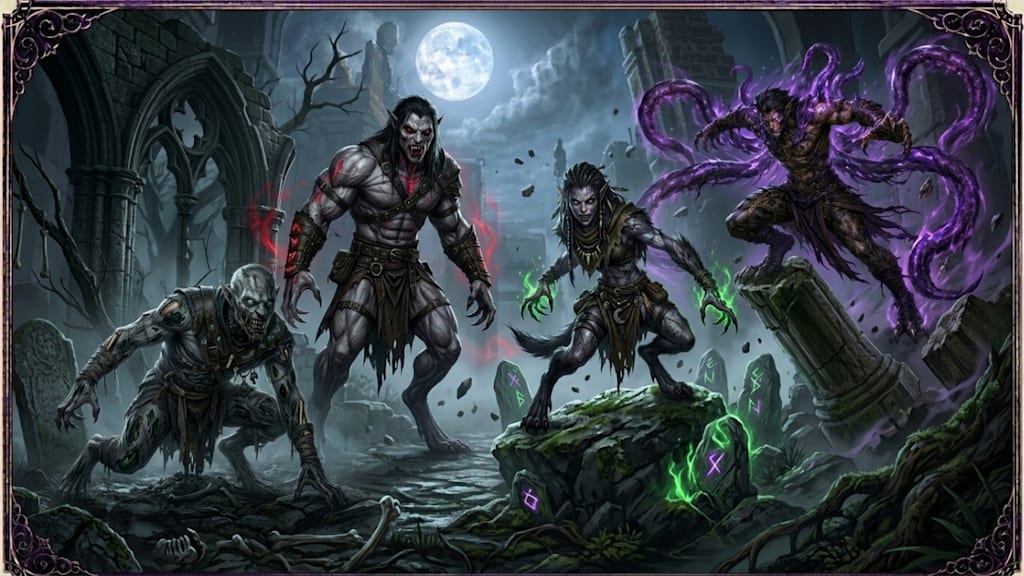
After building the core of my lycanthropy system, I knew the next step had to be customization. A curse is interesting when it first appears, but if a player is going to live with it, fight with it, build around it, and survive because of it, the system needs room to grow. That is where the Lycanthropy Feat System comes in.
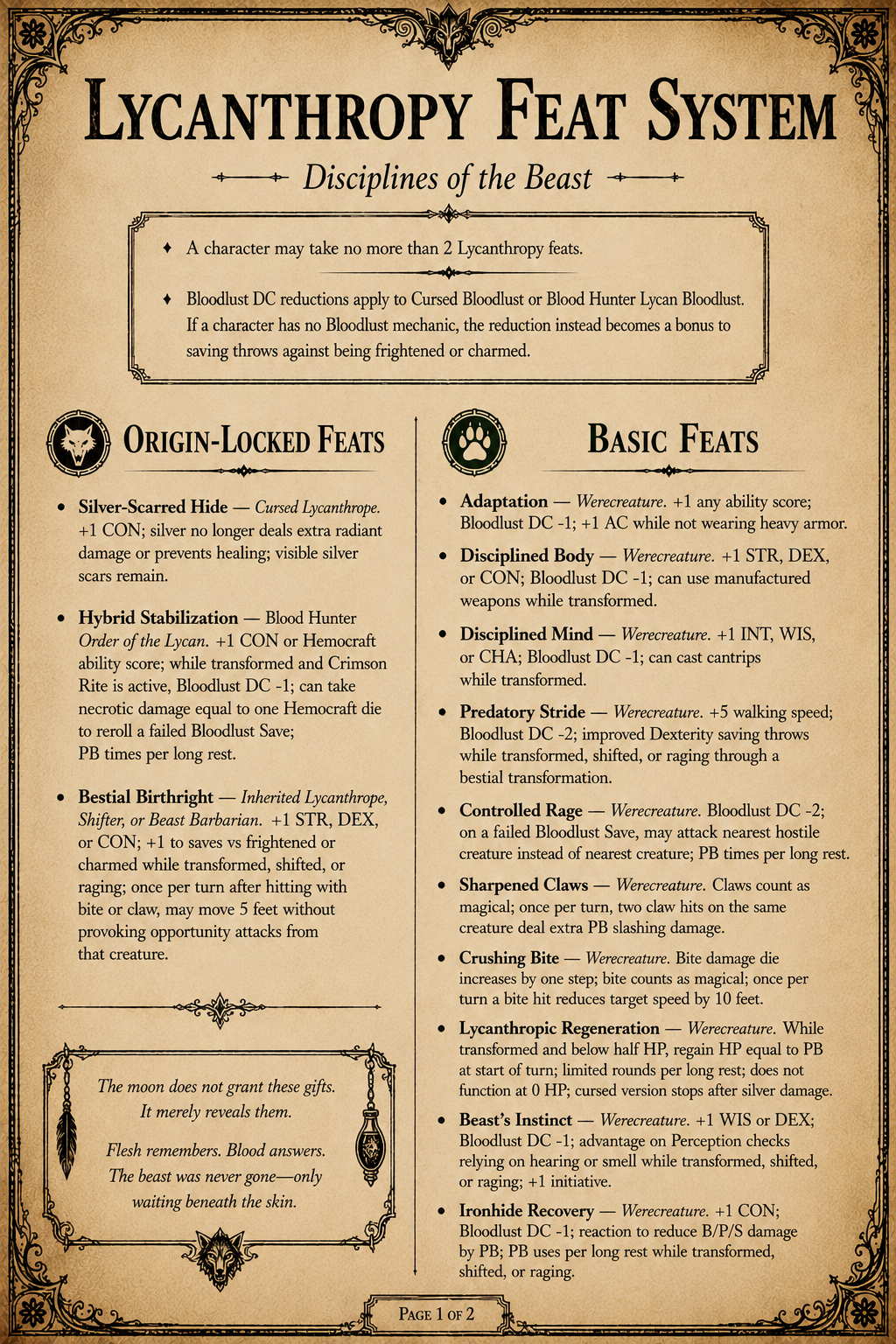
The goal of these feats is not to turn every character into the same optimized monster. It is to let different werecreatures develop in different directions. One character might learn to control the beast through discipline. Another might lean into regeneration, claws, or speed. A Blood Hunter Lycan might stabilize the curse through hemocraft, while a cursed lycanthrope might become scarred by silver and learn to survive it. A Vargulf, Hexenwolf, or Dreadwolf can grow into a much stranger hybrid threat. The feats are designed to make lycanthropy feel like a living part of the character rather than a static condition written on the sheet.
To keep the system from getting out of hand, a character can take no more than two Lycanthropy feats. That limit matters. These are not meant to replace normal class progression or let one player stack every possible monster trait. They are meant to create meaningful choices. If a player only gets two, then choosing between better control, more durability, stronger natural weapons, spellcasting flexibility, or a terrifying capstone becomes part of the character’s story.
The system also treats Bloodlust as a major balancing point. Many Lycanthropy feats reduce Bloodlust DC, but that reduction applies differently depending on the character. For cursed lycanthropes, it lowers the Cursed Bloodlust DC. For Blood Hunter Lycans, it lowers the Order of the Lycan Bloodlust save. If the character has no Bloodlust mechanic, such as an inherited lycanthrope, Shifter, or Path of the Beast Barbarian, the reduction instead becomes a bonus to saving throws against being frightened or charmed. That keeps the feats useful across different versions of the werecreature fantasy without forcing every character to use the exact same curse mechanics.
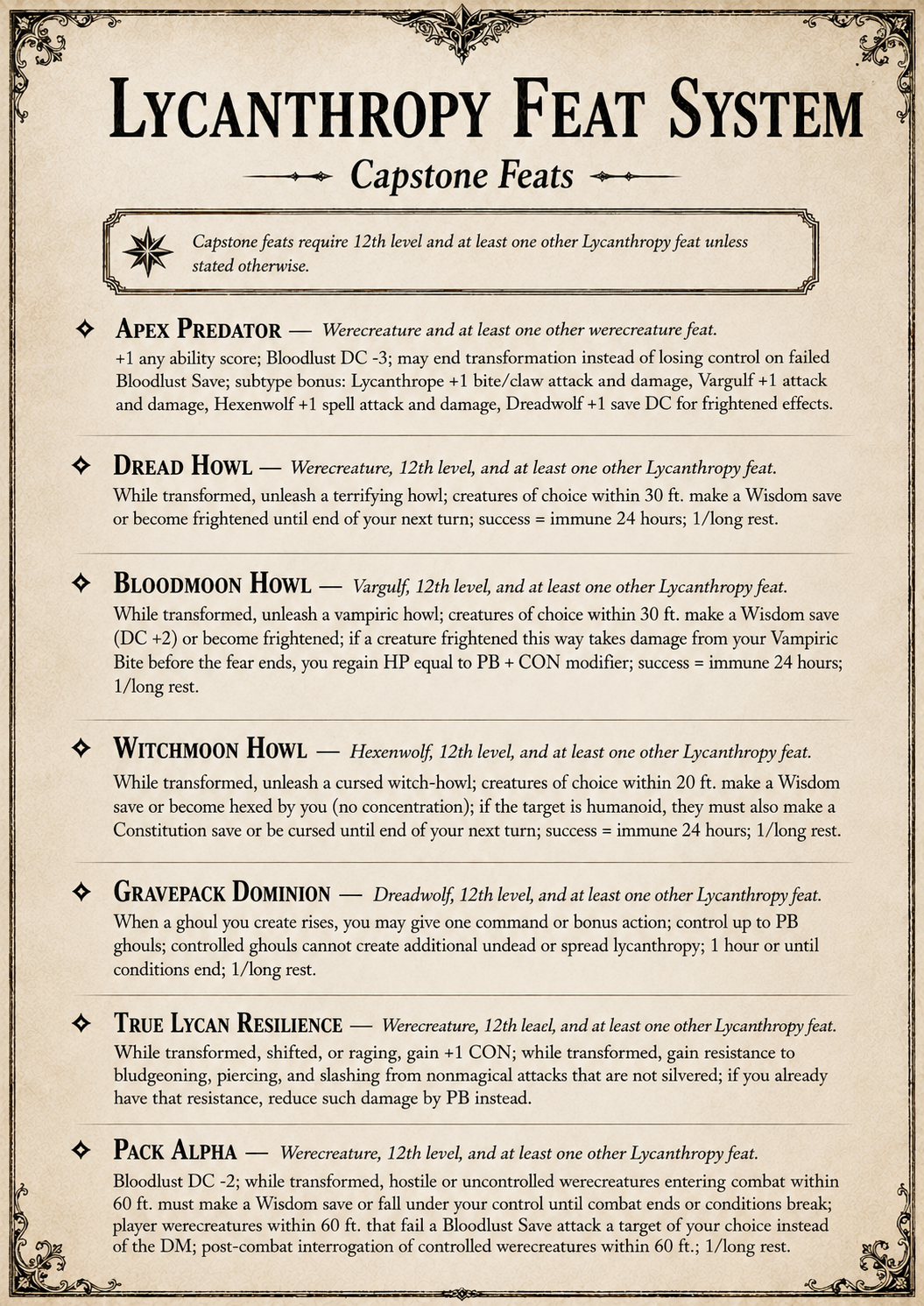
The capstone feats are where the system becomes more dramatic. These generally require 12th level and at least one other Lycanthropy feat, because they are not meant for a character who has only just begun living with the curse. Apex Predator is the broad capstone for werecreatures who have mastered their transformation. It improves an ability score, greatly reduces Bloodlust, and allows the character to end their transformation instead of losing control on a failed Bloodlust Save. It also gives a subtype bonus depending on what the character is: traditional lycanthropes become better with bite and claw attacks, Vargulfs become deadlier overall, Hexenwolves improve their spell attacks and damage, and Dreadwolves become more terrifying through stronger fear effects.
The howl feats are designed to make advanced werecreatures feel like battlefield monsters. Dread Howl gives a transformed werecreature a terrifying cry that can frighten chosen creatures nearby. Bloodmoon Howl is the Vargulf version, turning the howl into a vampiric burst of fear that can feed the character if a frightened target is damaged by their Vampiric Bite. Witchmoon Howl belongs to Hexenwolves and blends the howl with witchcraft, allowing the creature to hex enemies without concentration and potentially spread the curse through that magical vector. Gravepack Dominion belongs to Dreadwolves and lets them command the ghouls created through their death-touched curse, turning their horror into a temporary undead pack.
The final capstones reinforce two different sides of the fantasy: endurance and dominance. True Lycan Resilience makes the character harder to kill by granting resistance to nonmagical bludgeoning, piercing, and slashing damage that is not silvered, or by improving that resistance if the character already has it. Pack Alpha is about control. It lets a powerful werecreature impose dominance over hostile or uncontrolled werecreatures nearby, and it gives player werecreatures a way to redirect failed Bloodlust attacks toward a chosen target.
What I like about this feat system is that it makes lycanthropy feel like a real path without making it a full class. A character can remain a Fighter, Barbarian, Rogue, Blood Hunter, Warlock, or anything else, but lycanthropy still matters mechanically. The player gets to decide whether the curse becomes a weapon, a discipline, a bloodline, a horror, or a form of monstrous leadership.
For me, lycanthropy in Dungeons & Dragons should not be reduced to “you are immune to normal weapons” or “you turn into a wolf sometimes.” It should change how the character moves, fights, survives, loses control, and grows. These feats are my way of giving players and DMs a structured way to do that without losing the danger of the curse.
About the Creator
Juan Alfonso
Former Marine Corps correspondent with newspaper and magazine experience. I own a digital marketing company and write about games, TV, movies, comics, and pop culture. Husband, dad, and cat dad 🖖 #LLAP
Enjoyed the story? Support the Creator.
Subscribe for free to receive all their stories in your feed.
Comments
There are no comments for this story
Be the first to respond and start the conversation.