
Control Resonant Is a Messy, Brilliant Gamble
Remedy traded shooting for melee, the Oldest House for Manhattan, and Jesse for Dylan. The result is uneven, unforgettable, and very Remedy.
I. 9,100 and 40,000
In 2019, Remedy released Control. The supernatural shooter earned eight TGA nominations and won Best Art Direction. Its all-time peak concurrent player count on Steam was about 9,100.
On September 24, 2026, Remedy released Control Resonant. Its Steam peak broke 40,000. Two days before launch, its wishlist count passed 2 million.
Those numbers explain the shift from shooter to melee action RPG. Remedy did not abandon shooters because it dislikes them. Vainio said the team studied God of War and Devil May Cry to get the melee feel right. The studio knew it was entering unfamiliar territory. But 9,100 players cannot sustain an independent studio in Helsinki.
II. Ghost Karaoke and an Upside-Down Manhattan
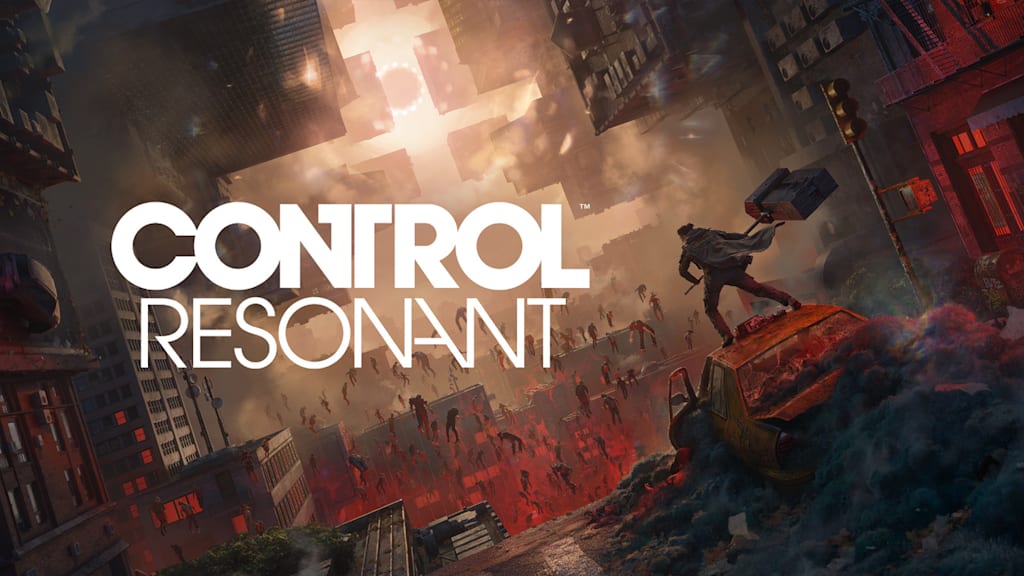
The one thing Control Resonant does not need to worry about is its aesthetics. From the Oldest House to Manhattan, Remedy scaled up its New Weird sensibility to the size of a city.
Highways hang upside down from skyscraper walls. Streets end in cliffs made by spatial folds. Mold walls stand at the city's edge. Patrolling monsters look like goldfish floating in air. Borges's Library of Babel gets redrawn at city scale.
A side quest includes a ghostly karaoke machine that turns a family gathering deadly. FBC agents on street corners make no secret of their disgust for Dylan. The character you play was once imprisoned and suspected. Every line of dialogue reminds you.
Executive producer Vainio calls the "Remedy DNA" a distinctive sense of reversal, of the eerie, and of things not being as simple as they look. Those things are still in Resonant.
Replacing Jesse with Dylan is not a simple swap. Creative director Mikael Kasurinen calls the two games sister works. Jesse's story falls from reality into the unknown. Dylan's moves from confinement toward the outside world. Dylan spent years imprisoned in a coma. He is raw, introverted, and indecisive. Giant Bomb's reviewer wrote: "Dylan is not likable. His posture is bad, his attitude is bad, his vibe is wrong. But in the end I loved everything about him."
III. Button-Mashing and Getting Lost
Beyond the aesthetics, problems start with the first fight.
Combat in the first Control was called static. Players could stay in one spot and solve every enemy with throwing and shooting. The sequel replaces the core weapon with a transformable melee baton that switches between whip, hammer, and other forms. Gravity anomalies, double jumps, air dashes, and wall-running let you move between skyscrapers and attack from any angle.
That is the theory. IGN's review said "RPG depth is limited, and later combat gradually becomes repetitive." Yahoo Gaming was more direct: "The melee combat is bafflingly hollow, endlessly repetitive, and overall terribly balanced." The game removes blocking or parrying. Dodging alone carries the action. There is no combo system. When players switch abilities and weapon forms, they "cannot make interesting, worthwhile attacks." One NGA player summed it up: "It's basically just mashing basic attacks the whole way."
Navigation causes more widespread frustration. Manhattan's space folds layer upon layer. Height differences are huge. Gravity changes direction at any moment. The minimap "cannot fully solve the problem of getting lost." Giant Bomb's reviewer described "spending huge amounts of time circling the same three blocks just to find a small door, an entrance, or some rooftop passage." A9VG summed up the map experience as "Lost Manhattan."
This is not an oversight. Remedy transplanted an ability set designed for closed, linear spaces into an open city. Gravity movement and wall-running worked in the Oldest House. Manhattan's vertical exploration needed another navigation language. Remedy did not have enough budget or time to invent it.
IV. 88% and 71%
Commercially, Control Resonant is Remedy's most successful launch. Its Steam peak was 40,000, nearly four times the previous game. It briefly topped the global best-seller chart. Overall rating: 88%, "Very Positive."
Simplified Chinese reviews sit at 71%, "Mostly Positive." That gap is not accidental. Negative reviewers focused on hit feedback, optimization, and the unreasonable practice of requiring players who had already preloaded to re-download content when updating. Positive reviewers praised the scene design, atmosphere, and combat innovation. One player said in an NGA discussion that "a lot of people are essentially here for the art." The combat system's flaws do not stop them from enjoying the rest.
One telling detail: piracy communities saw voices calling for support of the official version. One user said that given Remedy's "recent financial difficulties" and its history of "several titles underperforming at launch," players who can afford it should buy the official version. Goodwill from a gray area confirms the emotional capital Remedy has built among players.
V. A Team Smaller Than FromSoftware
You cannot understand the choices in Control Resonant without understanding Remedy's size. The studio's headcount is "even a little smaller than FromSoftware's." Its development budget was about 50 million euros, far below a typical AAA project. In the interview, Vainio recalled the chaos of developing the first Control: "About two months into the project, I realized we had planned two-thirds more content than the existing development time allowed."
That resource constraint left marks on Resonant too: too few enemy types, repetitive late-game combat, rough map navigation. Behind these problems is a small-to-midsize team forced to choose between spectacle and systemic depth under limited budget and time. Vainio says Resonant's development was "much less chaotic than the first game." Remedy's internal employee survey showed team happiness was "noticeably higher than during the development of Control." For a studio driven by creativity and dependent on retaining talent, that may matter more than any single game's score.
VI. Fun, Interesting, Remedy
At the end of the interview, Vainio recommended the game in three words: "Fun, interesting, Remedy."
Whether the first two hold depends on the player. The third is not in dispute. Control Resonant is a very Remedy game from beginning to end. It is eerie. It is bold. It is also imperfect. It is impossible to confuse with anything else. In an increasingly homogenized industry, being impossible to confuse is a scarce value.
One line from Giant Bomb's review may be the most honest summary: "It is a messy game that lets its characters fall into the mud and roll around."
Remedy has never pursued perfection. Max Payne had bullet time. Alan Wake had metanarrative experiments. Quantum Break had cross-media ambitions. Control had surrealist aesthetics. The studio's value lies in its willingness to keep testing and making mistakes in the tension between commerce and art.
Resonant's turn did not fully succeed. The melee system lacks polish. The open world brings a new kind of lostness. But in an era when AAA games increasingly lean toward conservative replication, Remedy changed its flagship IP from shooting to melee. It moved from a closed building to an open city. It replaced Jesse with Dylan. Most studios do not dare to do that.
It survived. The next game will show whether the bet pays off.
About the Creator
Jin
Writer of reamstories
https://reamstories.com/jin
Enjoyed the story? Support the Creator.
Subscribe for free to receive all their stories in your feed. You could also become a paid subscriber, letting them know you appreciate their work.
Comments
There are no comments for this story
Be the first to respond and start the conversation.