
Zhang Yuanfu lost on his first night. Then he went back to his 300 clay crocks, and let fermentation take the trophy.
He Didn’t Win With Fire. He Won With Time.
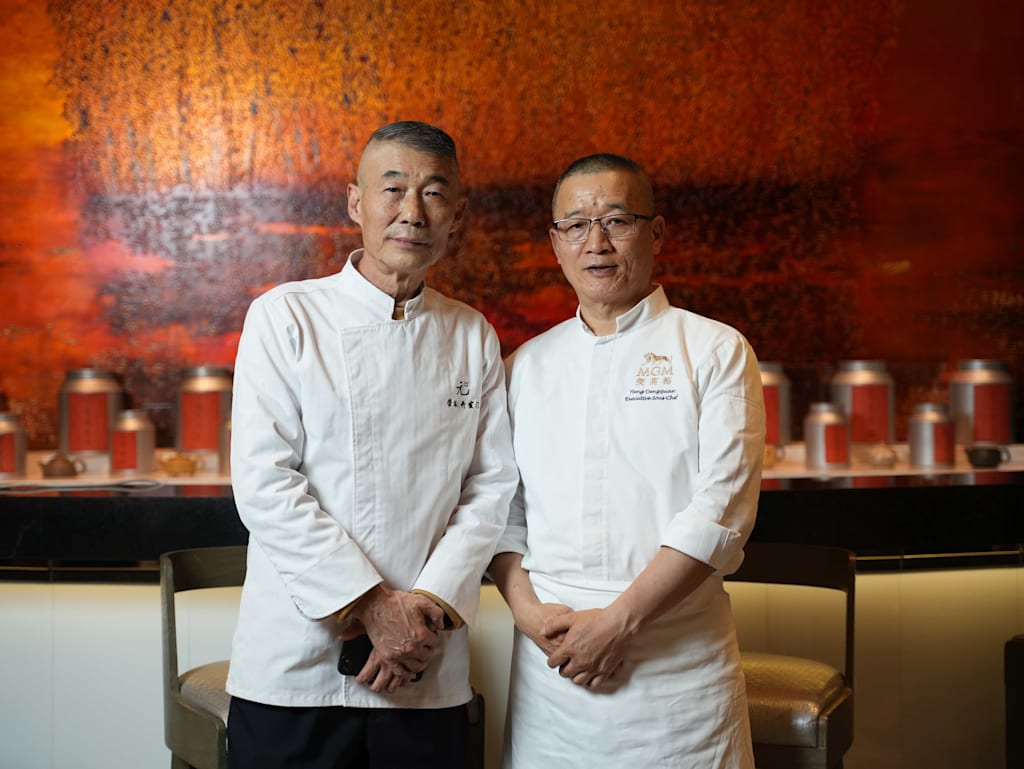
Zhang Yuanfu stood at the stove of the Hundred Chefs Battle for the first time, and the dish he sent up was returned.
The judge did not say anything harsh, only tasted a bite, put down the spoon, and did not take a second chopstickful. Liang Jinglun later said the dish was “right in flavor, but wrong.” Zhang Yuanfu stood at the stove, his apron speckled with oil, the back of his hand stained with splattered sauce. He did not argue. He carried the dish back to the kitchen, dumped it in the trash, and washed the pan.
That night he returned to Youyun · Luhui Tianfu 1911, did not enter the restaurant, and went straight to the courtyard behind it.
The courtyard held more than three hundred sauce crocks. The oldest crock, its rim polished smooth, contained twenty-year-old Pixian douban. He reached in, lifted the lid, scooped out a spoonful with a wooden spoon, brought it close to smell, then put it back. Beside it was a row of pickle jars; the water seal on one jar burped a bubble. He squatted, shone a flashlight into the jar. The red of the pickled chilies rose and sank in the brine, the skins already half-translucent.
He stood up and told his apprentice: “Redo that dish tomorrow. Switch the douban to fifteen-year, use erjingtiao for the pickled chilies, not facing-heaven chilies.”
The reason for the first-round loss he later mentioned in an interview: “I wanted them to see how complex Sichuan cuisine is, but I piled complexity on complexity, and the flavor turned messy.” What he did not say was that he stayed in the sauce yard until two in the morning, tasting every crock of douban. Fifteen-year, eighteen-year, twenty-year. Spiciness, sauce aroma, sweetness, acidity, each one different. He finally chose a fifteen-year crock because “the fish that day needed a lively acidity; twenty-year was too heavy.”
In the semifinal he sent out pickled-vegetable braised camel paw.
Camel paw was rehydrated three days ahead, braised in pickle brine. The brine was not ordinary pickle brine; it was the five-year-old salt water from his sauce yard, holding not only erjingtiao chilies but young ginger, garlic, Sichuan peppercorn, rock sugar, baijiu. The camel paw’s collagen melted slowly into the brine; sourness worked into every strand of meat, spiciness wrapped in collagen, not sharp, leaving only a warmth at the base of the tongue. The judge took a bite, then another. Liang Jinglun said: “This flavor, I feel like I’ve tasted it in some Sichuan village, but it’s not quite that either.”
Zhang Yuanfu wiped his hands behind the stove and did not smile. He knew the key to this dish was not the camel paw, but that jar of pickle brine. He had kept that brine for five years, adding ingredients once a week, measuring acidity once a day. One summer the temperature got too high and the whole jar nearly spoiled; he got up in the middle of the night, moved the jar into an air-conditioned room, and pointed a fan at it all night.
The final’s prompt was “a single bean.”
Others used beans to make tofu, soy milk, mashed beans. Zhang Yuanfu used a single soybean to make three dishes: pan-fried bean-sprout cakes, hot-and-sour douhua, and drunken green-bean cakes. The sprouts he grew himself in a corner of the sauce yard, with well water, no light, for five days, until the sprouts were three centimeters long and the root hairs snow-white. The sprout cakes were pan-fried, the oil a seven-to-three blend of rapeseed oil and lard, fried golden on both sides, dusted with a little Sichuan peppercorn powder. The hot-and-sour douhua used the sourness from pickle brine and the heat from douban; the douhua was set with bittern, so tender it trembled when lifted with a spoon. The drunken green-bean cakes were made by steaming green beans, mashing them, adding fermented glutinous rice juice and a little baijiu, chilling to set, cutting into blocks, and topping each with a goji berry.
The three dishes went up. The judges ate for a long time without speaking. Finally one judge said: “This bean, from sprouting to fermenting, you used five days and five years.”
Zhang Yuanfu’s cooking depends on fermentation. His sauce yard has more than three hundred crocks; the youngest pickle jar has been kept for three years. Douban is divided into yin and yang: yin douban sun-dried for three years, yang douban sun-dried for five, blended before use. Pickled chilies use erjingtiao; pickled ginger uses Qianwei young ginger; pickled garlic uses Wenjiang single-clove garlic. Zaodan sauce is made by cracking duck eggs, keeping the membrane, adding fermented glutinous rice and baijiu, then fermenting again. The white becomes amber, the yolk becomes a runny center; scoop out a spoonful and the aroma of wine, egg, and fermented rice wine mingle. Toss with asparagus, toss with anything.
His signature dish, Longan Stream Fish, follows the same path as the final’s braised mandarin fish with litchi and yin douban. The fish is from the Min River, small, about two liang, not scaled, pan-fried in lard until lightly browned on both sides. Leave the base oil in the wok, fry yin douban until fragrant, add pickled chilies, pickled ginger, garlic slices, pour in stock, add the fish, add longan flesh. The longan’s sweetness meets the yin douban’s salty heat; sweetness is held up by heat, heat is rounded off by sweetness. Before serving, thicken with a light slurry, scatter scallions. The fish is tender, the sauce thick, the longan’s fruity aroma rises slowly after the heat.
Youyun’s cold dishes also rely on fermentation. Zaodan sauce tossed with asparagus: the asparagus arrives from Pengzhou that day, blanched ten seconds, shocked in ice water, cut into lengths, tossed with zaodan sauce. Zaodan sauce is an intangible cultural heritage craft: duck eggs cracked, membrane kept, added to fermented glutinous rice and baijiu, sealed and fermented three months. The white becomes translucent amber, the yolk a deep-red runny center. Scoop out a spoonful and the wine aroma hits you; the egg’s fishiness has been tamed by the fermented rice into umami. Tossed with asparagus, the asparagus’s clean bitterness meets the zaodan’s richness; bitterness is dissolved by wine aroma, umami is set off by bitterness.
But Zhang Yuanfu’s weak points are obvious.
Youyun · Luhui Tianfu 1911 still has no Michelin star. The Chengdu Michelin Guide has been around for years; even Zinan, opened by his apprentice, just got one star this year, while Youyun has not even made the selection. The reason is not complicated: ingredients, heat control, stock. Once you take away pickled chilies, douban, and those fermented sauces, none of it is quite satisfactory.
A bowl of boiled cabbage in clear soup: the stock is not clarified enough, the cabbage is not tender enough. A plate of snowflake chicken custard: the minced chicken is not pounded fine enough, the lard is not added precisely enough. These dishes do not rely on fermentation; they rely on the patience of clarifying stock, the feel of pounding meat, the precision of heat. In Zhang Yuanfu’s kitchen, the sauce yard takes up more than half the back courtyard; there are only two stock-stewing stoves. His energy is in the jars, not the stockpots.
He knows it himself. Once I ate at Youyun and ordered boiled cabbage in clear soup. When he brought it over he said: “This stock, today I rushed it a bit.” I took a sip. The soup was clear, but not clear enough; there was umami, but it was thin. He did not explain, turned and left. Later I saw him go into the sauce yard, squat in front of a crock, shine a flashlight on the douban inside, and look for a long time.
Fermentation sits behind many top foods. Douban, pickles, soft-centered dried abalone, caviar, Iberian ham, Feitian Moutai. Top foods all rely on fermentation. Fermentation is also a craft of tiny variables: temperature, humidity, oxygen, salinity, acidity. Slight changes and the flavor goes completely different. The Moutai academician was mocked online, but what he did was microbial fermentation. The ceiling is high.
Sichuan cuisine and Nordic cuisine connect at this point. Noma took world number one by relying on fermentation too. Noma’s fermentation lab has over a thousand fermented products, from pea paste to ant vinegar, from pine-needle wine to fish sauce. Zhang Yuanfu’s sauce yard has over three hundred crocks, from douban to pickles, from zaodan to sweet flour paste. Two kitchens, one in Copenhagen, one in Chengdu, doing the same thing: letting microbes work for the chef.
On the day Zhang Yuanfu won the championship, he stood on the stage, trophy in hand, neither crying nor smiling. He said one sentence: “This award is for the jars.”
After returning to the kitchen, he put the trophy at the entrance of the sauce yard, on top of a crock. Inside was twenty-year-old douban; the crock rim had a crack repaired with glutinous rice paste. He scooped out a spoonful with a wooden spoon, put it in a bowl, added a little rapeseed oil, and steamed it for ten minutes. The steamed douban was deep red, glossy, its sauce aroma carrying a hint of caramel. He dipped a chopstick in, tasted it, and nodded.
That night a new dish appeared on Youyun’s menu: steamed douban from the sauce yard. With rice, with steamed bread, with anything. The douban was the same douban, but everyone who ate it said that day’s douban was especially fragrant.
Zhang Yuanfu did not explain why. He just left the sauce yard door open and let guests go in and look for themselves. More than three hundred crocks; the oldest one had a crack on its rim repaired with glutinous rice paste. The douban in the crocks glistened in the setting sun.
About the Creator
Jin
Writer of reamstories
https://reamstories.com/jin
Enjoyed the story? Support the Creator.
Subscribe for free to receive all their stories in your feed. You could also become a paid subscriber, letting them know you appreciate their work.
Comments
There are no comments for this story
Be the first to respond and start the conversation.