
Why High-Performing Entrepreneurs Are Rethinking Their Wardrobes
Inside the quiet shift from casual disregard to deliberate dressing — and what it signals about modern business identity

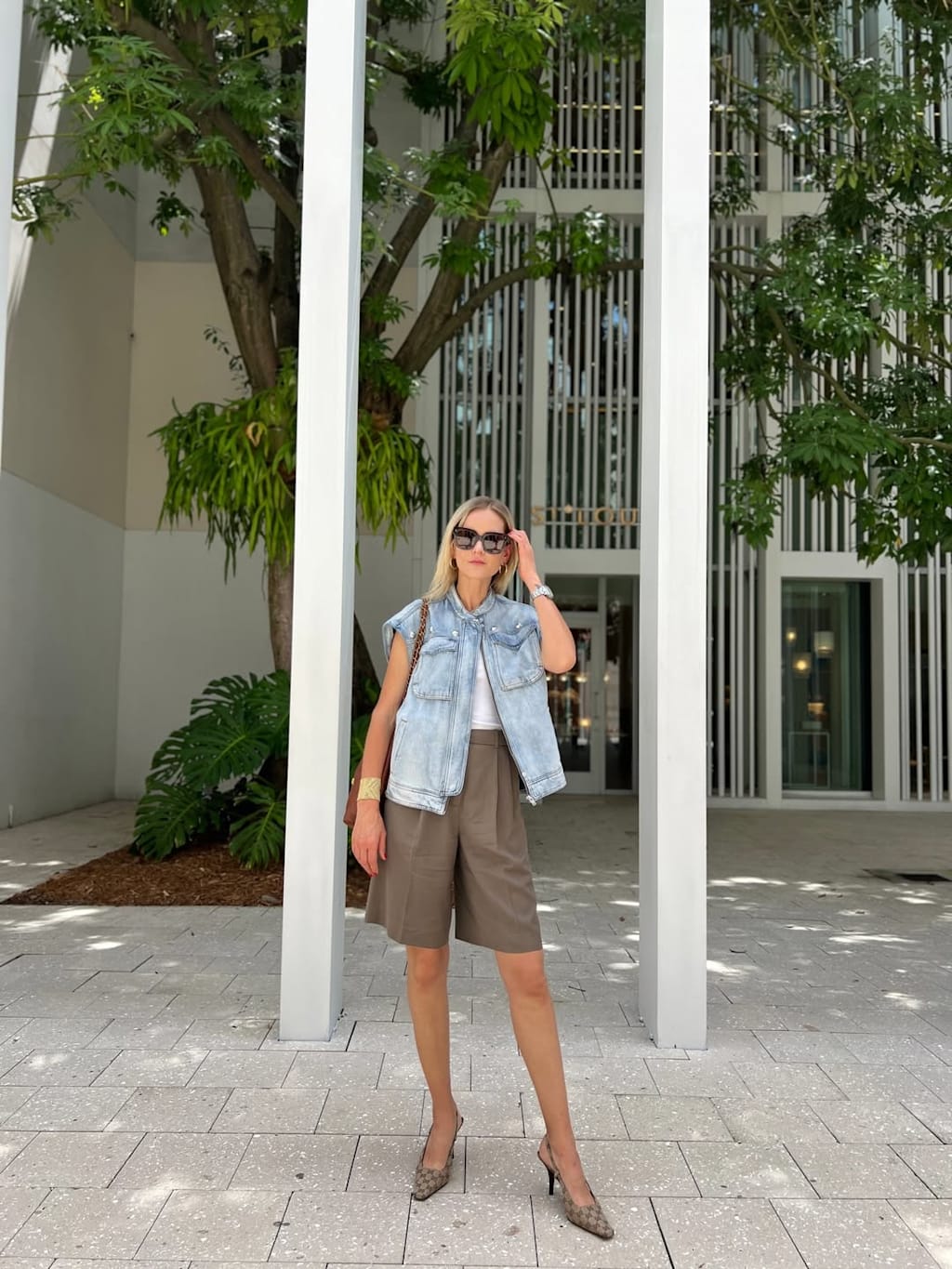
There is a certain irony embedded in the startup culture uniform: the hoodie, the worn sneakers, the signal of studied nonchalance. For years, it functioned as shorthand for a particular kind of ambition — the idea that serious builders had no time for surfaces. Yet something has shifted. Across boardrooms, pitch meetings, and founder circles, a growing number of high-performing entrepreneurs are turning to personal stylists not as a luxury indulgence, but as a calculated business decision. The entrepreneur personal stylist has emerged as a legitimate professional category, one that sits at the intersection of brand strategy, psychology, and time management.
A personal stylist for entrepreneurs is a professional who curates a client's wardrobe and visual presentation to align with their business goals, audience expectations, and personal brand. Unlike traditional fashion styling, entrepreneur-focused styling prioritizes function, consistency, and strategic impression management over trend-driven aesthetics. The result is a wardrobe designed to reduce decision fatigue, strengthen professional credibility, and project a coherent identity across all business contexts.
The Decision Fatigue Argument
The case for deliberate dressing among founders rarely begins with vanity. It begins with cognitive load. Entrepreneurs operating at the executive level make hundreds of decisions daily — product direction, team dynamics, capital allocation, market positioning. The wardrobe, when left unconsidered, becomes yet another arena requiring mental energy that could be more productively deployed elsewhere.
This is the reasoning behind what has become one of the most cited wardrobe philosophies in entrepreneurial culture: the concept of a personal uniform. The late Steve Jobs and his consistent black turtleneck, Mark Zuckerberg's well-documented grey t-shirt preference — these were not accidents of taste, but deliberate systems. What personal stylists bring to this equation is the expertise to build such systems thoughtfully, rather than by accident or default.
The distinction matters. A poorly considered uniform can communicate stagnation or indifference. A well-constructed one communicates focus, confidence, and intentionality — qualities that translate directly into professional trust. Stylists who work with entrepreneurs understand that the goal is not to assemble a wardrobe that draws attention to itself, but one that consistently reinforces the impression the founder intends to make.
Appearance as a Business Signal
In professional environments, appearance functions as a signaling mechanism — one that operates before a single word is spoken. Research in social psychology has long established that first impressions form within seconds and are extraordinarily resistant to revision. For entrepreneurs who regularly engage with investors, media, potential hires, and clients, the cost of an inconsistent or poorly calibrated visual identity is not merely aesthetic — it is reputational.
Personal stylists who specialize in entrepreneur clients approach this signal value as a form of brand architecture. In the same way a company invests in visual identity — logo, color palette, tone of voice — a founder's personal presentation operates as a layer of that same brand. The two are not separate. In early-stage companies especially, where the founder and the company are largely indistinguishable in the public imagination, how the entrepreneur presents is inseparable from how the company is perceived.
This alignment becomes particularly significant in high-stakes contexts. A founder pitching institutional investors operates in an environment where credibility is assessed on multiple dimensions simultaneously. Presentation does not replace substance, but it contextualizes it. A stylist working in this space understands the visual vocabulary of different industries, investor cultures, and professional environments — and builds wardrobes capable of navigating all of them without recalibration.
The Rise of the Entrepreneur Stylist as a Distinct Practice
Personal styling as a profession is not new. What is relatively recent is its specific application to the entrepreneurial context, where the needs, constraints, and objectives diverge significantly from those of, say, a celebrity or media personality.
Entrepreneur stylists tend to operate with a distinct methodology. Engagements often begin with an audit — a structured assessment of the client's current wardrobe against their professional calendar, public-facing role, and brand positioning. What follows is typically a combination of wardrobe editing, strategic acquisition, and the development of what practitioners often call a "visual identity system": a coherent set of pieces, combinations, and guidelines that can be deployed across contexts with minimal ongoing effort.
The time-saving dimension is frequently cited by clients as the primary value proposition. For founders operating across time zones, managing multiple stakeholder relationships, and context-switching between operational and strategic roles, the ability to get dressed without deliberation is not trivial. It is a genuine efficiency gain — one that compounds across the year in recovered mental energy and time.
Many stylists in this niche also extend their work into the domain of personal branding more broadly — advising on presentation for keynote appearances, media engagements, and social media content. The wardrobe becomes one component of a larger visual communication strategy, rather than an isolated concern.
Industry and Context: Dressing Across Verticals
One of the more nuanced challenges in entrepreneur styling is the breadth of professional contexts that founders navigate. A technology entrepreneur may move between a product development environment, a venture capital meeting, a press interview, and a team offsite within a single week. Each context carries different visual expectations. The ability to move across them credibly, without appearing to costume-change or perform, requires a wardrobe architecture that is both flexible and coherent.
Personal stylists working with entrepreneurial clients develop an acute understanding of industry visual codes. The norms governing appearance in fintech differ from those in creative industries, which differ again from those in healthcare or consumer goods. Getting these codes right is not about conformity — it is about demonstrating fluency. Founders who appear visually at home in a given professional environment signal competence and contextual intelligence. Those who appear misaligned signal either disregard or unfamiliarity, neither of which is useful.
This cross-context competency is where experienced entrepreneur stylists deliver their most specific value. General styling advice, widely available and largely interchangeable, addresses surface concerns. Strategic wardrobe architecture addresses a more complex problem: how does a single person maintain a consistent, credible, and intentional visual identity across a wide variety of professional environments, without spending meaningful time or energy managing it?
The Psychology of Intentional Dressing
Beyond the external signal, there is a substantial body of evidence pointing to the psychological impact of clothing on the wearer. The concept of "enclothed cognition" — the influence of clothing on cognitive processes and performance — has attracted academic interest over the past decade, with studies suggesting that wearing clothing associated with particular qualities or roles can meaningfully affect the wearer's own thinking and behavior.
For entrepreneurs, this dimension of dressing is not incidental. The founder who dresses with intention is not simply managing external perception — they are also managing internal state. Clothing that communicates authority and competence to an outside observer can simultaneously reinforce those qualities in the person wearing it. This is particularly relevant in high-pressure contexts: investor presentations, difficult negotiations, public speaking engagements.
Personal stylists attuned to this psychological dimension work not just from an external brief — "how should this founder appear to their audience?" — but from an internal one as well: "what does this founder need to feel in order to perform at their best?" The two questions are related but not identical, and the most sophisticated work in this space addresses both.
Wardrobe as Infrastructure
Perhaps the most telling reframing of personal styling in the entrepreneurial context is this: the wardrobe as infrastructure. Not adornment, not self-expression in the purely personal sense, not a concession to superficiality — but a functional system that supports the work.
Infrastructure, by definition, is most effective when it is invisible. The best wardrobe systems are those that require no ongoing management, generate no friction, and create no decisions. They simply work — delivering the right presentation for the right context, consistently, without demanding attention. This is the standard to which entrepreneur-focused stylists hold their work, and it is a meaningfully different standard from the one that governs most of the fashion and styling industry.
The growing appetite for this kind of professional relationship reflects a broader maturation in how successful founders think about their own functioning. The era of deliberate neglect as a performance of seriousness is giving way to something more considered — an understanding that how you show up, visually and otherwise, is a dimension of professional practice that merits the same attention given to any other lever of business performance.
For the time-poor, results-driven entrepreneur, the personal stylist is, at its core, a specialist in removing one more thing from the decision stack — and replacing it with a system that quietly, consistently, works.
About the Creator
Elsab Styling
At ElsaB Styling, we specialize in providing bespoke, high-end personal styling services for high-net-worth individuals, CEOs, executives, and VIPs.
Enjoyed the story? Support the Creator.
Subscribe for free to receive all their stories in your feed.
Comments
There are no comments for this story
Be the first to respond and start the conversation.